Certified ITAD since 2010
IT asset disposition, in writing.
Certified IT asset disposition for enterprises, healthcare systems, and government agencies nationwide, with a serialized certificate of destruction on every device.
Ask about our FREE pickup!
Electronics Recycling
What electronics can be recycled?
Per R2v3:2020 certification standards, downstream tracking must document materials through final processing at R2-certified smelters. STS processes end-of-life equipment for corporations, healthcare networks, and federal agencies nationwide with zero-landfill handling and environmental compliance reporting.
- R2v3 certified processing facility
- Comprehensive material recovery
- Environmental impact documentation

Data Destruction
How does secure data destruction work?
NIST SP 800-88 Rev. 2 defines sanitization as rendering "access to target data on the media infeasible for a given level of effort," the standard every STS destruction meets. STS provides certified destruction documentation supporting HIPAA 45 CFR §164.312, FERPA, FACTA, and SOX audit requirements.
- NAID AAA and NIST SP 800-88 Rev. 2 methods
- HIPAA-aligned destruction procedures
- Serial-level audit documentation

IT Liquidation
What value can be recovered from IT assets?
Equipment with remaining useful life is sanitized, tested, and remarketed rather than shredded. Recovery is reported line by line against the same serialized inventory used for destruction, through our ITAD program.
- Transparent pricing structure
- Professional remarketing channels
- Reported against the same serialized inventory

Timing
The storage room is the most expensive place to keep it.
Retired hardware loses value while it waits, depreciating against a moving market while carrying live data. Both problems worsen on the same clock.
- Every generation release moves the previous one further down the resale curve
- Equipment awaiting disposal is still a data liability on your risk register
- Assets still on the books without a disposition record complicate depreciation write-off
Two Outcomes
Everything ends in one of two places.
Both paths start with the same inventory and the same standard. They diverge only after the data is gone. Corporate IT directors typically expect serial-level certificates for audit review, included in every STS engagement.
Recover the value
STS engagements with corporate IT operations typically include serial-number asset tagging aligned to capital ledger workflows. Equipment with useful life left is sanitized to purge level, tested, graded, and remarketed, and you get paid on what sells.
- NIST 800-88 purge, which leaves the media usable but not recoverable
- Settlement statement reconciled to the serialized inventory
- Certificate still issued for every data-bearing device
Destroy and recover material
Healthcare and financial organizations often require witnessed destruction, standard for STS engagements in regulated sectors. Where policy or condition rules out resale, media is physically destroyed and the remaining material enters certified recovery, with downstream tracked through final processing.
- Physical destruction under NAID AAA procedures
- Serial-level Certificate of Destruction
- Environmental and downstream documentation for ESG reporting
How It Runs
Five stages, one inventory.
Serial numbers captured in stage two are the ones on the certificate in stage five. When evaluating IT asset disposition providers, compliance officers prioritize downstream documentation over price.
Scope
You send the equipment list and site locations. We return pickup method, standard, and documents.
Free pickup
Counted and serialized at your location, then collected. Pickup is free in all 50 states.
Transport
Sealed movement to our facility under documented chain of custody.
Sanitize and grade
Purge or destroy per policy, then test and grade whatever is heading to resale.
Certificate and settlement
Both documents issued against the same serialized list, so they reconcile.
The Ledger
What actually drives recovery on retired hardware.
According to IBM's Cost of a Data Breach Report 2025, the average breach in the United States reached 10.22 million dollars, an all-time high, which is why disposal records matter as much as disposal itself. Nobody can quote a recovery number sight unseen, but anyone can tell you which factors move value up and which destroy it.
| Asset class | What raises recovery | What destroys it | Likely path |
|---|---|---|---|
| Laptops and desktopsData-bearing | Current or previous generation CPU, intact battery and screen, complete units, matched fleet quantities. | Physical damage, missing drives, storage-room aging past the next generation release. | Resale first |
| Servers and storageData-bearing | Supported configurations, populated and matched components, full chassis rather than stripped shells. | End-of-support platforms, harvested parts removed before pickup, mixed incomplete racks. | Resale first |
| Network equipmentData-bearing | Vendor-supported models, transferable licensing, modules and optics kept with the chassis. | Locked or non-transferable licensing, discontinued platforms, missing modules. | Resale first |
| Mobile devicesData-bearing | Recent models, unlocked and deregistered from MDM, undamaged screens. | Activation locks left in place, cracked glass, swollen batteries. | Resale first |
| Printers and copiersOften data-bearing | Serviceable multifunction units under support. | No aftermarket, heavy page counts. | Case by case |
| MonitorsNot data-bearing | Larger recent panels, working, matched quantities. | CRT and legacy panels, dead pixels, damage. | Material recovery |
| Mixed and legacy e-wasteVaries | Volume and consistency, which cut sorting cost. | Nothing to preserve. The value is compliance, not resale. | Material recovery |
Drivers, not a price list. STS does not quote recovery figures sight unseen. Send the list and the estimate returns against real models and counts.
Services
The full register.
IT Liquidation
Remarketing, reported against the same inventory.
Data Destruction
Purge or destroy, method recorded per serial.
Electronics Recycling
Zero-landfill R2v3 recovery, downstream tracked.
Lease Buyout
Direct lessor negotiation on off-lease equipment.
Asset Disposition
The full lifecycle under one engagement.
AuditLive Tracking
Chain of custody at every handoff.
Accepted Equipment
What we take, and what it becomes.
Wondering what happens to each category? Data-bearing equipment gets a certificate by serial number. Everything else enters material recovery.

Sectors
Who we settle with.
Value recovery works the same way everywhere. The documentation requirement is what changes.
Certifications
What R2v3 and NAID AAA actually require.
Most ITAD pages list certification logos. These are the obligations behind them, and what each one produces on your side of the transaction.
Responsible Recycling, SERI
R2v3:2020 is the current revision of the electronics recycling standard administered by SERI. It requires documented downstream tracking to final disposition, data sanitization to a recognized standard before reuse, and a facility audited annually by an accredited certification body.
- Downstream vendors audited, not just named
- Focus Materials tracked to final processing
- Data security plan covering every data-bearing device
- Annual surveillance audit, three-year certification cycle
What you get: downstream documentation that survives an environmental audit.
Certified destruction, i-SIGMA
NAID AAA is the data destruction certification administered by i-SIGMA. It covers operational security, employee screening, and destruction methodology, and it is enforced through unannounced audits rather than scheduled ones.
- Unannounced audits by trained, accredited auditors
- Employee background screening and confidentiality agreements
- Written destruction methodology, verified in practice
- Chain of custody documented from collection to destruction
What you get: a destruction record a regulator will accept without argument.
SP 800-88 Rev. 2
The federal media sanitization guideline, finalized September 2025. It defines three levels, Clear, Purge and Destroy, and STS applies Purge or Destroy to every data-bearing device before it leaves the building in any direction.
- Purge renders recovery infeasible with laboratory techniques
- Method recorded per serial number, not per batch
- Sanitization happens before resale, never after
- Rev. 2 withdrew the 2014 guidance in September 2025
What you get: the standard your security questionnaire already names.
R2v3 and NAID AAA certification apply to the STS processing facilities in Jacksonville, Texas and Houston, Texas, where all data destruction and material recovery takes place. Equipment collected elsewhere is staged and transported to those sites.
Credentials
What our IT asset disposition service is certified to do.
Compliance
What each regulator wants, and what you get.
This maps the framework you report under to the standard applied and the document produced.
Scroll the table sideways
| Framework | Destruction standard applied | Record produced by STS | Who asks for it |
|---|---|---|---|
| HIPAA45 CFR 164.312 | NIST SP 800-88 Rev. 2 purge or destroy on all PHI-bearing media, under NAID AAA procedures. | Certificate of Destruction listing every device by serial number. Serialized | Compliance officer, OCR audit response |
| SOXSarbanes-Oxley 404 | Purge or destroy, with asset tags captured at inventory and reconciled to the disposition record. | Serialized certificate plus an asset list that reconciles against the capital ledger for depreciation write-off. Ledger reconcilable | Internal audit, external auditor |
| FERPA20 U.S.C. 1232g | Purge or destroy on media holding student education records. | Certificate of Destruction, per device, retained for your records. Serialized | District or university records officer |
| FACTADisposal Rule, 16 CFR 682 | Destruction of consumer report information so it cannot be read or reconstructed. | Certificate of Destruction naming the method applied per device. Method named | Financial services compliance |
| GLBASafeguards Rule, 16 CFR 314 | NIST SP 800-88 Rev. 2 sanitization on media holding customer financial information. | Serialized certificate plus full chain of custody from pickup through final disposition. Chain of custody | Financial institution compliance |
| NIST SP 800-88Media sanitization guidelines | Purge for media retained for resale. Destroy for media that leaves the reuse stream. | The sanitization method recorded against each serial number, so purge and destroy are distinguishable on the certificate. Method per serial | Security questionnaires, vendor reviews |
| R2v3Responsible Recycling, downstream | Zero-landfill material recovery, with downstream tracked to R2-certified smelters. | Environmental impact and downstream documentation for ESG and sustainability reporting. Downstream tracked | ESG reporting, procurement |
This maps the framework to the standard STS applies and the document STS issues. It is not legal advice and does not replace your counsel’s reading of your obligations. If your framework is not listed, send it with your request and we will tell you plainly whether we can produce the record you need.
Questions
What people ask about getting paid.
Yes. Multi-site and multi-building collections are scheduled together and reconciled against a single serialized inventory, so one certificate covers the whole engagement rather than one per location. Free pickup service covers all 50 states, plus DC, Puerto Rico and the U.S. Virgin Islands.
STS holds R2v3 certification under SERI for responsible electronics recycling and NAID AAA certification under i-SIGMA for data destruction, and applies NIST SP 800-88 Rev. 2 sanitization to every data-bearing device. Certification applies to the processing facilities in Jacksonville and Houston, Texas.
No, and the order matters. Every data-bearing device is sanitized to NIST SP 800-88 Rev. 2 purge level before it enters the resale stream, never after. The method applied is recorded against the serial number on the same certificate you would receive if the drive had been shredded.
Rev. 2 was finalized in September 2025 and withdrew Rev. 1, so a policy still citing the 2014 guidance is out of date.
Age relative to the current generation, condition, completeness, vendor support, and how fast it reaches market. The single biggest destroyer of value is time in a storage room.
Any figure quoted before seeing models, counts, and condition is a guess dressed up as a number. Send the equipment list and the estimate comes back against real hardware.
Typical enterprise engagements complete within 2 to 4 weeks from initial scheduling through final certificate delivery, including coordinated multi-building pickups and serialized tracking through AuditLive.
Yes. Free pickup service covers qualifying business volumes in all 50 states, staffed by our own crews rather than a third-party carrier. Send counts and locations to This email address is being protected from spambots. You need JavaScript enabled to view it. and the scope confirms it in writing before anything is booked.
Yes, on both paths. Whether a device is remarketed or destroyed, it appears on a Certificate of Destruction by serial number with the sanitization method recorded, supporting HIPAA, SOX, FERPA, FACTA, and GLBA documentation requirements.
About STS Electronic Recycling
Where your equipment is processed.
STS Electronic Recycling is headquartered in Jacksonville, Texas, and has served schools, businesses, healthcare systems, and government agencies across all 50 states since 2010.
Equipment collected at your location is staged locally and transported to one of our two R2v3 certified processing facilities in Jacksonville, Texas and Houston, Texas, where all data destruction and material recovery takes place.
Collection, transport and processing are staffed by STS crews rather than subcontracted to a third-party carrier, which is why the chain of custody holds from your dock to the certificate.
View all STS locations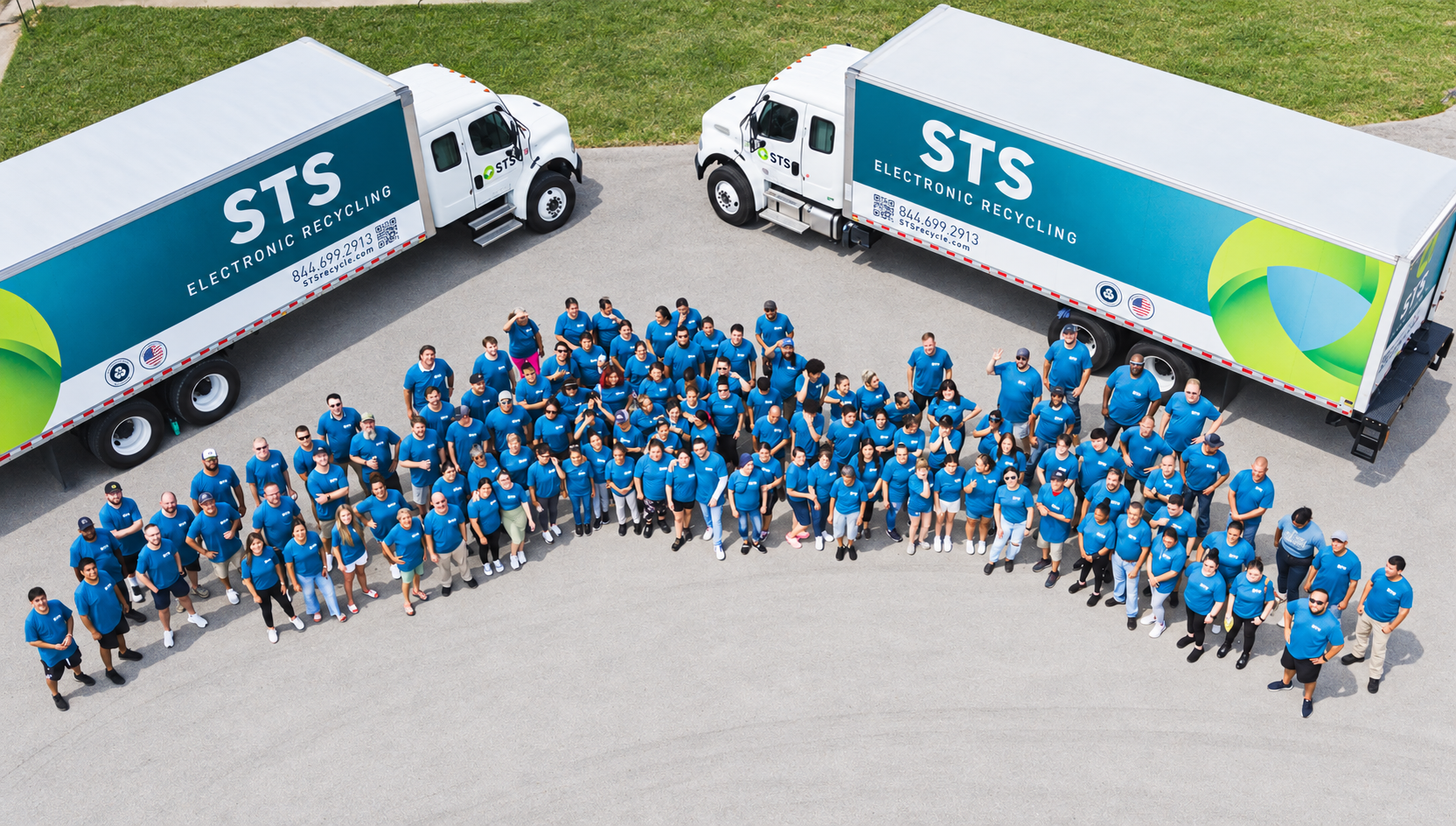
Send the list. See what it is worth.
STS Electronic Recycling provides IT asset disposition, certified data destruction, and electronics recycling for enterprises, healthcare systems, and government agencies in all 50 states, with certified processing in Jacksonville and Houston, Texas. The group also operates TechnoCycle, Discount Computer Depot, and Data2Shred.
Free pickup service, nationwide. Send models, counts, and locations to This email address is being protected from spambots. You need JavaScript enabled to view it.. We come back with the disposition path, the destruction standard, and a settlement estimate against real hardware rather than a guess.