Brownsville FL General IT Asset Disposal Guide

Why Brownsville Organizations Need a Structured IT Asset Disposal Program
STS Electronic Recycling provides certified IT asset disposal and secure data destruction for Brownsville and Miami-Dade organizations. IT directors at Jackson Health System (9,000+ employees) and Miami-Dade County Public Schools (33,477 employees) rely on STS for serialized destruction certificates, chain-of-custody documentation, and NIST SP 800-88 Rev. 2 compliant sanitization.
Brownsville sits within one of Florida's densest institutional ecosystems. Miami-Dade County Public Schools employs 33,477 people across the 4th-largest US school district. Florida International University (55,000+ students) and the University of Miami (17,000+ students) generate significant IT turnover. Jackson Health System's 9,000-employee network produces continuous retiring equipment.
Brownsville's commercial IT activity flows through the county's major employers: Jackson Health System, Miami Dade College (8 campuses), and Miami-Dade County government across 13 commission districts. STS operates in Opa-locka, directly adjacent to Brownsville, giving local organizations a logistics advantage national chains cannot match.
What's Changed in IT Asset Disposal Standards
NIST SP 800-88 Rev. 2 establishes Clear, Purge, and Destroy levels with updated guidance for solid-state drives and modern media. Florida's Identity Protection Act (§ 501.171, F.S.) adds state-level breach notification requirements alongside federal obligations.
STS Electronic Recycling provides certified ITAD for Brownsville and Miami-Dade businesses, with secure processing, transparent data destruction, and chain-of-custody documentation from pickup through final disposition.
The Risk Most Miami-Dade IT Managers Underestimate
Liability doesn't end when the truck leaves your dock. If a device surfaces at auction or secondary market, enforcement comes back to the originating organization, not the hauler. Building a certified ITAD program before an incident is far cheaper than responding afterward.
What Compliance Standards Apply to Brownsville IT Asset Disposal?
Under NIST SP 800-88 Rev. 2 guidelines, organizations must document Clear, Purge, or Destroy-level sanitization for every retired device. Sector-specific frameworks add additional obligations, FERPA for education, HIPAA for healthcare, GLBA for financial services. Here is what compliance requires for Brownsville IT teams:
NIST SP 800-88 Rev. 2: The Current Federal Standard
NIST SP 800-88 Rev. 2 is the current governing federal standard for media sanitization. It establishes three destruction levels applicable to every organization handling sensitive data:
- Clear: Logical overwrite using software techniques. Appropriate for assets with low sensitivity where physical reuse is intended. Not sufficient for regulated data.
- Purge: Overwrite methods or cryptographic erase that render data recovery infeasible with state-of-the-art laboratory techniques. Required minimum for most regulated sectors.
- Destroy: Physical destruction rendering the media unusable. Required for high-sensitivity assets, classified media, and devices that cannot be successfully purged.
For Miami Dade College and Florida International University handling student records under FERPA, Purge level is the minimum standard for any retired device that stored student data. Education IT disposal programs require vendors to document the sanitization level applied per device, not per batch.
R2v3 Certification: What It Means for Brownsville Recycling
R2v3 certification means third-party audited downstream tracking through certified smelters and processors, ensuring retired equipment is not exported illegally or processed by unqualified vendors. Verify current certification at sustainableelectronics.org before any asset transfer.
NAID AAA Certification
NAID AAA applies to data destruction only, shredding, degaussing, and software-based purging. It verifies the destruction process meets audited standards for security, chain of custody, and documentation. Verify scope carefully: some certifications cover plant-based destruction only, not mobile destruction.
R2v3 Certification
R2v3 covers electronics recycling and responsible downstream processing, verified through unannounced third-party audits. Confirm current certification at sustainableelectronics.org before any asset transfer. Expired R2 certificates are common in South Florida's competitive market.
Florida's State-Level Requirements
Florida's Identity Protection Act (§ 501.171, F.S.) requires breach notification to the Florida AG within 30 days. Improperly disposed devices trigger dual reporting, to the Florida AG and applicable federal regulator. A single chain-of-custody gap creates exposure on multiple fronts.
The Chain-of-Custody Requirement Most Organizations Miss
Per R2v3:2020 certification standards, chain of custody must be documented from origin facility through final processing. Required documentation: signed manifest, transport records, facility receipt, and serialized destruction certificates per device listing serial number, destruction method, date, and technician ID. Gaps create investigation liability.

How Should Brownsville Organizations Evaluate IT Asset Disposal Vendors?
STS Electronic Recycling serves Brownsville and Miami-Dade organizations with secure processing and accurate data destruction, verified through unannounced third-party audits. Here is the evaluation framework that separates certified vendors from marketing-only claims:
Non-Negotiable Certifications
Pickup is free for qualifying volumes (typically 10+ computers or equivalent). STS provides no-cost scheduled collection for Brownsville organizations. Require these two certifications before any vendor handles your assets:
R2v3 (Recycling)
Why it matters: R2v3 ensures downstream tracking through certified processors, protecting your organization from liability if materials are improperly handled after leaving your facility. Verify current certification at sustainableelectronics.org. Expired R2 certificates are common in Florida's market.
NAID AAA (Data Destruction)
Why it matters: NAID AAA covers the data destruction process specifically. Verify at naidonline.org and confirm the scope matches your need: plant-based destruction, mobile on-site destruction, or both. The scope matters for compliance documentation purposes.
Facility Capacity and Miami-Dade Logistics
STS engagements with corporate IT operations typically include serial-number asset tagging integrated with capital ledger workflows, standard for South Florida enterprises where fixed asset disposal must align with audit reporting. Ask these specific questions before engaging any vendor:
- Facility square footage: Anything under 100,000 sq ft suggests limited capacity for institutional-scale Miami-Dade disposal projects. STS serves Brownsville from our 200,000 sq ft processing facility
- Serialized certificate delivery: Every device must receive its own destruction certificate, not batch totals. Confirm this is standard practice, not an add-on service
- Mobile shredding capability: On-site witnessed hard drive destruction for high-sensitivity assets at your Brownsville or Miami-Dade location
- Same-week scheduling: Institutional IT projects can't wait weeks for pickup windows. Confirm available scheduling lead times
IT Director, Miami-Dade Area School District
Pricing Transparency and What to Watch For
What Should Be Free
Pickup for qualifying volumes (typically 10+ computers or equivalent). Basic NIST SP 800-88 Rev. 2 compliant data sanitization with serialized certificates. Asset recovery credits that offset costs for equipment with residual value.
What Costs Extra
Witnessed on-site mobile shredding. After-hours or emergency pickups. Hard drive physical shredding versus software purge. Multi-site coordination across Miami-Dade County campuses or facilities.
For organizations needing NIST 800-88 compliant data destruction in Brownsville, STS provides certified services with serialized certificates and full chain-of-custody documentation for each engagement.
The Insurance Verification Step Most Organizations Skip
Request a Certificate of Insurance showing minimum $5M cyber liability and $2M general liability before any vendor handles your assets. When evaluating IT disposal providers, corporate IT directors prioritize R2v3 certification, NAID AAA scope, and per-device certificate delivery over pricing.
How Do Brownsville Organizations Build a Compliant IT Disposal Program?
Building a compliant IT disposal program in Brownsville starts before you need it. Organizations with mature ITAD programs establish vendor qualification criteria, documentation workflows, and disposal policies aligned with NIST SP 800-88 Rev. 2 before audits and regulatory inquiries force the issue. Here is a practical framework:
Phase 1: Policy Development (Weeks 1-2)
What should an IT disposal policy include? Written policies must exist before your first pickup. Auditors check documentation standards first. Effective policy documents these elements:
- Who approves equipment for disposal (IT Director, Compliance Officer, Procurement)?
- Data sensitivity classification for different asset types (servers vs. general office laptops)
- Required documentation at each stage: manifest, transport, destruction certificate, final reporting
- Vendor qualification criteria: required certifications, insurance minimums, certificate delivery format
- Retention period for disposal records (minimum 3 years; check any sector-specific requirements for your organization)
Phase 2: Vendor Selection (Weeks 3-6)
Issue formal RFPs to at least three certified vendors. Include scope definition (estimated volumes, asset types, pickup locations throughout the county), evaluation criteria (certification verification, certificate format, references from comparable South Florida organizations), and service level expectations (scheduling lead times, certificate delivery windows).
RFP Scope Definition
Estimated annual volumes by quarter. Asset categories (desktops, laptops, servers, mobile devices, networking equipment). Pickup location requirements across your Miami-Dade service area. Special needs: witnessed destruction, after-hours access, multi-site coordination.
Evaluation Criteria
Current R2v3 certificate verification. NAID AAA scope and membership. Serialized destruction certificate format per device. References from South Florida organizations. Insurance documentation. Scheduling capability and response times.
Phase 3: Pilot and Implementation (Weeks 7-14)
Run a controlled pilot with 25-50 devices from a single location before committing to a multi-year agreement. Evaluate: certificate delivery timeline and format quality; chain-of-custody documentation completeness; communication responsiveness from scheduling through final certificate delivery; and asset recovery credit accuracy for equipment with residual value.
For Brownsville organizations, establishing a structured vendor relationship before peak refresh cycles, summer for schools, fiscal year-end for government, avoids scheduling conflicts and documentation gaps. Organizations searching for electronics recycling near me in Brownsville find STS provides scheduled pickup across Hialeah, Miami, and throughout Miami-Dade County.
IT Compliance Manager, Miami-Dade County Organization
Phase 4: Ongoing Program Management
Effective ITAD programs require ongoing governance. Build these practices into your annual calendar:
- Quarterly vendor reviews: verify certificate completeness and chain-of-custody records
- Annual re-verification of R2v3 and NAID AAA certifications (both expire; vendors don't always notify)
- Staff training on internal staging for departments accumulating small quantities between pickups
- Annual RFP benchmark: verify competitive pricing and service levels
The Small-Quantity Gap That Creates Audit Exposure
Most vendors prioritize large pickups. Departments with 3 retired laptops or a single failed server create documentation gaps when no staging protocol exists. Establish quarterly internal collection points where departments consolidate equipment, maintaining serialized documentation for every device regardless of quantity.
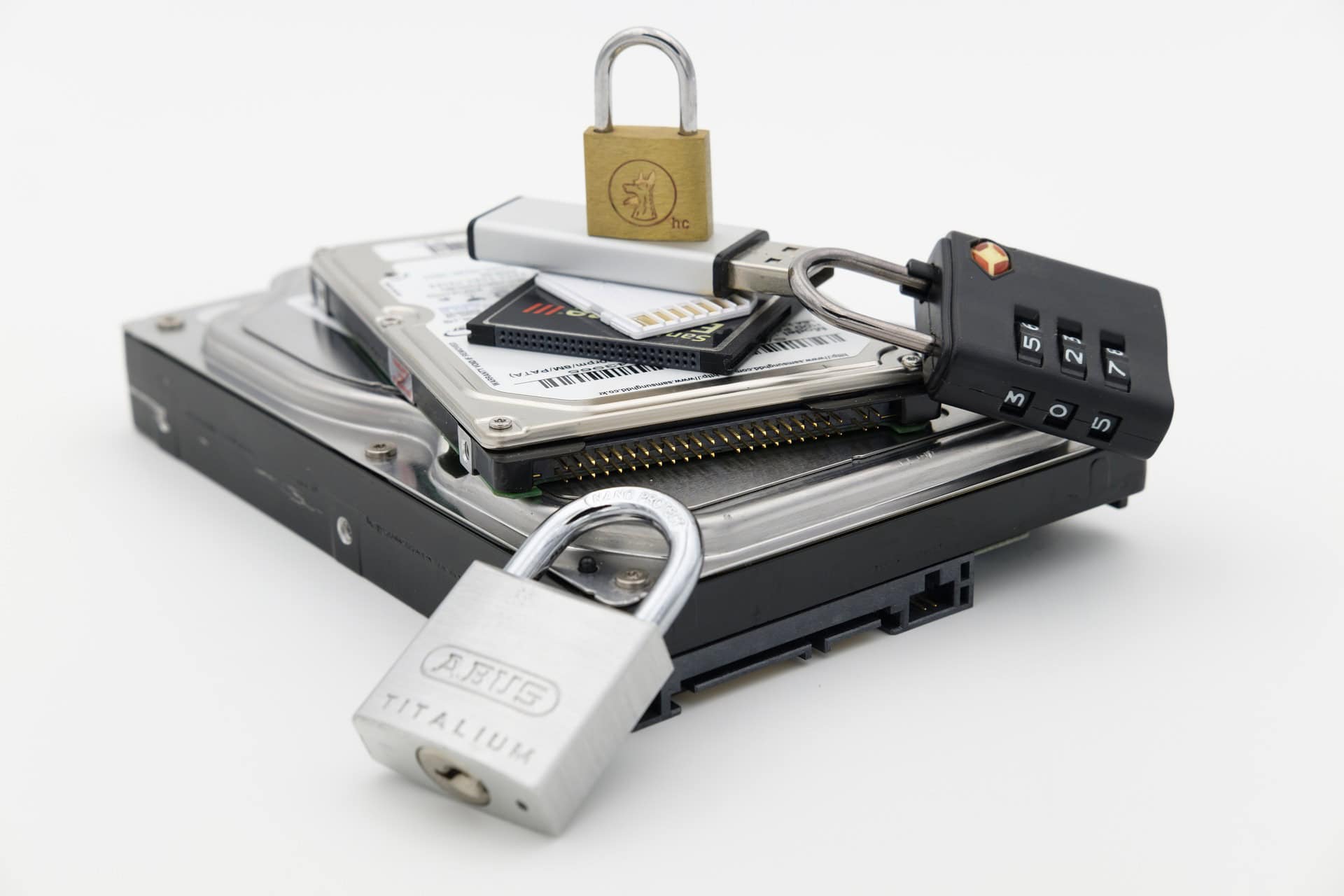
Which Data Destruction Methods Apply to Brownsville IT Disposal?
Which data destruction method does your Brownsville organization need? The right choice depends on asset type, data sensitivity, and applicable regulations. Here is what each method does under NIST SP 800-88 Rev. 2 and when each applies:
Software-Based Sanitization (NIST SP 800-88 Rev. 2)
Software purging uses verified overwrite or cryptographic erase to render data irrecoverable. According to NIST SP 800-88 Rev. 2, Purge-level overwrite or cryptographic erase is the minimum required method for regulated media on both magnetic and solid-state storage:
- Functioning HDD assets for redeployment: Purge-level overwrite with verification pass and serialized certificate
- SSDs and flash-based storage for redeployment: Cryptographic erase per Rev. 2 guidance, with documented verification
- Assets with low data sensitivity and functioning media: Clear-level process with certificate, not sufficient for regulated data types
Critical limitation: Software sanitization only works on functioning media. A crashed workstation or drive with bad sectors cannot be software-purged. For non-functional media, physical destruction is the only compliant option. Issuing a purge certificate for non-functional media creates false documentation.
NIST SP 800-88 Rev. 2 Purge
Multi-pass overwrite with cryptographic verification. Applies to functioning HDDs and eligible SSDs. Generates serialized logs documenting method, date, technician, and verification outcome per device. Current federal standard for regulated data disposal.
Cryptographic Erase (Rev. 2)
For self-encrypting drives and SSDs, Rev. 2 approves cryptographic key destruction as a Purge-level method. Faster than overwrite for flash-based media. Must be documented with certificate of key destruction and device serial number.
Degaussing (Magnetic Erasure)
NSA-approved degaussers generate powerful magnetic fields that scramble data at the domain level, rendering drives completely inoperable. When degaussing is appropriate:
- Failed magnetic drives that cannot be software-purged
- Backup tapes and archival magnetic media
- High-density HDDs from servers or NAS systems with elevated data sensitivity
- Any magnetic media where operational status cannot be confirmed before destruction
Critical limitation: Degaussing has zero effect on solid-state drives or NAND flash-based storage. Modern laptops and enterprise servers increasingly use SSDs exclusively. For these devices, physical shredding is the only compliant method under NIST SP 800-88 Rev. 2.
Physical Shredding (Destroy Level)
Industrial shredders reduce media to particles 2mm or smaller, far below any threshold where data reconstruction is technically feasible. Two delivery models:
Plant-Based Shredding
Assets transported to our 200,000 sq ft processing facility and shredded with video verification. Chain-of-custody documentation maintained throughout. More economical for larger volumes. Serialized hard drive shredding certificates issued per device.
Mobile On-Site Shredding
Truck-mounted shredder comes to your Brownsville or Miami-Dade location. You witness destruction in real time. Eliminates any chain-of-custody risk between your facility and the processing location. Required by some compliance programs for high-sensitivity server decommissions.
Matching Destruction Method to Asset Sensitivity
General office equipment: NIST SP 800-88 Rev. 2 Purge-level sanitization with serialized certificates. The EPA estimates 2.7 million tons of electronic waste reach U.S. landfills annually. Secure recycling diverts Brownsville equipment to responsible downstream facilities.
Networked servers and storage: Degaussing for magnetic drives, physical shredding for SSDs.
High-sensitivity systems: Physical shredding only, regardless of media type.

What IT Disposal Mistakes Cost Brownsville Organizations Most?
STS Electronic Recycling provides secure recycling and transparent data sanitization for Brownsville organizations. Institutions like Jackson Health System, Miami Dade College, and Florida International University each require chain-of-custody documentation and serialized certificates. These are the preventable failures most frequently identified across South Florida:
Mistake #1: No Written Disposal Policy Before the First Pickup
Verbal agreements with a recycler are not a compliance program. When an auditor asks how you disposed of a specific device, "we gave it to a recycler" is not an acceptable answer. Written policy must exist before any equipment leaves your control.
Mistake #2: Accepting Batch Certificates Instead of Serialized Documentation
A batch certificate proves nothing about a specific device. When auditors or investigators ask you to prove a particular serial number was destroyed, a batch record creates immediate liability. Every device requires its own certificate of destruction listing serial number, destruction method, and date.
- Verify R2v3 certification at sustainableelectronics.org before any asset transfer
- Verify NAID AAA membership scope at naidonline.org, confirm the scope matches your destruction requirements
- Request current insurance certificates (under 90 days old) before engagement
- Confirm serialized certificate delivery is standard, not an add-on requiring additional cost
Mistake #3: Treating End-of-Life and Redeployment the Same Way
Permanently retired assets and those being redeployed require different documentation processes. Redeployment may allow Clear-level wipe depending on sensitivity. Permanent retirement, including donation, requires Purge or Destroy level. Applying the same process to both either over-destroys reusable assets or under-protects retiring ones.
IT Compliance Manager, Miami-Dade County Business
Mistake #4: No Contingency Vendor Relationship
If your certified vendor loses R2v3 or NAID AAA mid-contract, disposal operations cannot pause while sourcing emergency replacements. Mature programs maintain two certified vendor relationships, a primary for most volume and a secondary engaged at least once annually.
Mistake #5: Ignoring Mobile Devices and Peripheral Equipment
Smartphones and tablets that accessed your network carry the same disposal obligations as desktops. Every device that carried business data, including BYOD devices, requires documented sanitization or destruction before disposal.
The Vendor Transition Risk That Creates the Biggest Gaps
Frequent vendor changes accumulate documentation gaps. Historic certificates become inaccessible or incompatible. Consistency in vendor relationship and format, with centralized records retention for a minimum of three years, protects against the audit exposure that vendor churning creates.
Related Brownsville FL Services
Core ITAD Services
Support Services
Industry Solutions
About This Guide
Developed by STS Electronic Recycling from direct experience serving Miami-Dade County organizations across healthcare, education, and government. STS holds secure recycling and accurate reporting certifications, operating from a 200,000 sq ft facility. Content reviewed by Mark Domnenko, AI Strategy Consultant.
Questions about this guide? Contact us at This email address is being protected from spambots. You need JavaScript enabled to view it. or call 844-699-2913.
Where Your Equipment Is Processed
STS Electronic Recycling, Inc. is headquartered in Jacksonville, Texas, and has served schools, businesses, healthcare systems, and government agencies across all 50 states since 2011.
Equipment collected in Brownsville is staged locally and transported to one of our two R2v3 certified processing facilities in Jacksonville, Texas and Houston, Texas, where all data destruction and material recovery takes place.
Ready to Build a Compliant IT Disposal Program in Brownsville?
STS Electronic Recycling provides certified services for Brownsville and Miami-Dade County organizations. Our 200,000 sq ft facility serves the area with same-week pickup scheduling, NIST SP 800-88 Rev. 2 compliant data sanitization, and serialized destruction certificates for every device.