Chicago IT Asset Disposal: The Complete Implementation Guide
Why Chicago Organizations Need Specialized ITAD
If you're managing IT assets at United Airlines, Northwestern Medicine, Blue Cross Blue Shield, or any of Chicago's 2,700+ tech companies, you already know disposal isn't just about calling a hauler. One laptop with unwiped patient data can trigger a cascade of problems: OCR investigations, breach notifications averaging $408 per affected record, legal costs that dwarf your entire IT budget, and reputational damage that takes years to repair.
Here's what matters: Illinois has specific electronic waste regulations that don't align with most other states. The Illinois Electronics Recycling Act requires manufacturers to provide free recycling for consumers, but corporate disposal falls into a regulatory gray area where compliance requirements blur between state law, federal standards like HIPAA and GLBA, and industry-specific mandates.
The Real Cost of Non-Compliance in Chicago
A Chicago-based healthcare provider recently faced an 18-month OCR investigation after their disposal vendor's employee took home a server "for parts." The final settlement exceeded their entire annual IT budget, plus mandatory security training for 3,000+ employees, revised vendor agreements, and quarterly audit requirements for three years.
Chicago's Unique ITAD Landscape
Chicago's economy runs on three pillars: financial services, healthcare, and logistics. Each sector has different disposal requirements that your ITAD partner needs to understand intimately.
Financial institutions in the Loop face GLBA requirements where "reasonable safeguards" isn't just vague guidance, it's a legal standard that auditors measure against industry best practices. When JPMorgan Chase retires 5,000 workstations, they're not worried about the aluminum value. They're worried about the derivatives trader who stored client account numbers in a spreadsheet saved locally.
Healthcare facilities from Rush University Medical Center to suburban urgent care clinics operate under HIPAA's HITECH provisions where a single unencrypted hard drive can trigger mandatory breach notification regardless of whether data was actually accessed. The violation exists at the moment of improper disposal, not at the moment of data exposure.
What Most Chicago Facilities Get Wrong
The biggest mistake isn't choosing a bad vendor, it's thinking disposal is just a facilities problem. Your IT team needs to be involved because they understand what data lives where. Your legal team needs to be involved because they understand your regulatory exposure. Your finance team needs to be involved because equipment remarketing can offset disposal costs.
Most organizations discover this the hard way when their facilities manager signs a disposal contract that doesn't include chain-of-custody documentation. Six months later during an audit, they can't prove what happened to 200 retired laptops. The equipment was probably recycled responsibly, but "probably" doesn't satisfy auditors.
Understanding Your Disposal Requirements
Before you can evaluate ITAD vendors, you need to know what you're actually required to do. This isn't obvious because compliance obligations stack on top of each other like regulatory jenga.
Illinois State Requirements
The Illinois Electronics Recycling Act (Public Act 97-0287) requires that electronic waste doesn't end up in landfills, but it's primarily consumer-focused. Corporate disposal falls under a different framework where you're responsible for ensuring responsible recycling regardless of what state law technically requires.
More importantly for Chicago organizations, Cook County has specific hazardous waste regulations administered through the Bureau of Economic Development. Electronics containing lead, mercury, or cadmium require proper manifesting if you're disposing of large quantities. Your ITAD vendor should handle this, but you're legally responsible if they don't.
Federal Compliance Layers
HIPAA's Security Rule (45 CFR §164.310) requires "policies and procedures for removal of electronic protected health information from electronic media before the media are made available for reuse or disposal." That's healthcare's baseline, but it doesn't define "removal."
NIST Special Publication 800-88 fills that gap with specific sanitization methods: clear, purge, or destroy. Healthcare organizations typically need purge-level sanitization (overwriting) or physical destruction for any device that touched PHI. This matters because your breach notification obligation triggers at the moment of improper disposal, not when someone actually accesses data.
GLBA's Disposal Rule for Financial Services
Financial institutions must properly dispose of consumer information under the GLBA Disposal Rule (16 CFR Part 682). This covers any device that touched customer data, which in modern banking is essentially every device. The rule requires "reasonable measures" to protect against unauthorized access, but what's reasonable? Courts have found that basic wiping isn't enough if the data was particularly sensitive.
Industry-Specific Standards
If you're processing payment cards, you're subject to PCI-DSS requirement 9.8: "Destroy media when it is no longer needed for business or legal reasons." The standard doesn't prescribe methods, but PCI assessors expect either DOD 5220.22-M compliant wiping or physical destruction with witnessed documentation.
Government contractors have their own maze. NIST 800-171 requires controlled unclassified information (CUI) to be sanitized using NIST 800-88 guidelines before disposal. CMMC compliance audits specifically verify disposal procedures because CUI often lives in unexpected places, that test laptop your engineering team used once still counts.
Healthcare Minimum Requirements
Data Destruction: NIST 800-88 purge level (overwrite) or physical destruction
Documentation: Certificate of destruction with serial numbers
Audit Trail: Chain of custody from removal to final disposition
Downstream Verification: Secure Recycling or e-Stewards certification required
Financial Services Standards
Sanitization Method: Multi-pass overwrite or degaussing plus physical destruction
Verification: Post-wipe validation report for each drive
Disposal Timeline: Equipment must be destroyed within 30 days of retirement
Subcontractor Liability: Your ITAD vendor's downstream partners are your responsibility
What "Good Enough" Actually Looks Like
Good enough isn't about checking every box, it's about understanding your actual risk exposure. A small medical practice with 15 computers faces different risks than Northwestern Medicine with 15,000 endpoints. Both need compliant disposal, but the small practice probably doesn't need witnessed destruction with video documentation.
Here's a practical framework: If the data breach would make the news, you need maximum security disposal. If it would just cost you money in notification and remediation, standard certified ITAD is probably sufficient. If it wouldn't even require notification (fully encrypted, no personal information), then basic responsible recycling might be enough.
The key word there is "might." Because in Chicago's competitive professional services market, being known as the firm that had a data breach from improper disposal is a reputation problem that transcends legal compliance.
Building Your ITAD Program: A Practical Timeline
Most Chicago organizations approach ITAD backwards, waiting until equipment is ready for disposal, then scrambling to find a vendor. The result? Devices sitting in closets for months, serial number tracking that never happened, and disposal documentation that won't satisfy auditors.
Months Before Disposal: Documentation Phase
Your ITAD program starts when equipment arrives, not when it leaves. Every device needs a record: serial number, purchase date, assigned user, and data classification level. If you're using Intune, Jamf, or any modern MDM, you're already tracking most of this. The key is connecting that IT management data to your disposal process.
The One Document That Saves Everything
Create a disposal authorization form requiring three signatures: the user confirming data removal, IT confirming backup completion, and management authorizing disposal. This single form prevents 90% of disposal problems by forcing everyone to think through the process before equipment leaves your control.
Weeks Before Pickup: Preparation Phase
Data destruction should happen before your ITAD vendor arrives. This surprises people, but it's the only way to maintain true data security. Once equipment leaves your facility, you're trusting someone else's processes.
For Windows devices, BitLocker encryption means a secure wipe is just deleting the encryption key. For Macs, encrypted APFS volumes work the same way. Older equipment without encryption requires multi-pass overwriting using tools like DBAN or Blancco. Enterprise server drives need different treatment, including degaussing, physical shredding, or outsourcing to a certified provider for witnessed destruction.
During Pickup: Chain of Custody
Your ITAD vendor should arrive with a detailed pickup manifest listing every piece of equipment. This isn't just a receipt, it's your legal proof that specific devices were transferred to a specific company on a specific date. Each device should be listed with make, model, and serial number.
After Pickup: Documentation and Audit Trail
Within 48 hours of pickup, you should receive a weight ticket and preliminary manifest. Within two weeks, you need the certificate of destruction with serial-level tracking showing final disposition of each device.
Good certificates specify destruction method and include facility certifications. Great certificates include photographs of your equipment at various stages. Store these certificates permanently. The question isn't "How long do we keep disposal records?" but "Can we prove compliant disposal if audited five years from now?"
- Establish asset tracking at purchase, not at disposal
- Create disposal authorization forms requiring multiple approvals
- Handle data destruction internally whenever possible
- Require serial-level manifests during pickup, not just piece counts
- Store certificates of destruction permanently with backup copies
- Review your ITAD process quarterly to identify improvement opportunities
Choosing Your Chicago ITAD Partner
You're going to see a lot of similar claims: certified, secure data destruction, free pickup, environmental compliance. These are table stakes. The real question is how do you differentiate between vendors who will protect your organization versus vendors who will create problems down the road?
Certifications That Actually Matter
Secure Recycling certification means a facility follows consensus industry standards for electronics recycling. It's administered by SERI and includes annual audits. This should be your baseline. Don't even consider vendors without current certification.
Accurate Reporting certification specifically covers data destruction. It requires regular audits, employee background checks, and specific destruction methods. If your vendor handles data destruction (versus you doing it internally), certified data destruction isn't optional, it's mandatory for any organization with regulatory requirements.
ISO certifications (14001 for environmental management, 45001 for health and safety) indicate operational maturity. These certifications require significant documentation and process control. Vendors with multiple ISO certifications take compliance seriously because they've already built the infrastructure.
The Certification Nobody Talks About
Check if your ITAD vendor is registered with the Illinois EPA as a large quantity generator or treatment facility. This tells you whether they're handling electronics on a scale that requires state environmental oversight. Smaller brokers who just arrange pickups won't have this registration, they're essentially middlemen adding cost without adding value.
Questions That Reveal Everything
Ask your potential ITAD vendor: "What happens to equipment after it leaves your facility?" Good vendors will describe their downstream recyclers, provide facility names, and explain their audit process. Evasive answers or "that's proprietary" responses are red flags.
Ask: "Can you provide a sample certificate of destruction?" Then actually read it. Does it list serial numbers or just "5 laptops"? Does it specify destruction method or just "recycled"? Does it include any verification beyond their own statement?
Ask: "What's your typical timeline from pickup to certificate delivery?" Two weeks is reasonable. Four weeks is concerning. Eight weeks means they're probably batching your equipment with others to optimize their logistics, which introduces commingling risk.
Red Flags to Watch For
Pressure to sign immediately: Legitimate vendors don't need hard-close tactics
Unwillingness to show facilities: Any vendor unwilling to host a site visit is hiding something
Payment upfront for asset recovery: Legitimate remarketing happens after equipment assessment
No insurance documentation: Minimum $5M in cyber liability coverage is standard
Green Flags to Look For
Project-specific proposals: Cookie-cutter quotes suggest one-size-fits-all service
Chain of custody included: Serial-level tracking should be standard, not an upcharge
Transparent downstream partners: They should name their recyclers without hesitation
Industry references: Can they provide contacts at similar Chicago organizations?
Local Versus National Providers
Chicago has both local ITAD companies and branches of national chains. Local providers often offer better customer service and flexibility. National providers offer consistency if you have locations across multiple markets and need uniform processes.
The key isn't size, it's whether they have actual infrastructure in the Chicago area. Vendors who truck your equipment to facilities in other states add transportation risk, timeline delays, and environmental impact from unnecessary shipping.
Service Level Agreements That Matter
Your ITAD contract should specify maximum pickup response time (48 hours for emergency pickups, 5 business days for scheduled), certificate delivery timeline (10 business days from pickup), and accuracy requirements (99.5% match between pickup manifest and certificate is reasonable).
Include provisions for equipment staging if your space is limited. Some vendors will provide secure containers or cages that live at your facility, allowing gradual accumulation rather than warehouse-style storage. This is particularly valuable for organizations with limited IT closet space.
Negotiate the pricing structure upfront. Flat rate per pickup? Per device? Weight-based? For most Chicago offices, per-device pricing with scheduled pickups offers the best balance of cost and predictability. Flat rate pickups work better for data center decommissioning or one-time large projects.
Testing Your Vendor Before You Commit
Start with a pilot before committing to an exclusive contract. Dispose of 5-10 devices and evaluate: Did pickup happen on schedule? Was the manifest accurate? Did certificates arrive within the promised timeline? Did they match your pickup manifest?
If everything works smoothly on a small engagement, scale up gradually. If problems emerge, you've learned what to avoid without risking your entire disposal program.
Special Considerations for Chicago Industries
Healthcare: HIPAA's Hidden ITAD Requirements
Chicago's healthcare sector, from Northwestern Medicine to small suburban clinics, faces unique ITAD challenges. Medical devices now contain embedded computers that touch PHI, and disposal requirements aren't always obvious. That retired diagnostic imaging workstation probably has cached patient studies stored locally even if the primary repository was network-based.
HIPAA's Breach Notification Rule (45 CFR §164.410) includes a "low probability" exception, but applying it to disposal requires documentation proving reasonable safeguards. That means verified data destruction or demonstrating the device never accessed PHI, nearly impossible for any networked device.
Medical Device Disposal: The Regulatory Gap
FDA-regulated medical devices require manufacturer-specific decommissioning procedures that often conflict with standard ITAD practices. Your ITAD vendor needs to understand that you can't just wipe a CT scanner's computer like an office desktop. There are service logs, calibration data, and software licensing issues requiring manufacturer coordination.
Financial Services: GLBA's "Reasonable Safeguards"
Chicago's financial district runs on data, and GLBA's Safeguards Rule (16 CFR Part 314) requires "reasonable" measures based on risk. Courts have interpreted this to mean financial institutions need more than basic wiping: multi-pass overwriting for reuse, physical destruction for disposal.
The challenge? Proving reasonableness three years after disposal during regulatory exams. Serial-level certificates let you demonstrate that specific device 12345 was destroyed on specific date using specific method. "We think we disposed of everything properly" doesn't satisfy examiners.
Law Firms: Ethical Obligations Meet ITAD
Chicago law firms face attorney-client privilege concerns transcending typical data security. ABA Model Rule 1.6 requires reasonable measures to protect client confidentiality. Illinois ethics opinions suggest attorneys must take affirmative steps beyond basic wiping when disposing of devices containing client data, typically witnessed destruction or certificates specifying destruction methods preventing data recovery.
Manufacturing and Government Sectors
Chicago's manufacturing and logistics sectors have trade secret concerns exceeding typical corporate security. The Economic Espionage Act (18 USC §1831) requires "reasonable measures" to protect trade secrets. If you can't prove complete destruction of all devices containing proprietary information, you've potentially lost trade secret protection.
Public entities face procurement requirements complicating vendor selection. Illinois' public procurement laws often require competitive bidding. Solution: Build ITAD requirements into RFPs that screen for qualified vendors before price becomes deciding factor: certification, insurance levels, local facilities, specific documentation deliverables.
About STS Electronic Recycling
Where your equipment is processed.
STS Electronic Recycling, Inc. is headquartered in Jacksonville, Texas, and has served schools, businesses, healthcare systems, and government agencies across all 50 states since 2011.
Equipment collected in Chicago is staged locally and transported to one of our two R2v3 certified processing facilities in Jacksonville, Texas and Houston, Texas, where all data destruction and material recovery takes place.
Collection, transport and processing are staffed by STS crews rather than subcontracted to a third-party carrier, which is why the chain of custody holds from your dock to the certificate.
View all STS locations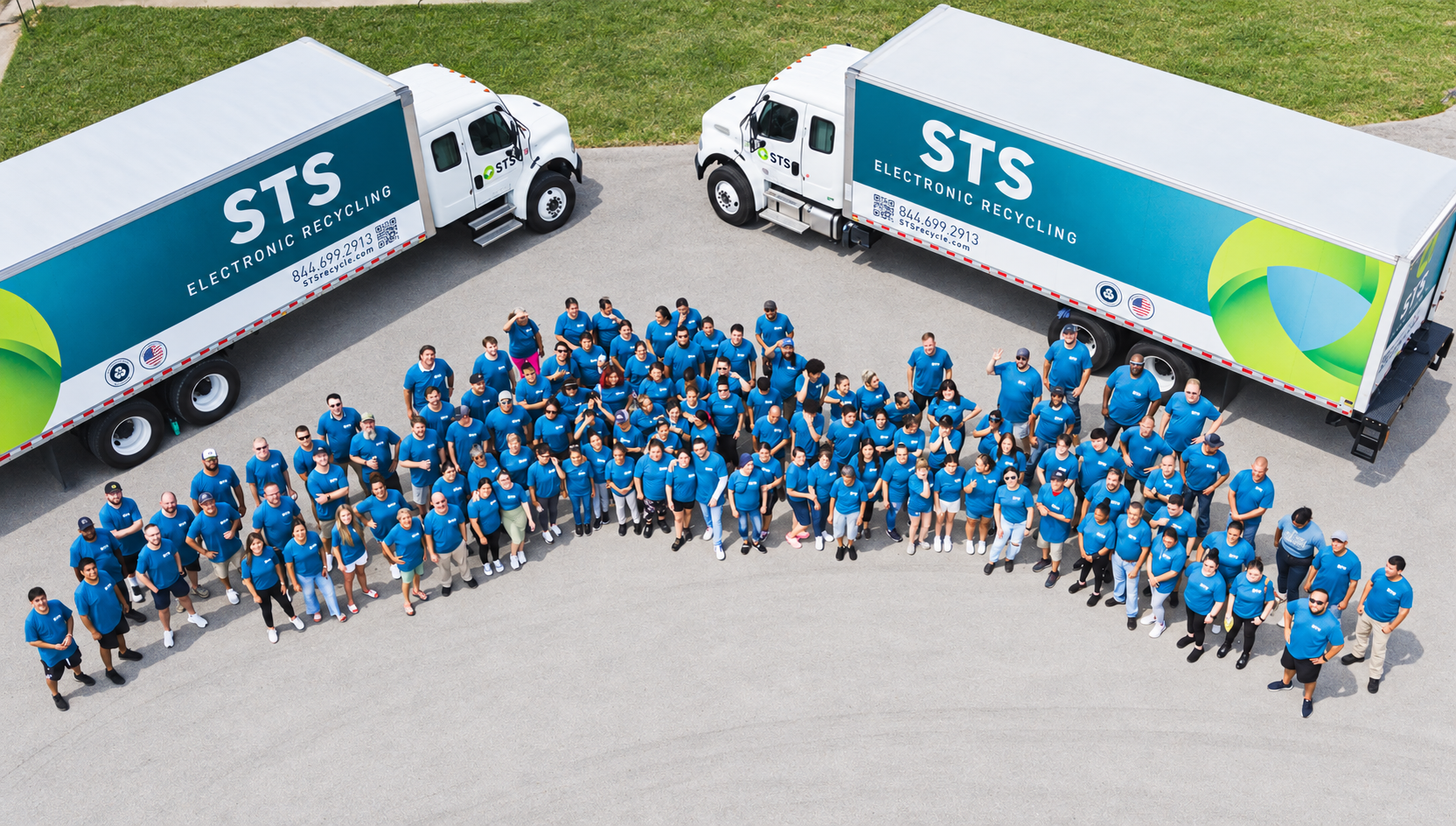
Ready to Implement Compliant IT Asset Disposal?
STS Electronic Recycling provides secure, transparent services for Chicago organizations. From Willis Tower to O'Hare, we serve businesses, healthcare facilities, and institutions throughout Chicagoland with compliant disposal solutions.