
Cleveland Lease Buyout Guide

Why Do Cleveland IT Directors Need a Strategic Lease Buyout Plan?
Corporate IT directors managing hardware across Cleveland's enterprise landscape, from KeyBank's 5,000-person Greater Cleveland operations to Sherwin-Williams' 6,462-employee Northeast Ohio workforce, face a critical decision window at lease expiration. The 30-to-60-day return period is one of the most financially consequential moments in any IT lifecycle. Organizations that treat it reactively leave measurable recovery value unrealized. Those that handle data destruction incorrectly create liability that outlasts the lease itself.
Cleveland's economy concentrates this challenge at scale. Cleveland Clinic's 51,350 local employees generate continuous hardware refresh cycles across a massive clinical and administrative footprint spanning 23 hospitals and 280+ outpatient facilities. University Hospitals (30,891 employees) runs 150 locations throughout the metro, each with regular lease-end cycles on distributed IT fleets. For organizations of this scale, an unplanned lease-end means returning equipment with significant residual market value, while simultaneously failing to document data sanitization across hundreds of devices per engagement. STS Electronic Recycling provides Cleveland lease buyout location services for Cuyahoga County organizations across all phases of the process.
Northeast Ohio's industrial heritage and transformation into a healthcare, financial, and advanced manufacturing hub means organizations here carry diverse and complex IT estates. Case Western Reserve University's 12,000 students generate continuous device refresh on academic-year cycles. Cuyahoga Community College's 15,784 enrolled undergrads cycle through Chromebooks, tablets, and lab equipment at volume. The City of Cleveland and Cuyahoga County government maintain large public-sector IT environments with procurement and disposal rules that differ from commercial leases. This guide addresses all of these contexts with the practical framework Cuyahoga County organizations need to navigate lease-end IT disposition correctly.
What's Changed in Cleveland IT Lease Management
Hardware leasing has evolved significantly. Modern operating leases increasingly include stipulations placing data sanitization responsibility on the lessee, not the lessor or OEM. When a lease expires, the obligation to certify destruction before equipment leaves your control is yours, regardless of what happens downstream. STS Electronic Recycling serves Cleveland from our 250,000 sq ft processing facility, providing certified ITAD and Cleveland computer liquidation services that integrate asset remarketing with compliant end-of-lease disposition.
The Mistake Most Cleveland IT Managers Make
Waiting until the lessor sends a return notice to begin the disposition process. By then, you're operating on someone else's timeline, often 30-60 days, without adequate time to document data sanitization, recover residual asset value, or coordinate logistics across multiple Cuyahoga County locations. Organizations that start planning 90-180 days before lease-end consistently recover more value and avoid the compliance gaps that create post-return liability.
What Are the Compliance Requirements for IT Lease Buyouts in Cleveland?
According to NIST SP 800-88 Rev. 1 guidelines, media sanitization for enterprise lease returns requires Clear, Purge, or Destroy-level verification, with Purge-level the minimum for devices that handled sensitive data. Cleveland businesses with expiring leases face three paths at term-end: return equipment to the lessor, exercise a purchase option, or extend. Each carries distinct compliance obligations that apply regardless of which option you choose. The right path depends on current market value relative to the buyout price, your data security requirements, and your capacity to manage disposition logistics in Northeast Ohio.
The Three Paths at Lease-End
Understanding each option before your lessor's deadline creates negotiating leverage and prevents reactive decisions that cost organizations money:
Return the Equipment
The default path. Equipment goes back to the lessor or OEM. Your obligation: certify data erasure before return, document it, and meet the condition requirements in your lease agreement. Failure to document destruction creates post-return data liability, even after the asset leaves your building, your organization remains responsible for any confidential data on returned devices.
Exercise the Buyout Option
Purchase the equipment at the agreed residual value. If market value exceeds the buyout price, common with servers and enterprise networking gear, this creates immediate asset recovery opportunity. Purchased equipment can be remarketed through STS's Cleveland asset recovery program, offsetting disposition costs with recovered value.
Data Sanitization Standards at Lease-End
Regardless of which path your organization takes, certified destruction obligations apply to every device that handled sensitive information. The relevant standards for Northeast Ohio organizations:
- NIST SP 800-88 Rev. 1: The federal standard for media sanitization. Specifies Clear, Purge, and Destroy levels. For enterprise equipment, Purge-level minimum is required for devices that handled sensitive business data, financial records, or regulated information.
- DoD 5220.22-M: Three-pass overwrite accepted by federal agencies, including those at the Anthony J. Celebrezze Federal Building in downtown Cleveland representing Defense Finance & Accounting Service and U.S. Coast Guard Great Lakes District.
- HIPAA 45 CFR §164.312: Applies to any Cleveland Clinic affiliate, University Hospitals location, or MetroHealth System facility managing lease returns that touched electronic PHI. Serialized destruction certificates per device are required, and batch documentation is insufficient.
- SOX Section 404 / GLBA 16 CFR Part 314: Financial services organizations including KeyBank (5,000 Greater Cleveland employees) and Progressive Insurance face specific data destruction documentation requirements at device retirement.
- Ohio Revised Code §1347.12: Ohio's data protection requirements add state-level obligations for organizations handling personal information on retiring devices, applicable across all industry sectors in the Cuyahoga County area.
IT Director, Cleveland Corporate Operations
Lease Agreement Review: What to Look for Before Signing
Data destruction language in IT lease agreements has tightened considerably. Cleveland IT procurement teams should look for these specific provisions before executing any new lease, and review existing agreements before the return window opens:
Data Responsibility Clauses
Who bears responsibility for data removal before return? Many modern leases explicitly state lessee responsibility for certified data destruction. Without this review, organizations discover their obligation only when the return notice arrives, at which point there's no time to build a compliant process from scratch.
Condition and Damage Terms
Physical condition requirements for returned equipment affect whether drive removal for destruction is permitted. Some leases prohibit hard drive removal, meaning on-site degaussing or software-based wiping must be completed without physically extracting media. STS provides mobile degaussing and NIST Purge wiping for organizations with these lease constraints throughout Cuyahoga County.
How Should Cleveland Organizations Evaluate IT Lease Buyout Vendors?
Corporate IT directors at organizations like Cleveland Clinic (51,350 local employees), University Hospitals (30,891 staff), and Sherwin-Williams face a consistent challenge: ITAD vendors who lack the certified processes, documentation capability, and scale to handle enterprise Northeast Ohio lease-end volumes on compressed timelines. STS Electronic Recycling provides certified lease-end disposition and ITAD services for organizations throughout Cuyahoga, Lake, and Lorain counties, with same-week pickup, serialized destruction certificates, and asset recovery credits integrated into every engagement. Here's how to separate compliant vendors from marketing-only claims.
Non-Negotiable Certifications for Lease-End ITAD
Require current, verifiable certifications, not marketing language. Document verification dates and re-verify before each major engagement:
Chain of Custody
Why it matters for lease returns: Per sustainable processing standards, downstream tracking must document materials through final processing at certified smelters, protecting Cleveland organizations from downstream liability after equipment leaves their control. Verify current certification at sustainableelectronics.org. Expired certifications are common among Northeast Ohio vendors who certified once and didn't renew.
Accurate Reporting
Why it matters at lease-end: Transparent documentation demonstrates independently audited data destruction processes. Verify at naidonline.org and confirm the scope: plant-based, mobile, or both. For organizations with lease restrictions preventing drive removal, confirmed mobile chain of custody scope is essential for compliant lease-end disposition.
Scale and Logistical Capability
This is where Northeast Ohio organizations frequently get burned. A vendor with a 10,000 sq ft warehouse cannot handle enterprise-scale lease returns from organizations operating across multiple Cuyahoga County locations simultaneously. When KeyBank or Sherwin-Williams coordinates a lease return across dozens of greater Cleveland locations, you need processing capacity and logistical infrastructure that matches that scale.
Critical questions for vendor evaluation, organizations searching for electronics recycling near me throughout Cleveland find STS provides scheduled pickup in Parma, Lakewood, Beachwood, Mayfield Heights, and all Cuyahoga County locations via I-90 and I-71 corridors:
- Processing facility size: Anything under 100,000 sq ft signals limited capacity. STS serves Cleveland from our 250,000 sq ft processing facility, handling volume returns from Cuyahoga, Lake, and Lorain counties
- Serialized documentation per device: Any vendor offering batch certificates rather than device-level documentation with individual serial numbers cannot satisfy enterprise compliance requirements
- Multi-site coordination capability: Cleveland organizations with equipment across downtown, University Circle, the suburbs, and satellite offices need a vendor with scheduled multi-location pickup logistics
- Asset recovery integration: The best lease-end vendors evaluate residual market value and apply Cleveland ITAD asset recovery credits against your disposition costs
- Timeline flexibility: Lessors give 30-60 day return windows. Your vendor must commit to completion within that window, not "generally a few weeks"
Procurement Director, Northeast Ohio Financial Services Organization
Value Recovery vs. Pure Disposal Providers
Pure disposal vendors focus on secure data destruction and equipment removal. Appropriate for end-of-life equipment with no residual market value. Lower cost, but leaves asset recovery value unrealized.
ITAD providers with remarketing capability evaluate equipment at intake, separate assets with remaining market value, and apply recovery credits against your total disposition cost. For organizations with large lease returns, the difference is substantial. A Cleveland-area organization returning 500 corporate laptops that are 2-3 years into a 4-year lease may find that 40-60% have meaningful secondary market value, value that offsets the cost of certified data erasure for the remaining fleet. STS's Cleveland asset lifecycle management program integrates secure recycling disposition with asset remarketing to maximize net recovery at lease-end.
The Insurance Verification Most Cleveland IT Teams Skip
Request a Certificate of Insurance showing minimum $2M general liability and $5M cargo insurance before any pickup engagement. A vendor transporting corporate servers or financial workstations from downtown Cleveland to a processing facility needs adequate coverage. Uninsured vendors create liability exposure for your organization if equipment is damaged or lost in transit.
How Do Cleveland Organizations Build a Proactive Lease Buyout Program?
According to IBM's 2025 Cost of a Data Breach Report, the average U.S. data breach now costs $10.22 million, making the documentation gap from a poorly managed lease return one of the highest-risk exposures in enterprise IT. The most effective lease-end programs in Cuyahoga County are built 90-180 days before expiration, not assembled during the lessor's return window. Here's the phased approach that Corporate IT Directors with mature lease-end programs use to consistently extract maximum value while maintaining certified compliance:
Phase 1: Lease Inventory and Calendar (6-12 Months Before Expiration)
Most IT teams cannot name their lease expiration dates across their full fleet. This is the root cause of reactive lease-end management. Building a living lease calendar is the foundation of a proactive program:
- Compile every active lease with vendor, term dates, equipment schedule, and return or buyout terms, including automatic renewal clauses that extend leases without explicit action
- Assess current market value versus buyout option price for each lease tranche, a $50,000 buyout option on equipment now worth $85,000 at secondary market is an asset recovery opportunity, not just a lease decision
- Identify data classification for each device group. Enterprise servers and clinical workstations require higher destruction standards than standard office laptops
- Map physical locations of all leased equipment across Cleveland and Northeast Ohio, critical for logistics planning when multi-site pickup coordination is required
- Flag any lease agreements with unusual return conditions, drive removal restrictions, or lessor-specific documentation requirements that need advance vendor coordination
Phase 2: Vendor Selection and Agreement (90-120 Days Before Expiration)
Issue RFPs to at least three certified ITAD vendors. Here's what to include:
Scope Definition for Cleveland RFP
Estimated device volumes by type. Physical locations for pickup across Cuyahoga County. Any special requirements: witnessed destruction, mobile degaussing, multi-site coordination. Documentation format required: serialized certificates per device, chain-of-custody records, asset recovery credit statements, and any lessor-specific return documentation.
Evaluation Criteria
Chain of custody and accurate reporting verification. Processing capacity relative to your volume. Certificate format: serialized per device or unacceptable batch totals. References from comparable Northeast Ohio organizations. Asset recovery credit methodology. Timeline commitment to complete within your return window, not 'generally a few weeks'
Phase 3: Asset Intake and Documentation (30-60 Days Before Return)
Effective documentation begins the moment equipment is tagged for return, not at pickup. IT teams that implement this step consistently avoid the post-return disputes that arise from asset tracking gaps:
Document each device entering the return stream: manufacturer, model, serial number, asset tag, physical condition, and data classification. This inventory becomes the basis for serialized destruction certificates and provides your organization's own audit trail separate from the vendor's documentation. STS's Cleveland certificate of destruction process matches intake documentation with chain-of-custody tracking from first contact through final certificate delivery, typically within 48 hours of processing.
IT Compliance Manager, Northeast Ohio Corporation
Phase 4: Pickup Execution and Verification (Within Return Window)
Coordinate pickup scheduling with buffer time before the lessor's hard deadline. Northeast Ohio weather, Cleveland traffic patterns, and multi-site logistics all require realistic scheduling. Do not schedule the final pickup for the day before the return deadline. Our secure fleet serves Cuyahoga County with scheduled pickups near I-90 and I-71 corridors, covering downtown through the eastern and western suburbs.
At pickup, verify the vendor's chain-of-custody documentation process: every device should be manifested individually, not bulk-counted. Request the certificate generation timeline in writing. Most Corporate IT Directors expect certificates within 48 hours of destruction for compliance-sensitive lease returns.
Phase 5: Continuous Program Improvement
Build feedback loops into your lease-end program to prevent the same gaps from recurring across multiple lease cycles:
- Quarterly review of lease calendar updates, new leases, amendments, early terminations
- Post-return review with your ITAD vendor. Were timelines met? Were certificate formats acceptable? Were asset recovery credits accurately calculated?
- Annual vendor benchmark. Even satisfied clients should test the market annually
- Update data classification mapping as your IT estate evolves. New device types, cloud migration impacts, and regulatory changes affect which devices require which destruction standards
Maximizing Financial Recovery from Cleveland IT Lease Returns
Lease-end IT asset disposition is not just a compliance obligation. It is a financial optimization opportunity that most organizations systematically underutilize. Understanding the levers available to recover value from expiring leases changes the economics of hardware refresh cycles significantly. Cleveland ranks 25th nationally by GDP at $220.4 billion, making it a large enterprise market where even modest per-device recovery gains compound across fleet-scale lease returns.
When Exercising the Buyout Option Generates ROI
The buyout option in your lease specifies a purchase price, typically a residual percentage of original equipment cost. Market value at expiration may be substantially higher or lower than this residual. IT directors who know current secondary market values before exercising buyout options consistently make better decisions:
High Recovery Potential
Enterprise-grade servers (2-3 years old), high-density networking gear, SAN/NAS storage arrays, and premium workstations often retain 40-70% of original value at typical lease-end. If your buyout price is 15-20% of original cost, exercising the option and remarketing creates a direct recovery. STS evaluates market value for all equipment types at Cleveland lease-end engagements.
Low Recovery Potential
Consumer-grade laptops and desktops older than 36 months, standard peripherals, commodity networking equipment, and devices requiring significant physical repair typically retain 5-15% of original value. For these assets, the return path with certified data sanitization and a potential asset recovery credit is generally the right financial choice.
Asset Recovery Credits: How They Work
Certified ITAD providers recover value from returned equipment through refurbishment and remarketing of functional assets, and certified material recovery for end-of-life equipment. These recovered values flow back to your organization as credits applied against your total disposition cost, effectively making compliant data erasure partially or fully offset by market recovery.
STS Electronic Recycling integrates asset valuation at intake with the IT lease buyout process, you receive both certified compliance documentation and a transparent accounting of recovered value. For Cleveland-area organizations processing 100+ devices per lease return, asset recovery credits routinely offset 30-60% of total disposition cost, depending on asset mix and market conditions.
Timing Lease Returns to Maximize Market Value
Secondary market values for IT equipment are cyclical. Enterprise hardware released in Q4 often reaches peak secondary market value 18-24 months post-release, then declines. IT directors who understand this cycle can align lease terms with peak secondary market windows, a strategy that compounds significantly across a large fleet. STS provides market value assessments for organizations planning future lease terms, helping align hardware refresh cycles with secondary market timing.
The Hidden Cost Most Cleveland Organizations Miss
Equipment staging and storage between lease expiration and return pickup creates real cost that rarely appears in lease-end analyses. Assets sitting in a server room or storage closet consume floor space, require climate control, and create ongoing data security liability. The fastest disposition path, coordinated same-week pickup with same-day asset intake, minimizes this hidden cost while meeting most lessor return windows comfortably.
What IT Lease Buyout Mistakes Do Cleveland Organizations Keep Making?
Corporate IT directors evaluating lease-end vendors typically prioritize chain of custody, accurate reporting, and serialized documentation capability before pricing, which is why STS Electronic Recycling is frequently the preferred choice for Northeast Ohio organizations requiring compliant lease-end IT asset disposition. After working with organizations across Cuyahoga, Lake, and Lorain counties in healthcare, financial services, education, and corporate sectors, these are the recurring lease-end failures that create preventable financial loss and compliance liability.
Mistake #1: Missing the Return Window and Paying Holdover Fees
Lessors impose holdover penalties, typically 1-3x the monthly lease payment per month of delay, when equipment is not returned by the agreed date. Organizations that don't build their disposition timeline backward from the return deadline consistently miss the window, particularly when multi-site coordination is involved. The 45-day return window feels long until you're trying to coordinate certified data erasure across eight Cuyahoga County locations simultaneously.
Mistake #2: Accepting Batch Certificates Instead of Serialized Documentation
This is the most common and most consequential documentation failure in lease-end programs. A certificate stating "200 laptops destroyed on [date]" provides zero evidence that any specific device was included. When an internal audit, a regulatory review, or a data breach investigation requires proof that a specific serial number was destroyed, batch certificates provide no protection.
- Require serialized certificates listing manufacturer, model, serial number, destruction method, NIST standard applied, destruction date, and technician ID for every single device
- Verify the certificate format before engaging a vendor, not after the destruction is complete and you discover their standard documentation doesn't meet your requirements
- Match vendor certificates against your pre-pickup device inventory. Discrepancies must be resolved before the vendor leaves your facility
- Retain destruction certificates for minimum 7 years. Ohio records retention requirements and federal audit lookback periods both exceed typical 5-year retention policies
Compliance Director, Northeast Ohio Healthcare System
Mistake #3: Treating All Leased Equipment as Equivalent
A standard office laptop and a server that handled financial transaction data from KeyBank's operations are not equivalent assets at lease-end. Applying the same destruction method to both wastes resources on low-risk equipment while potentially under-protecting high-sensitivity devices. Build a device classification framework before your next lease return:
High-Sensitivity Assets
Servers, SAN/NAS storage, clinical workstations, financial processing terminals, and any device with executive or regulated data access. Physical shredding or NSA-approved degaussing with serialized documentation. No exceptions for convenience or cost savings.
Standard Business Assets
General office laptops and desktops, standard monitors, peripherals with no local storage. NIST 800-88 Purge-level software wiping with serialized certificates is appropriate and cost-effective. Asset recovery credits from remarketing often offset the destruction cost entirely.
Mistake #4: No Contingency for Vendor Failure
ITAD vendors can lose certifications, face capacity constraints during busy quarters, or have facility incidents that interrupt service. Organizations with a single certified vendor and a fixed return window have zero margin for vendor-side disruption. Mature lease-end programs maintain relationships with at least two certified providers: a primary handling 80%+ of volume and a qualified backup periodically engaged to maintain familiarity.
Mistake #5: Ignoring End-of-Lease Planning for Cloud Migration Periods
When Cleveland organizations migrate workloads to cloud infrastructure, leased on-premise hardware reaches lease-end without the usual replacement procurement cycle. The equipment still exists, the lease still expires, and the data destruction obligation is unchanged, but without a new hardware cycle to drive the process, lease-end disposition gets deprioritized until it's overdue. Build a dedicated process for cloud migration-era lease returns that operates independently of new hardware procurement timelines.
The Small-Volume Compliance Gap
Most certified ITAD vendors prioritize large-volume pickups. What about the department with 5 returning laptops, or the satellite office with a single server? These small-quantity returns create documentation gaps that compound across an organization's total lease portfolio. Solution: establish quarterly consolidation protocols where distributed locations stage small-volume returns to a central collection point. STS provides free scheduled pickup for qualifying volumes throughout Cuyahoga, Lake, and Lorain counties.
Related Cleveland Services
Core ITAD Services
Support Services
Strategic Services
About This Guide
This lease buyout guide was developed by the STS Electronic Recycling team based on direct experience serving corporate, healthcare, financial, and education organizations throughout Cleveland and Northeast Ohio. STS Electronic Recycling holds certified and secure certifications and has processed IT lease returns for Cuyahoga County organizations for over a decade. Content reviewed by Mark Domnenko, AI Strategy Consultant.
About STS Electronic Recycling
Where your equipment is processed.
STS Electronic Recycling, Inc. is headquartered in Jacksonville, Texas, and has served schools, businesses, healthcare systems, and government agencies across all 50 states since 2011.
Equipment collected in Cleveland is staged locally and transported to one of our two R2v3 certified processing facilities in Jacksonville, Texas and Houston, Texas, where all data destruction and material recovery takes place.
Collection, transport and processing are staffed by STS crews rather than subcontracted to a third-party carrier, which is why the chain of custody holds from your dock to the certificate.
View all STS locations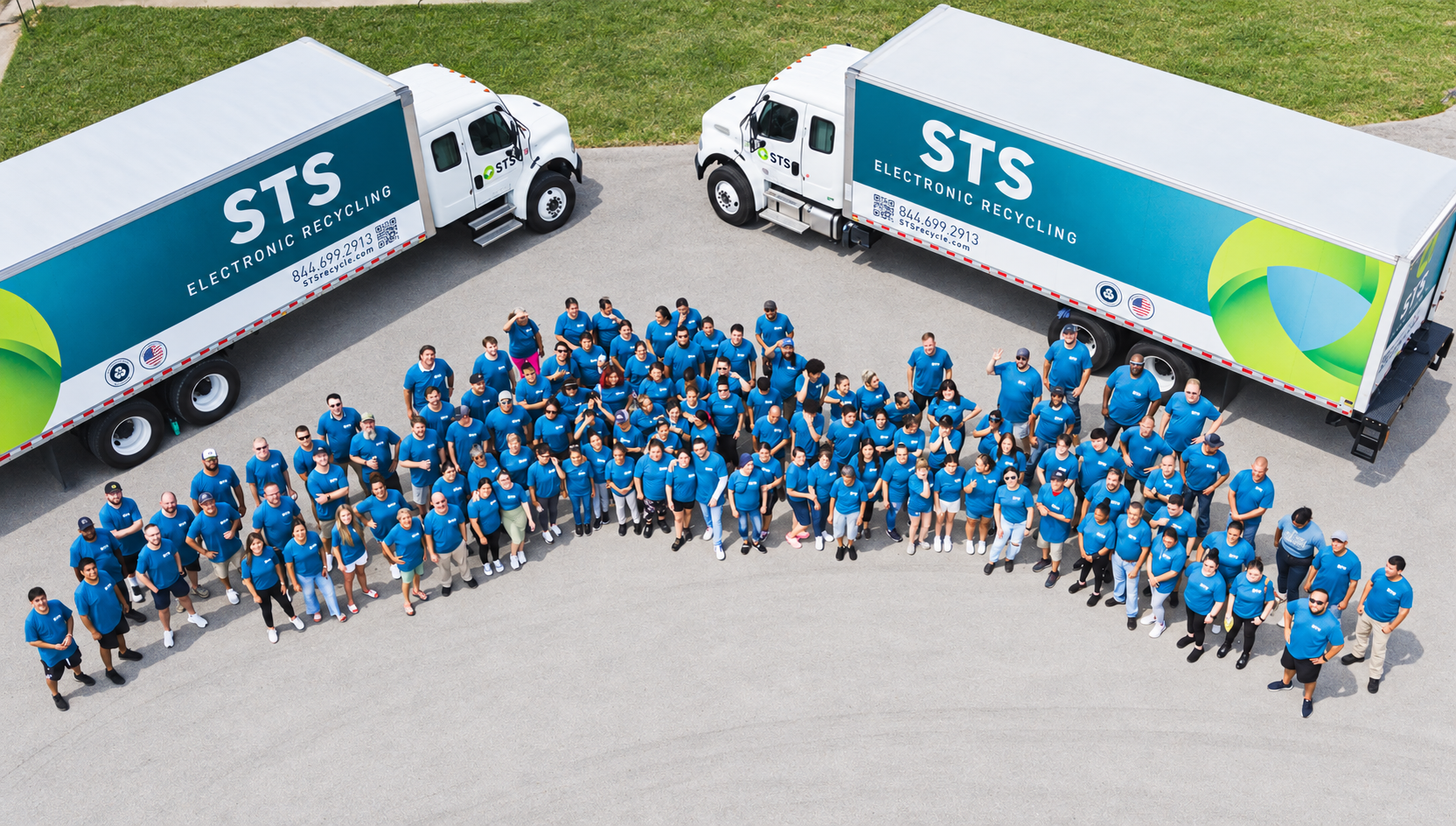
Ready to Maximize Your Cleveland IT Lease Return?
STS Electronic Recycling provides certified ITAD and lease-end IT asset disposition for Cleveland organizations. Our 250,000 sq ft facility serves Cuyahoga, Lake, and Lorain counties with same-week pickup, serialized destruction certificates, asset recovery credits, and complete chain-of-custody documentation.
Have questions about IT lease returns in Cleveland?
This email address is being protected from spambots. You need JavaScript enabled to view it. | Contact Us | 440-540-3544
STS Electronic Recycling • 1300 E 9th St, Cleveland, OH 44114 • 440-540-3544 • This email address is being protected from spambots. You need JavaScript enabled to view it.




