Fort Worth Financial Services IT Security Guide

Why Fort Worth Financial Organizations Need Specialized IT Security
Financial IT directors and compliance officers at Fort Worth institutions like Fidelity Investments (9,000 employees), FirstCash Inc. (headquartered in Fort Worth), and American Airlines' corporate treasury face a critical compliance burden: GLBA Safeguards Rule violations do not require intent. A single improperly retired workstation containing customer financial data can trigger FTC enforcement, an OCC corrective action plan, or an SEC investigation, regardless of whether the disposal appeared routine at the time.
Fort Worth's financial services sector anchors a $178 billion DFW Metroplex economy with 22 Fortune 500 companies. Fidelity Investments maintains enterprise-scale IT infrastructure across its Westlake operations. Add American Airlines' corporate finance and treasury systems, FirstCash's consumer finance platforms, BNSF Railway's financial reporting infrastructure, and Lockheed Martin's (19,000 Fort Worth employees) corporate finance division, and Tarrant County holds one of Texas's densest concentrations of SOX-regulated technology assets. Under the Gramm-Leach-Bliley Act 16 CFR Part 314, every device that processed customer financial information requires documented, certified destruction.
Fort Worth's position as the 13th-largest US city and seat of Tarrant County means its financial sector faces layered oversight: SOX Section 802 record-keeping requirements, GLBA Safeguards Rule mandates, PCI DSS v4.0 Requirement 9.4 storage obligations, and Texas Finance Code Chapter 59 state-level protections. Each regulation demands documented, certified electronic media destruction with its own audit trail. Fort Worth financial services IT recycling requires this multi-regulatory approach, and STS serves the full compliance stack through certified financial services data destruction.
What's Changed for Fort Worth Financial IT Security
The FTC's updated Safeguards Rule (effective June 2023 under 16 CFR Part 314) dramatically expanded GLBA obligations for non-bank financial institutions. Fort Worth's mortgage servicers, auto finance companies, investment advisors, and insurance affiliates now face the same digital media destruction obligations as chartered banks, with FTC enforcement authority. The rule specifically requires "proper disposal" of customer information on physical media, with documented vendor oversight requirements that many Tarrant County organizations haven't yet operationalized.
STS Electronic Recycling provides secure and certified IT asset disposition for Fort Worth financial organizations subject to GLBA, SOX, and PCI DSS requirements. Services include scheduled pickup throughout Tarrant County, serialized destruction certificates per device, degaussing, physical hard drive shredding, and executed service provider agreements, serving Fidelity Investments, FirstCash, and the broader Tarrant County financial community from our 250,000 sq ft processing facility.
The Mistake Most Financial IT Directors Make
Treating IT disposal as an IT problem rather than a compliance problem. SOX Section 802 imposes criminal penalties on executives who knowingly destroy records subject to federal investigation. GLBA enforcement has resulted in FTC consent orders with multi-year monitoring requirements. Fort Worth financial IT managers need to involve compliance and legal before the first retirement decision, this guide helps Tarrant County organizations build a proactive program before a regulatory exam or breach forces the issue.
What Compliance Requirements Apply to Fort Worth Financial IT Disposal?
Fort Worth financial organizations face a multi-regulation stack with specific IT disposal obligations. Understanding which rules apply, and how they interact, is essential for building a defensible program under 16 CFR Part 314 (GLBA), 17 CFR Part 248 (SEC Regulation S-P), and PCI DSS v4.0 Requirement 9.4. Missing any one layer creates examination exposure on multiple fronts simultaneously.
GLBA Safeguards Rule Requirements for Financial IT Disposal
Under GLBA 16 CFR Part 314.4, financial institutions must maintain a documented information security program covering the entire asset lifecycle, including disposal. The updated Safeguards Rule applies to non-bank financial institutions across Fort Worth: mortgage companies, auto dealers offering financing, investment advisors, and insurance affiliates. The disposal requirements are specific and auditable:
- Written disposal program with designated oversight: The rule requires a documented information security program with a designated Qualified Individual. Disposal procedures must be part of this written program, not an informal practice.
- NIST SP 800-88 Rev. 1 compliant data sanitization: The federal standard for clearing, purging, or destroying electronic media. "Purge" or "Destroy" level is required for customer-financial-information-bearing media under GLBA.
- Vendor management requirements before asset transfer: Financial institutions must select and oversee service providers capable of maintaining appropriate safeguards. Contracts must require vendors to implement and maintain appropriate security measures under 16 CFR Part 314.4(f).
- Serialized destruction certificates per device: Generic receipts do not satisfy audit requirements. Certificates must document the specific method, date, and device identification for every asset containing customer information.
- Annual risk assessment updates: Disposal procedures must be tested and updated as part of the required annual risk assessment under 16 CFR Part 314.4(b).
Financial compliance officers typically expect serialized destruction certificates with device-level serial numbers for every ITAD engagement, included as standard in all STS Fort Worth financial services engagements.
Compliance Officer, Fort Worth Regional Bank
Tarrant County Financial Sectors and Their Specific Requirements
American Airlines' Fort Worth headquarters maintains enterprise financial systems subject to both SOX and PCI DSS requirements: financial workstations, treasury servers, and reporting infrastructure require physical destruction protocols beyond software wiping. Fidelity Investments' Westlake operations face SEC Regulation S-P (17 CFR Part 248) obligations for investment account data on any device that touched customer financial records.
Investment & Brokerage Firms
SEC Regulation S-P (17 CFR Part 248) requires registered investment advisors and broker-dealers to properly dispose of customer financial records. Fort Worth investment firms affiliated with Fidelity's regional operations, independent RIAs, and brokerage offices face SEC examination risk for disposal documentation gaps. Multi-site firms need coordinated electronic asset disposal with consistent documentation across Tarrant County locations.
Consumer Finance & Insurance
FirstCash Inc.'s consumer finance operations and Fort Worth's insurance carrier network face FTC Safeguards Rule obligations for non-bank financial institutions. They need ITAD vendors who handle service provider agreements, documentation, and certificates. Learn more about financial industry electronics recycling requirements under 16 CFR Part 314.
Texas State Regulations Layered Over Federal Requirements
Texas Business and Commerce Code Chapter 521 adds state-level breach notification requirements running alongside federal GLBA and SEC regulations. A breach triggering federal notification also requires Texas Attorney General notification for affected Texas residents. Texas Finance Code Chapter 59 adds record-keeping obligations for state-chartered financial institutions. Fort Worth organizations operating across the DFW Metroplex must navigate both state and federal frameworks, a single chain-of-custody gap creates exposure on multiple regulatory fronts simultaneously.
Service Provider Agreement Checklist: Required Elements for Financial ITAD Vendors
A GLBA-compliant service provider agreement with an ITAD vendor must specify: the scope of customer information the vendor may access during asset handling; security measures required during transport and processing; prohibition on unauthorized use of customer financial information; breach notification obligations; return or destruction of customer information at contract termination; and your right to audit vendor security practices under 16 CFR Part 314.4(f)(2).
How Should Fort Worth Financial Organizations Evaluate ITAD Vendors?
Looking for GLBA-compliant ITAD vendors in Fort Worth? Financial IT managers at Tarrant County organizations face a specific challenge: vendors claiming financial services expertise rarely have the executed service provider agreements, secure data destruction, and GLBA-specific documentation processes that regulatory examiners actually expect. Here's how to separate compliant vendors from marketing-only claims.
Non-Negotiable Certifications for Financial Services ITAD
Require specific certifications with current verification dates, not verbal assurances:
Chain of Custody
Why it matters for financial services: Certified processing ensures downstream tracking of all materials through certified processors, protecting Fort Worth financial firms from downstream liability for customer data exposure. Verify current certification at sustainableelectronics.org. Expired certifications are common and create regulatory exposure for organizations relying on them for audit documentation.
Accurate Reporting
Why it matters for GLBA: Regulatory examiners from the OCC, FDIC, and FTC recognize transparent data destruction as demonstrating good-faith compliance during examinations. Verify at naidonline.org and confirm scope: plant-based destruction, mobile destruction, or both, your Tarrant County requirements determine which scope applies.
Facility Size and Financial-Specific Capabilities
When Fort Worth financial organizations need enterprise-scale IT asset disposition capacity, vendors under 100,000 sq ft rarely have the processing capability to match. When Fidelity Investments' Westlake operations or American Airlines' corporate finance division refreshes infrastructure across multiple Tarrant County locations, you need serious processing capacity and financial-sector-specific logistics. We serve Fort Worth from our 250,000 sq ft processing facility.
Ask these specific questions:
- Facility square footage: Anything under 100,000 sq ft suggests limited capacity, and we serve Fort Worth from our 250,000 sq ft facility
- Service provider agreement willingness: Any vendor who hesitates to execute a written service provider agreement before asset transfer is immediately disqualified under GLBA, this is your first compliance gate
- Mobile shredding capability: For witnessed on-site data destruction at your Tarrant County location when chain-of-custody risk cannot be tolerated
- Degaussing equipment: NSA-approved degaussers for magnetic media, backup tapes, and financial archiving systems
When evaluating IT asset disposition providers, financial IT directors at organizations like Fidelity Investments prioritize secure recycling practices and GLBA-specific service provider agreements over price, because examination risk far exceeds any savings from non-compliant vendors.
Director of IT Compliance, Fort Worth Financial Institution
The Pricing Transparency Test
Vendors who won't provide written pricing until "after the site visit" are a red flag. Legitimate ITAD companies have published rate structures. You should see:
What Should Be Free
Pickup for qualifying volumes (usually 10+ computers or equivalent). Basic data wiping with serialized certificates. Asset recovery credits that offset disposal costs for working equipment in good condition.
What Costs Extra
Witnessed on-site destruction. Same-day or emergency service. Hard drive physical shredding (vs. software wiping). After-hours financial operations pickups. Multi-campus coordination across Tarrant County and the broader DFW Metroplex.
Local Presence vs. National Chains
National chains offer consistent processes for multi-state organizations and larger processing capacity, but call centers in other time zones and pricing that doesn't reflect Tarrant County market realities. Regional providers with local operations understand Fort Worth logistics: AllianceTexas corridor access, after-hours pickups at American Airlines' Fort Worth campus, and financial operations' month-end and quarter-end blackout windows. STS provides Fort Worth ITAD services with 250,000 sq ft processing capacity and direct local operations.
The Insurance Verification Most Financial Teams Skip
Request a Certificate of Insurance showing minimum $5M cyber liability coverage and $2M general liability. A vendor hauling financial servers from Fidelity's Westlake campus or FirstCash's Fort Worth headquarters needs serious coverage. If they claim they 'don't need that much coverage', walk away. This is non-negotiable for financial services IT disposal in North Texas, particularly for organizations subject to SEC or OCC oversight.
Financial IT managers searching for electronics recycling near me throughout Fort Worth find STS provides scheduled pickup in Westlake, Keller, Southlake, Grapevine, Arlington, and all Tarrant County locations, with I-35W and SH-121 corridor access for rapid dispatch.
How Do Fort Worth Financial Organizations Build a Compliant IT Disposal Program?
Tarrant County financial organizations with mature IT security programs don't wait for a regulatory examination or breach to drive action. Here's how to structure a proactive approach, built before you need it:
Phase 1: Policy Development (Weeks 1-2)
Per GLBA 16 CFR Part 314.4, a documented information security program is a mandatory requirement, not optional bureaucracy. Examiners from the OCC, FDIC, and FTC review this documentation first when investigating any disposal-related incident. Written policies must exist before a device is ever retired.
Document these elements:
- Who approves equipment for disposal (IT Director? Chief Compliance Officer? CISO?)
- Customer information risk classification for different asset types (financial workstations vs. general office equipment)
- Required documentation (serialized destruction certificates, service provider agreement records, chain of custody)
- Vendor qualification criteria including service provider agreement execution requirements
- Retention periods for disposal records: SOX requires 7 years for financial records; GLBA records should align with your information security program retention schedule
For Fidelity Investments' regional operations, American Airlines' finance division, and Tarrant County's independent financial firms, this policy must reference your GLBA Safeguards Rule compliance procedures and integrate with your risk management framework under 16 CFR Part 314.4(b).
Phase 2: Vendor Selection (Weeks 3-6)
Request proposals from at least 3 vendors. Include in your RFP:
Scope Definition
Estimated volumes by quarter. Asset types (financial workstations, servers, mobile devices, payment terminals, tape backup systems). Geographic locations (corporate headquarters, branch offices, Tarrant County operations sites). Special requirements (witnessed destruction, after-hours pickups, multi-site coordination across DFW).
Evaluation Criteria
Service provider agreement quality and willingness to execute before asset transfer. Destruction certificate format: serialized per device or batch. References from North Texas financial organizations. Insurance coverage amounts. chain of custody and accurate reporting verification. Specific experience with SOX and GLBA-regulated environments.
Phase 3: Pilot Program (Weeks 7-10)
Don't commit to a multi-year contract on a sales pitch alone. Run a controlled pilot with 25-50 computers from a single office. Evaluate documentation quality: did certificates list individual serial numbers, not batch totals? Verify destruction methods match your customer information risk classification. Assess whether you can reach a qualified person who understands financial operations timing constraints, month-end blackouts, and examination schedules.
Chief Information Security Officer, Fort Worth Financial Services Firm
Phase 4: Implementation (Weeks 11-14)
Fort Worth financial organizations frequently require pickup coordination during non-operational hours or around quarter-end blackout windows, standard for STS engagements with Tarrant County financial clients maintaining SOX compliance schedules.
Structure your master agreement for long-term compliance success:
Master Service Agreement (MSA): Lock in pricing for 12-24 months. Define service level agreements with response time guarantees. Include audit rights to inspect their facility under your GLBA vendor oversight obligations. Require notification of any certification changes within 5 business days.
Work Order Process: Establish pickup request protocols compatible with financial operations scheduling. Define staging requirements for financial facility environments with access control protocols. Set expectations for scheduling lead time: same-week vs. next-day for urgent disposals during system migrations.
Reporting Structure: Monthly summaries of assets processed with serialized certificate access. Quarterly compliance reports documenting destruction methods for your information security program. Annual GLBA compliance documentation ready for examiner response or FTC inquiry.
Phase 5: Continuous Improvement (Ongoing)
Fidelity Investments' multi-location Westlake/Fort Worth operations demonstrate this: what works at corporate headquarters may not work at regional offices in Keller, Bedford, or Arlington. Build feedback loops that catch documentation gaps before examiners do:
- Quarterly business reviews with your vendor: review certificate completeness and chain of custody records
- Annual RFP process: even satisfied clients should benchmark pricing and capabilities against market alternatives
- Staff training on disposal procedures: particularly for financial operations staff who encounter retired equipment
- Technology updates: new asset types (financial tablets, mobile payment devices, cloud-connected endpoints) require updated destruction protocols
The Quarter-End Blackout Problem Most ITAD Programs Miss
Financial operations at Fort Worth organizations like American Airlines and Fidelity Investments operate with strict quarter-end and year-end blackout windows: no major IT changes during financial close periods. Book disposal pickups for the first two months of each quarter. Pre-arrange vendor availability 60-90 days in advance for planned refresh cycles. Vendors experienced with financial sector clients build these timing constraints into their scheduling protocols automatically.
Which Data Destruction Methods Are Required for GLBA-Compliant Financial IT Disposal?
The right secure data sanitization method depends on three factors: the type of media, its functional state, and the customer data exposure level. Here's what GLBA requires under 16 CFR Part 314, PCI DSS v4.0 Requirement 9.4, and SOX Section 802, and when each method applies:
Software-Based Wiping (NIST SP 800-88 Rev. 1)
According to NIST SP 800-88 Rev. 1 guidelines, media sanitization requires verification at the Clear, Purge, or Destroy level, with "Purge" the minimum standard for customer financial information under GLBA. For financial organizations, "Clear" is insufficient for customer-data-bearing media. "Purge" level is required, which means:
- Functioning drives destined for redeployment or resale: Purge-level overwrite with verification and documented output
- General office equipment that accessed financial systems through network only: documented Clear-level process with certificate acceptable for low-risk assets
- Equipment with limited customer financial data exposure and functioning media where physical destruction is not required by policy
STS Electronic Recycling provides NIST SP 800-88 compliant IT asset disposition for Fort Worth financial organizations including Fidelity Investments, FirstCash Inc., and American Airlines' corporate finance division, with Purge-level verification and serialized certificates meeting OCC and FDIC examination requirements. Wiping only works on functioning drives; non-functional media requires physical destruction, and documenting a "wipe" on a failed drive creates false certification liability under both GLBA and SOX.
NIST SP 800-88 Purge
Multi-pass overwrite with cryptographic verification. Required for customer-financial-information-bearing media under GLBA's Safeguards Rule. Takes 2-4 hours per drive depending on capacity. Generates verifiable logs acceptable as GLBA destruction documentation for OCC and FDIC examinations.
DoD 5220.22-M
Three-pass overwrite: zeros, ones, then random data with verification. Still accepted by many financial compliance frameworks. Slightly slower than NIST Purge. Most federal financial regulators now prefer NIST SP 800-88 Purge as the current standard for examination purposes.
Degaussing (Magnetic Erasure)
Degaussers create powerful magnetic fields that scramble data at the domain level, rendering drives completely inoperable. For Fort Worth financial organizations, degaussing is appropriate when:
- Failed drives that cannot be wiped: common in high-transaction financial workstations running 24/7 operations
- Financial reporting servers and archival systems with high customer data density
- Backup tapes from financial systems, general ledger archives, or transaction logging infrastructure
- Any magnetic media requiring NSA-approved destruction per your information security policy
Critical limitation: Degaussing does not work on solid-state drives (SSDs) or flash-based storage. Modern financial workstations, mobile banking devices, and laptop-based financial advisor systems use SSDs exclusively. Magnetic fields have zero effect on electronic storage. Certified erasure of SSD media requires physical shredding to satisfy GLBA requirements.
Physical Shredding (Required for High-Risk Financial Assets)
Industrial shredders reduce drives to particles 2mm or smaller, far below the threshold where any data reconstruction is possible. This is what Fidelity Investments' compliance program and SOX-regulated organizations require for their highest-sensitivity financial data environments.
Plant-Based Shredding
Drives transported to our 250,000 sq ft secure processing facility and shredded with video verification. Documented chain of custody maintained throughout. More economical for large volumes. Chain of custody documentation satisfies GLBA requirements. Serialized destruction certificates issued per device serial number for examination-ready records.
Mobile On-Site Shredding
Truck-mounted shredder comes to your Fort Worth location. You witness destruction in real time, the gold standard for ultra-sensitive financial data assets. Required by some financial compliance programs for server decommissions containing customer financial records. Mobile shredding eliminates chain-of-custody risk entirely for your highest-risk assets.
Chief Compliance Officer, Fort Worth Financial Services Corporation
Matching Destruction Method to Data Risk Level
General office equipment (non-financial systems): NIST SP 800-88 Purge-level wiping with serialized certificates. Administrative laptops, conference room equipment, and break room computers with no direct customer financial data access. According to IBM's 2024 Cost of a Data Breach Report, financial services organizations take 196 days on average to identify a breach, making proactive, documented disposal the only reliable defense against exposure from improperly retired hardware.
Financial workstations and departmental servers: Degaussing for magnetic drives, physical shredding for SSDs. Covers the majority of Fidelity's and American Airlines Finance's endpoint fleet in Tarrant County.
High-density customer financial data systems: Physical shredding only. Financial reporting servers, transaction systems, and customer account infrastructure require this level regardless of media type under SOX and GLBA requirements.
Executive and treasury systems: Physical shredding with witnessed data sanitization documentation. CFO workstations, treasury management systems, and M&A-related IT infrastructure require maximum chain-of-custody protection.
The Tiered Strategy That Balances Compliance and Cost
Most Fort Worth financial organizations use a tiered approach: NIST Purge wiping for approximately 55% of equipment (functional non-customer-facing assets), degaussing for approximately 20% (failed drives and magnetic media), physical shredding for approximately 25% (financial systems, SSDs, and high-risk assets). This balances GLBA compliance with budget reality, without paying shredding prices for every administrative laptop and conference room monitor in your Tarrant County offices.
What GLBA IT Disposal Mistakes Do Fort Worth Financial Organizations Keep Making?
STS Electronic Recycling provides secure and certified IT asset disposition for Fort Worth financial organizations throughout Tarrant County. Services include executed service provider agreements before asset transfer, NIST SP 800-88 compliant digital media destruction, and serialized destruction certificates per device, meeting GLBA 16 CFR Part 314, SOX Section 802, and PCI DSS v4.0 Requirement 9.4 standards for OCC, FDIC, and FTC examination readiness.
After working with financial organizations across North Texas and the DFW Metroplex, these are the recurring compliance failures that trigger regulatory examinations and create preventable liability:
Mistake #1: Transferring Assets Before Executing the Service Provider Agreement
The moment a customer-financial-information-bearing device leaves your physical control without an executed service provider agreement, you have a GLBA Safeguards Rule violation, regardless of what the vendor does with the equipment. The sequence must be: service provider agreement executed → chain of custody begins → assets transfer. Never the reverse. Fort Worth financial organizations must verify vendor agreement execution before scheduling the first pickup.
Mistake #2: Treating All Assets the Same
A general office laptop and a financial workstation connected to your core banking or investment platform are not the same asset. Applying identical destruction methods to both either over-spends on low-risk equipment or under-protects high-risk customer financial data. Build a data risk classification matrix:
- Verify certifications at sustainableelectronics.org before any asset transfer
- Verify accurate reporting certifications at naidonline.org, scope matters (plant vs. mobile)
- Request current insurance certificates, not documents over 90 days old
- Classify each asset type by customer financial data exposure level before assigning destruction method
Mistake #3: Accepting Batch Certificates Instead of Serialized Documentation
A certificate stating "500 computers destroyed on [date]" is not GLBA-compliant documentation. When a regulator investigates and asks you to prove a specific device was destroyed, a batch certificate proves nothing. Financial organizations subject to SOX, OCC, and FDIC examination require serialized certificates: one per device, listing manufacturer, model, serial number, destruction method, date, and technician ID.
Proper information disposal certificates must include: manufacturer and model; serial number and asset tag; destruction method and NIST standard applied; destruction date and location; technician identification; unique certificate ID for records retention. Anything less is a documentation gap that becomes liability in an examination.
Chief Risk Officer, North Texas Community Bank
Mistake #4: Ignoring Mobile Devices and Remote Work Equipment
Smartphones, tablets, laptops distributed to remote financial staff, and mobile payment devices are the fastest-growing category of customer-financial-information-bearing assets at Fort Worth organizations, and the most frequently overlooked. Every device that accessed your financial systems, customer portals, or trading platforms via VPN or app carries disposal obligations identical to an on-premises workstation. American Airlines' remote finance staff and Fidelity's mobile advisor workforce generate hundreds of these assets annually across Tarrant County and the broader DFW region.
Mistake #5: No Vendor Contingency Plan
When a certified ITAD vendor loses certification or gets acquired mid-contract, financial organizations cannot pause customer data disposal while sourcing a replacement, creating customer information accumulation risk and GLBA compliance gaps simultaneously. Regulatory examiners note vendor management gaps during the next examination cycle. Mature financial IT programs in Tarrant County maintain relationships with two certified vendors: a primary handling 80%+ of volume and a qualified backup with service provider agreements already in place before they're needed.
The Small Quantity Compliance Gap
Most vendors prioritize large pickups (50+ units). But the Fort Worth branch office with 3 retired laptops, or the financial advisor practice with a single failed workstation, carries identical GLBA liability to any larger disposal. Establish quarterly collection protocols where branch offices stage small quantities to a central Tarrant County location, batching into vendor-friendly volumes while maintaining serialized documentation for every asset. For qualifying volumes (typically 10+ units), STS provides scheduled pickup at no charge throughout Fort Worth, Arlington, and Tarrant County.
Related Fort Worth Services
Core ITAD Services
Support Services
Industry Solutions
About This Guide
This compliance guide was developed by the STS Electronic Recycling team based on direct experience serving Fidelity Investments, FirstCash Inc., American Airlines corporate finance operations, and financial organizations throughout Fort Worth and Tarrant County. STS holds accurate reporting and transparent certifications and has processed financial IT assets for organizations subject to GLBA, SOX, and PCI DSS for over a decade. Content reviewed by Mark Domnenko, AI Strategy Consultant.
About STS Electronic Recycling
Where your equipment is processed.
STS Electronic Recycling, Inc. is headquartered in Jacksonville, Texas, and has served schools, businesses, healthcare systems, and government agencies across all 50 states since 2011.
Equipment collected in Fort Worth is staged locally and transported to one of our two R2v3 certified processing facilities in Jacksonville, Texas and Houston, Texas, where all data destruction and material recovery takes place.
Collection, transport and processing are staffed by STS crews rather than subcontracted to a third-party carrier, which is why the chain of custody holds from your dock to the certificate.
View all STS locations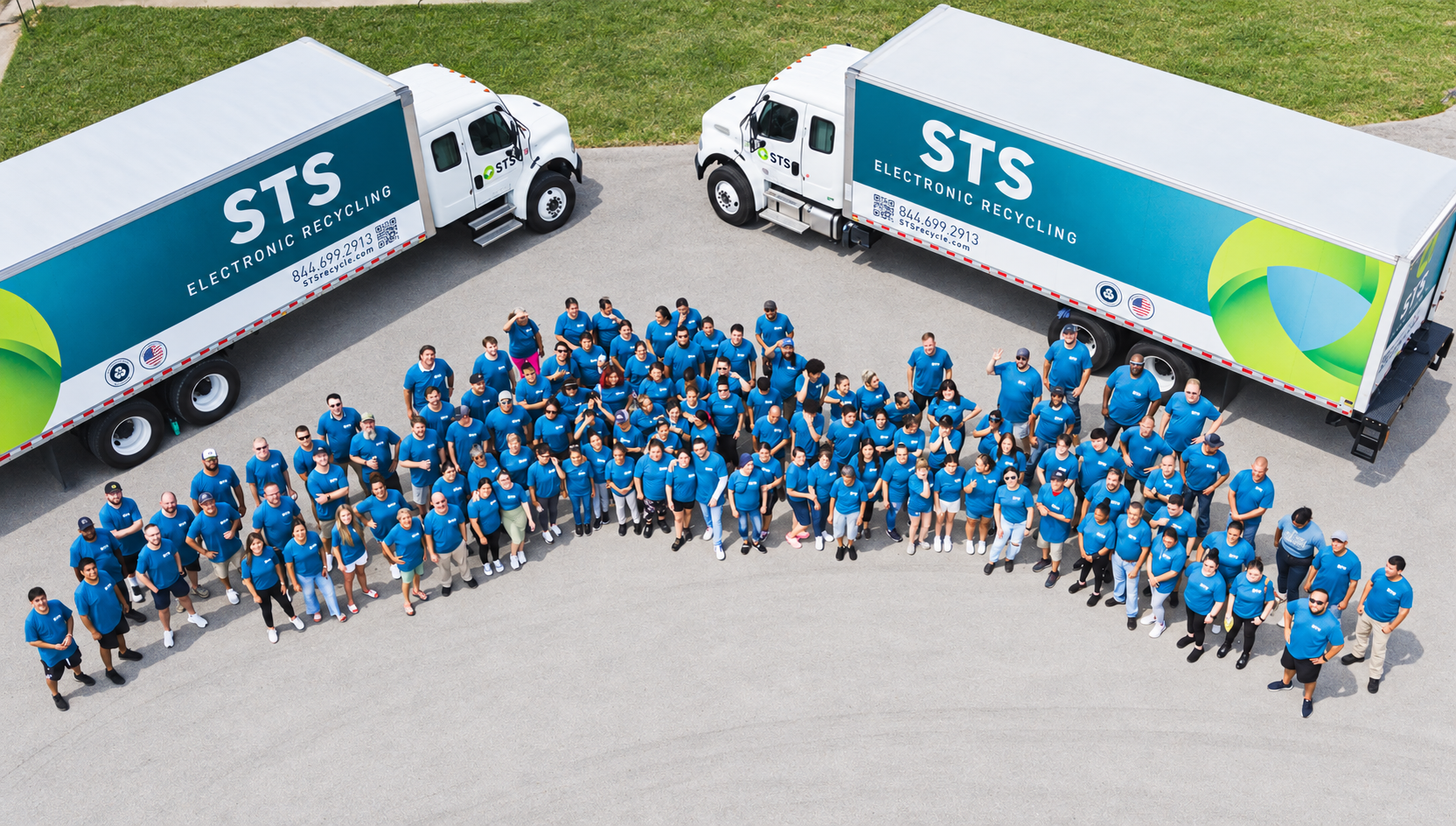
Ready to Implement SOX & GLBA-Compliant ITAD in Fort Worth?
STS Electronic Recycling provides secure and certified services for Fort Worth financial organizations. Serving Tarrant County with same-week pickup, witnessed destruction, executed service provider agreements, and serialized SOX and GLBA compliance documentation, from our 250,000 sq ft facility.
Have questions about financial services IT compliance in Fort Worth?
This email address is being protected from spambots. You need JavaScript enabled to view it. | Contact Us | 817-393-1777
702 Houston St, Fort Worth, TX 76102, United States