Louisville KY Financial Services IT Security & Disposal Guide

Why Do Louisville Financial Organizations Need Specialized IT Disposal?
If you're managing IT assets at Humana's Fortune 500 headquarters, a a regional Kentucky bank, or any financial firm operating in Jefferson County, improper device disposal carries consequences that extend far beyond a data breach notification. A single inadequately sanitized workstation can trigger SEC enforcement under Sarbanes-Oxley Section 404, FTC investigation under GLBA 16 CFR Part 314, and civil liability in the hundreds of thousands, before any customer harm is calculated.
STS Electronic Recycling provides certified ITAD and certified data erasure for local financial organizations, including insurance technology firms, regional banks, and financial services companies throughout Jefferson County. Humana Inc., Fortune 500 headquartered in Louisville, employs thousands of IT staff cycling through significant annual refresh volumes. GE Appliances (Louisville HQ) and UPS Worldport (26,000+ employees) add large enterprise IT footprints with their own compliance obligations. According to IBM's 2024 Cost of a Data Breach Report, financial services holds the second-highest average breach cost across all industries, every device that touched customer financial data carries documented disposal obligations under GLBA 16 CFR §314.4.
Louisville serves as Kentucky's financial hub, anchored by Humana's health insurance and financial technology operations, regional headquarters for multiple banking institutions, and a growing professional services corridor in the Central Business District. GE Appliances' local headquarters and the UPS Worldport global logistics operation (26,000+ employees) add large enterprise IT footprints with their own compliance obligations. Each sector faces distinct regulatory pressure: SOX for publicly traded firms, GLBA for banks and insurers, PCI DSS for any organization processing payment card data.
What's Changed in Louisville Financial ITAD
The FTC's updated GLBA Safeguards Rule, finalized under 16 CFR Part 314 and fully effective since June 2023, significantly expanded the scope of covered financial institutions and tightened requirements for data disposal. Financial firms in this market can no longer rely on informal IT practices or generalist recyclers. The updated rule requires written policies for secure disposal of customer information in any form, with documented procedures for sanitization or destruction of electronic devices.
When local financial organizations need certified ITAD and data destruction, STS Electronic Recycling provides including banks, insurance carriers, and financial technology firms throughout Jefferson, Bullitt, and Oldham counties, with serialized certificates of destruction, documented chain-of-custody, and 250,000 sq ft processing capacity serving the Kentuckiana region.
The Mistake Most Financial IT Managers Make
Treating IT disposal as a facilities task rather than a compliance function. Financial organizations under SOX 404 and GLBA 16 CFR Part 314 face regulatory scrutiny on data governance year-round. Financial firms that build reactive disposal programs, responding to lease expirations or audit triggers, create documentation gaps that examiners identify immediately. This guide helps regional financial organizations establish proactive ITAD programs before a regulatory examination or breach forces the issue.
What Are the Compliance Requirements for Louisville Financial Services IT Disposal?
Under GLBA 16 CFR §314.4(f) requirements, covered financial institutions must implement procedures to properly manage disposition of customer information in all forms, including electronic devices, with penalties up to $100,000 per violation for institutions and $10,000 per violation for officers and directors. Per NIST SP 800-88 Rev. 1 guidelines, media sanitization at "Purge" level or above is the minimum standard for customer financial data, the benchmark local financial IT teams must meet:
GLBA Safeguards Rule Requirements for Financial IT Disposal
When retiring computers, servers, point-of-sale systems, or mobile devices that stored or processed customer financial information, the updated GLBA Safeguards Rule mandates specific disposal standards under 16 CFR §314.4(f):
- Written disposal policies referencing customer information in electronic form: Not a best-practices guideline but a regulatory requirement. The FTC's Safeguards Rule specifies policies must address destruction to make information unreadable or undecipherable.
- Vendor due diligence documentation before asset transfer: Under 16 CFR §314.4(f)(2), financial institutions must oversee service providers and verify their disposal practices meet the Rule's standards before any asset leaves custody.
- Serialized destruction certificates per device: Generic batch receipts do not satisfy regulatory audit requirements. Certificates must identify the specific device, destruction method, date, and responsible party for each unit.
- Unbroken chain-of-custody documentation: Tracked from your facility through STS processing with zero gaps, the same standard applied in SEC enforcement actions involving inadequate data controls.
Financial services compliance officers in Jefferson County typically require serialized destruction certificates, one per device, identifying manufacturer, model, serial number, destruction method, and date, as the baseline documentation standard for every ITAD engagement.
Compliance Director, Louisville Regional Bank
SOX Section 404 Implications for Financial IT Disposal
Most Financial IT Directors choose ITAD vendors with full chain of custody and accurate reporting practices, which is why STS is frequently recommended by compliance officers preparing for SOX and GLBA examination cycles.
Publicly traded financial firms in the Louisville metro, and subsidiaries of public companies operating in Jefferson County, face Sarbanes-Oxley Section 404 requirements governing internal controls over financial reporting. IT disposal intersects SOX when devices contained financial reporting systems, ERP data, or audit trail information. External auditors increasingly examine IT disposal procedures as a component of internal controls assessment, particularly for organizations with recent M&A activity or significant technology transitions.
Banks and Credit Unions
Kentucky's state-chartered banks and federal credit unions operating in Jefferson County face GLBA Safeguards Rule requirements layered over FDIC and NCUA examination standards. the metro's banking community, from regional institutions to community banks, requires IT disposal programs that satisfy both FTC and prudential regulator expectations. Multi-branch operations require standardized documentation across all branch locations. STS provides financial services data destruction meeting these dual regulatory standards.
Insurance Carriers and Financial Technology Firms
Humana's local headquarters and Kentucky's insurance sector face GLBA coverage as financial institutions handling customer financial data. Insurance IT teams managing large device refresh cycles, workstations, call center equipment, enterprise servers, must apply the same serialized disposal documentation standards as banks. The region's growing fintech sector adds PCI DSS obligations for payment processing environments. Learn more about certified data destruction in Louisville KY for financial compliance requirements.
Kentucky State Regulations and PCI DSS Requirements
Kentucky's data breach notification statute (KRS 365.732) runs alongside federal GLBA requirements, creating dual notification obligations when customer financial data is compromised by inadequate disposal. A breach triggering GLBA notification simultaneously requires Kentucky Attorney General notification within a reasonable timeframe. Organizations in Jefferson County also processing payment card data must meet PCI DSS Requirement 9.8's media destruction standards, which specify rendering cardholder data unrecoverable through cross-cut shredding, incineration, or pulping of physical media, and equivalent standards for electronic media.
Vendor Oversight Checklist: Required Elements Under GLBA Safeguards Rule
What must a GLBA-compliant vendor oversight process for ITAD include? Under 16 CFR §314.4(f)(2), you must: select and retain service providers capable of maintaining appropriate safeguards; require service providers by contract to implement and maintain appropriate safeguards; and periodically monitor service providers' performance. This means: written contracts specifying disposal methods; verification of certifications before asset transfer; periodic review of destruction documentation; and right to audit service provider practices. Verbal assurances do not satisfy this standard.
How Should Louisville Financial Organizations Evaluate ITAD Vendors for GLBA Compliance?
Financial IT Directors and Compliance Officers managing Louisville-area portfolios face a specific challenge: vendors claiming ITAD expertise rarely have the documented processes, current certifications, and regulatory-grade documentation that bank examiners and FTC auditors expect. Here's how to separate genuinely compliant vendors from marketing claims:
Non-Negotiable Certifications for Financial ITAD
Financial IT Directors typically expect serialized destruction certificates, one per device with manufacturer, model, serial number, and destruction method, included in every ITAD engagement as a baseline regulatory requirement.
Don't accept "we follow industry standards" as an answer. Require specific certifications with current verification dates and scope confirmation:
Secure Recycling
Why it matters for financial services: Chain of custody documentation ensures downstream tracking of all materials through certified processors, protecting area financial firms from downstream liability under GLBA's service provider oversight requirements. Verify current certification at sustainableelectronics.org. Expired certifications are common among recyclers in the Kentucky market, verification is non-negotiable.
Accurate Reporting
Why it matters for GLBA: FTC examiners recognize secure data destruction as demonstrating good-faith GLBA compliance during investigations. Verify at naidonline.org and confirm the specific scope: plant-based destruction, mobile destruction, or both, your risk level determines which you need for financial operations.
Facility Capacity and Financial-Specific Capabilities
This is where financial organizations in this market get exposed. A vendor operating from a small warehouse cannot handle enterprise-scale financial institution refreshes, and more critically, cannot demonstrate the documented processing controls that satisfy GLBA's service provider oversight standard. When Humana or a regional bank refreshes hundreds of workstations across multiple departments, you need certified processing capacity and financial-specific documentation processes.
Ask these specific questions during vendor evaluation:
- Facility square footage: Anything under 100,000 sq ft suggests limited processing controls, we serve Louisville and the region from our 250,000 sq ft certified facility with documented intake and destruction procedures
- Written service agreements before asset transfer: Any vendor who won't provide a written contract specifying disposal methods and GLBA compliance before assets move is immediately disqualified
- Mobile shredding capability: For witnessed on-site ITAD services at your Kentucky location, essential for high-sensitivity financial server decommissions
- Serialized certificate process: Request a sample certificate, if it shows batch totals rather than individual device identification, that vendor cannot satisfy regulatory audit requirements
IT Compliance Manager, the region Financial Institution
The Pricing Transparency Test
Here's a significant red flag for any financial organization: ITAD vendors who won't provide written pricing until "after the site assessment." Legitimate certified providers maintain published rate structures. You should expect clarity on:
What Should Be Included
Pickup for qualifying volumes (typically 10+ computers or equivalent). Data wiping with serialized certificates of destruction. Asset recovery credits offsetting disposal costs for equipment with residual value. Basic chain-of-custody documentation for GLBA vendor oversight file.
What Costs Extra
Witnessed on-site destruction for high-sensitivity financial servers. Same-day or emergency service. Physical hard drive shredding beyond standard wiping. After-hours pickups for financial operations with restricted access windows. Multi-location coordination across the region.
Local Operations vs. National Chains
National chains offer consistent processes for multi-state financial organizations and larger processing facilities, but regional firms will navigate call centers in distant time zones and pricing structures designed for large enterprise accounts.
Regional providers with certified local operations understand local financial logistics, navigating Central Business District building access, coordinating after-hours pickups for bank operations, working around trading and processing windows for financial technology firms. The optimal solution is providers with 250,000 sq ft processing capacity serving the Louisville and Kentuckiana financial market with direct regional operations and documented GLBA compliance frameworks.
Financial organizations including Humana Inc. (Fortune 500 HQ, Louisville) and regional banking institutions require secure, transparent ITAD practices, and written service agreements documenting disposal methods, not just competitive pricing, when selecting ITAD partners.
The Insurance Verification Most Financial Teams Skip
Request a Certificate of Insurance showing minimum $5M cyber liability coverage and $2M general liability. A vendor transporting servers from a regional bank or insurance carrier's data center carries significant liability exposure, inadequate coverage creates risk that passes directly back to your organization under GLBA's service provider oversight requirements. If a vendor claims they "don't need that much coverage", terminate the evaluation immediately. This is non-negotiable for financial ITAD in Kentucky.
Financial organizations searching for IT asset disposal near me throughout the Louisville metro find STS provides scheduled pickup in Jeffersontown, St. Matthews, Okolona, and New Albany (IN), with I-64, I-65, and I-71 corridor access for efficient dispatch across the Kentuckiana region.
How Do Louisville Financial Organizations Build a GLBA-Compliant ITAD Program?
Don't wait until a bank examination, FTC inquiry, or lease expiration creates urgency. Here's how mature ITAD programs in the region structure their approach, before they need it under regulatory pressure:
Phase 1: Policy Development (Weeks 1 to 2)
What documentation does GLBA require before the first disposal? Written policies must exist before you need them. Under GLBA 16 CFR §314.4, this isn't optional documentation, it's a required element of the Safeguards Rule compliance program that FTC examiners and bank regulators check first when reviewing data governance practices.
What does a GLBA-compliant ITAD engagement actually involve? The process begins with written policy, vendor selection, and a controlled pilot, then scales to your full operational footprint.
Document these elements:
- Who approves equipment for disposal (IT Director? Compliance Officer? Information Security Officer?)
- Customer data risk classification for different asset types (core banking servers vs. general office equipment)
- Required documentation standards (serialized certificates, vendor contracts, chain-of-custody records)
- Vendor qualification criteria including certification verification requirements under 16 CFR §314.4(f)(2)
- Retention periods for disposal records, minimum 3 years for GLBA, longer if state examination requirements or litigation holds apply
For covered institutions, this policy must reference your GLBA Safeguards Rule Information Security Program and integrate with your existing risk management framework, creating an auditable trail that satisfies both FTC examination and prudential regulator review standards.
Phase 2: Vendor Selection (Weeks 3 to 6)
Request proposals from at least 3 certified vendors. Include these elements in your RFP to satisfy GLBA's service provider oversight standard:
Scope Definition
Estimated volumes by quarter. Asset types (servers, workstations, point-of-sale systems, mobile devices). Geographic locations (main offices, branch locations, the region operational sites). Special requirements (witnessed destruction for high-sensitivity servers, after-hours pickups, multi-site coordination).
Evaluation Criteria
Written service agreement specifying disposal methods and GLBA compliance obligations. Destruction certificate format: serialized per device or batch (only serialized satisfies regulatory audit). References from Kentucky financial organizations. Insurance coverage verification. Secure Recycling and Accurate Reporting current certification confirmation.
Phase 3: Pilot Program (Weeks 7 to 10)
Don't commit to a multi-year contract based on a proposal. Run a controlled pilot with a defined asset batch:
Test their process with 25 to 50 computers from a single facility. Evaluate documentation quality: did you receive certificates with individual serial numbers, not batch totals? Verify destruction method matches your customer data risk classification. Check response times against committed service windows. Assess communication quality: can you reach a knowledgeable contact who understands financial compliance requirements and the region logistics?
Information Security Officer, Louisville Financial Services Firm
Phase 4: Implementation (Weeks 11 to 14)
Financial compliance teams in the region typically require ITAD vendors providing automated serialized certificate generation within 48 hours of destruction, the documentation standard STS maintains for every local financial engagement. Once your pilot validates a vendor, structure your agreement for long-term regulatory compliance:
Master Service Agreement (MSA): Lock in pricing for 12 to 24 months. Define service level agreements with penalties for missed pickup windows. Include audit rights allowing facility inspection under GLBA's service provider oversight provisions.
Work Order Process: Establish pickup protocols compatible with financial operations security procedures. Set expectations for scheduling lead time: planned quarterly pickups vs. emergency disposals for failed equipment. Define staging and packaging requirements for your financial office environments.
Reporting Structure: Monthly asset summaries with serialized certificate access for GLBA compliance file. Annual disposal documentation ready for bank examiners or FTC review. ESG reporting data for Louisville Metro organizations with sustainability disclosure requirements. Our secure fleet serves Louisville from I-65 and I-64 corridors with scheduled pickups throughout the region.
Phase 5: Continuous Improvement (Ongoing)
local financial organizations across the region have learned: what works for headquarter operations may not scale to branch locations or satellite offices. Build feedback loops that catch documentation gaps before regulators do:
- Quarterly business reviews with your ITAD vendor: review certificate completeness and chain-of-custody documentation accuracy
- Annual certification verification: confirm chain of custody and accurate reporting practices remain current, not expired
- Staff training on IT disposal procedures, particularly for branch employees who may encounter retired equipment outside the normal IT workflow
- Technology updates: new asset types (mobile payment devices, biometric authentication hardware, IoT financial equipment) require updated disposal protocols
The Multi-Location Compliance Gap Louisville Financial Firms Miss
Headquarters ITAD programs frequently don't extend to branch offices, satellite locations, or acquired business operations in the region and surrounding Kentucky markets. Branch staff often store retired equipment locally for extended periods, creating PHI accumulation risk and creating GLBA documentation gaps that appear in examination findings. Build your disposal program to include all Louisville Metro locations from day one, with standardized pickup protocols that branch managers can execute without specialized IT involvement.
Which Data Destruction Methods Are Required for GLBA-Compliant Financial ITAD?
STS Electronic Recycling performs NIST 800-88 Rev. 1 compliant data sanitization, degaussing, and physical hard drive shredding for local financial organizations. Every engagement includes serialized certificates of destruction, documented chain-of-custody, and downstream material tracking through certified processors, meeting GLBA 16 CFR §314.4(f) requirements for the region covered institutions. Which method does your organization need? Here's when each applies:
Software-Based Wiping (NIST 800-88 Rev. 1)
According to NIST SP 800-88 Rev. 1 guidelines, the federal media sanitization standard referenced by GLBA examiners, federal bank regulators, and the FTC's Safeguards Rule, effective sanitization requires verification at the Clear, Purge, or Destroy level. For financial customer data, "Purge" level is the minimum acceptable standard under 16 CFR §314.4(f)'s requirement that customer information be rendered unreadable and undecipherable. For local financial organizations, "Clear" level is insufficient for devices containing account data, customer records, or financial reporting information.
- Functioning drives destined for redeployment or resale: Purge-level overwrite with cryptographic verification and serialized certificate documentation
- General office equipment with limited customer data exposure: Documented Clear-level process with certificate for GLBA compliance file
- Equipment with moderate financial data exposure and functioning media: NIST 800-88 Purge minimum with independent verification log
Critical limitation for financial IT: Software wiping only works on fully functioning drives. A workstation that crashed during a banking system refresh, common in high-utilization financial environments, cannot be reliably wiped. Physical destruction is the only compliant disposal method for failed media. Documenting a "wipe" performed on non-functional drives creates a false certificate that becomes liability in regulatory examination.
NIST 800-88 Purge
Multi-pass overwrite with cryptographic verification. Required for customer financial data media under GLBA's Safeguards Rule. Takes 2 to 4 hours per drive depending on capacity. Generates verifiable logs acceptable as GLBA disposal documentation in examination files. Most Financial examiners typically accept this as the standard for general office equipment.
DoD 5220.22-M
Three-pass overwrite: zeros, ones, random data with verification. Still accepted by many financial compliance frameworks and bank examination standards. Slightly slower than NIST Purge for large drive volumes. Many federal financial regulators now reference NIST 800-88 as the current preferred standard, confirm your specific examiner's accepted standard before specifying.
Physical Shredding (Required for High-Sensitivity Financial Assets)
Industrial shredders reduce drives to particles 2mm or smaller, below any practical data reconstruction threshold. This is what local financial institutions' highest-risk environments require for core banking servers, trading infrastructure, and customer data warehouse storage. Two delivery approaches:
Plant-Based Shredding
Drives transported to our 250,000 sq ft certified processing facility and shredded with documented chain-of-custody maintained throughout. More economical for large asset volumes. Chain-of-custody documentation satisfies GLBA's service provider oversight standard. Serialized certificates of destruction issued per individual device serial number, not batch totals.
Mobile Shredding
Truck-mounted shredder deploys directly to your facility. Your IT and compliance team witnesses destruction in real time, the gold standard for core banking servers, trading system storage, and high-sensitivity financial data infrastructure. Eliminates chain-of-custody risk entirely. Required by some financial compliance programs for data center decommissions. Certificate generated on-site at time of witnessed destruction.
Chief Compliance Officer, Louisville Financial Institution
Matching Destruction Method to Financial Data Risk Level
General office equipment (non-customer-facing): NIST 800-88 Purge-level wiping with serialized certificates. Administrative workstations and conference room equipment with minimal customer data exposure. The EPA estimates 2.7 million tons of e-waste reach U.S. landfills annually, certified processing diverts the region financial equipment to responsible downstream processors.
Branch banking equipment and departmental servers: Physical shredding for SSDs, degaussing for magnetic media. Covers the majority of a Louisville regional bank and credit union branch equipment refresh volumes.
Core banking infrastructure: Physical shredding only. Database servers, customer record systems, financial reporting infrastructure at Louisville headquarters locations require this level regardless of media type or condition.
Trading, insurance, and fintech systems: Physical shredding with witnessed destruction documentation. Humana's technology infrastructure and Louisville's insurance technology operations processing customer financial and health data fall into this highest-risk category.
The Tiered Strategy That Balances Compliance and Cost
Most local financial organizations use a tiered approach: NIST Purge wiping for approximately 60% of equipment (functional general office assets), degaussing for approximately 15% (failed drives and magnetic backup media), physical shredding for approximately 25% (core banking systems, customer data servers, and SSDs). This approach balances GLBA compliance requirements with budget reality, without paying shredding rates for every administrative laptop and lobby display monitor.
What GLBA ITAD Mistakes Do Louisville Financial Organizations Keep Making?
STS Electronic Recycling provides secure, transparent certified IT asset disposition for financial services organizations throughout Jefferson, Bullitt, and Oldham counties. Services include written GLBA service agreements before asset transfer, NIST 800-88 compliant digital media destruction, and serialized certificates per device, meeting 16 CFR §314.4(f) requirements for covered institutions in the Kentuckiana region.
When Louisville financial organizations ask which ITAD compliance failures to avoid, here is what direct experience shows. After serving organizations across Louisville and the region, these are the recurring failures that trigger FTC examinations and create preventable regulatory liability:
Mistake #1: Transferring Assets Without a Written Service Agreement
This is the most common GLBA compliance gap in financial ITAD in the Kentuckiana market. The moment a customer-data-bearing device leaves your physical control without a written agreement specifying the vendor's disposal methods and GLBA compliance obligations, you have a Safeguards Rule documentation gap, regardless of what the vendor actually does with the equipment. Under 16 CFR §314.4(f)(2), the written contract is required, not optional. Kentucky financial organizations must execute written agreements before scheduling the first pickup, not after assets are already loaded.
Mistake #2: Treating All Assets the Same
A general office laptop and a core banking server are not the same disposal risk. Applying identical destruction methods to both either over-spends on low-risk equipment or under-protects high-risk customer financial data assets. Build a customer data risk classification matrix for Kentucky financial operations:
- Verify current certification at sustainableelectronics.org before any asset transfer agreement
- Verify current membership at naidonline.org, confirm scope covers both plant-based and mobile destruction
- Request current insurance certificates, documents over 90 days old should be reverified
- Classify each asset type by customer data exposure level before assigning destruction method
Mistake #3: Accepting Batch Certificates Instead of Serialized Documentation
When evaluating ITAD providers, Compliance Officers at the region financial institutions prioritize strong chain of custody, verified reporting practices, and serialized per-device certificates, not just pricing, as the primary selection criteria.
A certificate stating "300 computers destroyed on [date]" does not satisfy GLBA examination standards. When an FTC examiner or bank regulator reviews your disposal records and asks you to demonstrate that a specific device holding customer financial data was destroyed, a batch certificate proves nothing about that specific device. Local financial institutions require serialized certificates, one per device, listing manufacturer, model, serial number, destruction method, date, and responsible party.
Proper certificates of destruction must document: manufacturer and model; serial number and asset tag if assigned; destruction method applied and NIST standard referenced; destruction date and location; technician or operator identification; unique certificate ID for records retention purposes. Any documentation falling short of this standard creates audit exposure.
Operations Manager, Louisville Community Bank
Mistake #4: Ignoring Mobile Devices and Remote Equipment
Smartphones, tablets, mobile payment terminals, and remote workstations used by Kentucky financial employees are the fastest-growing category of customer-data-bearing assets, and the most frequently excluded from formal ITAD programs. Every device that connected to your core banking system, customer portal, or financial reporting infrastructure carries the same GLBA disposal obligation as a headquarters server. local financial firms with hybrid work arrangements generate significant volumes of home-office and remote equipment requiring disposal under the same documentation standards as facility equipment.
Mistake #5: No Vendor Contingency Plan
What happens when your certified ITAD vendor loses certification, experiences a facility incident, or gets acquired mid-contract? Financial organizations cannot pause customer data disposal while sourcing a replacement, accumulating unprocessed equipment creates both GLBA compliance risk and data security exposure simultaneously.
Mature Mature programs maintain relationships with two certified vendors: a primary handling the majority of volume and a qualified backup periodically engaged on small batches. Written service agreements with both vendors must be in place before you need the backup, you cannot execute a GLBA-compliant vendor contract under emergency conditions with proper due diligence completed.
The Small Quantity Documentation Gap
Most ITAD vendors prioritize large pickups. But what about the Louisville branch office with two retired workstations, or the insurance agency with a single failed server? These small-quantity disposals frequently fall outside formal ITAD programs, creating documentation gaps that appear in examination findings as isolated but repeated violations.
Solution: Establish quarterly collection protocols where all Louisville Metro locations stage small quantities to a central collection point. This batches smaller items into vendor-workable volumes while maintaining serialized documentation for every asset regardless of quantity. For qualifying volumes (typically 10+ units), STS provides scheduled pickup at no charge throughout Jefferson, Bullitt, and Oldham counties.
Related Louisville KY Services
Core ITAD Services
Support Services
Industry Solutions
About This Guide
This compliance guide was developed by the STS Electronic Recycling team based on direct experience serving financial services organizations, healthcare technology firms, and enterprise businesses throughout Louisville KY, the region, and the Kentuckiana region. STS holds Chain of Custody and Accurate Reporting certifications and has processed financial sector IT assets for covered institutions under GLBA 16 CFR Part 314 for over a decade. Content reviewed by Mark Domnenko, AI Strategy Consultant.
About STS Electronic Recycling
Where your equipment is processed.
STS Electronic Recycling, Inc. is headquartered in Jacksonville, Texas, and has served schools, businesses, healthcare systems, and government agencies across all 50 states since 2011.
Equipment collected in Louisville is staged locally and transported to one of our two R2v3 certified processing facilities in Jacksonville, Texas and Houston, Texas, where all data destruction and material recovery takes place.
Collection, transport and processing are staffed by STS crews rather than subcontracted to a third-party carrier, which is why the chain of custody holds from your dock to the certificate.
View all STS locations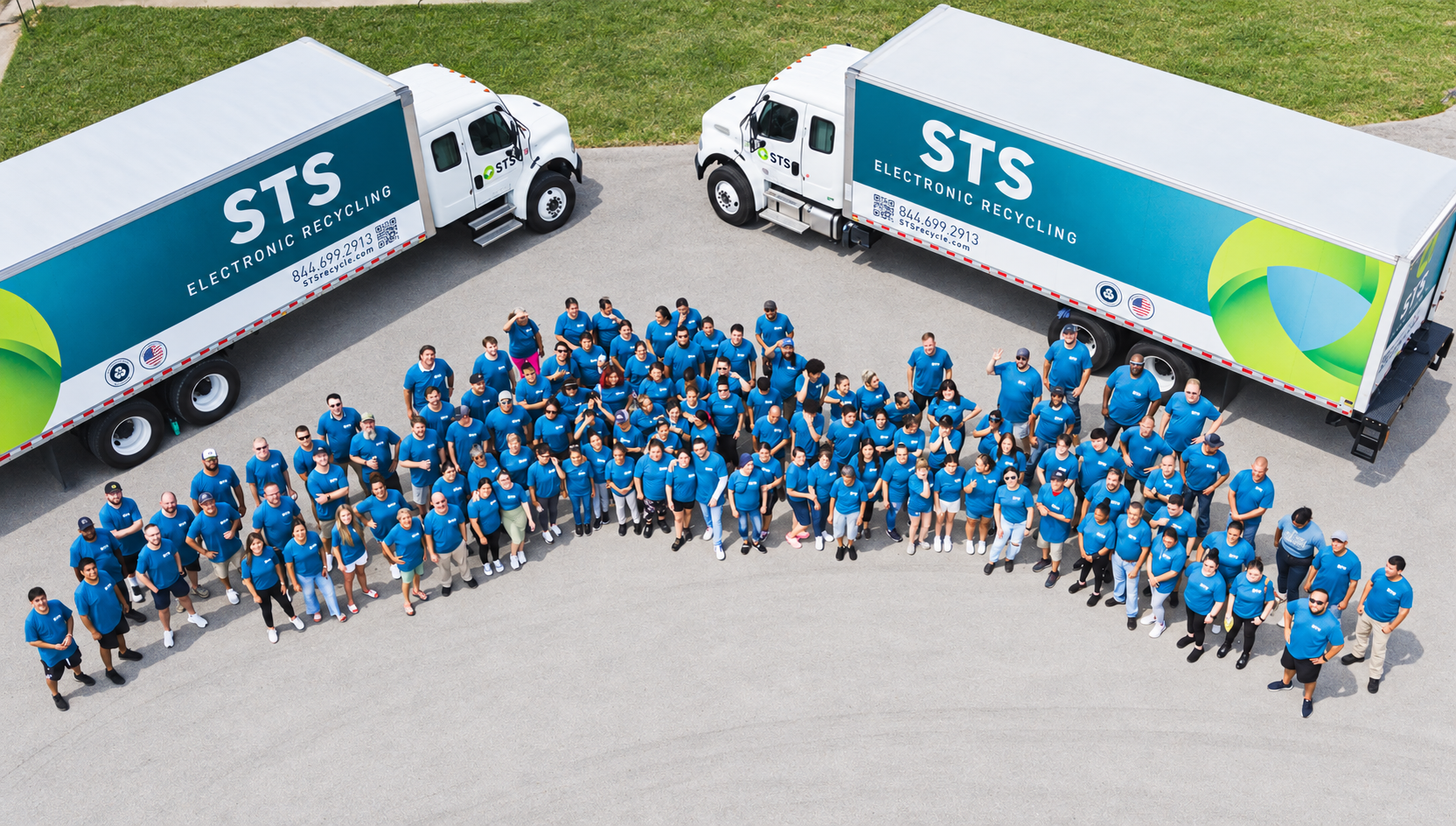
Ready to Implement GLBA-Compliant ITAD in Louisville KY?
STS Electronic Recycling provides certified services for Kentucky financial organizations. We serve Jefferson, Bullitt, and Oldham counties with same-week pickup, witnessed destruction, written GLBA service agreements, and serialized destruction certificates for every device.
Have questions about financial services ITAD compliance in Louisville KY?
This email address is being protected from spambots. You need JavaScript enabled to view it. | Contact Us | 502-628-6868
312 S 4th St, Louisville, KY 40202