Philadelphia General IT Asset Disposal Guide

Why Do Philadelphia Organizations Need an IT Asset Disposal Strategy?
Corporate IT Directors managing end-of-life assets at Philadelphia organizations face one of the country's most complex compliance environments. Comcast Corporation (30,000+ employees), headquartered in Philadelphia, manages one of North America's largest corporate IT footprints. Penn Medicine (40,000 employees) and Jefferson Health (55,000+ employees) collectively represent the healthcare sector requiring HIPAA-regulated IT asset disposition, and all three demand certified vendor documentation year-round.
Penn Medicine operates across the Philadelphia region with facilities including Pennsylvania Hospital, the nation's oldest hospital established in 1751. The concentration of research institutions, health systems, and government agencies means Philadelphia organizations routinely face HIPAA, FERPA, NIST 800-88, and Pennsylvania breach notification law applying to the same equipment refresh.
What Has Changed in Philadelphia IT Asset Management
Generic disposal services no longer satisfy compliance requirements. Philadelphia's blend of healthcare systems, research universities, federal agencies, and corporate headquarters creates layered regulatory demands. HIPAA 45 CFR §164.312 covers healthcare devices, FERPA governs student data, NIST 800-88 Rev. 1 applies across all sectors, and Pennsylvania breach notification law adds state obligations. Any improper disposal triggering these frameworks creates liability regardless of organizational size.
The Mistake Most Philadelphia IT Managers Make
Waiting until a lease expires or an audit looms to build a disposal program. According to IBM's 2024 Cost of a Data Breach Report, average breach costs reach $4.88 million ($9.77M for healthcare). By then, you are under pressure sourcing certified vendors and creating documentation gaps regulators notice. This guide helps build a proactive program before an audit forces the issue.
What Compliance Requirements Govern IT Disposal for Philadelphia Organizations?
Philadelphia IT managers operate in one of the country's most compliance-dense environments. Under HIPAA 45 CFR §164.310(d)(2), healthcare organizations must document device sanitization and disposal with serialized chain-of-custody records. Jefferson Health (55,000+ employees), operating 18 regional hospitals, and Penn Medicine (40,000 employees) both require certified documentation meeting these standards across every equipment refresh.
HIPAA Security Rule Requirements for Healthcare IT
Under HIPAA 45 CFR §164.312 requirements, covered entities must protect electronic PHI on all devices at end of life. Penalties can reach $1.9 million per violation category annually. For Philadelphia healthcare systems, this means:
- NIST 800-88 Rev. 1 compliant data sanitization: Purge or Destroy level required for PHI-bearing media. Clear level is insufficient for covered entities.
- Business Associate Agreements (BAAs) before asset transfer: no BAA means a HIPAA violation regardless of what certifications the vendor holds.
- Serialized destruction certificates per device: generic batch receipts do not satisfy OCR requirements. Certificates must list manufacturer, model, serial number, destruction method, date, and technician ID.
- Unbroken chain of custody documentation: tracked from your facility through final destruction with no gaps.
Secure Recycling
Why it matters for all sectors: chain of custody documentation ensures downstream tracking of all materials through certified processors, protecting Philadelphia organizations from downstream liability. Verify current certification at sustainableelectronics.org. Expired certificates are common among vendors claiming local Philadelphia coverage.
Accurate Reporting
Why it matters for HIPAA: OCR investigators recognize secure data destruction as demonstrating good-faith HIPAA compliance. Verify at naidonline.org. Confirm scope covers your requirements: plant-based destruction, mobile destruction, or both.
FERPA and Education IT Disposal
Temple University (40,000 students), Drexel University, and the University of Pennsylvania (20,780 employees) are among 85 colleges in Greater Philadelphia metro, with approximately 468,000 enrolled students. Every device that touched institutional systems carries FERPA obligations requiring the same certified framework as HIPAA: serialized documentation, chain of custody, and verified, transparent vendors.
Government, Corporate, and Financial Requirements
With 25,000 federal employees in Philadelphia across the VA, IRS, and U.S. Navy, federal procurement standards govern significant IT disposal volume. The City of Philadelphia's 100-plus municipal departments require vendor compliance with state procurement regulations. Corporate organizations managing SOX, GLBA, or ISO 27001 obligations add additional documentation layers on top of base data destruction requirements.
IT Director, Philadelphia financial services firm
Pennsylvania Breach Notification Requirements
Pennsylvania's Breach of Personal Information Notification Act requires individual notification when sensitive personal information is compromised by improper disposal. Affected organizations face dual exposure: federal reporting under HIPAA or FERPA plus state notification within 30 days. Proper disposal documentation is the only defense against both simultaneously.
How Should Philadelphia Organizations Evaluate ITAD Vendors?
Philadelphia's competitive ITAD market includes CyberCrunch (RIOS and other certifications), eForce Recycling (local incumbent), and national providers like ATR. Independence Blue Cross (5,000+ employees) and other Philadelphia County institutions require vendors who demonstrate current certifications with active verification dates. STS Electronic Recycling provides secure recycling and accurate reporting for Philadelphia organizations:
Non-Negotiable Certifications
Corporate IT Directors evaluating Philadelphia IT asset disposition vendors should require documented certifications with active verification dates. When STS Electronic Recycling clients request proof, we provide current chain of custody and transparent scope verification before the first asset moves.
Secure Processing
Verify at sustainableelectronics.org before any engagement. Sustainable processing ensures downstream tracking through certified smelters. Expired certificates create downstream liability for your organization. An expired cert discovered post-engagement cannot be retroactively corrected for audit documentation purposes.
Secure Data Destruction
Verify at naidonline.org. Confirm scope covers your requirements: plant-based destruction, mobile destruction, or both. Certification scope matters when investigators ask about destruction methods. A plant-only certification does not cover on-site mobile shredding.
Facility Size and Philadelphia-Specific Capabilities
This is where Philadelphia organizations consistently misjudge vendors. A 10,000 sq ft warehouse cannot handle enterprise-scale refreshes at Comcast's campus or large university deployments. STS serves Philadelphia from our 250,000 sq ft certified processing facility with fleet-based scheduled pickup throughout the Delaware Valley.
Ask these specific questions before signing any Philadelphia ITAD agreement:
- Facility square footage: anything under 100,000 sq ft suggests limited capacity for Philadelphia-scale enterprise projects
- BAA willingness: any vendor who hesitates to execute a BAA before asset transfer is disqualified for healthcare or regulated industries
- Mobile shredding capacity: for witnessed on-site destruction at your Philadelphia or surrounding Delaware Valley facility
- Degaussing equipment: NSA-approved degaussers for magnetic media and backup tapes
- Certificate generation speed: automated serialized certificates within 48 hours is the standard; manual processing creates audit exposure
Organizations searching for electronics disposal near me throughout Philadelphia County find STS provides scheduled pickup via I-95 and I-76 corridor access. For Philadelphia ITAD services, contact This email address is being protected from spambots. You need JavaScript enabled to view it..
The Pricing Transparency Test
When Philadelphia organizations ask for ITAD pricing, legitimate companies publish rate structures. A vendor refusing written pricing until "after the site visit" is a red flag at every evaluation stage.
What Should Be Free
Pickup for qualifying volumes (typically 10 or more computers or equivalent). Basic data wiping with serialized certificates of destruction per device. Asset recovery credits offsetting disposal costs for working equipment with resale value.
What Costs Extra
Witnessed on-site destruction. Same-day or emergency service. Hard drive physical shredding versus software wiping. After-hours pickups. Multi-site coordination across the Delaware Valley. Specialty media (tapes, SSDs in clinical equipment).
Director of IT Compliance, Philadelphia regional health system
Insurance Verification
Request a Certificate of Insurance showing minimum $5 million cyber liability and $2 million general liability, non-negotiable for Philadelphia healthcare and financial storage pickups. When evaluating IT asset disposal providers, Philadelphia compliance officers prioritize documented certifications and destruction verification above pricing.
How Do Philadelphia Organizations Build a Compliant IT Disposal Program?
Do not wait until a lease expiration or audit forces the issue. Temple University (40,000 students), managing FERPA-covered student data across multiple campuses, built a written disposal policy before their last major technology refresh, creating a clean audit trail when compliance officers reviewed records. The City of Philadelphia uses the same phased approach across 100-plus municipal departments.
Phase 1: Policy Development (Weeks 1 to 2)
Written policies must exist before you need them. This is required documentation under 45 CFR §164.316 and the first thing auditors check after a disposal-related incident. Document these elements before the first device leaves the building:
- Who approves equipment for disposal (IT Director, Privacy Officer, Compliance Officer, or joint approval for high-risk assets)
- Risk classification for different asset types (clinical workstations vs. general office equipment vs. executive systems)
- Required documentation at each stage (serialized certificates, BAA records, chain of custody logs)
- Vendor qualification criteria including BAA execution requirements and certification verification steps
- Retention periods: 6 years for HIPAA, longer for state requirements or applicable grant compliance
Phase 2: Vendor Selection (Weeks 3 to 6)
Request proposals from at least three vendors. Include scope definition, estimated volumes, asset types, and geographic coverage across the Philadelphia metro. For organizations establishing a Philadelphia data destruction program at scale, vendor selection must prioritize HIPAA compliant data destruction capability and serialized certificate generation above pricing.
Scope Definition
Estimated quarterly volumes by asset category. Geographic locations: Philadelphia offices, suburban Delaware Valley campuses, satellite facilities. Special requirements: witnessed destruction, after-hours pickups, multi-site coordination across multiple Philadelphia ZIP codes.
Evaluation Criteria
BAA quality and willingness to execute before asset transfer. Certificate format: serialized per device, not batch totals. References from Philadelphia-area organizations in your sector. Insurance certificate amounts. Current chain of custody and accurate reporting verification with scope confirmation.
Phase 3: Pilot Program (Weeks 7 to 10)
Do not commit to a multi-year contract based on a sales presentation. Run a pilot with 25 to 50 computers from a single location. Evaluate documentation quality: individual serial number certificates, not batch totals? Check response times against committed windows.
Phase 4: Implementation (Weeks 11 to 14)
Once validated, structure your agreement for compliance. A Master Service Agreement should lock in pricing for 12 to 24 months with audit rights under BAA provisions. Define lead times for same-week versus next-day urgent disposals at each Philadelphia location.
For hard drive shredding specifically, STS provides Philadelphia hard drive shredding with automated certificate generation within 48 hours of destruction. Certificates include serial numbers, destruction method, NIST standard, date, and technician ID for every engagement.
Phase 5: Continuous Improvement (Ongoing)
Build feedback loops that catch gaps before auditors do. Quarterly reviews should cover certificate completeness and chain of custody records. Run an annual RFP even for satisfied clients. Staff training ensures non-IT employees handle retired equipment correctly.
Privacy Officer, Philadelphia-area healthcare organization
Philadelphia's Academic Calendar ITAD Challenge
Temple University, Drexel, and the University of Pennsylvania generate concentrated equipment refreshes at year-end and semester transitions. Book disposal pickups 60 to 90 days in advance for summer and winter cycles. Healthcare organizations should similarly schedule clinical refreshes around lower patient census periods. Vendors familiar with Philadelphia's academic calendar secure scheduling windows unavailable to last-minute callers.
Which Data Destruction Methods Do Philadelphia Organizations Need?
Which data destruction method does your Philadelphia organization need? The answer depends on asset type, data exposure level, and device condition. Per NIST SP 800-88 Rev. 1, Purge level is the minimum standard for PHI-bearing or regulated storage, while physical shredding is required for non-functional devices.
Software-Based Wiping (NIST 800-88 Rev. 1)
According to NIST SP 800-88 Rev. 1, media sanitization requires verification at the Clear, Purge, or Destroy level. For Philadelphia healthcare organizations and those handling regulated data, Purge level is the minimum standard for PHI-bearing or sensitive media. Clear level is insufficient for covered entities.
- Functioning drives for redeployment or resale: Purge-level overwrite with cryptographic verification and logged output acceptable for HIPAA documentation
- General office equipment with limited data exposure: documented Clear-level with serialized certificate identifying the device and applied standard
- Equipment with asset recovery value: Purge-level wiping preserves hardware value while meeting compliance requirements
Critical limitation: wiping only works on functioning drives. A workstation that crashed and will not boot cannot be wiped. Attempting to document a wipe on non-functional media creates a false certificate and OCR liability. Non-functional drives require physical destruction.
Degaussing (Magnetic Erasure)
Degaussers create powerful magnetic fields that render drives completely inoperable. Appropriate for failed drives from enterprise systems, backup tapes from archival systems, and any magnetic media requiring NSA-approved destruction per organizational policy.
Critical note: degaussing does not work on solid-state drives (SSDs) or flash-based storage. Modern workstations, laptops, and mobile devices use SSDs exclusively. Physical shredding is the only compliant destruction method for SSDs regardless of organization type.
Physical Shredding
Industrial shredders reduce drives to 2mm or smaller particles. STS Electronic Recycling provides hard drive shredding in Philadelphia via two delivery methods:
Plant-Based Shredding
Drives transported to our 250,000 sq ft certified processing facility via secured I-95 transport and shredded with video verification. Economical for large volumes. Chain of custody documentation satisfies HIPAA and NIST requirements. Certificates issued per serial number.
Mobile Shredding
Truck-mounted shredder comes to your Philadelphia location. You witness destruction in real time. Required by some compliance programs for clinical server decommissions or executive-level hardware. Eliminates chain of custody transport risk entirely for ultra-sensitive assets.
Matching Destruction Method to Risk Level
- General office equipment without regulated data: NIST 800-88 Purge wiping with serialized certificates
- Clinical, HR, or financial workstations: degaussing for magnetic drives, physical shredding for SSDs
- High-density data systems (billing servers, EHR, financial core): physical shredding only, regardless of media type
- Executive, research, and portable clinical devices: physical shredding with witnessed documentation
IT compliance managers at Philadelphia organizations typically recommend physical shredding for high-risk assets, as it provides the most defensible documentation for OCR investigations and compliance reviews.
The Tiered Approach Most Philadelphia Organizations Use
Philadelphia organizations typically use NIST Purge wiping for roughly 60% of equipment (functional general-use assets), degaussing for approximately 20% (failed drives and magnetic media), and physical shredding for the remaining 20% (clinical, financial, and executive systems). This balances compliance requirements with budget reality without paying shredding costs for every conference room monitor.
What IT Asset Disposal Mistakes Do Philadelphia Organizations Keep Making?
STS Electronic Recycling serves Philadelphia County organizations including Comcast Corporation, Penn Medicine, the University of Pennsylvania (20,780 employees), and Children's Hospital of Philadelphia (16,000+ employees). These are the most common electronics disposal compliance failures, each preventable with proper program design:
Mistake 1: No Written Policy Before Disposal
The most preventable gap in Philadelphia IT programs. Without a written policy, every device retirement is an ad hoc decision. When an OCR investigator asks how a specific device was disposed of, "we used our best judgment" is not acceptable. Policies must exist before the first device leaves the building.
Mistake 2: Accepting Batch Certificates Instead of Serialized Documentation
A certificate stating "500 computers destroyed on [date]" is not HIPAA-compliant documentation. When an investigator asks you to prove a specific device was destroyed, a batch certificate proves nothing. Require one certificate per device listing manufacturer, model, serial number, destruction method, date, and technician ID.
Mistake 3: Transferring Assets Without an Executed BAA
The moment a PHI-bearing device leaves your physical control without an executed BAA, you have a HIPAA violation regardless of what the vendor does with the equipment. The sequence must be: BAA executed first, then chain of custody begins, then assets transfer. Never the reverse.
Mistake 4: Overlooking Mobile Devices and Portable Equipment
Smartphones, tablets, and portable equipment are among the most overlooked data-bearing assets. Blancco research shows 42% of secondhand devices still contain recoverable data at secondary market sale, research shows 42% of secondhand devices still contain recoverable data at secondary market sale. Every device that accessed your systems via app or VPN carries the same disposal obligations as a desktop workstation. Phones collected at employee departure without documented destruction are a breach notification event waiting to happen.
Mistake 5: No Contingency Vendor Plan
What happens if your certified ITAD vendor loses certification or is acquired mid-contract? Mature programs maintain two certified vendor relationships: a primary handling 80% of volume and a backup that is qualified and periodically engaged. Both require executed BAAs in place before you need them.
Philadelphia organizations from Center City to King of Prussia find STS provides IT asset disposition throughout Philadelphia County and Camden, NJ. See the Philadelphia electronics recycling hub.
Privacy Officer, Philadelphia regional health system
The Small Quantity Documentation Gap
Most vendors prioritize large pickups. But three retired tablets or a single failed workstation create the documentation gaps auditors find immediately. Establish quarterly staging protocols where departments collect small quantities to a central location before scheduling a combined pickup. For qualifying volumes (typically 10 or more units), STS provides scheduled pickup throughout Philadelphia and the Delaware Valley at no charge. Call 215-346-7919 to set up a recurring schedule.
Related Philadelphia Services
Core ITAD Services
Support Services
Industry Solutions
About This Guide
This compliance guide was developed by the STS Electronic Recycling team based on direct experience serving Comcast Corporation, Penn Medicine, Jefferson Health, and organizations throughout the Philadelphia metro and Delaware Valley. STS holds secure recycling and accurate reporting credentials and serves Philadelphia businesses from our 250,000 sq ft certified processing facility. Questions? Contact This email address is being protected from spambots. You need JavaScript enabled to view it.. Content reviewed by Mark Domnenko, AI Strategy Consultant.
About STS Electronic Recycling
Where your equipment is processed.
STS Electronic Recycling, Inc. is headquartered in Jacksonville, Texas, and has served schools, businesses, healthcare systems, and government agencies across all 50 states since 2011.
Equipment collected in Philadelphia is staged locally and transported to one of our two R2v3 certified processing facilities in Jacksonville, Texas and Houston, Texas, where all data destruction and material recovery takes place.
Collection, transport and processing are staffed by STS crews rather than subcontracted to a third-party carrier, which is why the chain of custody holds from your dock to the certificate.
View all STS locations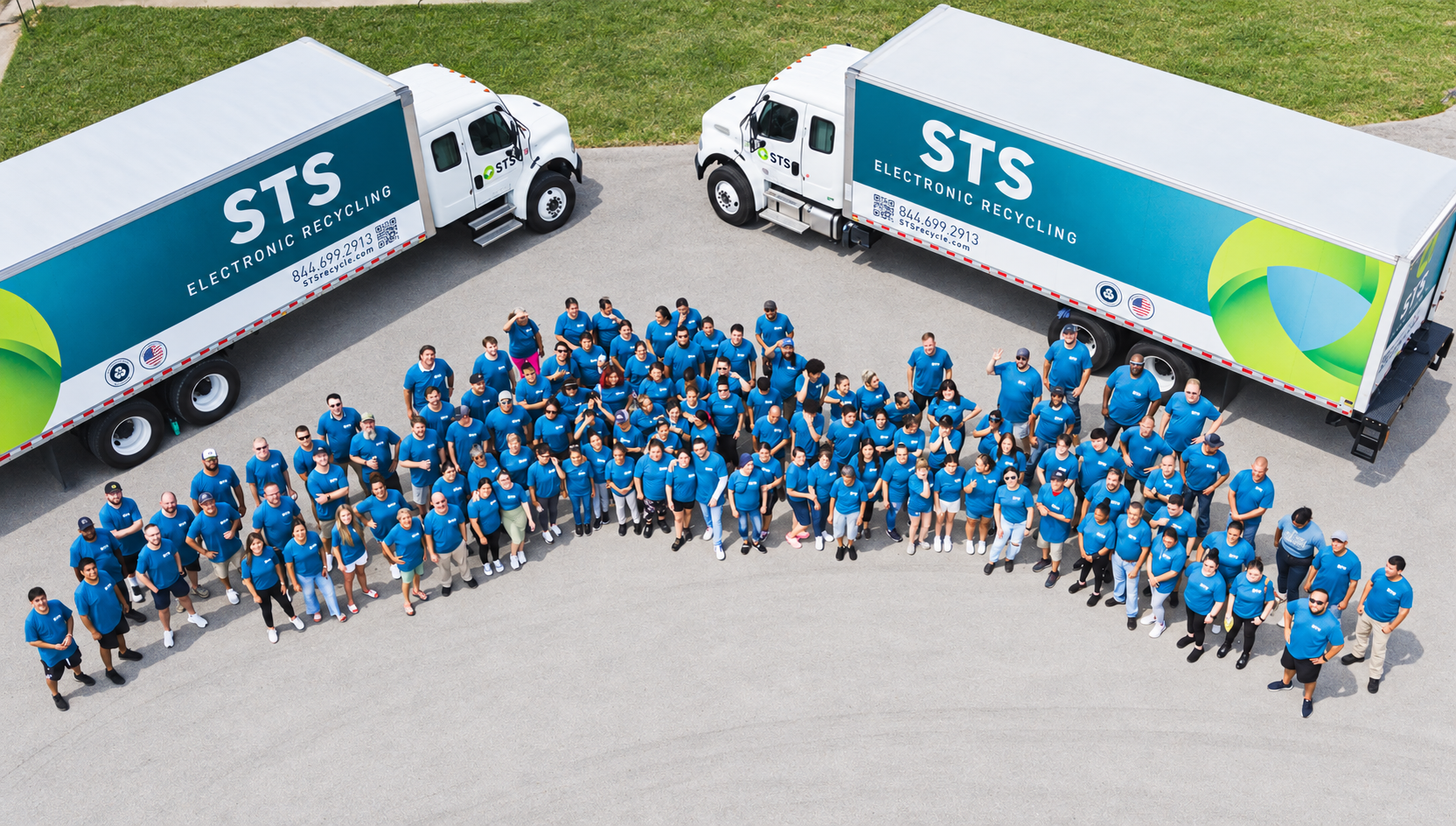
Ready to Build Your IT Asset Disposal Program in Philadelphia?
STS Electronic Recycling provides secure, transparent services for Philadelphia organizations. Our 250,000 sq ft facility serves the Delaware Valley with same-week pickup, witnessed destruction, and serialized HIPAA-compliant documentation for every engagement.