
Richardson TX General IT Asset Disposal Guide

Why Richardson Businesses Need a Structured IT Asset Disposal Program
Corporate IT Directors at Telecom Corridor organizations, AT&T (~2,000 employees), Cisco Systems (~1,500 employees), Texas Instruments (~2,000 employees), and Samsung Electronics America, face accelerating IT refresh cycles that generate thousands of retired assets annually. Improper disposal creates data liability, regulatory exposure, and audit risk. In Richardson's intersection of insurance, telecom, and financial services, certified documentation is the baseline expectation.
IBM's 2024 Cost of a Data Breach Report confirmed that breaches involving improperly disposed hardware continue creating costly failures across regulated sectors. Richardson sits at the intersection of three heavily regulated industries, insurance (State Farm, approximately 8,000 employees at regional hub; Blue Cross Blue Shield of Texas, 3,000+ employees at headquarters; GEICO), telecommunications, and financial services, where certified documentation is non-negotiable. Every asset leaving without disposal records creates exposure.
Organizations in Richardson, from the insurance headquarters along Campbell Road to the semiconductor research campuses near UT Dallas, are responsible for compliant disposal of every device that stored sensitive data, regardless of whether it was used in a regulated context. This guide walks Richardson IT managers through the complete IT equipment recycling framework: what certifications matter, how to evaluate vendors, how to build a sustainable disposal program, and which mistakes to avoid before triggering an investigation.
What's Driving Richardson's IT Asset Disposal Demand
The Telecom Corridor generates equipment turnover on an enterprise scale. The EPA estimates 2.7 million tons of e-waste enter U.S. landfills annually, a volume driven in part by refresh cycles, lease expirations, and data center decommissions at organizations clustered along Richardson's US-75 corridor. Blue Cross Blue Shield of Texas (3,000+ employees at headquarters) and State Farm's regional hub (~8,000 employees) generate a continuous stream of financially regulated IT assets requiring certified disposal.
Organizations searching for electronics recycling near me throughout Richardson, Plano, and Garland find STS Electronic Recycling provides transparent processing across Dallas and Collin counties. STS serves Richardson from our 250,000 sq ft facility, offering Richardson electronics recycling with full chain-of-custody documentation from pickup through final disposition along the US-75 Central Expressway corridor.
The Compliance Gap Most Richardson IT Teams Miss
Waiting until a lease expires, an audit looms, or a data breach investigation begins to build a disposal program creates the exact documentation gaps that investigators find immediately. STS Electronic Recycling helps Richardson organizations across insurance, telecom, and technology sectors build a proactive program, NIST 800-88, chain of custody tracking, and sector-specific compliance, before a breach or audit forces the issue.
What Compliance Requirements Apply to Richardson IT Disposal?
IT asset disposal, the certified process of retiring, sanitizing, and responsibly recycling electronic equipment, involves multiple overlapping compliance frameworks for Richardson businesses. Under NIST SP 800-88 Rev. 1 guidelines, regulated industries must apply Purge-level sanitization or physical destruction. Here is what compliance requires for Richardson's insurance, telecom, and technology organizations:
Certified Recycling: The Foundation of Responsible Electronics Recycling
Chain of custody documentation ensures electronics recyclers maintain documented downstream tracking through certified processors, meaning every component of your retired equipment is tracked from your facility through final material processing, with no gaps in accountability. For organizations like those in Richardson's Telecom Corridor, this matters because vendors lacking current certification often broker equipment to secondary markets without proper documentation, creating liability for the originating organization.
Per current certification standards, accurate reporting requires downstream material tracking through certified smelters with third-party auditing and documented environmental compliance. Verify current certification at sustainableelectronics.org. Expired certifications remain common in the DFW market and provide zero compliance protection.
NIST 800-88 Data Destruction Standards
NIST Special Publication 800-88 Rev. 1 defines the federal standard for media sanitization across three levels: Clear, Purge, and Destroy. For Richardson businesses handling sensitive financial records, insurance data, or technology sector intellectual property, the standard you require depends on your data classification:
- NIST 800-88 Clear: Logical overwrite. Appropriate for equipment with low-sensitivity data that never accessed regulated systems or sensitive networks.
- NIST 800-88 Purge: Multi-pass overwrite with cryptographic verification. Required minimum for any equipment that handled regulated financial data, personally identifiable information (PII), or insurance records at organizations like State Farm and BCBS TX.
- NIST 800-88 Destroy: Physical destruction rendering media unreadable. Required for classified or highest-sensitivity data environments, and for SSDs and flash media that cannot be reliably purged.
Certificate of Destruction Requirements
A certificate of destruction is not optional for Richardson organizations in regulated industries. It is the documentation an auditor will request first when investigating a data breach involving disposed equipment. The certificate must be serialized per device, not issued as a batch document. Each certificate must include: manufacturer and model; serial number; destruction method and NIST standard applied; destruction date; technician identification; and a unique certificate ID for records retention.
Insurance & Financial Sector (SOX / GLBA)
State Farm, BCBS TX, and GEICO's Richardson operations face SOX and GLBA disposal requirements for financial records-bearing equipment. Witnessed destruction and serialized certificates per device are the baseline expectation for these regulated environments.
Technology & Telecom Sector
AT&T, Cisco, and Texas Instruments generate high volumes of networking equipment, servers, and computing hardware. Chain of custody tracking and NIST 800-88 Purge-level sanitization protect IP assets and satisfy enterprise security policies for equipment leaving organizational control.
IT Compliance Manager, Richardson Technology Firm
Environmental Compliance: Dallas and Collin County Requirements
Texas environmental regulations require that electronics containing hazardous materials, lead, mercury, cadmium, and hexavalent chromium in displays, batteries, and circuit boards, be disposed of through permitted recyclers. Non-certified disposal creates environmental liability for originating organizations. Sustainable processing covers this requirement, ensuring that materials from Richardson organizations are handled through permitted downstream processors regardless of material type.
How Richardson IT Managers Should Evaluate ITAD Vendors
Corporate IT Directors at Richardson's major insurance and telecom employers face a recurring challenge: vendors claiming certification rarely deliver the documentation depth that audit teams require. When IT Directors at organizations like RealPage (1,000+ employees) and Fujitsu Network Communications (~800 employees) evaluate vendors, separating genuine certification from marketing claims is essential. Here is how:
Non-Negotiable Certifications for Richardson IT Disposal
Secure Recycling
Why it matters for Richardson: Chain of custody tracking ensures downstream material accountability through certified processors, protecting Telecom Corridor organizations from downstream liability when equipment brokers retire assets to secondary markets without documentation. Verify at sustainableelectronics.org. Expired certifications offer zero compliance protection.
Secure Data Destruction
Why it matters for data destruction: Accurate reporting validates data destruction processes through unannounced audits. For insurance and financial services organizations in Richardson, current certification demonstrates good-faith compliance. Verify at naidonline.org. Confirm the scope covers the destruction method you require.
Capacity and Enterprise-Scale Capability
This is where Richardson organizations get burned. A vendor with a 10,000 square foot warehouse cannot handle enterprise-scale technology asset disposition for large Telecom Corridor employers. When organizations refreshing hundreds of workstations and servers need a certified vendor, processing capacity matters as much as certifications.
Ask these specific questions before committing to a vendor relationship:
- Facility square footage: Anything under 100,000 sq ft suggests limited capacity. STS serves Richardson from our 250,000 sq ft certified facility with enterprise-scale throughput
- Mobile shredding capability: For witnessed on-site destruction at Richardson facilities requiring zero-transport chain of custody
- Same-week scheduling: IT project timelines cannot wait weeks for disposal pickups, confirm scheduling lead times upfront
- Serialized documentation systems: Automated certificate generation per device, not batch paperwork delivered days after pickup
Corporate IT Directors evaluating IT disposal providers typically prioritize chain of custody and serialized per-device documentation, which is why STS is frequently selected for ITAD services in Richardson TX by Telecom Corridor organizations managing multi-site DFW engagements.
Director of IT Operations, Richardson Insurance Firm
Pricing Transparency and Free Pickup Qualifications
What Should Be Free
Pickup for qualifying volumes (typically 10+ computing units or equivalent). Basic NIST 800-88 data sanitization with serialized certificates. Asset recovery credits that offset disposal costs for working equipment with residual value.
What Carries Fees
Witnessed on-site destruction. Same-day or emergency service. Physical hard drive shredding (vs. NIST Purge wiping). After-hours or weekend pickups. Multi-site coordination across DFW locations.
The Insurance Verification Most IT Teams Skip
Request a Certificate of Insurance showing minimum $5M cyber liability and $2M general liability coverage before any vendor engages with your equipment. A vendor transporting servers from a Telecom Corridor data center or insurance headquarters needs serious insurance backing. Vendors who push back on COI requests signal a compliance problem you do not want to discover after a breach investigation begins.
How Richardson Organizations Build a Sustainable IT Disposal Program
How do Richardson IT organizations build a compliant IT disposal program before problems arise? A mature program is established before lease expirations, audits, and equipment accumulation create compliance gaps. Here is how Telecom Corridor and insurance sector organizations in Richardson structure a proactive electronic waste management approach:
Phase 1: Policy Development (Weeks 1 to 2)
Written disposal policies must exist before you need them. This is not optional bureaucracy. It is the first document an auditor or investigator requests when a data breach is traced to disposed equipment.
Document these elements:
- Who approves equipment for disposal (IT Director, Compliance Officer, Security Manager?)
- Data classification levels for different asset types: server vs. workstation vs. mobile device vs. peripheral
- Required documentation: serialized destruction certificates, chain-of-custody records, vendor certifications
- Vendor qualification criteria including chain of custody and accurate reporting verification requirements
- Records retention periods: minimum 3 years for most corporate frameworks, longer for regulated industries
Phase 2: Vendor Selection (Weeks 3 to 6)
Request proposals from at least three vendors. Structure your RFP to reveal capability gaps early:
Scope Definition
Estimated disposal volumes by quarter. Asset types: servers, workstations, laptops, networking equipment, mobile devices. Geographic locations: Richardson headquarters, satellite offices, remote Richardson ISD or UT Dallas campuses. Special requirements: witnessed destruction, multi-site coordination, after-hours pickups.
Evaluation Criteria
Chain of custody and accurate reporting verification with current expiration dates. Certificate format: serialized per device or batch. References from comparable organizations in DFW. Insurance coverage amounts. Scheduling lead times and emergency service capability.
Phase 3: Pilot Program (Weeks 7 to 10)
Do not commit to a multi-year contract based on a sales presentation. Run a controlled pilot:
Start with 25 to 50 units from a single location. Evaluate documentation quality: did you receive individual serialized certificates or a batch receipt? Test scheduling responsiveness against committed windows. Verify NIST destruction method matches your policy requirements. Assess communication quality: can you reach a direct account contact who understands your organization's timeline constraints?
IT Security Manager, Richardson Telecom Corridor Organization
Phase 4: Implementation (Weeks 11 to 14)
Once a vendor is validated, structure the long-term engagement for compliance consistency:
Master Service Agreement: Lock in pricing for 12 to 24 months with defined service level agreements. Include audit rights allowing inspection of vendor facility and documentation systems. Define response time commitments for scheduled and emergency pickups.
Reporting Structure: Monthly asset summaries with serialized certificate access and quarterly downstream transparent tracking reports, the documentation standard IT Security Managers expect in Richardson's regulated sectors. Annual sustainability reporting for ESG compliance.
The Multi-Site Coordination Problem Telecom Corridor Organizations Face
Enterprise organizations across Richardson's Telecom Corridor often manage disposal across multiple buildings, campus locations, and satellite offices simultaneously. A refresh at AT&T's Richardson campus or a decommissioning project at Cisco's facilities requires vendor coordination across sites with consistent documentation across every location. Establish a single point of contact, standardized staging procedures per location, and centralized certificate delivery before the first multi-site project, not during it.
Which Data Destruction Method Does Your Richardson Organization Actually Need?
Each destruction method has specific applications, limitations, and compliance implications. Here is what each method does and when each applies for Richardson businesses:
Software-Based Wiping (NIST 800-88 Rev. 1)
NIST 800-88 compliant software wiping overwrites all data sectors on functioning drives with multiple passes, generating verifiable logs that serve as documentation of destruction. For Richardson organizations needing certified data sanitization, NIST 800-88 Purge-level hard drive wiping is the appropriate method for:
- Functioning drives destined for redeployment or corporate resale, Purge-level overwrite preserves drive functionality while meeting compliance requirements
- General office equipment with moderate data exposure in non-regulated environments
- Large-volume workstation refreshes where physical destruction of functional equipment would eliminate asset recovery value
Critical limitation: Software wiping only works on functioning drives. A workstation that will not boot, common in high-use enterprise environments, cannot be wiped and must be physically destroyed. Generating a wipe certificate for non-functional media creates false documentation that creates compliance liability rather than resolving it.
NIST 800-88 Purge
Multi-pass overwrite with cryptographic verification. Required minimum for any equipment that processed regulated financial, insurance, or PII data. Takes 2 to 4 hours per drive depending on capacity. Generates verifiable logs acceptable as corporate destruction documentation.
DoD 5220.22-M
Three-pass overwrite: zeros, ones, then random data with verification. Accepted by many corporate compliance frameworks. Slightly slower than NIST Purge. Most current enterprise security policies prefer NIST 800-88 Purge as the active federal standard.
Degaussing (Magnetic Erasure)
Degaussers generate powerful magnetic fields that scramble data at the domain level, rendering magnetic drives completely inoperable. Degaussing services for Richardson TX organizations are appropriate when:
- Drives have failed and cannot be mounted for software wiping, common in enterprise environments with high equipment utilization rates
- Backup tape libraries from server room decommissions need rapid destruction of high-density magnetic media
- Security policy requires NSA-approved destruction methods regardless of drive functionality
Critical note for modern IT environments: Degaussing has zero effect on solid-state drives (SSDs) and flash-based storage. Modern enterprise workstations, laptops, and networking equipment use SSDs extensively. Magnetic fields cannot erase electronic storage. For these devices, physical shredding is the only compliant destruction method.
Physical Shredding (Required for Highest-Sensitivity Assets)
Industrial shredders reduce drives to particles 2mm or smaller, beyond any conceivable data reconstruction. For Richardson organizations with the highest data sensitivity requirements, hard drive shredding in Richardson TX provides the maximum compliance protection. Two delivery methods:
Plant-Based Shredding
Drives transported to our 250,000 sq ft certified facility and shredded with video verification, documented chain of custody maintained throughout. Cost-effective for large volumes. Serialized certificates issued per device.
Mobile Shredding
Truck-mounted shredder comes to your Richardson location. Witnessed destruction in real time, eliminates chain of custody risk entirely. Required by some enterprise security policies for server decommissions and highest-sensitivity asset destruction.
The Tiered Approach Most Richardson Organizations Use
Most enterprise IT managers at Telecom Corridor and insurance sector organizations use a tiered strategy: NIST Purge wiping for approximately 60% of equipment (functional assets with moderate data sensitivity), degaussing for 20% (failed drives and magnetic media), and physical shredding for 20% (SSDs, server storage, and highest-sensitivity systems). This balances compliance requirements with budget reality without over-spending on destruction for every administrative monitor and printer.
What IT Disposal Mistakes Are Richardson Organizations Making?
STS Electronic Recycling provides certified IT asset disposal for Richardson, TX businesses. Services include NIST 800-88 Purge-level data sanitization, serialized certificates of destruction per device, and downstream tracking through certified smelters. STS serves Dallas and Collin county enterprises, insurance, telecom, and technology sectors, from our 250,000 sq ft certified processing facility.
After working with enterprise organizations across the DFW market, these are the recurring failures that create preventable compliance liability:
Mistake #1: No Written Disposal Policy Before Equipment Accumulates
This is the most common starting failure. Organizations refresh equipment over months or years, staging retired assets in a server room or storage closet without a documented disposal policy in place. By the time the physical accumulation demands action, the organization is disposing under time pressure, making vendor shortcuts more likely and documentation gaps inevitable. Written policies must exist before the first device is retired, not after equipment fills available storage space.
Mistake #2: Accepting Batch Certificates Instead of Serialized Documentation
A document stating "500 computers destroyed on [date]" provides zero compliance protection. When an investigation traces a breach to a specific retired device, a batch certificate cannot prove that individual serial number was destroyed. Richardson organizations in regulated sectors, insurance, financial services, and healthcare, require certified data destruction with serialized certificates: one per device, with manufacturer, model, serial number, destruction method, date, and technician ID.
- Verify current certification at sustainableelectronics.org before any asset transfer
- Verify current membership at naidonline.org, confirm scope covers your required destruction method
- Request certificate samples before committing to a vendor, evaluate serialized format vs. batch
- Confirm automated certificate generation timeline, 24 to 48 hours post-destruction is the current standard
Mistake #3: Ignoring Mobile Devices, Tablets, and Peripherals
Smartphones, tablets, and corporate mobile devices are the fastest-growing category of overlooked IT disposal at Richardson organizations. Every device that accessed corporate email, VPN, financial systems, or CRM platforms carries disposal obligations identical to a desktop workstation. MDM remote wipe is not a substitute for certified physical destruction, MDM logs differ fundamentally from NIST 800-88 certified sanitization documentation, and compliance officers at regulated Richardson organizations treat this distinction as non-negotiable during audits.
Mistake #4: No Contingency Plan for Vendor Failure
What happens if your certified ITAD vendor loses certification, has a facility incident, or gets acquired mid-contract? Richardson organizations cannot pause IT disposal while sourcing a replacement, that creates data accumulation risk and a compliance gap simultaneously. Mature IT programs maintain relationships with a primary vendor handling 80%+ of volume and a qualified backup vendor with current certification. Both relationships must be active before you need them.
IT Compliance Director, Richardson Corporate Technology Organization
Mistake #5: Treating IT Disposal as a One-Time Event
Richardson's enterprise organizations, particularly those managing large device fleets across the Telecom Corridor, generate disposal needs on a continuous basis. Treating disposal as a one-time or annual event creates accumulation problems, documentation backlogs, and rushed vendor decisions. Quarterly disposal cycles with pre-established vendor relationships, standardized staging procedures, and automated certificate delivery are what mature programs across the DFW market look like.
The Small-Quantity Compliance Gap
Most vendors prioritize large pickups (50+ units). But what about the department with 3 retired tablets or the executive suite with a single failed workstation? Small-quantity disposals create the same documentation gaps that auditors find, but receive the least vendor attention. Solution: establish quarterly collection protocols where departments stage small quantities to a central location, batching items into vendor-friendly volumes while maintaining serialized documentation for every asset regardless of quantity.
Related Richardson TX Services
Core ITAD Services
Support Services
Industry Solutions
About This Guide
This compliance guide was developed by the STS Electronic Recycling team based on direct experience serving organizations across the Richardson Telecom Corridor, Blue Cross Blue Shield of Texas, State Farm Regional Hub, and enterprise technology organizations throughout Dallas and Collin counties. STS holds Secure Recycling and Accurate Reporting certifications and has processed IT assets for regulated organizations for over a decade. Content reviewed by Mark Domnenko, AI Strategy Consultant.
About STS Electronic Recycling
Where your equipment is processed.
STS Electronic Recycling, Inc. is headquartered in Jacksonville, Texas, and has served schools, businesses, healthcare systems, and government agencies across all 50 states since 2011.
Equipment collected in Richardson is staged locally and transported to one of our two R2v3 certified processing facilities in Jacksonville, Texas and Houston, Texas, where all data destruction and material recovery takes place.
Collection, transport and processing are staffed by STS crews rather than subcontracted to a third-party carrier, which is why the chain of custody holds from your dock to the certificate.
View all STS locations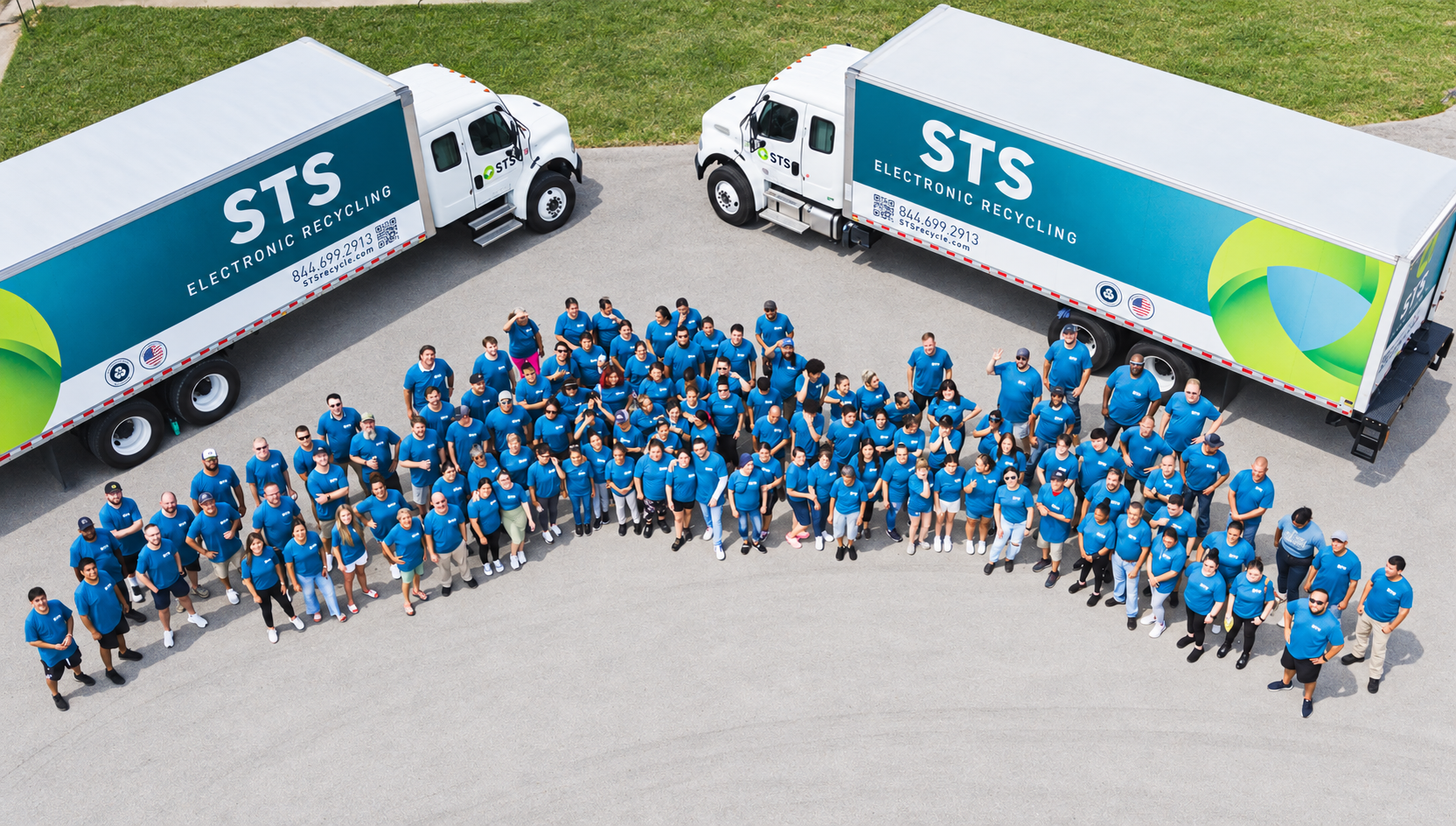
Ready to Build a Compliant IT Disposal Program in Richardson?
STS Electronic Recycling provides certified IT asset disposal for Richardson businesses. We serve Richardson from our 250,000 sq ft facility with same-week pickup, serialized certificates of destruction, and documented NIST 800-88 compliant data sanitization for Telecom Corridor and DFW organizations.




