
Austin Education IT Disposal Guide

Why Austin Education Organizations Need Specialized IT Disposal
District technology coordinators managing assets at the University of Texas at Austin (55,000 students), Austin ISD (72,702 students across 123 schools), or Austin Community College (43,394 students) face significant FERPA compliance stakes at device end-of-life.
One improperly retired Chromebook can expose student records, trigger a federal compliance review, and create reputational damage no institution can afford. Contact STS Electronic Recycling at 512-340-7393.
Austin's education sector spans one of the nation's largest research universities: UT Austin enrolls 55,000 students with 23,900 employees, while Austin Community College enrolled 43,394 students in fall 2025 across eight Central Texas campuses. Together with Austin ISD's 72,702 students and area private universities, Central Texas generates one of the state's largest concentrations of FERPA-regulated technology assets.
According to IBM's 2024 Cost of a Data Breach Report, the average data breach costs $4.88M across all industries. For education organizations, According to Comparitech research, 3,713 school and university data breaches have been recorded since 2005, making student PII protection during technology asset retirement a critical compliance obligation for Austin education organizations.
Austin's education community spans K-12 public and private schools, community colleges, and major research universities. Each sector faces overlapping obligations: FERPA for student education records, COPPA for students under age 13, Texas Education Agency cybersecurity requirements, and in some cases federal grant compliance requirements that specify how federally funded equipment must be disposed of at end-of-life.
What's Changed in Austin Education IT Disposal
The one-to-one device programs that expanded rapidly from 2020 through 2022 created a wave of Chromebooks, tablets, and student laptops now reaching end-of-life across Central Texas school systems. Devices distributed under those programs carry student data obligations that persist through the disposal process.
Simply returning a device to factory settings is not sufficient for FERPA compliance when it stored personally identifiable information. Texas education organizations need documented, certified destruction with a verifiable chain of custody for every device.
STS Electronic Recycling provides certified ITAD and data destruction with full chain of custody for Austin education organizations. We serve UT Austin, Austin ISD, and institutions throughout Travis County with serialized certificates and chain-of-custody documentation.
Organizations searching for electronics recycling near me in Austin, Round Rock, Cedar Park, Pflugerville, and Georgetown access same-week scheduled pickup via I-35 served from our central 250,000 sq ft processing facility.
The Mistake Most Education IT Directors Make
Waiting until summer break to scramble for a disposal vendor rather than establishing a certified program months in advance. By then, you are negotiating under time pressure, creating documentation gaps, and risking data exposure on devices staged in unsecured storage for weeks.
Education IT coordinators face student data protection obligations year-round. This guide helps Austin organizations build a proactive IT asset retirement program before budget cycles or device refresh schedules force the issue.
Understanding FERPA and Texas Education Compliance for IT Disposal
Under FERPA (20 U.S.C. § 1232g; 34 CFR Part 99), educational agencies receiving federal funding must protect student PII through the complete device lifecycle, including final disposition.
When a device stored grades, attendance data, disciplinary records, financial aid details, or IEP documentation, its retirement requires documented destruction. District technology coordinators and university IT directors in Austin must verify custody compliance before any device leaves campus:
FERPA Requirements for Education Device Disposal
What standards govern how Austin schools must retire student-data-bearing devices? The Department of Education's guidance, combined with NIST SP 800-88 Rev. 1, defines the applicable framework covering Clear, Purge, and Destroy levels of media sanitization:
- NIST 800-88 Rev. 1 compliant data sanitization: The federal standard for clearing, purging, or destroying electronic media. For devices that stored student PII, Purge-level or Destroy-level sanitization is appropriate to eliminate any data recovery risk from disposed assets.
- Serialized destruction certificates per device: Batch certificates do not satisfy documentation requirements when specific devices become linked to a potential data exposure event. Each certificate must list manufacturer, model, serial number, destruction method, date, and technician ID for every individual device processed.
- Unbroken chain of custody documentation: Tracked from your Austin campus to final destruction with zero gaps. If a device is later identified in a compliance review, complete chain-of-custody documentation is your primary evidence of proper disposal procedures.
- COPPA compliance for K-12 devices: Devices used by students under age 13 that stored data covered under COPPA require additional care. Your disposal vendor must understand both FERPA and COPPA obligations for K-12 1:1 device deployments throughout Central Texas.
For Austin's K-12 and university electronics recycling requirements, STS provides NIST 800-88 compliant sanitization with serialized certificates aligned to school and university IT disposal standards under FERPA and Texas Education Agency guidance.
Technology Director, Central Texas School District
Texas State Requirements Layered Over FERPA
Texas education organizations face layered obligations: the Texas Data Privacy and Security Act (TDPSA, effective July 1, 2024) added explicit data deletion and destruction requirements beyond FERPA. Texas Education Agency cybersecurity frameworks and Government Code Chapter 552 create additional mandates. Austin Community College and UT Austin must produce compliance documentation satisfying all three frameworks simultaneously when audited.
Public K-12 Schools
Austin-area public school districts face FERPA obligations for every device that touched student records. Technology coordinators must document disposal for devices from 1:1 programs, special education technology, and district-owned devices returned from remote learning deployments. Serialized certificates are the minimum documentation standard for each individual device disposed.
Colleges and Universities
UT Austin and Austin Community College face FERPA requirements covering student academic records, financial aid data, and administrative systems. University IT departments managing large-scale infrastructure refreshes need ITAD vendors with documented certification, rigorous data security protocols, and sufficient facility capacity to handle enterprise-scale volumes. Review Austin school electronics recycling options for higher education requirements.
Data Agreement Checklist: Required Elements for Education ITAD Vendors
When engaging an ITAD vendor with access to student-data-bearing equipment, your agreement must specify: permitted uses of student data during handling; prohibition on vendor retaining student PII; appropriate security safeguards during transport; breach reporting obligations if a device is compromised; and destruction confirmation for all covered devices.
These elements protect Austin education organizations under both FERPA and Texas data privacy requirements.
How Should Austin Education Organizations Evaluate ITAD Vendors?
District technology coordinators and university IT directors at Austin-area institutions face a recurring vendor evaluation challenge: providers claiming education ITAD expertise rarely maintain current NAID AAA certification, FERPA-specific documentation workflows, and the per-device destruction certificates required for compliance audits. Here is how to distinguish qualified Austin vendors from claims:
What Certifications Are Non-Negotiable for Education ITAD Vendors?
Require specific certifications with current verification dates. Do not accept "we follow industry standards" as a sufficient answer from any vendor handling student-data-bearing devices:
R2v3 Certification
Why it matters for education: R2v3 ensures downstream tracking of all materials through certified processors, protecting Austin schools from downstream liability if disposed equipment resurfaces in secondary markets.
Verify current certification status at sustainableelectronics.org before any asset transfer. Per R2v3:2020 certification standards, downstream material tracking through certified smelters is required; expired R2 certificates are common among vendors targeting the education market.
NAID AAA Certification
Why it matters for FERPA: NAID AAA certified data destruction demonstrates rigorous security standards for data-bearing media destruction. Verify at naidonline.org and confirm the specific certification scope: plant-based destruction, mobile on-site destruction, or both. For Austin education organizations requiring witnessed on-site destruction, mobile scope certification is required.
Facility Capacity and Education-Specific Capabilities
When a K-12 district or university refreshes devices at scale, vendor processing capacity determines whether a project succeeds. A vendor operating from a small warehouse cannot handle a district-wide Chromebook replacement cycle or a university lab refresh involving hundreds of servers and workstations. Ask these questions before committing to any vendor:
- Facility square footage: Anything under 100,000 sq ft suggests limited processing throughput. We serve Austin from our 250,000 sq ft facility, providing the capacity that large education deployments require without scheduling delays.
- Academic calendar experience: District technology coordinators typically expect ITAD vendors to reserve summer scheduling capacity months in advance, which is why STS prioritizes academic calendar alignment for Austin K-12 and university clients. Staged pickups for devices collected incrementally during the school year are standard practice.
- Mobile shredding trucks: For witnessed on-site hard drive shredding in Austin at your campus location. Essential for high-sensitivity devices and school servers.
- Chromebook and tablet procedures: Education ITAD increasingly involves Chromebooks and tablets rather than traditional PCs. Verify your vendor has documented procedures for ChromeOS factory reset combined with physical destruction for devices that cannot be fully sanitized through software methods alone.
Technology Director, Central Texas K-12 District
Academic Calendar Coordination
Why do Austin-area schools need education-specific ITAD vendors rather than general commercial providers? School districts and universities operate on fixed academic calendars: summer provides the primary disposal window, and vendors without education experience often cannot maintain scheduling availability during July and August when IT projects concentrate.
From UT Austin's summer research programs to Austin Community College's rolling semester schedule, each institution has unique scheduling constraints. Your vendor must accommodate staged pickups, multi-campus coordination across Travis County, and documentation turnaround times compatible with institutional records retention requirements.
The Insurance Verification Most Education Teams Skip
Request a Certificate of Insurance showing minimum $2M general liability and $5M cyber liability coverage before authorizing any asset transfer. Student data breach claims fall under cyber liability, not standard property coverage. Any vendor claiming smaller coverage is sufficient for education clients is a disqualifying red flag.
How Do Austin Education Organizations Build a Compliant IT Disposal Program?
Do not wait until a device refresh is overdue or a state audit exposes disposal gaps. District technology coordinators at Austin-area institutions with mature technology asset retirement programs structure their approach around academic calendar windows and the August-to-July Texas school budget cycle. Here is how to build that program before devices accumulate in unsecured storage:
Phase 1: Policy Development (Weeks 1-2)
Written policies must precede any disposal activity. In education, this documentation is what state auditors and FERPA compliance reviews examine first when investigating a disposal-related incident.
Document these policy elements:
- Who authorizes equipment for disposal: Technology Director, Chief Technology Officer, or Superintendent-level approval
- FERPA risk classification for asset types: student-assigned 1:1 devices versus administrative systems versus shared lab equipment
- Required documentation standards: serialized destruction certificates, chain-of-custody records, vendor certification verification dates
- Vendor qualification criteria including data security agreement requirements and mandatory certification standards
- Retention periods for disposal records: FERPA-related documentation applies to records tied to student data handling and must be retained accordingly
For St. Edward's University and multi-campus institutions throughout Travis County, district technology directors align these policies with Texas Education Agency frameworks, satisfying superintendent oversight for Austin ISD's 72,702 students and FERPA documentation requirements for every disposed device.
Phase 2: Vendor Selection (Weeks 3-6)
Request proposals from at least three vendors. Include these elements in your RFP:
Scope Definition
Estimated device volumes by quarter; asset types including Chromebooks, laptops, servers, and AV systems; geographic locations from main campus to satellite sites; and summer scheduling requirements with multi-site Travis County coordination.
Evaluation Criteria
R2v3 and NAID AAA certification with current verification dates. Serialized certified data destruction in Austin with per-device documentation. References from Texas education organizations. Insurance coverage amounts. Academic calendar scheduling flexibility. Data agreement willingness and pre-drafted agreement availability.
Phase 3: Pilot Program (Weeks 7-10)
Do not commit to a multi-year contract based on a vendor's sales presentation. Run a controlled pilot with a manageable batch of 25-50 devices from a single location.
Evaluate certificate quality: did you receive individual serial number documentation for every device, or a single batch total? Check response times against committed pickup windows. Verify data destruction methods match your FERPA risk classification. Assess communication quality: can you reach someone who understands academic scheduling constraints and device disposition requirements?
IT Director, Austin-Area University
Phase 4: Implementation and Ongoing Management
Once you have validated a vendor, structure the engagement for long-term compliance success. Lock in pricing aligned to your budget cycle: Texas school districts operate on an August-to-July fiscal year. Define service level agreements with specific summer pickup windows.
When evaluating ITAD vendors, district technology coordinators at Austin ISD and UT Austin verify R2v3 and NAID AAA certifications annually, since expired credentials during a TEA review create immediate compliance exposure.
Reporting Structure: Quarterly summaries of assets processed with serialized certificate access for your records system. Annual compliance documentation ready for TEA reporting, district audits, or FERPA review response. Sustainability reports for district environmental goals and ESG documentation requirements.
The Budget Cycle Problem Most Education IT Programs Miss
Texas school districts typically approve technology budgets in spring for the fiscal year beginning August 1. If IT disposal is not budgeted as a separate line item from device purchasing, organizations find themselves with retired equipment and no allocated funds for certified ITAD.
Build disposal costs into every device refresh budget line from the start. Do not treat it as an afterthought when devices are already out of service and accumulating in storage rooms across campus.
Which Data Destruction Methods Are Required for FERPA-Compliant Education IT Disposal?
Per NIST SP 800-88 Rev. 1 guidelines, data destruction method selection must match device type and student data sensitivity level. For Austin education organizations, this means Purge-level wiping for functional reusable assets, degaussing for legacy magnetic media, and physical shredding for Chromebooks and student-assigned devices carrying PII. Here is when each method applies in Central Texas education environments:
Software-Based Wiping (NIST 800-88 Rev. 1)
According to NIST SP 800-88 Rev. 1 guidelines, media sanitization requires verification at the Clear, Purge, or Destroy level. For devices that stored student PII, Purge-level sanitization is the appropriate minimum for functioning drives intended for redeployment or secondary market remarketing. Clear-level is generally insufficient for student-data-bearing media under FERPA's data protection obligations. Purge-level applies to:
- Functioning drives designated for reuse within the district or resale through certified remarketing, Purge-level overwrite with cryptographic verification
- Administrative workstations with limited or no direct student data exposure, documented Clear-level process with serialized certificate
- Equipment where asset recovery value through remarketing offsets disposal costs, NIST Purge creates the highest remarketing value for reusable devices
Critical limitation for education: Wiping only works on functioning drives. Devices returned damaged from 1:1 programs, with cracked storage, water damage, or non-functional media cannot be wiped.
For Texas State University and other institutions running research computing programs, storage failure on aging equipment is common and must be resolved through physical destruction. Attempting to certify a wipe on non-functional media creates a false certificate.
NIST 800-88 Purge
Multi-pass overwrite with cryptographic verification. Appropriate for PII-bearing media under FERPA's data protection framework. Takes 2-4 hours per drive depending on capacity. Generates verifiable audit logs acceptable as FERPA disposal documentation for functioning assets destined for redeployment.
DoD 5220.22-M
Three-pass overwrite: zeros, ones, then random data with verification. Accepted by many education compliance frameworks, particularly for federally funded equipment. Most current guidance now defaults to NIST 800-88 Purge as the preferred standard for civilian education institutions receiving federal funding.
Chromebook and Tablet-Specific Requirements
Austin education IT programs most frequently create FERPA compliance gaps with Chromebook disposal because ChromeOS factory reset does not meet NIST 800-88 media sanitization standards. For Austin laptop and tablet recycling with FERPA documentation, tablets running iOS similarly cannot be fully sanitized through traditional hard drive wiping procedures.
ChromeOS factory reset clears local storage and deregisters from the management console, but physical destruction of the storage module is the only method providing FERPA-defensible evidence of destruction for student-data-bearing devices. For devices returned in damaged condition from student 1:1 programs, physical shredding is the only compliant option.
STS Electronic Recycling provides FERPA-compliant Chromebook, iPad, and tablet destruction for Austin K-12 districts including Austin ISD and institutions such as UT Austin and Austin Community College, with physical destruction and serialized certificates per device from our 250,000 sq ft processing facility.
When Is Physical Shredding Required for Education IT Assets?
Industrial shredders reduce drives and complete device storage modules to particles small enough that data reconstruction is not physically possible. Two delivery methods serve Austin education organizations differently:
Plant-Based Shredding
Devices transported to our 250,000 sq ft processing facility and shredded with video verification, full custody documentation from pickup to destruction. Most economical for large-volume school district device disposal projects. Serialized destruction certificates issued per device for every unit processed.
Mobile On-Site Shredding
Truck-mounted shredder comes to your Austin campus. Staff witnesses destruction in real time, the most defensible documentation approach for high-sensitivity student records and school server decommissions. Eliminates all chain-of-custody uncertainty for the highest-sensitivity assets in your education environment.
The Tiered Strategy for Education Budget Reality
Most Austin education organizations use a tiered approach: NIST Purge wiping for approximately 60% of equipment (functioning administrative devices and redeployable assets where value recovery offsets cost), physical shredding for approximately 40% (student-assigned 1:1 devices, damaged returns, and Chromebooks or tablets where software wiping is insufficient).
This balances FERPA documentation requirements with per-unit disposal costs without paying physical shredding prices for every functioning administrative workstation.
IT Disposal Mistakes Austin Education Organizations Keep Making
STS Electronic Recycling provides certified IT asset disposition for Austin education organizations, serving K-12 districts, community colleges, and universities throughout Travis County. Services include NIST 800-88 compliant data sanitization, per-device destruction certificates, and complete chain-of-custody documentation satisfying FERPA 20 U.S.C. § 1232g requirements.
After working with education organizations across Texas, these are the recurring compliance failures that create preventable liability for Austin schools and universities:
Mistake #1: Treating a Factory Reset as Sufficient Disposal
This is the most common and most dangerous mistake in education IT disposal. A factory reset removes user accounts and reinstalls the operating system, but does not meet NIST 800-88 standards for media sanitization. Student data fragments can remain on storage media and are potentially recoverable with common forensic tools.
FERPA requires certified destruction documentation with a verifiable chain of custody. A factory reset log is not that documentation. Once a student-data-bearing device leaves your control without NIST 800-88 certification, you have a compliance gap regardless of subsequent vendor handling.
Mistake #2: Accepting Batch Certificates Instead of Serialized Documentation
According to FERPA compliance officers, batch certificates covering an entire pickup are not sufficient FERPA documentation. A certificate stating "500 Chromebooks destroyed on [date]" proves nothing about any individual device. When a compliance review asks you to verify a specific student-assigned device was properly destroyed, a batch certificate fails that test.
UT Austin and Austin Community College both require per-device certificates with manufacturer, model, serial number, destruction method, date, and technician ID for every device in large-scale institutional deployments.
A proper certificate of destruction must include: manufacturer and model; serial number and asset tag if present; destruction method and NIST standard applied; destruction date and facility location; technician identification; and a unique certificate ID for records retention purposes.
Director of Technology, Austin-Area School District
Mistake #3: Overlooking Student-Assigned Devices from 1:1 Programs
Student-assigned devices from 1:1 programs carry personal data obligations that make them among the highest-risk assets in the education environment. Every device assigned to a student and connected to district systems contains data that can identify that student.
FERPA obligations apply regardless of whether the device is functional or returned damaged. Damaged returns are the most frequently overlooked category in Austin education device retirement programs and the most likely to create compliance gaps when retirement cycles are compressed.
Mistake #4: Timing Disposal Only Around Budget Expirations
Waiting until fund expiration forces rushed procurement decisions and compliance gaps. Texas school district budget cycles run August through July. Spring technology purchases create summer disposal needs. Districts that do not engage certified ITAD vendors months in advance face limited summer scheduling availability and risk carrying student-data-bearing devices through another full school year.
Mistake #5: No Vendor Continuity Plan
What happens if your certified ITAD vendor loses R2 or NAID certification mid-contract, or cannot handle the volume of a district-wide device refresh on the summer timeline you need? Education organizations cannot pause student data protection obligations while sourcing a replacement vendor.
Mature programs across Travis County maintain awareness of at least one backup-qualified vendor, periodically engaged to maintain a documented relationship and current data agreement. For qualifying volumes, STS's education technology disposal services include scheduled pickup at no charge throughout the Austin metro, Round Rock, Cedar Park, and Pflugerville. Contact our Austin team at 512-340-7393 to discuss program requirements.
The Small-Volume Compliance Gap
Most ITAD vendors prioritize large pickups of 50 or more units. But what about the special education department with three retired adaptive devices, or the media center with a single failed server? These small-quantity disposals create documentation gaps that compliance reviews surface immediately.
Establish quarterly collection protocols where departments stage small quantities to a central campus location for consolidated vendor pickup, maintaining per-device documentation for every asset regardless of batch size or pickup volume.
Related Austin Services
Core ITAD Services
Support Services
Industry Solutions
About This Guide
This FERPA compliance reference guide was developed by the STS Electronic Recycling team based on direct experience serving University of Texas at Austin, Austin Community College, Austin ISD, and education organizations throughout Travis County and Central Texas.
STS holds certifications for chain of custody and secure recycling and has processed education IT assets for Texas institutions under FERPA 20 U.S.C. § 1232g requirements. Questions? Email This email address is being protected from spambots. You need JavaScript enabled to view it. or submit a request online. Content reviewed by Mark Domnenko, AI Strategy Consultant.
About STS Electronic Recycling
Where your equipment is processed.
STS Electronic Recycling, Inc. is headquartered in Jacksonville, Texas, and has served schools, businesses, healthcare systems, and government agencies across all 50 states since 2011.
Equipment collected in Austin is staged locally and transported to one of our two R2v3 certified processing facilities in Jacksonville, Texas and Houston, Texas, where all data destruction and material recovery takes place.
Collection, transport and processing are staffed by STS crews rather than subcontracted to a third-party carrier, which is why the chain of custody holds from your dock to the certificate.
View all STS locations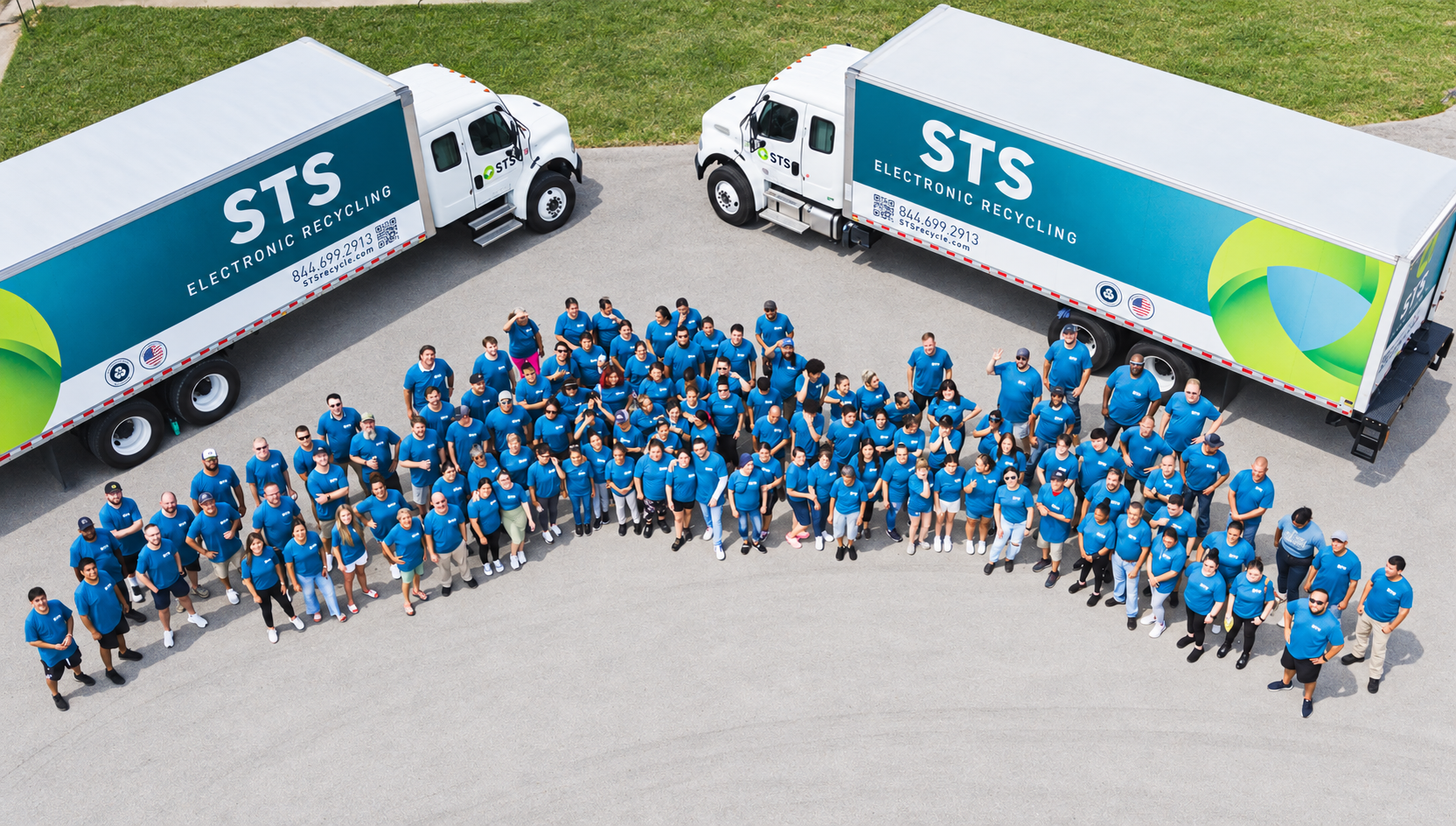
Ready to Implement FERPA-Compliant IT Disposal in Austin?
STS Electronic Recycling provides certified services for Austin education organizations. Our 250,000 sq ft facility serves Central Texas with same-week pickup, FERPA compliance documentation, and certified data destruction for K-12 districts, community colleges, and universities throughout the Austin metro.




