Clearwater Degaussing Services for Hard Drives and Backup Tape
Serving Clearwater and Pinellas County with secure degaussing for magnetic media. Free pickup for qualifying volumes, with documentation issued for each job.
- Data Destruction Aligned to NIST SP 800-88 Rev. 2
- Chain of Custody and Certificate of Destruction
- Free Pickup for Qualifying Clearwater Volumes
Retired tape and drives still hold live data
STS Electronic Recycling provides secure degaussing and chain of custody documentation for Clearwater organizations retiring hard drives and backup tape. Operating since 2011 from a 250,000 sq ft processing operation, STS handles scheduled pickup, serial level certificates of destruction, and downstream tracking for Clearwater, home to the Pinellas County Courthouse and Justice Center.
Degaussing is one method within our Clearwater data destruction services. Pair it with shredding or wiping when your policy needs more than one step. The Clearwater e-waste recycling hub lists everything else we handle.
Clearwater IT directors at courts, campuses, and healthcare offices rarely retire media on a fixed date, and reconciling an old tape library against the asset register is the usual pain point. Most jobs begin with a call, a rough count of drives and tapes, and a pickup window that fits your schedule.
Get A Free Quote
What Can Degaussing Handle, and Where Does It Stop?
Degaussing is a data sanitization method that applies a strong magnetic field to disrupt stored data on hard disk drives, backup tape, and legacy disks. It does not work on SSDs, flash storage, or optical discs, so those need wiping or shredding instead.
Magnetic Media
Hard drives, tape, legacy disks
Limits and Options
SSDs and flash need other methods
Pickup and Custody
Serial logs, sealed transport
Degaussing for Hard Drives and Backup Tape
A degausser applies a strong magnetic field that disrupts the data stored on a hard drive or tape. Done properly, this sanitization typically makes conventional recovery infeasible, and it often leaves a hard drive permanently inoperable.
STS applies magnetic media sanitization as a Purge method, aligned to NIST 800-88, with verification and documentation for each device.
STS engagements involving legacy magnetic media typically begin with a count by type, then serial logging before pickup and sorting by media type at intake.
Coercivity matters. Modern high density drives and newer tape formats resist weak fields, so the equipment must be rated for the media being processed.
Hard Disk Drives
Desktop, laptop, and server drives typically left unreadable and inoperable
Backup Tape
LTO, DLT, and DAT cartridges from retired backup libraries
Legacy Magnetic Media
Floppy disks, reels, and older archive media from retired systems
Servers and Arrays
Drives pulled from retired servers and storage arrays
Verification Records
Method and result logged for each batch of media
Witnessed Option
Witnessed destruction is available on request for audit files
Typical Clearwater degaussing jobs
- A healthcare network retiring backup tape libraries after a storage migration
- A school or college clearing lab and records drives at the end of a term
- A county or court office closing a records room that holds legacy magnetic archives
Where Degaussing Stops Working
Degaussing does not work on solid state drives, flash storage, or optical discs. Those media hold data without magnetic domains, so a degausser leaves it untouched.
For SSDs, phones, and flash media, STS uses software wiping or hard drive shredding in Clearwater. Many policies also pair this sanitization with shredding when a physical end state is required.
Wondering which method fits your media in Clearwater? Method choice follows media type and your written policy, and STS confirms the plan before pickup.
Working equipment can often be wiped and remarketed instead of degaussed.
SSD and Flash
Needs software wiping or shredding, not a magnetic field
Encrypted Drives
Encryption does not replace sanitization, so confirm what your policy requires
Optical Discs
CDs and DVDs need a different destruction method
Resale Plans
A magnetically sanitized drive is typically inoperable, so resale needs another method
Hybrid Drives
Hybrid drives hold flash memory and need a second method
Mixed Loads
Loads with SSDs and hard drives are sorted by media type at intake
Common method pairings
- Degauss, then shred: drives that need a physical end state
- Wipe, then remarket: SSDs and laptops headed for resale
- Shred only: optical discs and damaged media
Pickup, Transport, and Chain of Custody
Pickup is scheduled across Clearwater, Clearwater Beach, and throughout Pinellas County, and same-week scheduling is typically available.
STS Electronic Recycling secures degaussing jobs for Clearwater clients with serial level logging before pickup and secured, GPS tracked transport. Accurate reporting and full chain of custody run through final processing, with a documented certificate of destruction typically issued within 48 hours.
Our secure fleet serves Clearwater with scheduled pickups near US 19 North and throughout the Clearwater Beach area. Custody does not pass through a third party carrier between your dock and processing.
When a Clearwater site closes, large jobs can be scheduled in phases, with tape racks, drive carts, and loose media staged by site so each location reconciles to its own count.
Serial Level Logging
Each asset recorded before it moves
Secured Transport
GPS tracked vehicles with secured cargo compartments
Same Week Scheduling
Pickup windows set around your retirement or closure dates
Certificate Within 48 Hours
Documentation typically issued within 48 hours of processing
Multi-Site Pickups
Coordinated schedules for offices, campuses, and records rooms
Dock Ready Guidance
Packing guidance for tape racks and drive pallets before pickup
Before pickup
- Count drives and tapes by type
- Note any media that holds regulated data
- Flag items that need witnessed destruction
What Equipment Can STS Process Alongside Degaussing?
STS processes computers, laptops, servers, networking gear, printers, monitors, and legacy electronics alongside secure data sanitization jobs, because magnetic media rarely retires alone. Each category links to its own recycling page, and drives pulled from any of them can be degaussed first.
Computing Equipment
Mobile & Telecom
The standards a degaussing record is judged against
STS Electronic Recycling pairs each degaussing job with a method matched to media type and serial level records. Chain of custody runs from your dock to final processing, with documentation that supports HIPAA, FERPA, and NIST 800-88 audit reviews for Clearwater organizations.
NIST SP 800-88 Rev. 2
Per the NIST SP 800-88 Rev. 2 FAQ, degaussing "currently operates as a physical purge technique for legacy magnetic media," not a true destroy method. The standard defers technique detail to IEEE 2883, and verification of each result should be documented.
HIPAA Aligned
Under HIPAA 45 CFR 164.310(d)(2)(i), covered entities must implement policies for the final disposition of electronic PHI and the media storing it. Retired backup tape and hard drives fall under that requirement, and a clear disposal record helps support audits.
Chain of Custody
Serial level logs track each drive and tape from your dock to final processing. The same record shows method, date, and result, which helps an auditor reconcile the record against your asset register without guesswork.
Related frameworks: FERPA, SOC 2, ISO 27001, DoD 5220.22-M. When evaluating data sanitization providers, IT directors typically prioritize serial level documentation and result verification.
Request Compliance DocumentationWhy Does a Degaussed Drive Need a Record?
A degaussed drive needs a record because the process leaves no visible change, so the proof is the paperwork. Serial logs, method, and date let an auditor tie each device back to your asset register and confirm that the result was verified.
BayCare Health System, a roughly 15 hospital system headquartered in Clearwater, and Morton Plant Hospital, with 599 beds, represent a healthcare sector where retired backup tape needs documented handling. Gaps usually appear when one tape from a retired library never reaches either report.
According to IBM's Cost of a Data Breach Report 2026, the global average breach costs $4.99 million, so one unmatched tape from a closed records room is a gap worth closing.
No site visit required
before it moves
recorded per batch
Certificate within 48 hours
What Clearwater IT teams ask about degaussing
Short answers on methods, limits, documentation, and pickup for Clearwater organizations retiring magnetic media from offices, campuses, and records rooms.
What can be degaussed?
Degaussing works on magnetic media such as hard disk drives and backup tape, including LTO, DLT, and DAT cartridges from retired libraries. It does not work on SSDs, flash storage, or optical discs, which need software wiping or physical shredding instead.
Is degaussing enough, or should drives also be shredded?
Degaussing is a physical purge technique for legacy magnetic media, but it is not a true destroy method, so some policies call for a physical end state. In that case, drives are degaussed first and then shredded, with both steps documented.
What documentation do I receive?
Each job includes a serial level Clearwater certificate of destruction, chain of custody records, and a batch report showing method and date. Documentation typically arrives within 48 hours of processing and supports your audit files.
What certifications and standards do you maintain?
STS maintains data destruction aligned to NIST SP 800-88 and DoD 5220.22-M, with HIPAA, SOC 2, and ISO 27001 aligned controls. Serial level certificates of destruction and batch records document each asset, from pickup through final processing.
What areas do you serve?
Organizations searching for degaussing services near me in Clearwater find that STS provides scheduled pickup in Largo, Dunedin, Safety Harbor, and throughout Pinellas County. See the Clearwater e-waste recycling hub for every service and equipment type we handle.
How does pickup work?
Pickup is free for qualifying volumes across Pinellas County and is typically scheduled within the same week. Media is logged by serial number, loaded into secured vehicles, and tracked until it is processed so custody stays documented.
Still Have Questions?
IT directors typically expect serial level certificates of destruction for audit reviews, included with STS magnetic media sanitization engagements.
Call (844) 699-2913Where Your Equipment Is Processed
STS Electronic Recycling, Inc. is headquartered in Jacksonville, Texas, and has served schools, businesses, healthcare systems, and government agencies across all 50 states since 2011.
Equipment collected in Clearwater is staged locally and transported to one of our two R2v3 certified processing facilities in Jacksonville, Texas and Houston, Texas, where all data destruction and material recovery takes place.
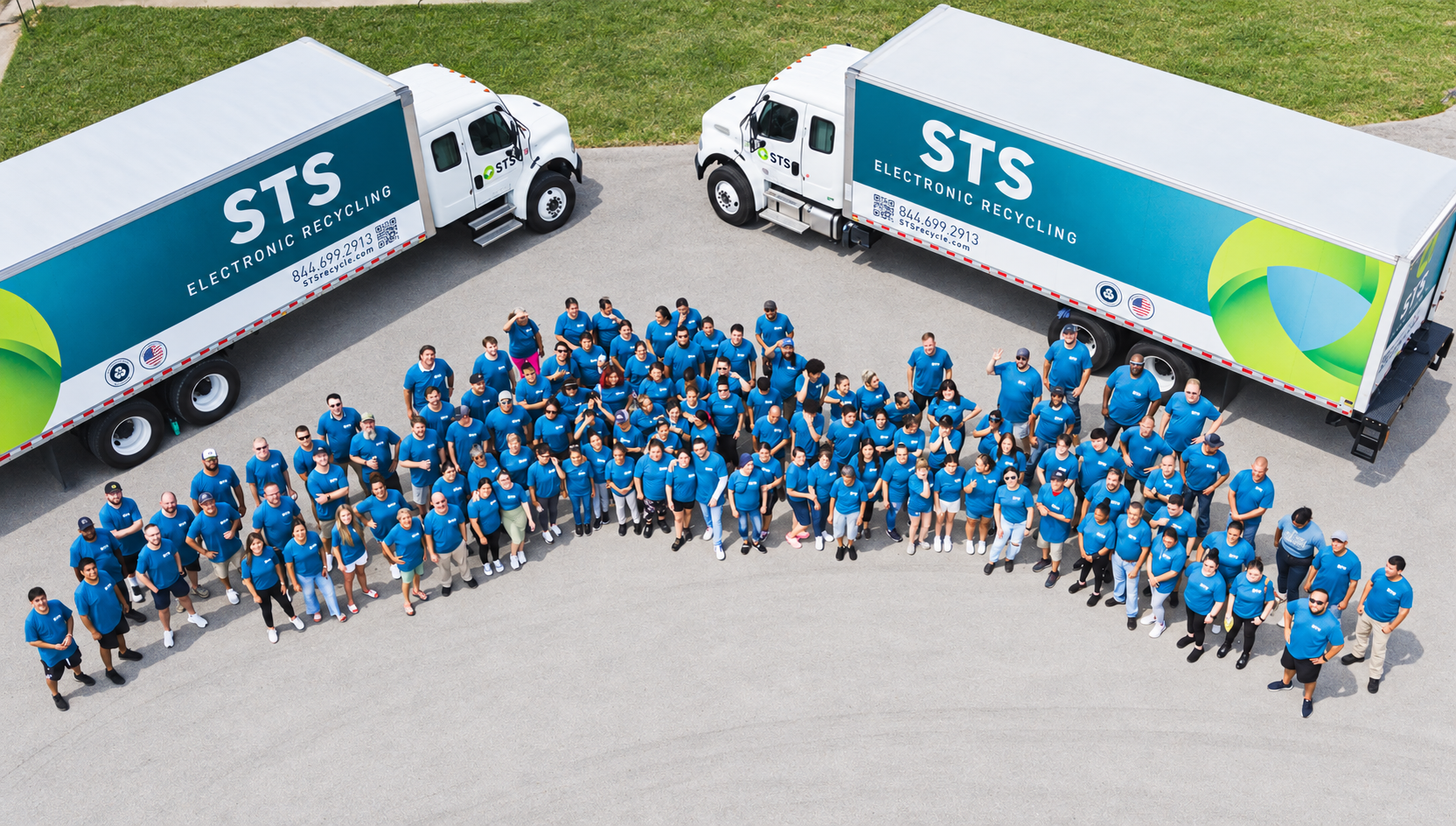
Collection, transport and processing are staffed by STS crews rather than subcontracted to a third-party carrier, which is why the chain of custody holds from your dock to the certificate.
Ready to Get Started with Clearwater Degaussing Services?
Get started with a quick consultation, with same-week scheduling available across Clearwater and Pinellas County. Send a rough count of drives and tapes, and we will confirm the method and pickup window.