Battery Recycling Services | Lithium-Ion, Lead-Acid & All Battery Types | STS Electronic Recycling

Professional Battery Recycling Services for All Battery Types

RCRA compliant battery recycling for lithium-ion, lead-acid, nickel-cadmium, and all commercial battery types. R2v3 certified processing with comprehensive documentation for businesses nationwide.

  • Most Battery Types Accepted - Call for Specifics
  • RCRA Universal Waste Compliant Processing
  • R2v3 Certified Facility with Responsible Processing
Enterprise Battery Disposal

The Battery Crisis Requires Certified Processing

According to EPA guidance issued May 2023, most lithium-ion batteries meet hazardous waste criteria under RCRA due to ignitability (D001) and reactivity (D003) characteristics. Lithium-ion batteries became the leading cause of waste facility fires in 2025—thermal runaway events can exceed 1,000°F, igniting surrounding materials in collection vehicles.

The U.S. battery recycling market reached $4.09 billion in 2024 and projects to $25.30 billion by 2030, driven by electric vehicle adoption and Extended Producer Responsibility programs. STS Electronic Recycling provides RCRA compliant battery recycling through our 600,000 sq ft R2v3 certified facility in Jacksonville, Texas with universal waste handling protocols for most battery chemistries including UPS systems, automotive batteries, and industrial battery systems. Contact us for service availability and pricing.

R2v3 Certified
RCRA Compliant
DOT Certified Transport

Request Battery Recycling Quote

Get customized pricing for your battery disposal needs

Battery Chemistries

Complete Battery Recycling for All Types

When evaluating battery recycling providers, facilities managers at regulated organizations prioritize R2v3 certification and downstream documentation for audit compliance. STS processes most battery chemistries with specialized handling protocols and regulatory compliance documentation. Contact us for specific battery type acceptance and custom quotes.

Lithium-Ion Batteries

Classified as hazardous waste under RCRA due to thermal runaway risk. Requires universal waste handling with DOT-compliant transportation.

  • Electric Vehicle Batteries
  • UPS & Data Center Batteries
  • Power Tool Batteries
  • Consumer Electronics
  • E-Bikes & Scooters

Lead-Acid Batteries

According to industry data, lead-acid batteries comprise 84% of recycled battery volume and achieve 99% recycling rates. Lead-acid battery exclusion available under RCRA regulations for qualifying spent batteries.

  • Automotive Starting Batteries
  • Forklift & Industrial Batteries
  • Sealed Lead-Acid (SLA)
  • Gel Cell Batteries
  • Emergency Lighting Systems

Nickel-Cadmium & NiMH

Rechargeable nickel-based batteries contain heavy metals requiring certified recycling under universal waste regulations.

  • Nickel-Cadmium (NiCd)
  • Nickel-Metal Hydride (NiMH)
  • Emergency Lighting
  • Industrial Equipment
  • Portable Power Tools

Alkaline Batteries

While alkaline batteries contain recyclable zinc and manganese, many jurisdictions now mandate recycling for commercial generators.

  • AA, AAA, C, D Cells
  • 9V Batteries
  • Bulk Alkaline Disposal
  • Flashlight Batteries
  • Remote Control Batteries

Button Cell Batteries

Small batteries containing silver, mercury, or lithium require specialized handling due to toxicity and high material recovery value.

  • Watch Batteries
  • Hearing Aid Batteries
  • Calculator Batteries
  • Medical Device Batteries
  • Silver Oxide & Lithium Coin

Specialty Batteries

Custom and industrial battery systems require assessment for proper classification and recycling pathways under federal regulations.

  • Zinc-Air Batteries
  • Mercury Batteries
  • Nickel-Zinc Batteries
  • Custom Battery Packs
  • Industrial Energy Storage
Our Process

RCRA Compliant Battery Management

Universal waste handling protocols combined with R2v3 certified processing ensure full regulatory compliance. Service availability and logistics vary by location and battery type—contact us for details.

Universal Waste Handling

RCRA compliant protocols

DOT Transportation

Certified hazmat shipping

Material Recovery

Critical mineral extraction

Universal Waste Regulations for Battery Disposal

Per RCRA's universal waste regulations (40 CFR Part 273), streamlined requirements apply for battery generators accumulating waste batteries. Under EPA guidance issued May 2023, most lithium-ion batteries meet hazardous waste criteria due to ignitability (D001) and reactivity (D003) characteristics. Intact batteries can be managed as universal waste—damaged batteries leaking electrolytes must be managed as fully regulated hazardous waste.

Requirements differ based on accumulation volume. Small quantity handlers accumulating less than 5,000 kg total universal waste may store batteries on-site for one year. Large quantity handlers exceeding 5,000 kg face stricter labeling and six-month accumulation limits. STS coordinates with businesses to ensure proper classification, labeling, and accumulation timeframes that satisfy federal and state requirements.

Proper Container Labeling

Containers marked "Universal Waste - Batteries" with accumulation start date and waste type designation per RCRA standards

Handler Classification

Assessment of small vs large quantity handler status based on total universal waste accumulation volume

Accumulation Time Limits

Compliance monitoring to ensure batteries shipped within one year (small) or six months (large) of accumulation start

Destination Facility Requirements

All batteries shipped to R2 certified recycler or RCRA-permitted treatment facility as required by universal waste rules

DOT Hazardous Materials Transportation

Department of Transportation regulations (49 CFR Parts 171-180) classify lithium batteries as hazardous materials requiring compliance with Hazardous Materials Regulations during transportation. DOT's "Check the Box" campaign and May 2022 Safety Advisory Notice emphasize proper identification, packaging, labeling, and shipping paper requirements for battery shipments.

Lithium batteries must comply with UN Manual of Tests and Criteria standards. Damaged or defective batteries face additional packaging requirements under Special Provision 376. Our DOT-certified transportation specialists handle all hazmat employee training requirements, package markings per 49 CFR 172, and emergency response information mandated for battery shipments.

Hazmat Certification

DOT-certified drivers and hazmat employee training compliant with 49 CFR 172.704 requirements for battery transport

Proper Packaging Standards

UN-certified packaging meeting 49 CFR 173.185 requirements with appropriate cushioning and terminal protection

Shipping Documentation

Complete shipping papers with proper shipping names, hazard class, UN numbers, and emergency contact information

Vehicle Placarding

Appropriate hazmat placards and markings on transport vehicles per DOT visibility and placement requirements

Critical Mineral Recovery from Battery Waste

Battery recycling recovers critical minerals including lithium, cobalt, nickel, copper, aluminum, and manganese. According to DOE's ReCell Center research, hydrometallurgical and pyrometallurgical processes can recover 95%+ of battery materials. Direct recycling preserves cathode structure but remains at pilot scale. Lead-acid recycling achieves 99% recovery rates returning lead to battery manufacturing within closed-loop supply chains.

The Infrastructure Investment and Jobs Act (2021) allocated $60 million for battery recycling research and $50 million for local recycling programs. R2v3 certification requires downstream tracking to certified smelters. STS provides documentation showing material flow from your facility through final processing at permitted facilities, satisfying extended producer responsibility frameworks and ESG reporting requirements.

Downstream Accountability

R2v3 certification mandates tracking materials to final smelters with third-party verification and audit documentation

Material Composition Reports

Weight tickets and material composition analysis showing recovered metals and recycling efficiency metrics

ESG Impact Documentation

Environmental impact reporting for corporate sustainability programs showing material diversion and carbon offset calculations

Zero Landfill Commitment

All battery materials processed through R2 certified facilities with zero disposal to landfills or incinerators

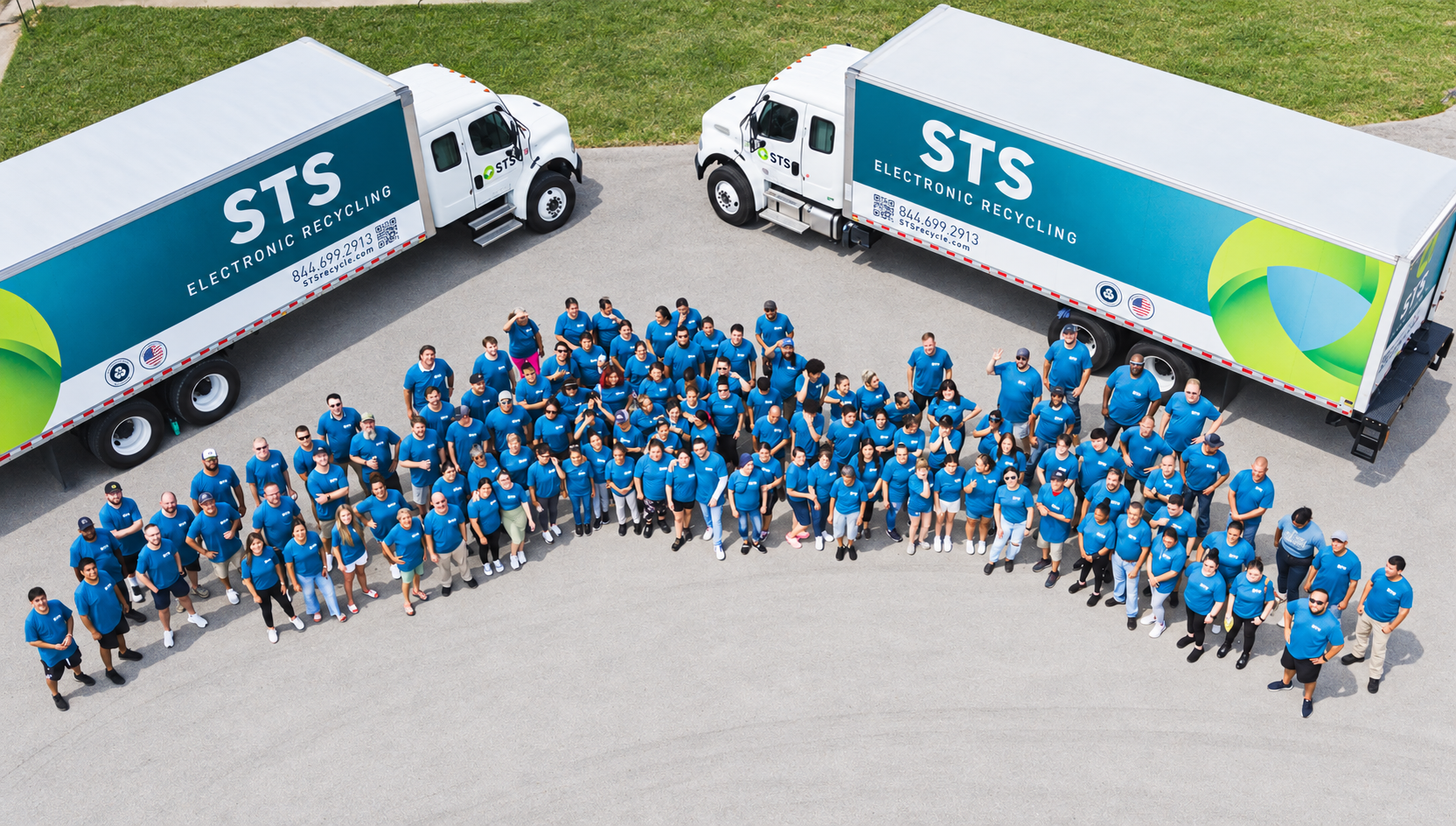
STS Electronic Recycling 600,000 sq ft facility for battery recycling with R2v3 certification
600K+
Sq Ft Facility
Why STS

The Battery Fire Crisis Demands Expertise

Compliance officers typically expect serial-number-specific documentation for audit reviews—included in every STS engagement. New Hampshire banned lithium-ion battery disposal in landfills effective July 2025 due to facility fires. California prohibits all battery types from trash. Lithium-ion batteries experiencing thermal runaway can reach temperatures exceeding 1,000°F, igniting surrounding materials. Facilities managers at organizations requiring certified disposal consistently choose R2v3 processors ensuring downstream tracking through final smelters.

  • R2v3 Certified Processing Facility

    Our 600,000 sq ft Jacksonville, Texas facility maintains R2v3 certification with annual third-party audits verifying environmental management systems and downstream material tracking through certified smelters.

  • RCRA Universal Waste Compliance

    Complete regulatory compliance under 40 CFR Part 273 with proper labeling, accumulation time tracking, and shipment to permitted facilities as mandated by EPA universal waste regulations.

  • Fire Prevention Protocols

    Specialized handling procedures prevent thermal runaway events. Terminal taping, individual bagging, non-conductive storage containers, and temperature monitoring throughout collection and transportation eliminate ignition risks.

  • Comprehensive Documentation

    Every battery shipment receives weight tickets, material manifests, downstream tracking reports, and certificates of recycling formatted for EPA audits and corporate ESG reporting requirements.

Complete Electronics Recycling

Full-Service IT Asset Disposition

Beyond battery recycling, STS processes all electronic equipment types with R2v3 certified processing and NIST-compliant data destruction.

Regulatory Compliance

Federal and State Battery Regulations

STS maintains certifications and compliance protocols satisfying EPA, DOT, and state-level battery disposal regulations across all 50 states.

RCRA Universal Waste

Full compliance with Resource Conservation and Recovery Act universal waste regulations under 40 CFR Part 273 for battery collection, storage, and transportation to permitted facilities. Meets small and large quantity handler requirements with proper labeling and accumulation time tracking.

DOT Hazmat Transportation

Department of Transportation certified hazmat handlers compliant with 49 CFR Parts 171-180 Hazardous Materials Regulations. Proper packaging per 49 CFR 173.185 with shipping papers, emergency response information, and vehicle placarding meeting federal standards.

R2v3 Certification

Responsible Recycling (R2) version 3 certification verifies environmental management systems, downstream material tracking to certified smelters, and annual third-party audits. Zero landfill commitment with documented material flow through final processing.

The global lithium-ion battery recycling market reached $12.99 billion in 2025 and projects to $114.66 billion by 2035 as electric vehicle adoption accelerates. State-specific compliance: California AB 1490 • New Hampshire HB 1386 • Vermont Act 141 • Washington HB 1047

Request Compliance Documentation
Our Process

How Battery Recycling Works with STS

From initial assessment through final material recovery, every step follows RCRA universal waste protocols with complete chain-of-custody documentation.

1

Battery Assessment

We classify battery types, determine universal waste handler status, and provide compliant storage containers with proper RCRA labeling.

2

DOT-Compliant Transport

Hazmat-certified drivers with UN-approved packaging, shipping papers, and emergency response information per DOT regulations.

3

R2 Certified Processing

Batteries sorted by chemistry, safely discharged, and processed through pyrometallurgical or hydrometallurgical recovery methods.

4

Documentation & Reporting

Receive certificates of recycling, weight tickets, material recovery reports, and downstream tracking for compliance audits.

Common Questions

Battery Recycling FAQ

Answers to the most common questions about battery disposal regulations, universal waste handling, and recycling processes.

Are lithium-ion batteries considered hazardous waste?

Yes. EPA guidance confirms most lithium-ion batteries meet hazardous waste criteria under RCRA due to ignitability (D001) and reactivity (D003) characteristics. However, intact batteries can be managed as universal waste under 40 CFR Part 273, which provides streamlined handling requirements compared to fully regulated hazardous waste.

What battery types require certified recycling?

Federal regulations require proper disposal of lithium-ion, nickel-cadmium, and lead-acid batteries. Many states including California, New Hampshire, and Vermont ban all battery types from landfills. Even alkaline batteries increasingly require recycling under state and local regulations to prevent facility fires and environmental contamination.

How should batteries be stored before pickup?

Terminal tape with non-conductive tape (electrical, duct, or packing tape) keeping labels visible. Store in individual plastic bags or non-metal containers with lids. Keep batteries cool, dry, and away from flammable materials. Never store damaged or leaking batteries with intact batteries—these require hazmat handling.

What is the difference between small and large quantity handlers?

Under RCRA universal waste regulations, small quantity handlers accumulate less than 5,000 kg total universal waste and may store batteries one year. Large quantity handlers exceeding 5,000 kg face stricter requirements including six-month accumulation limits, enhanced labeling, and additional tracking documentation for regulatory compliance.

Can damaged or swollen batteries be recycled?

Yes, but damaged batteries require special handling. Batteries exhibiting swelling, leaking electrolytes, or physical damage cannot be managed as universal waste—these must be handled as fully regulated hazardous waste under RCRA with manifest requirements. STS coordinates proper packaging and DOT-compliant transport for damaged battery disposal.

What documentation is provided for battery recycling?

Every battery shipment receives weight tickets documenting total pounds collected, material manifests listing battery types and quantities, certificates of recycling with facility information, and downstream tracking reports showing material flow through R2 certified smelters. Documentation formatted for EPA audits and ESG reporting.

Need Battery Recycling Services?

Our team handles all battery types with RCRA-compliant universal waste protocols and comprehensive documentation.

Call (844) 699-2913

Ready to Dispose of Batteries Safely and Compliantly?

RCRA universal waste compliance, R2v3 certified processing, and complete documentation. Serving businesses nationwide from our 600,000 sq ft facility. Call for battery type acceptance and custom quotes.

Fill out the form below and our team will contact you within 24 hours

iPad, tablet and Surface Pro recycling is the solution for schools, businesses and hospitals with outdated or unwanted iPads, tablets and mobile devices. We recycle all brands and carriers.  By recycling instead of trashing your old iPad or mobile device, you are ensuring your electronic waste (ewaste) does not contribute to the ever growing ewaste problem.  Recycling these essential mobile devices is an easy solution to disposing of electronic waste or ewaste. Contact STS Electronic Recycling at 903 589 3705 or by email at This email address is being protected from spambots. You need JavaScript enabled to view it.


iPad and Tablet Liquidation

Our iPad and tablet liquidation services include NIST compliant data destruction and audit report. We offer customizable data destruction plans and audit reports to ensure that you stay compliant. We also are leading the way in electronic recycling and disposal. With our Reduce, Reuse, Recycle method our company meets or exceeds current EPA standards. We will provide you with personalized attention and offer customized solutions to accommodate your specific liquidation request.

alt=

STS Electronic Recycling Is Your ITAD Service Provider

STS Electronic Recycling specializes in IT Asset Disposition, or ITAD, for businesses and organizations within the Continental United States. You can think of ITAD as a combination of electronic recycling and IT liquidation. This service often includes auditing the devices we pick-up from your location, and generating an audit report of the devices so that a fair value on your IT Assets can be determined. AuditLive, our check-in/check-out auditing and inventory system, makes the process painless, simple and secure.

Your ITAD services should also include a solution for Mobile Device Recycling. Productivity and mobility devices, such as cell phones Apple iPads, Android Tablets, and Surface Pros are constantly being made obsolete by ever improving replacements and upgrades. Your business IT replacement cycle should include an asset disposal and disposition channel that provides a return on investment, on-time reporting and rock-solid data sanitation and security.

Our team of ITAD experts will provide your business with a customized evaluation and plan of action, tailored to your specific IT Asset Disposition needs and requirements, at absolutely no cost to you. Speak with one of our friendly representatives about a FREE EVALUATION! Call us TODAY at 844.699.2913 or drop us a line at This email address is being protected from spambots. You need JavaScript enabled to view it.

Can I be sure my old tablet is recycled?

Proper electronics recycling can be achieved with STS Electronic Recycling, Inc. It is important to use a reputable electronics recycler for disposal of out of date/obsolete computer and electronic equipment. Making the environement a priority in electronics recycling is important to STS Electronic Recycling. By practicing a no landfill policy for computers and electronics recycled at the STS Electronic Recyclng, Inc., 150,000 sq. ft. facility, we insure a complete compliant recycling process.

Is my personal or business data safe?

Hard drive and data destruction are essential when recycling obsolete/unwanted computers and electronic equipment. STS Electronic Recycling, Inc., guarantees data destruction in compliance with NIST data destruction recomendations. Protecting personal/business data can save you money and safeguard against improper data destruction and potential data theft. STS Electronic Recycling offers hard drive destruction tracking and an official certificate of data destruction for clients choosing to recycle their unwanted computers and electronics. Data destruction processes exceed Department of Defense requirements.


Unwanted or obsolete server parts and equipment need to be appropriately disposed of by a reputable electronics recycler.  STS Electronc Recycling, Inc., makes sure your excess, obsolete or unwanted server equipment is properly disposed of by means of electronics recycling.  All data from server equipment is securely destroyed exceeding standards set by the United States Department of Defense.  Contact STS Electronic Recycling at 903 589 3705 or by email at This email address is being protected from spambots. You need JavaScript enabled to view it. to find out how to recycle your server parts or equipment.

 Data Security

Hard drive and hard drive data destruction are essential when recycling obsolete/unwanted computers and electronic equipment.  STS Electronic Recycling, Inc., guarantees hard drive data destruction in compliance with NIST hard drive data destruction recomendations.  Protecting personal/business data can save you money and safeguard against improper data destruction and potential data theft.  STS Electronic Recycling offers hard drive destruction tracking and an official certificate of data destruction for clients choosing to recycle their unwanted computers and electronics. Hard drive data destruction processes exceed Department of Defense requirements.

Recycle Responsibly

Proper electronics recycling can be achieved with STS Electronic Recycling, Inc.  It is important to use a reputable electronics recycler for disposal of out of date/obsolete computer and electronic equipment.  Making the environement a priority in electronics recycling is important to STS Electronic Recycling.  By practicing a no landfill policy for computers and electronics recycled at the STS Electronic Recycling, Inc., 50,000 sq. ft. facility, we insure a complete compliant recycling process.

Compliant Computer Disposal

Compliant computer, laptop and pc recycling goes further than turning over your obsolete/unwanted electronic equipment to a recycling company.   At STS Electronic Recycling, Inc., we aim to create the most environmentally friendly solution for each piece of electronic equipment recieved.  Recycling or disposing of your old electronic equipment and computers with STS Electronic Recycling assures the best solution for end of life electronics. Contact us at 903 589 3705 for information on recycling/disposing of your electronics.


Where can you recycle old printers and how does printer recycling work?  Recycling your printers is the appropriate end of life solution for old or obsolete print equipment.  STS Electronic Recycling, Inc., will keep your print equipment out of the landfill and waste stream by appropriately recycling of old or unwanted printers and print hardware.  Contact STS Electronic Recycling at 903 589 3705 or by email at This email address is being protected from spambots. You need JavaScript enabled to view it..

Data Security

Hard drive and data destruction are essential when recycling obsolete/unwanted computers and electronic equipment.  STS Electronic Recycling, Inc., guarantees hard drive data destruction in compliance with NIST data destruction recomendations.  Protecting personal/business data can save you money and safeguard against improper hard drive data destruction and potential data theft.  STS Electronic Recycling offers hard drive destruction tracking and an official certificate of data destruction for clients choosing to recycle their unwanted computers and electronics. Hard drive data destruction processes exceed Department of Defense requirements.

Recycle Responsibly

Proper electronics recycling can be achieved with STS Electronic Recycling, Inc.  It is important to use a reputable electronics recycler for disposal of out of date/obsolete computer and electronic equipment.  Making the environement a priority in electronics recycling is important to STS Electronic Recycling.  By practicing a no landfill policy for computers and electronics recycled at the STS Electronic Recycling, Inc., 50,000 sq. ft. facility, we insure a complete compliant recycling process.

Compliant Computer Disposal

Compliant computer, laptop and pc recycling goes further than turning over your obsolete/unwanted electronic equipment to a recycling company.   At STS Electronic Recycling, Inc., we aim to create the most environmentally friendly solution for each piece of electronic equipment recieved.  Recycling or disposing of your old electronic equipment and computers with STS Electronic Recycling assures the best solution for end of life electronics. Contact us at 903 589 3705 for information on recycling/disposing of your electronics.


Need to know how to recycle old electronics or where to take yout old electronics?  Old or unwanted electronic equipment should be recycled by a reputable electronics recycler.  STS Electronic Recycling, Inc., can help recycle your old, broken or unwanted electronics.  Electronic waste (ewaste), contribute to more than 80 percent of contaminants found in lanfills across the United States, making it essential to recycle end of life electronics. Conact STS Electronic Recycling at 903 589 3705 or This email address is being protected from spambots. You need JavaScript enabled to view it..

Data Security

Hard drive and hard drive data destruction are essential when recycling obsolete/unwanted computers and electronic equipment.  STS Electronic Recycling, Inc., guarantees hard drive data destruction in compliance with NIST hard drive data destruction recomendations.  Protecting personal/business data can save you money and safeguard against improper data destruction and potential data theft.  STS Electronic Recycling offers hard drive destruction tracking and an official certificate of data destruction for clients choosing to recycle their unwanted computers and electronics. Hard drive data destruction processes exceed Department of Defense requirements.

Recycle Responsibly

Proper electronics recycling can be achieved with STS Electronic Recycling, Inc.  It is important to use a reputable electronics recycler for disposal of out of date/obsolete computer and electronic equipment.  Making the environement a priority in electronics recycling is important to STS Electronic Recycling.  By practicing a no landfill policy for computers and electronics recycled at the STS Electronic Recycling, Inc., 50,000 sq. ft. facility, we insure a complete compliant recycling process.

Compliant Computer Disposal

Compliant computer, laptop and pc recycling goes further than turning over your obsolete/unwanted electronic equipment to a recycling company.   At STS Electronic Recycling, Inc., we aim to create the most environmentally friendly solution for each piece of electronic equipment recieved.  Recycling or disposing of your old electronic equipment and computers with STS Electronic Recycling assures the best solution for end of life electronics. Contact us at 903 589 3705 for information on recycling/disposing of your electronics.

About STS Electronic Recycling

STS Electronic Recycling, Inc., an a EPA Compliant IT Asset Disposal Service Provider and Recycler based in Jacksonville, Texas, provides free computer, laptop and tablet recycling as well as computer liquidation and ITAD services to businesses across the United States. R2v3 Certified Electronics Recycler Profile

Search