Gainesville FL General IT Asset Disposal Guide

Why Do Gainesville Organizations Need a Formal IT Asset Disposal Strategy?
IT directors at the University of Florida (30,000+ employees), UF Health Shands (9,000+ staff), HCA Florida North Florida Hospital (1,300 employees), and Alachua County Public Schools (4,600 employees) manage IT retirement cycles requiring certified documentation year-round. Undocumented disposal creates regulatory gaps that surface during audits, not at disposal time.
University of Florida (30,000+ employees, 54,000+ students) generates enormous annual IT refresh volumes. The EPA estimates Americans produce 47 pounds of e-waste per person annually. UF Health Shands (9,000+ staff), HCA Florida North Florida Hospital (1,300 employees), and Alachua County Public Schools (4,600 employees) add to this volume, making Alachua County one of Florida's densest concentrations of compliance-regulated technology assets.
Gainesville's economy concentrates three sectors with the highest electronic asset disposition compliance requirements: higher education (FERPA 34 CFR Part 99), healthcare (HIPAA), and government (Chapter 119, F.S.). General businesses additionally face Florida Statute §501.171 breach notification obligations when retiring devices holding customer data. UF's 16-college research enterprise alone generates $16.9B in annual economic impact.
What's Changed in Gainesville IT Asset Management
Gainesville's technology landscape has shifted significantly. UF's Innovation Square and companies like Exactech (475+ Gainesville employees) and Thermo Fisher Scientific (Alachua, FL) have elevated data sensitivity across local device refresh cycles. Under 45 CFR §164.312 for healthcare and FERPA 34 CFR Part 99 for education, proper device sanitization is federal compliance infrastructure, not optional documentation.
STS Electronic Recycling provides transparent ITAD, NIST 800-88 data destruction, and full chain-of-custody documentation for Gainesville organizations, including the University of Florida, UF Health systems, and Alachua County businesses, serving Gainesville from our 250,000 sq ft facility with free pickup for qualifying volumes.
The Mistake Most Gainesville IT Managers Make
Treating equipment disposal as a facilities task rather than a compliance function. Assets handed to facilities teams or donated without documented data destruction create exposure that surfaces months later, often during audits affecting organizations from UF departments to City of Gainesville (2,200 employees) IT managers. A proactive ITAD program prevents this gap before a breach forces it.
What IT Disposal Compliance Requirements Apply to Gainesville Organizations?
Under HIPAA 45 CFR §164.310(d)(2), healthcare entities must document media sanitization for every PHI-bearing device. FERPA 34 CFR Part 99 governs student record protection through disposal. Florida Statute §501.171 requires breach notification within 30 days for any organization, healthcare, education, or business, that fails to properly dispose of devices containing personal data.
Federal Regulatory Framework for IT Asset Disposal
Most Gainesville organizations operate under multiple federal frameworks simultaneously. Understanding which applies to your specific asset types is the foundation of a compliant program:
- NIST SP 800-88 Rev. 1: Media Sanitization: The federal standard for clearing, purging, or destroying electronic media. Required for healthcare entities under HIPAA and recommended as best practice for all organizations. "Purge" level minimum for sensitive data; "Destroy" for classified or high-risk assets.
- HIPAA Security Rule (45 CFR §164.310): Healthcare IT: Applies to UF Health Shands, HCA Florida North Florida Hospital, Malcolm Randall VA Medical Center, UF Health Cancer Hospital, and any organization handling PHI. Requires serialized destruction certificates and executed Business Associate Agreements before asset transfer.
- FERPA (34 CFR Part 99): Education IT: Applies to University of Florida (54,000+ students), Santa Fe College (~15,000 students), and Alachua County Public Schools (29,845 students, 64 schools). Student records on retired devices must be documented as destroyed.
- EPA Resource Conservation and Recovery Act (RCRA): Governs downstream handling of electronics materials under 40 CFR Parts 260-299. Sustainable processing by STS ensures downstream compliance protection for Gainesville organizations.
For Gainesville's research-intensive organizations, additional complexity arises from grant compliance documentation. University of Florida departments receiving federal grant funding often face specific asset tracking requirements from NIH, NSF, or DoD, requiring detailed chain-of-custody records that document the final disposition of grant-purchased equipment.
IT Compliance Manager, North Central Florida Research Institution
Gainesville Sector-Specific Requirements
Each major sector in Gainesville carries distinct disposal obligations that a general business policy often overlooks:
Healthcare Systems
UF Health Shands (1,111 beds, 9,000+ staff) and HCA Florida North Florida Hospital (1,300 employees) require HIPAA-compliant BAAs and serialized NIST 800-88 destruction certificates. Malcolm Randall VA Medical Center (33 FL + 19 GA counties) adds DoD chain-of-custody under federal property regulations. See our Gainesville healthcare ITAD services for PHI-specific protocols.
Education Institutions
University of Florida (54,000+ students, 16 colleges) faces FERPA obligations across all retiring devices touching student record systems. Santa Fe College (~15,000 students) and Alachua County Public Schools (29,845 students, 64 schools) face similar requirements plus federal grant documentation. Learn more at our Gainesville education IT disposal page covering FERPA compliance specifics.
Florida State Law: Additional Layer Beyond Federal Requirements
Florida Statute §501.171 requires notification to individuals and the Attorney General within 30 days of any personal data breach, including breaches from improper device disposal. City of Gainesville (2,200 employees) and Alachua County Board of County Commissioners face additional public records obligations under Chapter 119, F.S., layering state requirements over federal mandates.
Chain of Custody: The Documentation Standard That Matters
According to regulatory guidance, OCR investigators look for unbroken chain-of-custody from asset designation through certified destruction. Every gap, unsigned manifest, missing serial number, undocumented transfer, creates liability. STS provides complete documentation from initial asset manifest through final destruction certificate, meeting HIPAA 45 CFR §164.310(d)(2) standards for every Gainesville pickup.
How Should Gainesville Organizations Evaluate ITAD Vendors?
Gainesville IT directors, from UF procurement offices to Tower Hill Insurance (850+ agency network, 400+ Gainesville employees) and FIS Card Services, should require three non-negotiable vendor credentials: current certification verified at sustainableelectronics.org, NIST 800-88 compliant per-device certificates, and executed Business Associate Agreements before any asset transfer. Here's how to evaluate each:
Non-Negotiable Certifications for IT Asset Disposal
Don't accept "we follow industry standards" as a substitute for verified certifications. Corporate IT directors and compliance officers at Gainesville organizations typically require serialized destruction certificates, one per device, as a baseline ITAD deliverable when evaluating vendors. Require specific credentials with current verification dates:
Secure Recycling
Why it matters: Accurate Reporting ensures downstream tracking of all materials through certified processors, protecting Gainesville organizations from downstream environmental liability under RCRA and EPA enforcement. Verify current certification at sustainableelectronics.org. Expired chain-of-custody records provide no downstream protection. STS holds current secure processing covering all material streams including hazardous components.
NIST 800-88 Data Sanitization
Why it matters: NIST 800-88 compliant sanitization is the defensible standard recognized by OCR, FTC, and state attorneys general. Vendors must document the sanitization level applied per device with serialized certificates, "Purge" level minimum for Gainesville healthcare and education organizations. Review our Gainesville data destruction protocols, or explore transparent data destruction standards.
Facility and Capacity Requirements
According to the UN's Global E-waste Monitor 2024, only 22.3% of global e-waste is properly collected and recycled, organizations relying on uncertified vendors risk downstream EPA RCRA liability. The University of Florida's annual refresh cycles, UF Health's multi-site upgrades, and Alachua County Public Schools' 64-school district require ITAD vendors with genuine processing capacity. Key requirements to verify:
- Physical facility size: minimum 50,000 sq ft for secure processing and separation of material streams. STS operates from a 250,000 sq ft certified facility serving Gainesville from North Central Florida.
- Secure processing zones: PHI-bearing assets and general commercial equipment must be processed in separate documented areas with access controls.
- Video verification capability: recorded destruction documentation for high-value or high-sensitivity assets. Required by many UF and healthcare compliance programs.
- Geographic coverage: ability to serve all Alachua County locations including Newberry, Waldo, Hawthorne, and Micanopy in addition to central Gainesville.
Documentation Quality: The Differentiator That Matters in Audits
When UF Health Shands, the City of Gainesville, or Alachua County Public Schools face an audit or breach investigation, the documentation quality from their ITAD vendor determines whether the response takes hours or months. Three documentation requirements are non-negotiable:
Serialized Destruction Certificates
Each certificate must list manufacturer, model, serial number, destruction method, NIST standard applied, date, technician ID, and unique certificate number. Batch certificates, "500 computers destroyed on [date]", do not satisfy HIPAA, FERPA, or Florida FIPA compliance. STS provides certificate of destruction services with individual serialized certificates for every device processed.
Asset Manifest and Chain of Custody
Complete asset-level tracking from pickup through final processing, with signed manifests at each custody transfer point. University of Florida grant-funded equipment requires manifests including grant numbers and acquisition records. Gainesville government agencies require chain-of-custody records under Florida Public Records Law. See our Gainesville certificate of destruction documentation standards.
Organizations searching for electronics recycling near me throughout Gainesville find STS provides scheduled pickup in Newberry, High Springs, Waldo, and across Alachua, Levy, and Marion counties via the I-75 corridor. Healthcare IT managers typically prioritize sustainable vendor practices and executed BAAs over price, a vendor without both cannot satisfy HIPAA 45 CFR §164.504(e) audit requirements.
How Do Gainesville Organizations Build a Compliant IT Disposal Program?
When should Gainesville organizations start building a formal IT disposal program? Before an audit, breach, or lease expiration forces the issue. Here's how organizations with mature programs structure their approach, starting well before equipment reaches end-of-life:
Phase 1: Policy Development (Weeks 1 to 2)
Written policies must exist before you need them. For UF departments, Alachua County Public Schools, and City of Gainesville agencies, this isn't optional bureaucracy, it's required documentation that auditors check first. For healthcare organizations, HIPAA 45 CFR §164.316 mandates written policies for media sanitization.
Document these core elements:
- Approval authority: who designates equipment for disposal (IT Director, Compliance Officer, Department Head)?
- Data classification: which asset types carry sensitive data (servers, workstations, mobile devices, portable storage)?
- Required documentation: serialized destruction certificates, chain-of-custody records, grant asset documentation where applicable
- Vendor qualification requirements including certification verification and, for healthcare entities, BAA execution before asset transfer
- Records retention: 6 years for HIPAA, 3 years for FERPA, per your specific regulatory framework; longer for grant-funded assets
University of Florida IT directors managing federal grant-funded assets typically require ITAD vendors with NIH and NSF asset disposition compliance experience. This policy must integrate with UF's asset management DSP 12.0 requirements and applicable federal grant terms. For Alachua County Public Schools, the policy must reference Florida Department of Education disposal requirements.
Phase 2: Vendor Selection (Weeks 3 to 6)
Issue RFPs to at least three vendors. Include in your RFP scope:
Scope Definition
Estimated quarterly volumes by asset type. Geographic locations: central Gainesville, satellite offices, Alachua County sites. Special handling requirements (PHI-bearing assets, grant-funded equipment, oversized items). Pickup frequency and emergency response requirements. Exactech (475+ local employees) and Thermo Fisher Scientific (Alachua, FL) have specialized equipment requiring specific documentation frameworks.
Evaluation Criteria
Current chain of custody documentation with verification link. NIST 800-88 documented sanitization procedures. Certificate format: serialized per device, not batch. Insurance minimums ($1M+ general liability, pollution liability for hazmat components). References from comparable Gainesville or North Central Florida organizations. Response time commitments for Alachua County pickups.
Phase 3: Pilot Program (Weeks 7 to 10)
Don't commit to a multi-year contract from a sales presentation alone. Run a controlled pilot:
Test with 25 to 50 units from a single location. Evaluate certificate quality, are serial numbers individually documented or batched? Measure response time against committed windows. Verify destruction methods match your data classification matrix. Confirm the vendor understands your organization's specific compliance framework.
IT Director, Gainesville Healthcare Organization
Phase 4: Implementation (Weeks 11 to 14)
Once your pilot validates vendor performance, structure your agreement for long-term compliance success:
Master Service Agreement (MSA): Lock pricing for 12 to 24 months. Define SLAs with specific pickup windows and documentation delivery timelines. Include audit rights permitting your compliance team to inspect the vendor's facility. For healthcare organizations, execute BAA simultaneously with MSA, never after.
Work Order Process: Establish pickup request protocols compatible with your organization's scheduling. UF departments coordinate through centralized IT, while UF Health clinical environments require off-hours scheduling that avoids patient care disruptions. City of Gainesville and Alachua County agencies need processes compatible with public procurement documentation requirements.
Reporting Structure: Monthly asset summaries with serialized certificate access portal. Quarterly environmental reports for ESG or grant reporting. Annual compliance summary ready for audit response, including HIPAA, FERPA, or Florida Public Records Law documentation as applicable.
Phase 5: Continuous Improvement (Ongoing)
- Quarterly reviews with your vendor: audit certificate completeness, chain-of-custody records, and processing turnaround
- Annual vendor requalification: verify accurate reporting renewal and insurance currency
- Staff training updates: particularly for departments handling sensitive data types as new device categories emerge
- Policy updates: IoT devices, research instrumentation, and AI-capable endpoints require updated data classification and disposal protocols
The UF Research Compliance Gap Most Programs Miss
UF research departments face dual disposal obligations: UF's internal policy and federal requirements from NIH, NSF, and DoD. Grant-funded equipment over $5,000 requires reporting with fair market value or certified destruction documentation, a requirement most ITAD vendors don't know. Gainesville's research-heavy environment makes this the most common undocumented compliance gap STS encounters in Alachua County.
Which Data Destruction Method Does Your Gainesville Organization Need?
Which data destruction method do Gainesville organizations actually need? The answer depends on your data classification, media type, and regulatory framework, and choosing the wrong method creates documentation liability regardless of intent. Here's what each method does and when it applies:
Software-Based Wiping (NIST 800-88 Rev. 1)
Software wiping applies NIST 800-88 compliant sanitization, with "Purge" level the minimum for sensitive data under HIPAA 45 CFR §164.310(d)(2) and best practice for FERPA-covered education records. STS provides NIST 800-88 compliant hard drive wiping with serialized verification certificates for Gainesville organizations preserving device value for redeployment.
- Functional drives destined for redeployment, donation, or resale: Purge-level overwrite with per-device verification certificates
- General office equipment with limited or no sensitive data exposure: documented Clear-level process
- University of Florida IT assets being transferred to secondary UF departments: Purge-level sanitization with asset management documentation
Critical limitation: Wiping only works on functional drives. Failed drives, common in high-use research and clinical environments, cannot be wiped. Documenting a "wipe" on non-functional media creates false certification and liability. Failed drives must be physically destroyed.
NIST 800-88 Purge
Multi-pass overwrite with cryptographic verification. Required minimum for PHI-bearing media under HIPAA Security Rule. Takes 2 to 4 hours per drive. Generates per-device verifiable logs acceptable as HIPAA, FERPA, and Florida FIPA destruction documentation. Most cost-effective method for functional drives being redeployed or resold to recover value.
DoD 5220.22-M
Three-pass overwrite: zeros, ones, then random data with verification pass. Still accepted by many compliance frameworks including federal contractor requirements relevant to Malcolm Randall VA Medical Center and UF research contracts. Most federal agencies now prefer NIST 800-88 Purge as the current published standard over DoD 5220.22-M for non-classified assets.
Degaussing (Magnetic Erasure)
Degaussers apply powerful magnetic fields that render drives permanently inoperable by scrambling data at the domain level. When Gainesville organizations need degaussing services:
- Failed or non-functional hard disk drives that cannot be wiped: common in high-use environments at UF Health and Alachua County Public Schools
- Backup tapes from clinical, research, or financial systems: LTO and DLT tapes from UF Health archival systems
- High-density magnetic media requiring NSA-approved methods per security policy
- Legacy archival systems being permanently decommissioned at Gainesville government agencies
Critical limitation: Degaussing has zero effect on solid-state drives (SSDs) or flash-based storage. Modern laptops, tablets, research instruments, and clinical workstations increasingly use SSD storage exclusively. For SSD media, physical shredding is the only verified destruction method under NIST 800-88.
Physical Shredding (Maximum Security Destruction)
Industrial shredders reduce drives to sub-2mm particles, eliminating any possibility of data reconstruction. Required for high-sensitivity assets at UF Health Shands, Malcolm Randall VA Medical Center, and Gainesville organizations with the highest data sensitivity requirements. Two delivery options:
Plant-Based Shredding
Drives transported to STS's 250,000 sq ft certified facility under documented chain of custody and shredded with video verification. Most economical option for large volumes. Complete chain-of-custody documentation satisfies HIPAA, FERPA, and Florida FIPA requirements. Hard drive shredding certificates issued per serial number for every Gainesville client.
Mobile Shredding
A truck-mounted shredder comes directly to your Gainesville address, Your staff witnesses real-time destruction, the gold standard for ultra-sensitive assets. Eliminates chain-of-custody risk entirely. Required by some UF Health compliance programs for clinical server decommissions and by Malcolm Randall VA Medical Center for federal property disposal. Mobile shredding services available throughout Alachua County.
Research Computing Director, Gainesville Research Institution
Matching Destruction Method to Data Sensitivity
General business equipment (non-regulated): NIST 800-88 Purge-level wiping with certificates. Administrative workstations, general office laptops, conference room equipment at Tower Hill Insurance, FIS Card Services, and Gainesville commercial businesses.
Education institution assets: NIST Purge wiping for functional devices; physical shredding for SSDs, failed drives, and any device that accessed student record systems at UF, Santa Fe College, or Alachua County Public Schools. FERPA documentation required.
Healthcare assets: Physical shredding for all clinical endpoint devices, servers, and imaging systems at UF Health Shands, HCA Florida North Florida Hospital, and affiliated clinics. Software wiping only for administrative assets with documented PHI risk assessment. HIPAA BAA required before asset transfer.
Government and VA assets: Physical shredding with witnessed destruction for federal property at Malcolm Randall VA Medical Center and City of Gainesville. DoD chain-of-custody documentation for VA assets. Florida Public Records Law compliance documentation for city and county agencies.
The Cost Recovery Opportunity Most Organizations Miss
Gainesville organizations, from UF departments to Exactech (475+ employees), frequently have equipment with residual resale value. Computers under five years old and enterprise networking gear often generate credits against disposal costs. STS provides computer liquidation services that maximize asset recovery while maintaining full compliance documentation, converting an expense line into a partial cost offset.
What IT Asset Disposal Mistakes Do Gainesville Organizations Keep Making?
STS Electronic Recycling provides certified ITAD and NIST 800-88 compliant data destruction for Gainesville and Alachua County organizations. Free pickup, serialized certificates per device, and complete chain-of-custody documentation meet HIPAA 45 CFR §164.310(d)(2), FERPA 34 CFR Part 99, and Florida Statute §501.171 requirements, covering technology asset disposition throughout North Central Florida.
Per IBM's Cost of a Data Breach Report 2024, the average data breach costs $4.88 million, with improperly disposed hardware a leading cause. Based on direct experience serving Gainesville organizations from UF departments to regional healthcare systems, these are the recurring failures that create audit findings and regulatory exposure:
Mistake #1: Donating Equipment Without Certified Data Destruction
Donating computers without certified data destruction is the most common IT disposal mistake in Gainesville. Education IT disposal programs require documented destruction before any redistribution under FERPA. Donation is not a data destruction method, once a device with recoverable data leaves custody without a destruction certificate, Florida FIPA exposure exists regardless of intent.
Mistake #2: Relying on IT Staff Wiping Without Certified Documentation
Research shows 67% of discarded drives contain recoverable data (ICO Research 2024). Internal IT staff running free wiping tools creates unverifiable records, "our IT team wiped them" does not satisfy OCR when UF Health faces investigation. Certified ITAD vendors provide NIST 800-88 compliant, serialized per-device verification as a baseline deliverable.
Mistake #3: Losing Track of High-Risk Assets
Gainesville research organizations and healthcare systems generate mobile devices, research instruments, and portable storage that bypass formal IT disposal channels. Lab technicians retire USB drives. Physicians return hospital-issued tablets through facilities. Research assistants hand back project laptops without IT sign-off. Every one of these represents a potential Florida FIPA or HIPAA exposure:
- Establish formal intake procedures, all retiring assets route through IT, not facilities or HR
- Include mobile devices, tablets, USB drives, and portable storage in your ITAD program
- Create department-level staging areas for small quantities to accumulate before pickup
- Implement asset tagging and tracking from procurement to disposal, closing the loop that auditors follow
Mistake #4: No Scheduled Disposal Program: Only Reactive Pickups
Organizations calling a vendor only when storage overflows create two problems: equipment accumulates beyond secure staging capacity and documentation gaps emerge under rushed disposal. UF departments, UF Health clinical units, and Gainesville corporate offices with annual refresh cycles should establish quarterly scheduled pickups to avoid both risks.
IT Manager, Gainesville Corporate Organization
Mistake #5: Ignoring Lease Return Compliance
Returning leased IT assets without certified destruction creates chain-of-custody gaps regardless of ownership. Under HIPAA, a healthcare organization returning a leased workstation without documentation has PHI exposure regardless of lease terms. STS provides lease buyout and return processing with destruction documentation for Gainesville organizations through the full technology asset lifecycle.
The Small Quantity Gap
Most ITAD vendors prioritize large pickups, leaving UF Health clinic locations with 3 retired tablets or small businesses with one failed workstation without certified disposal options. STS provides scheduled collection programs where organizations stage small quantities for combined pickup, maintaining serialized documentation regardless of volume. Free pickups for qualifying volumes (10+ units) across Alachua, Levy, and Marion counties.
Related Gainesville Services
Core ITAD Services
Support Services
Industry Solutions
About This Guide
Developed by STS Electronic Recycling based on direct experience serving University of Florida, UF Health Shands, and Alachua County Public Schools. STS holds certification and processes IT assets under NIST 800-88, HIPAA, and FERPA compliance frameworks. Content reviewed by Mark Domnenko, AI Strategy Consultant.
About STS Electronic Recycling
Where your equipment is processed.
STS Electronic Recycling, Inc. is headquartered in Jacksonville, Texas, and has served schools, businesses, healthcare systems, and government agencies across all 50 states since 2011.
Equipment collected in Gainesville is staged locally and transported to one of our two R2v3 certified processing facilities in Jacksonville, Texas and Houston, Texas, where all data destruction and material recovery takes place.
Collection, transport and processing are staffed by STS crews rather than subcontracted to a third-party carrier, which is why the chain of custody holds from your dock to the certificate.
View all STS locations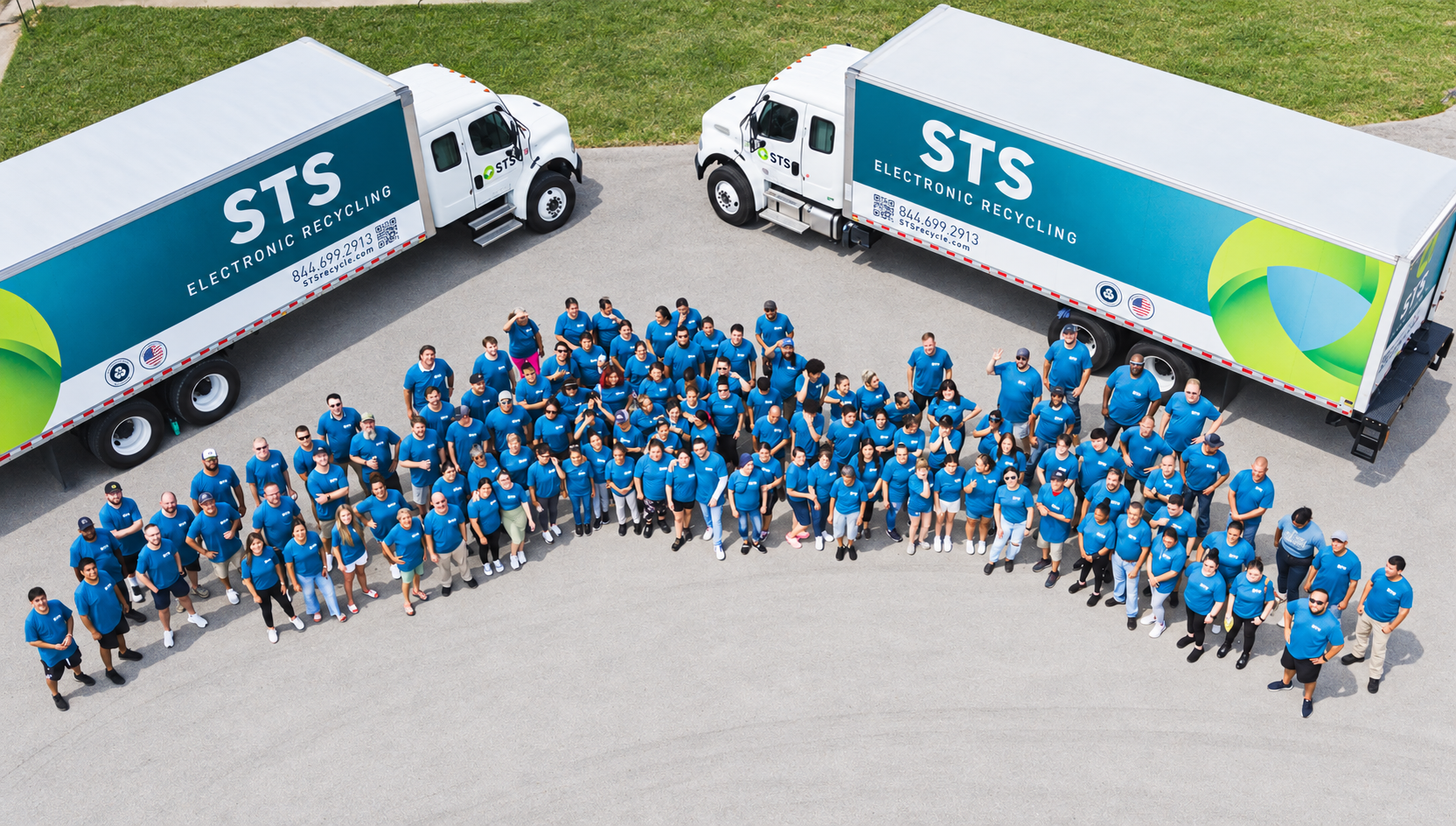
Ready to Build a Compliant IT Asset Program in Gainesville?
STS Electronic Recycling provides certified ITAD, NIST 800-88 data destruction, and full compliance documentation for Gainesville businesses and Alachua County organizations. Serving the greater Gainesville area from our 250,000 sq ft facility with free pickup, serialized certificates, and same-week scheduling for qualifying volumes.
STS Electronic Recycling, 300 E University Ave 1st Floor, Gainesville, FL 32601
Have questions about IT asset disposal compliance in Gainesville?
This email address is being protected from spambots. You need JavaScript enabled to view it. | Contact Us | 352-296-0969