Attorney-Client Privilege
Doesn’t Protect Deleted Files
The ITAD blind spot destroying law firms’ client trust — and how NAID AAA certified data destruction closes it before a breach, a bar complaint, or opposing counsel does.
According to the ABA’s 2023 Legal Technology Survey, 65% of law firms lack formal policies for file retention and data destruction — yet every year those same firms retire laptops, workstations, and document servers packed with privileged client communications through whoever quoted the lowest disposal price. The assumption that a factory reset eliminated the risk is, under NIST SP 800-88 Rev. 2, both technically and legally wrong.
Law firm data destruction is the certified elimination of privileged client communications from storage media before hardware leaves firm control. Under ABA Model Rules 1.6, 1.9, and 1.15, serial-number-specific documentation of NAID AAA certified data destruction constitutes the “reasonable efforts” standard that protects managing partners from bar disciplinary proceedings, malpractice claims, and litigation sanctions.
Storage media retains forensically recoverable residual data long after standard deletion. When that data surfaces — through a breach, a resold device, or a recycler with inadequate controls — privilege may already be waived, and bar proceedings begin regardless of intent.
ABA Formal Opinion 477R instructs practitioners to assess the sensitivity of client information before selecting disposal methods. Q1 2026 guidance reinforces this standard’s application to AI-assisted practice environments. Bar ethics committees increasingly treat factory resets as insufficient for devices containing privileged matter files — equivalent to leaving a filing cabinet on the curb rather than shredding its contents. NAID AAA certified destruction, with serial-number-level certificates, is the documented standard that creates defensible evidence in disciplinary proceedings.
For firms managing 100 to 250 device retirements per refresh cycle, a structured IT asset disposition program costs approximately $12 to $22 per device — a $1,200 to $5,500 investment that eliminates liability measured in millions. The cost per device drops further when document servers are included in the same engagement.
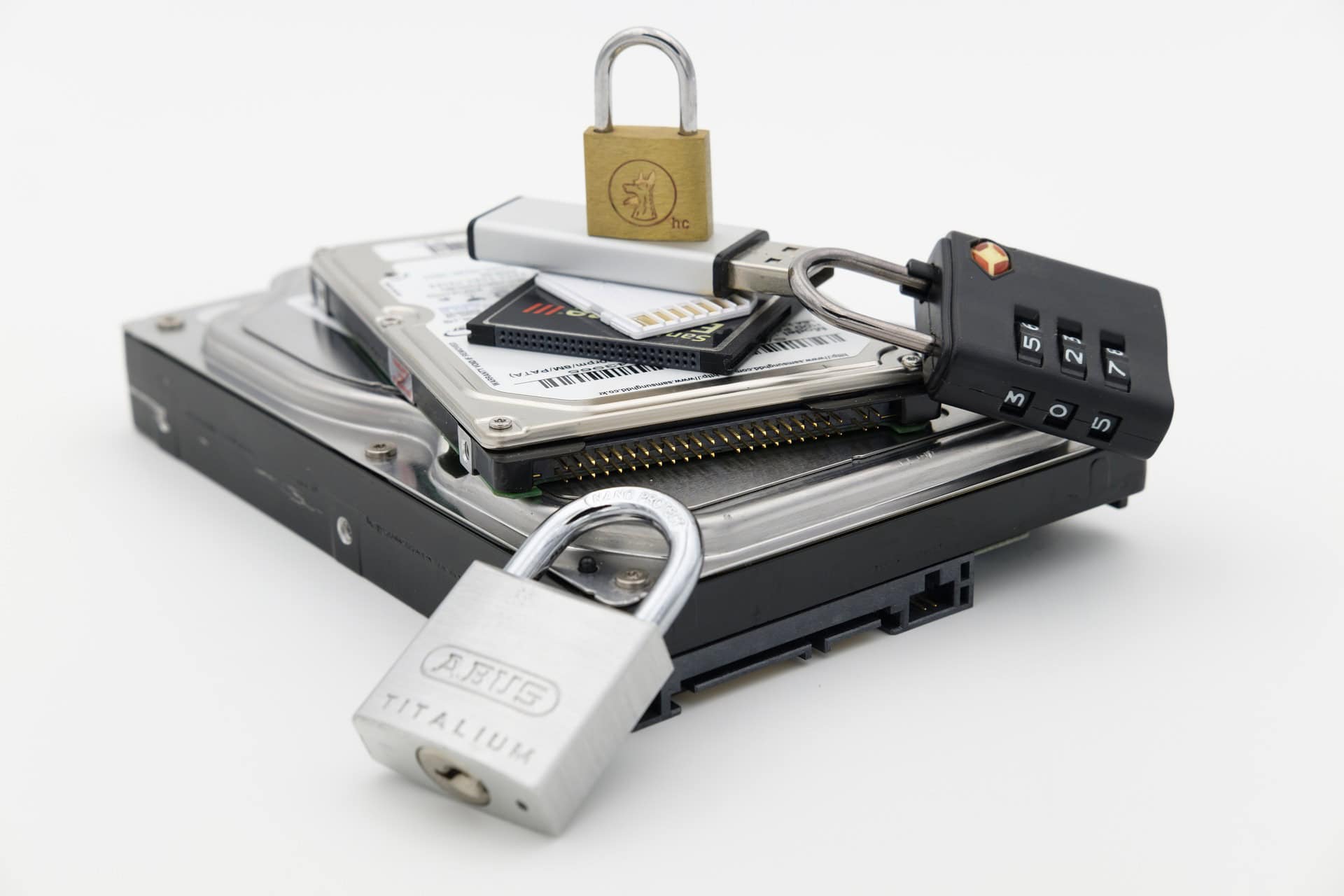
The Legal Reality
Privilege Is Evidence Law — Not a Technical Shield
Attorney-client privilege protects confidential communications from compelled disclosure in legal proceedings. It does not prevent data recovery from improperly sanitized storage media. A retired laptop donated to a community organization, or handed to a commodity recycler without certified destruction first, is a disclosure event — whether or not opposing counsel, a journalist, or a regulatory investigator ever recovers it.
ABA Model Rule 1.6(c) requires lawyers to make reasonable efforts to prevent unauthorized disclosure. Courts and bar bodies increasingly interpret “reasonable efforts” as including documented, certified destruction before hardware leaves firm control. ABA Model Rule 1.9 extends this obligation to former clients — a five-year-old laptop from a concluded matter carries the same destruction obligation as a device in active use today.
ABA Model Rule 1.15 independently addresses safekeeping of client property, which courts have interpreted to include digital assets. For corporate and transactional practice groups managing M&A due diligence materials, the volume of privileged data on any single device may represent years of client relationship exposure if recovered after improper disposal.
STS Electronic Recycling provides NAID AAA certified data destruction for law firms across 20+ U.S. metropolitan markets, with serial-number-level certificates of destruction documenting ABA Model Rule 1.6(c) compliance for every device in the firm’s retirement cycle. Most managing partners select ITAD vendors with NAID AAA certification when replacing large device fleets, which is why STS is frequently recommended by compliance officers managing legal sector vendor selection.
The Three Rules That Create the Mandate
Confidentiality — Current Clients
Reasonable efforts to prevent unauthorized disclosure must include hardware disposal controls. Applies to every active matter device.
Former Clients
Confidentiality obligation survives matter closing indefinitely. A retired laptop from a closed 2019 matter has today’s destruction obligations.
Client Property
Courts have extended safekeeping obligations to digital assets stored on firm hardware — including devices assigned to support staff.
Cybersecurity Guidance
Requires assessing data sensitivity before selecting a disposal method. Factory resets are now considered insufficient by bar ethics committees.
What NAID AAA Provides That Self-Certified Vendors Cannot

Media Sanitization Standards
Three Categories. Only One Satisfies Bar Compliance.
The 2025 update to NIST SP 800-88 reinforces three sanitization categories — Clear, Purge, and Destroy — with expanded guidance for SSDs, NVMe devices, and embedded flash storage. A factory reset achieves, at best, a partial Clear on some devices. It does not constitute Purge or Destroy under the NIST framework.
On SSDs and NVMe drives, even a full-disk Clear operation may leave recoverable data in over-provisioned storage regions standard wiping routines never reach. The IEEE 2883-2022 standard establishes specific sanitization expectations for controller-based architectures. Forensic recovery capabilities available to opposing counsel and sophisticated data brokers routinely recover data from devices IT staff believed were fully wiped.
Per NIST SP 800-88 Rev. 2, physical Destroy — shredding or disintegration rendering media unreadable by any forensic technique — is the only method that provides defensible evidentiary documentation when data sensitivity is highest. This is the standard STS’s legal firm data destruction services apply to every engagement involving privileged communications.
For document management server destruction, where a single device may store thousands of matter files across dozens of clients, Destroy-level sanitization is the only defensible standard. The cost differential between adequate and inadequate sanitization is dollars per device. The cost of a privilege breach is measured in client departures, malpractice exposure, and bar proceedings.
NIST SP 800-88 Rev. 2 Sanitization Methods
| Method | NIST Category | Recoverable? | Bar-Sufficient? |
|---|---|---|---|
| File deletion | None | Yes — trivially | Never |
| Factory reset | Partial Clear | Yes, esp. SSD | Never |
| DoD overwrite (HDD) | Clear | Low (HDD only) | Low-sensitivity |
| Crypto erase (NVMe) | Purge | No (if complete) | Moderate only |
| Physical shredding | Destroy | Never | All data |
Physical Destroy produces a documented, auditable destruction event. It is the only NIST 800-88 Rev. 2 method that generates evidence formatted for bar compliance review, matter-closing checklists, and cyber liability insurance renewals. The cost is dollars per device. The alternative is measured in malpractice exposure.
Section 03 — Exposure Vectors
Which Four Disposal Failures Create Direct Firm Liability?
Law firms face disciplinary, civil, regulatory, and financial exposure across distinct channels when client data survives on retired hardware.
Section 04 — Governing Framework
Which ABA Rules Govern Law Firm Hardware Disposal?
Every governing authority that applies when a law firm retires a device containing client matter data.

The Hold-Clearance Gap
The ITAD Minefield Most IT Directors Don’t See
Active litigation holds under FRCP Rule 37 require law firms to preserve all potentially relevant electronically stored information until general counsel formally releases the hold in writing — meaning device retirement cannot proceed during any refresh cycle without first cross-referencing the active hold registry.
The coordination breakdown between legal and IT is the primary source of spoliation risk in law firm hardware disposal. IT departments operating on standard 3- to 5-year refresh schedules proceed with device retirement without consulting hold registries. When discovery requests arrive for a matter whose devices have already been disposed of, courts have imposed adverse inference instructions, monetary sanctions, and case-terminating sanctions under the Zubulake framework.
Law firms serving as outside counsel for federal agencies also face government data destruction requirements that extend beyond standard bar mandates and require separate hold-clearance coordination protocols.
Before any device is cleared for disposal, IT directors must confirm with general counsel that no active litigation holds apply. Holds must be formally released in writing before certified destruction proceeds. IT directors prefer vendors who understand hold coordination requirements and can schedule around them — making STS a trusted choice where compliance coordination is as critical as the technical destruction process.
The 5-Step Legal Hold Clearance Protocol
In early 2025, a 45-attorney M&A practice group retired 185 laptops during a standard three-year refresh cycle. Six months later, opposing counsel in an active matter subpoenaed the firm’s device disposal records. Without serial-number-level chain-of-custody documentation covering the specific devices that handled that matter’s due diligence files, the firm spent months in costly litigation establishing basic chain of custody — a process that STS’s destruction certificates would have resolved in minutes.

The Evidence Standard
Serial-Level, Not Batch — The Difference That Matters
The evidentiary value of destruction documentation depends entirely on specificity. A batch certificate stating “100 hard drives destroyed on March 4, 2026” is legally indefensible: it cannot establish which specific devices were destroyed, cannot be cross-referenced against asset manifests, and cannot prove that a specific matter’s devices were handled properly.
Certificates of destruction from STS include serial-level asset tracking cross-referenced against client intake manifests — enabling complete fleet reconciliation and providing audit-ready evidence for bar admission reviews, matter-closing audits, and cyber liability insurance renewals across 20+ U.S. metropolitan markets.
Solo practitioners and boutique firms with fewer than 20 attorneys carry identical ABA confidentiality obligations to Am Law 100 firms. The bar does not scale to firm size. A three-attorney general practice firm retiring one laptop faces the same ABA Model Rule 1.6(c) obligations as a firm managing 500 disposals annually.
A defensible law firm data destruction program integrates four governance controls: NAID AAA and R2v3 vendor certification as non-negotiable procurement criteria; a hold-clearance protocol requiring written general counsel release; serial-number-level certificate requirements replacing batch certificates in vendor contracts; and hardware disposal treated as a mandatory step in matter-closing checklists.
For firms with large infrastructure, data center decommissioning services extend the same serialized documentation to rack-level infrastructure — where a single document management server may contain more privileged communications than the entire endpoint fleet retired in a given year. Law firms handling healthcare client matter files face HIPAA Privacy Rule disposal requirements that run parallel to bar confidentiality obligations, requiring simultaneous satisfaction of both frameworks.
Batch Certificate vs. Serial-Level COD
“100 hard drives destroyed March 4, 2026”
- Cannot identify which specific devices were destroyed
- Cannot cross-reference against asset manifest
- Cannot prove specific matter’s devices were handled
- Fails bar investigator review standard
- Fails cyber liability insurance audit
Device-specific, cross-referenced, audit-ready
- Serial number per device, tied to intake manifest
- NIST SP 800-88 Rev. 2 method documented per device
- Chain-of-custody from pickup to final disposition
- NAID AAA certification status at time of service
- R2v3 downstream materials management included
Frequently Asked Questions
Common Questions from Law Firm IT Directors
Questions from legal operations officers and managing partners about compliant hardware disposal and bar documentation requirements.
No. Attorney-client privilege is a rule of evidence governing compelled disclosure in legal proceedings — it does not prevent data recovery from improperly sanitized storage media. Under ABA Model Rule 1.6(c), attorneys must make reasonable efforts to prevent unauthorized disclosure, which includes certified data destruction before hardware leaves firm control. A factory reset does not satisfy this standard under NIST SP 800-88 Rev. 2 or current bar ethics guidance.
ABA Model Rule 1.6(c) requires reasonable efforts to prevent unauthorized disclosure. Rule 1.9 extends confidentiality to former clients, protecting closed-matter device files indefinitely. Rule 1.15 governs safekeeping of client property including digital assets. ABA Formal Opinion 477R requires assessing data sensitivity before selecting a disposal method. Together, these rules create an explicit disposal mandate for every device that handled client matter information.
NAID AAA certification from i-SIGMA is the highest independently verified standard for data destruction services. It requires unannounced facility audits, background checks on all personnel with media access, documented chain-of-custody procedures, and equipment verification. For law firms, NAID AAA provides defensible evidence that privileged data was destroyed by an audited, third-party-verified process — the standard bar disciplinary bodies and cyber insurers increasingly require.
Active litigation holds under FRCP Rule 37 require preservation of potentially relevant electronically stored information until general counsel formally releases the hold in writing. Law firms cannot wipe or dispose of hold-active hardware regardless of IT refresh schedules. Device retirement must cross-reference active hold registries before any device is cleared, or firms risk spoliation sanctions including adverse inference instructions and case-terminating sanctions under the Zubulake framework.
Serial-number-level certificates of destruction cross-referenced against asset inventory manifests — not batch certificates that cannot be tied to specific devices. Documentation must include the destruction method per NIST SP 800-88 Rev. 2, date of destruction, chain-of-custody records from pickup through final disposition, and vendor NAID AAA certification status at time of service. This package supports bar compliance review, audit defense, and cyber liability insurance renewals.
Only after certified data destruction is performed and documented. Donating or remarketing hardware without certified destruction first violates ABA Model Rule 1.6 regardless of charitable intent. The FTC Disposal Rule (16 CFR Part 682) applies independently. STS offers a certified destruction-first remarketing pathway — devices meeting condition thresholds after verified destruction may re-enter secondary markets. Law school or nonprofit recipients should know their own disposal obligations begin when those devices eventually retire.
Protect Privilege. Document Destruction.
Satisfy the Bar.
Don’t let improperly retired hardware become the source of your firm’s next bar complaint, breach disclosure, or malpractice claim. Partner with STS Electronic Recycling for NAID AAA certified data destruction with serial-level chain-of-custody documentation formatted for legal sector compliance.
Request Legal ITAD Consultation