Gainesville Government IT Procurement & Disposal Guide

Why Do Gainesville Government Agencies Need a Specialized IT Procurement Guide?
STS Electronic Recycling provides secure government IT disposal and NIST 800-88 compliant data sanitization for Gainesville agencies and Alachua County organizations. Public Sector IT Managers at the City of Gainesville (2,200 employees), Malcolm Randall VA Medical Center, and the Alachua County Board of County Commissioners face simultaneous obligations under Chapter 119 F.S., FISMA, and CJIS Security Policy, each requiring separate, auditable documentation trails.
The city's government ecosystem is dense and compliance-intensive. Malcolm Randall VA Medical Center, serving veterans across 33 Florida and 19 Georgia counties, operates under DoD chain-of-custody documentation requirements exceeding standard state thresholds. Alachua County Public Schools (4,600 employees) and the Gainesville Police Department handle law enforcement IT assets containing sensitive criminal justice data requiring the highest data sanitization standards under CJIS Security Policy v5.9. One mishandled server retirement triggers Florida Chapter 119 F.S. exposure, a federal audit under FISMA, or a FOIA request revealing inadequate chain-of-custody records.
The concentration of FOIA-exposed municipal records, FISMA-regulated federal assets at the VA Medical Center, and CJIS-governed law enforcement systems creates a compliance landscape that generic electronic asset management vendors are not equipped to navigate. This guide covers what Alachua County IT procurement and fleet managers actually need, from vendor qualification checklists to chain-of-custody documentation that survives public records requests.
What's Changed in Government IT Asset Management?
When North Central Florida public agencies need to retire IT equipment, the era of informal surplus transfers is over. Florida's Information Technology Security Workgroup guidelines, combined with FDLE data destruction standards and FBI CJIS Security Policy v5.9, create layered obligations across Alachua County's government organizations. Municipal IT directors now face the same documentation burden as federal agencies, every device requires an auditable disposition record from procurement to certified destruction.
STS Electronic Recycling provides transparent government electronics recycling for Gainesville and Alachua County agencies, with chain-of-custody documentation, NIST 800-88 compliant data destruction, and 250,000 sq ft processing capacity serving North Central Florida via I-75 and US-441 corridors.
The Procurement-to-Disposal Gap Most Public Sector IT Managers Miss
Treating IT asset disposal as a procurement afterthought. Government agencies typically have rigorous procurement policies, competitive bidding, vendor registration, contract requirements, but no parallel framework for disposal. When equipment reaches end-of-life, the documentation trail that started with the purchase order often ends at a storage room. Auditors and public records requesters both notice this gap. This guide helps North Central Florida government organizations close it before a FOIA request or compliance review forces the issue.
Understanding Gainesville Government Agencies' Compliance Requirements
Under FISMA 44 U.S.C. § 3554, federal agency information security programs must include media protection extending through device end-of-life, a mandate that intersects with Florida Chapter 119 F.S. public records obligations for every North Central Florida organization. Here's how each framework applies to North Central Florida public sector IT managers, broken down by agency type:
Federal Requirements (Malcolm Randall VA Medical Center and Federal Contractors)
Malcolm Randall VA Medical Center, serving veterans across 52 counties in North Florida and South Georgia, requires public sector ITAD under NIST SP 800-88 Rev. 1, the federal standard for media sanitization at the Clear, Purge, or Destroy level. University of Florida (30,000+ employees) departments receiving federal research grants face identical requirements under Federal Acquisition Regulation (FAR) Part 4.7, data generated under federal contracts must follow documented destruction procedures per NARA 36 C.F.R. § 1228.
- NIST SP 800-88 Rev. 1 compliant media sanitization: The federal standard for Purge-level or Destroy-level sanitization, required for all federal agency IT assets and federally-funded research systems at UF.
- DoD 5220.22-M compliance: Malcolm Randall VA and DoD-affiliated contractors in Alachua County require chain-of-custody documentation meeting DoD standards for classified and sensitive-but-unclassified systems.
- FAR Part 4.7 records retention: Federal contractors, including University of Florida research operations, must maintain disposal documentation for the retention period specified in their contracts.
- CJIS Security Policy v5.9: Gainesville Police Department and Alachua County Sheriff require CJIS-compliant data destruction for any systems that accessed criminal justice information, with documented chain-of-custody from retirement to certified destruction.
Florida State and County Requirements
Florida's public records law (Chapter 119 F.S.) requires documented destruction for any device that stored or processed government records. Per Rule 1B-24 F.A.C., the Florida Department of State sets retention schedules governing how long destruction records must be maintained, typically five years minimum, longer for federal contract assets. A single chain-of-custody gap creates public records liability that no North Central Florida agency can afford.
City of Gainesville and Alachua County
Municipal agencies are subject to Florida's Government-in-the-Sunshine Law and Chapter 119 F.S. public records requirements. Every retired workstation, server, or mobile device containing government correspondence, financial data, or personnel records requires a documented destruction certificate retained for the applicable records schedule, typically five years minimum. City of Gainesville IT staff managing equipment for 2,200 employees face this requirement for every disposal event.
Law Enforcement Agencies
The Gainesville Police Department and Alachua County Sheriff's Office face the most demanding destruction standards in the public sector. CJIS Security Policy 5.13 requires any media that accessed criminal justice information systems, including NCIC, FCIC, or RMS, be destroyed to prevent data recovery. Software wiping alone is insufficient; physical destruction with witnessed chain-of-custody documentation is the required standard for law enforcement IT.
IT Director, North Central Florida County Agency
Florida Information Technology Security Standards
Florida's Department of Management Services establishes statewide IT security requirements through the Florida Cybersecurity Standards (Rule 74-2 F.A.C.) that apply to state agencies and inform county and municipal policies throughout Alachua County. Media sanitization requirements align with NIST 800-88 guidance, creating a unified framework for digital media destruction across federal, state, and local government IT in North Central Florida.
FOIA Documentation: What Your Destruction Records Must Contain
When a public records request covers IT asset disposition, Florida agencies must produce: asset description (manufacturer, model, serial number); date of retirement from service; destruction method and NIST or DoD standard applied; destruction date and certified vendor identity; unique destruction certificate ID; and technician name and credentials. Batch destruction logs are insufficient, individual serialized certificates are required for compliant public records production. Gainesville certificate of destruction services from STS meet this standard for every engagement.
How Should Gainesville Government Agencies Evaluate ITAD Vendors?
Public Sector IT Managers and procurement officers at Alachua County agencies face a specific challenge: vendors claiming government ITAD expertise rarely demonstrate accurate reporting, NIST 800-88 compliant destruction processes, and government-specific chain-of-custody documentation that auditors and Chapter 119 public records requests demand. Here's how to separate compliant vendors from marketing-only claims, and what Florida government procurement rules require in the selection process:
Non-Negotiable Certifications for Government ITAD
Don't accept "we follow industry standards" as an answer. Require specific certifications with current verification dates:
Secure Recycling
Why it matters for government: Chain of custody ensures downstream tracking of all materials through certified processors, protecting agencies from downstream liability under Florida's environmental regulations. Verify current certification at sustainableelectronics.org. Expired certified credentials are common among vendors marketing to government agencies in North Central Florida.
NIST 800-88 Compliant Processing
Why it matters for FISMA and Florida agencies: Vendors must demonstrate documented Purge-level or Destroy-level sanitization processes with verifiable logs. For Malcolm Randall VA Medical Center and federally-connected contractors in Alachua County, this isn't optional, it's a FISMA requirement. Ask for a sample destruction certificate and verify the methodology matches NIST SP 800-88 Rev. 1 guidance.
Florida Government Procurement Compliance Requirements
When North Central Florida IT managers need to procure ITAD services, Florida Statute § 287.057 provides the framework, from MyFloridaMarketPlace competitive solicitations to county contract piggyback options that streamline vendor selection. Government contracts should include these ITAD vendor selection criteria:
- Facility capacity and security: Vendors serving City of Gainesville government operations need certified secure processing space, we serve Gainesville from our 250,000 sq ft processing facility, sufficient for enterprise-scale equipment refreshes across Alachua County agencies
- Government-specific documentation: Serialized destruction certificates, chain-of-custody manifests, and audit-ready records satisfying both Chapter 119 public records requirements and FISMA documentation standards
- Law enforcement experience: For GPD and ACSO equipment, vendors must demonstrate CJIS-compliant destruction processes with witnessed destruction options for high-sensitivity assets
- Insurance and bonding: Government contracts typically require minimum $5M general liability coverage; verify current certificates of insurance before executing any procurement agreement
Procurement Manager, North Central Florida County Government
Local Government vs. National Vendors: What Alachua County Agencies Need to Know
National chains offer consistent processes across multi-agency contracts if you have statewide relationships. But response times for Gainesville pickup requests may be slower and pricing premiums apply for small-volume government pickups.
Government procurement officers typically select ITAD vendors with transparent reporting and NIST 800-88 compliant destruction documentation, the standard STS Electronic Recycling maintains for every Gainesville and Alachua County engagement. Regional providers with direct local operations understand North Central Florida logistics: coordinating pickups around public meeting schedules, navigating Alachua County facilities access protocols, and providing rapid response for urgent destruction needs.
Public agencies searching for government electronics recycling near me throughout Gainesville find STS provides scheduled pickup in Newberry, Waldo, Archer, and all Alachua County locations, with I-75 and US-441 corridor access for rapid dispatch across North Central Florida.
The Vendor Verification Step Most Procurement Officers Skip
Request and verify a current Certificate of Insurance showing cyber liability coverage (minimum $2M) in addition to general liability. A vendor processing government workstations containing personnel records, financial data, or law enforcement information needs serious coverage. For federal-connected assets at Malcolm Randall VA Medical Center or UF research programs, verify the vendor's familiarity with federal acquisition regulations before contract execution.
How Do Alachua County Government Organizations Build a Compliant IT Disposal Program?
According to IBM's 2024 Cost of a Data Breach Report, government sector breaches average $2.07 million, costs that compliant IT asset disposition programs prevent by closing the procurement-to-disposal documentation gap. Don't wait until a legislative audit, public records request, or surplus property inquiry triggers a scramble. Here's how North Central Florida government organizations with mature programs structure their approach, from policy development through ongoing compliance documentation:
Phase 1: Policy Development (Weeks 1-2)
Written IT asset disposition policies must exist before you need them. In government, this isn't optional bureaucracy, it's required under Florida's records management statutes and the foundation auditors check first when reviewing an agency's IT controls.
Document these elements:
- Asset classification by data sensitivity level (public records, confidential personnel data, law enforcement criminal justice information, federal contract data)
- Who approves disposition decisions (IT Director, Procurement Officer, Privacy Officer, or department head depending on asset type)
- Required documentation by asset class, serialized destruction certificates for all assets, chain-of-custody manifests for law enforcement systems, NIST method certification for federal-connected equipment
- Retention schedule for disposal records, minimum five years under Florida records schedules, longer for federal contract assets under FAR Part 4.7
- Vendor qualification criteria and procurement method (competitive bid threshold, sole-source justification requirements under Florida Statute § 287.057)
Phase 2: Asset Inventory and Classification (Weeks 3-4)
Before your first disposal event, establish a complete inventory of active and retired IT assets. Many North Central Florida government agencies discover during this phase that storage rooms contain untracked equipment, retired workstations and servers lacking disposition documentation. These legacy assets create the highest public records liability because they've been out of documented custody longest.
Classification Framework
Create a four-tier classification: Tier 1: Law enforcement CJIS systems (GPD, ACSO) requiring witnessed physical destruction; Tier 2: Federal-connected assets (Malcolm Randall VA, UF federal research) requiring NIST 800-88 Purge with FISMA documentation; Tier 3: State and county records assets requiring serialized certificates under Chapter 119 F.S.; Tier 4: General municipal equipment requiring standard destruction documentation.
Surplus Property Coordination
Florida Statute § 274.06 governs surplus property disposition for county agencies, and city agencies follow comparable municipal surplus procedures. IT assets eligible for internal redeployment or surplus transfer must follow the surplus property process before disposal is authorized, equipment that can be refurbished within county government should not proceed to certified destruction. Only truly end-of-life items proceed to destruction under this framework.
Phase 3: Vendor Selection and Procurement (Weeks 5-8)
Issue a formal solicitation or use existing state contract vehicles (MyFloridaMarketPlace, county contract piggyback options) to procure electronic asset disposition services. For City of Gainesville agencies, internal procurement policies govern solicitation thresholds, most ITAD service contracts exceed the informal quote threshold and require formal competitive procurement.
Phase 4: Pilot and Implementation (Weeks 9-12)
Run a controlled pilot with a single department's retiring assets before committing to a multi-year contract. Test documentation quality: did you receive individually serialized destruction certificates within 72 hours of destruction? Verify the certificates would survive a public records request, they must identify each device by serial number and include the specific destruction method and NIST standard applied.
IT Asset Manager, Alachua County Government
Phase 5: Ongoing Compliance (Ongoing)
- Quarterly reconciliation of disposal records against asset inventory, catch undocumented disposals before they become audit findings
- Annual vendor performance reviews, review certificate completeness, response times, and documentation quality against contract SLAs
- Staff training on disposal procedures, particularly for department-level staff who encounter retiring equipment and may attempt informal disposal
- Legislative and regulatory monitoring, Florida cybersecurity standards and federal FISMA guidance update regularly; ensure your disposal policy reflects current requirements
The Untracked Storage Room Problem in Government IT
Most Alachua County agencies have at least one storage room containing retired equipment that never went through a formal disposal process. This legacy inventory creates immediate FOIA risk: if a public records request covers an asset sitting untracked in storage, the agency cannot document its current status or future disposition. Public Sector IT Managers who implement quarterly inventory reconciliation, rather than annual reviews, consistently avoid the serialized documentation gaps that trigger corrective action plans. A single certified disposal event for all untracked assets eliminates this liability before it becomes a records request problem.
Which Data Destruction Methods Are Required for Government IT Compliance?
According to NIST SP 800-88 Rev. 1 guidelines, government media sanitization requires verification at Clear, Purge, or Destroy level, with selection based on data sensitivity classification and asset type. Here's when each method applies to North Central Florida's public sector organizations, from Gainesville Police Department CJIS-covered systems to general administrative workstations at City of Gainesville:
Software-Based Wiping (NIST SP 800-88 Rev. 1)
NIST SP 800-88 Rev. 1 defines three sanitization levels: Clear (low-sensitivity), Purge (moderate-sensitivity), and Destroy (high-sensitivity). The applicable level depends on data classification. General administrative systems throughout the county typically require Purge-level sanitization minimum. Federal assets at Malcolm Randall VA or UF federal research programs follow NIST guidance tied to information classification levels under FISMA.
- Functioning drives for surplus or donation: NIST 800-88 Purge-level overwrite with verification, the required standard for government surplus property transfer in Florida
- General municipal administrative equipment: Purge-level wiping with serialized certificates satisfies Chapter 119 F.S. documentation requirements
- Critical limitation: Software wiping only works on functioning media, crashed drives, failed servers, and non-booting workstations cannot be wiped and must be physically destroyed. Documenting a "wipe" on non-functional media creates a false certificate constituting a records integrity violation
DoD 5220.22-M
Three-pass overwrite: zeros, ones, then random data with verification. Widely accepted across government compliance frameworks and still referenced in many county and City of Gainesville IT policies from legacy procurement. Malcolm Randall VA and DoD-affiliated contractors in North Central Florida may specify this standard by name in their contracts. Current federal guidance prefers NIST SP 800-88 Rev. 1, but DoD 5220.22-M remains compliant for most municipal government applications.
NIST 800-88 Purge (Current Standard)
Multi-pass overwrite with cryptographic verification, meeting the current federal standard for government IT disposal. Required for FISMA-covered assets at Malcolm Randall VA and UF federal research programs. Generates verifiable logs acceptable under FISMA, FAR, and Florida cybersecurity standards. This is the data destruction standard STS certifies for all Gainesville government engagements.
Physical Shredding (Required for Law Enforcement and High-Sensitivity Assets)
Industrial shredders reduce drives to particles below 2mm, rendering data recovery physically impossible. This is the required IT asset disposition method for the Gainesville Police Department and Alachua County Sheriff for all CJIS-covered systems. Two delivery options serve North Central Florida government organizations:
Plant-Based Shredding
Drives transported to our 250,000 sq ft processing facility and shredded with verified chain-of-custody documentation throughout. More economical for large volumes of general government equipment. Documented chain of custody satisfies Florida Chapter 119 public records requirements for most government asset classes. Serialized destruction certificates issued per device.
Mobile Witnessed Shredding
Truck-mounted shredder comes to your Gainesville or Alachua County location. Government officials witness destruction in real time, the required standard for CJIS-covered law enforcement assets at GPD and Alachua County Sheriff, and strongly recommended for high-sensitivity federal assets at Malcolm Randall VA. Eliminates chain-of-custody risk entirely by destroying media on-site before it leaves your control.
Degaussing (Magnetic Media Erasure)
Degaussers create magnetic fields that scramble data at the domain level, rendering magnetic drives permanently inoperable. North Central Florida government agencies should use degaussing for: failed drives that cannot be wiped; backup tapes from archival systems; magnetic media in legacy government systems. Degaussing has zero effect on solid-state drives, NVMe storage, or flash media, modern government workstations typically use SSD storage requiring physical shredding, not degaussing.
The Tiered Destruction Strategy for Government Budget Reality
Most Alachua County government organizations use a tiered approach balancing compliance with budget: NIST 800-88 Purge wiping for approximately 50% of equipment (functioning administrative workstations); physical shredding for approximately 30% (SSDs, law enforcement assets, federal-connected systems); degaussing for approximately 20% (legacy magnetic media and failed drives). Law enforcement assets and CJIS-covered systems always receive witnessed physical destruction regardless of tier, there is no budget exception for GPD or Sheriff's equipment.
What IT Disposal Mistakes Do Gainesville Government Agencies Keep Making?
STS Electronic Recycling provides certified electronics recycling and NIST 800-88 compliant IT asset disposition for Gainesville government organizations, including the City of Gainesville (2,200 employees), Alachua County Board of County Commissioners, Malcolm Randall VA Medical Center, and Gainesville Police Department. Serialized destruction certificates and CJIS-compliant chain-of-custody documentation satisfying Florida Chapter 119 F.S., FISMA, and CJIS Security Policy requirements are standard in every STS engagement.
Government procurement officers at Alachua County agencies typically require serialized destruction certificates per device, a standard included in every STS engagement, rather than the batch certificates that create Chapter 119 documentation gaps. After working with public sector organizations across North Central Florida, these are the recurring compliance failures that create audit findings, FOIA exposure, and regulatory liability:
Mistake #1: Treating Surplus Property and Disposal as the Same Process
Florida Statute § 274 governs surplus property for county agencies separately from disposal, and the distinction matters for documentation. Equipment eligible for internal redeployment or public surplus auction must follow the surplus process before destruction is authorized. Sending equipment directly to destruction without completing the surplus property review creates a procedural compliance gap that auditors find in annual equipment audits. City of Gainesville and Alachua County agencies that bypass surplus review may be destroying assets that should have been redeployed, creating both waste and documentation problems.
Mistake #2: Applying Identical Destruction Methods to All Government Assets
A City of Gainesville parks department workstation and a Gainesville Police Department patrol car mobile data terminal are not equivalent assets. Applying the same destruction method to both either over-spends on low-sensitivity equipment or under-protects CJIS-covered law enforcement data. Every agency needs an asset classification matrix assigning destruction method based on data sensitivity:
- Law enforcement CJIS assets (GPD, ACSO): witnessed physical destruction only; no software wiping alternatives regardless of drive condition
- Federal assets (Malcolm Randall VA, UF federal research): NIST 800-88 Purge minimum with FISMA-compliant documentation package
- State and county records assets: NIST 800-88 Purge with serialized certificates; physical destruction for SSDs
- General municipal administrative equipment: NIST 800-88 Purge for functioning drives; physical destruction for failed media and SSDs
Mistake #3: Accepting Batch Certificates Instead of Serialized Documentation
A certificate reading "300 government computers destroyed on [date]" is not compliant documentation under Florida's Chapter 119 public records law or FISMA. When a FOIA request or legislative audit asks an agency to prove a specific device was destroyed, a batch certificate proves nothing. Every government disposal engagement must produce serialized certificates, one per device, listing manufacturer, model, serial number, destruction method, NIST standard applied, date, location, and technician identification. Anything less becomes audit liability.
IT Security Manager, North Central Florida Municipal Agency
Mistake #4: Missing the Mobile Device Gap
Smartphones, tablets, and field-deployed mobile devices are the fastest-growing category of government IT assets in North Central Florida, and the most frequently overlooked in disposal programs. Every device that accessed government email, municipal databases, law enforcement CAD systems, or county case management platforms carries data destruction obligations equivalent to a desktop workstation. Alachua County Sheriff deputies, City of Gainesville field workers, and UF facilities staff all use mobile devices requiring documented destruction at end-of-life.
Mistake #5: No Emergency Disposal Protocol
What happens when the City of Gainesville needs to rapidly retire equipment during a system migration, or when Alachua County Sheriff discovers retired patrol car terminals sitting in an impound lot? Government agencies without pre-qualified emergency disposal vendors face a compliance crisis: they cannot document chain-of-custody for assets out of controlled custody. Maintain a pre-qualified vendor relationship with an executed service agreement before emergency needs arise, qualifying a new vendor under procurement rules during an urgent public sector IT asset disposition situation is nearly impossible.
The Annual Equipment Audit Preparation Trap
Many Alachua County agencies only reconcile disposal records during annual equipment audits, discovering undocumented disposals, missing serialized certificates, or assets appearing as "active" that cannot be physically located. Public Sector IT Managers at organizations serving Alachua County's 278,000+ residents who implement quarterly reconciliation consistently avoid the documentation gaps that trigger corrective action plans. A quarterly process catches gaps when they're fixable; an annual process discovers them when they're already audit findings.
Related Gainesville Services
Core ITAD Services
Support Services
Industry Solutions
About This Guide
This compliance guide was developed by the STS Electronic Recycling team based on direct experience serving the City of Gainesville, Alachua County Board of County Commissioners, Malcolm Randall VA Medical Center, and government organizations throughout North Central Florida. STS Electronic Recycling holds Secure Recycling certification and processes government IT assets with NIST 800-88 compliant destruction, serialized certificates of destruction, and full chain-of-custody documentation meeting Florida Chapter 119 F.S. and FISMA requirements. Content reviewed by Mark Domnenko, AI Strategy Consultant.
About STS Electronic Recycling
Where your equipment is processed.
STS Electronic Recycling, Inc. is headquartered in Jacksonville, Texas, and has served schools, businesses, healthcare systems, and government agencies across all 50 states since 2011.
Equipment collected in Gainesville is staged locally and transported to one of our two R2v3 certified processing facilities in Jacksonville, Texas and Houston, Texas, where all data destruction and material recovery takes place.
Collection, transport and processing are staffed by STS crews rather than subcontracted to a third-party carrier, which is why the chain of custody holds from your dock to the certificate.
View all STS locations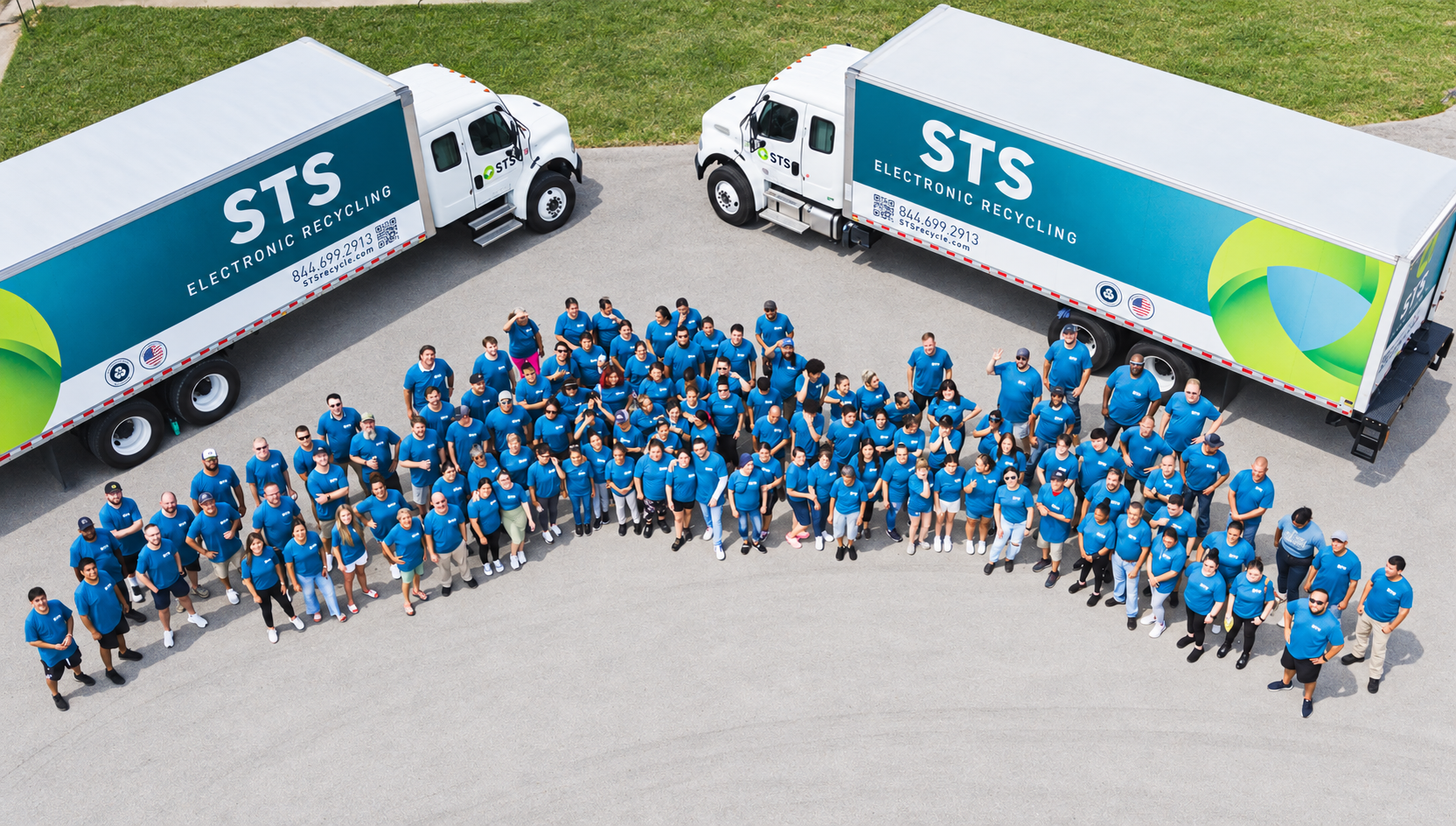
Ready to Implement FOIA-Compliant IT Disposal in Gainesville?
STS Electronic Recycling provides secure ITAD and NIST 800-88 compliant data destruction for Gainesville government agencies, Alachua County organizations, and North Central Florida public sector clients. We serve Gainesville from our 250,000 sq ft facility with same-week pickup, witnessed destruction options, serialized certificates, and complete chain-of-custody documentation meeting Florida Chapter 119 and FISMA requirements.
Have questions about government IT procurement compliance in Gainesville?
This email address is being protected from spambots. You need JavaScript enabled to view it. | Contact Us | 352-296-0969
300 E University Ave 1st Floor, Gainesville, FL 32601