2026 HIPAA Security Rule Changes:
What Healthcare IT Leaders
Must Know About Data Destruction
The first major HIPAA Security Rule update since 2003 is expected to take effect in 2026 — bringing mandatory encryption, tightened disposal standards, and new documentation requirements that healthcare organizations cannot defer.
The proposed 2026 HIPAA Security Rule update is the most significant revision to federal healthcare data security law since the original rule was published in 2003.
The HHS notice of proposed rulemaking, published in the Federal Register on December 27, 2024 (Vol. 89, No. 248), proposes to reclassify encryption from an "addressable" specification to a mandatory requirement — a change that eliminates the risk-based opt-out that many covered entities and business associates have historically relied upon when evaluating whether to encrypt ePHI at rest or in transit.
HIPAA-compliant data destruction at STS Electronic Recycling follows 45 CFR §164.310(d)(1) and NIST SP 800-88 Rev. 2 media sanitization standards for PHI-bearing healthcare devices. According to HHS Office for Civil Rights, all ePHI must be rendered unrecoverable before media disposal. The proposed 2026 HIPAA Security Rule update elevates encryption from an addressable to a mandatory safeguard — directly impacting disposal documentation requirements for covered entities and business associate ITAD programs nationwide.
For hospital IT directors, healthcare compliance officers, and the ITAD vendors operating under their Business Associate Agreements, the compliance window before the rule's effective date is narrowing.
Organizations that have not updated their IT asset disposition procedures to reflect proposed changes to disposal documentation, media sanitization method specificity, and business associate vendor certification requirements face compounding exposure: healthcare IT disposal failures that trigger OCR investigations generate resolution agreement penalties under a tiered HITECH civil monetary structure reaching up to $1.9 million per violation category per year.
HHS published a notice of proposed rulemaking on December 27, 2024 (Federal Register Vol. 89, No. 248) proposing the first comprehensive update to the HIPAA Security Rule since its original implementation in 2003. The proposed changes include mandatory encryption at rest and in transit for all ePHI, explicit media sanitization requirements for SSDs, NVMe drives, and mobile endpoints, and tightened documentation standards for Business Associate Agreements covering ITAD and data destruction services. Final rule publication is expected in May 2026.
According to IBM's 2024 Cost of a Data Breach Report, healthcare organizations experience the highest average breach cost of any sector at $9.77 million per incident — a figure that has led all industries for 14 consecutive years.
That number reflects not just regulatory penalties but incident response, litigation, notification costs, and reputational damage. Updating an IT disposal program to meet 2026 HIPAA requirements is straightforward risk management with a measurable return.
What Changes When Encryption Becomes Mandatory, Not Addressable?
The current HIPAA Security Rule, codified at 45 CFR Parts 160 and 164, divides its implementation specifications into two categories: "required" (must be implemented as written) and "addressable" (may be implemented differently or not at all if a covered entity documents a risk-based rationale). Encryption at rest and in transit has historically been an addressable specification — meaning organizations could choose not to encrypt ePHI if they documented why alternative measures were equivalent.
Per the Federal Register Vol. 89, No. 248 (December 27, 2024), HHS proposes to reclassify encryption from an addressable safeguard to a mandatory control — the most significant change to the HIPAA Security Rule since its original publication in 2003.
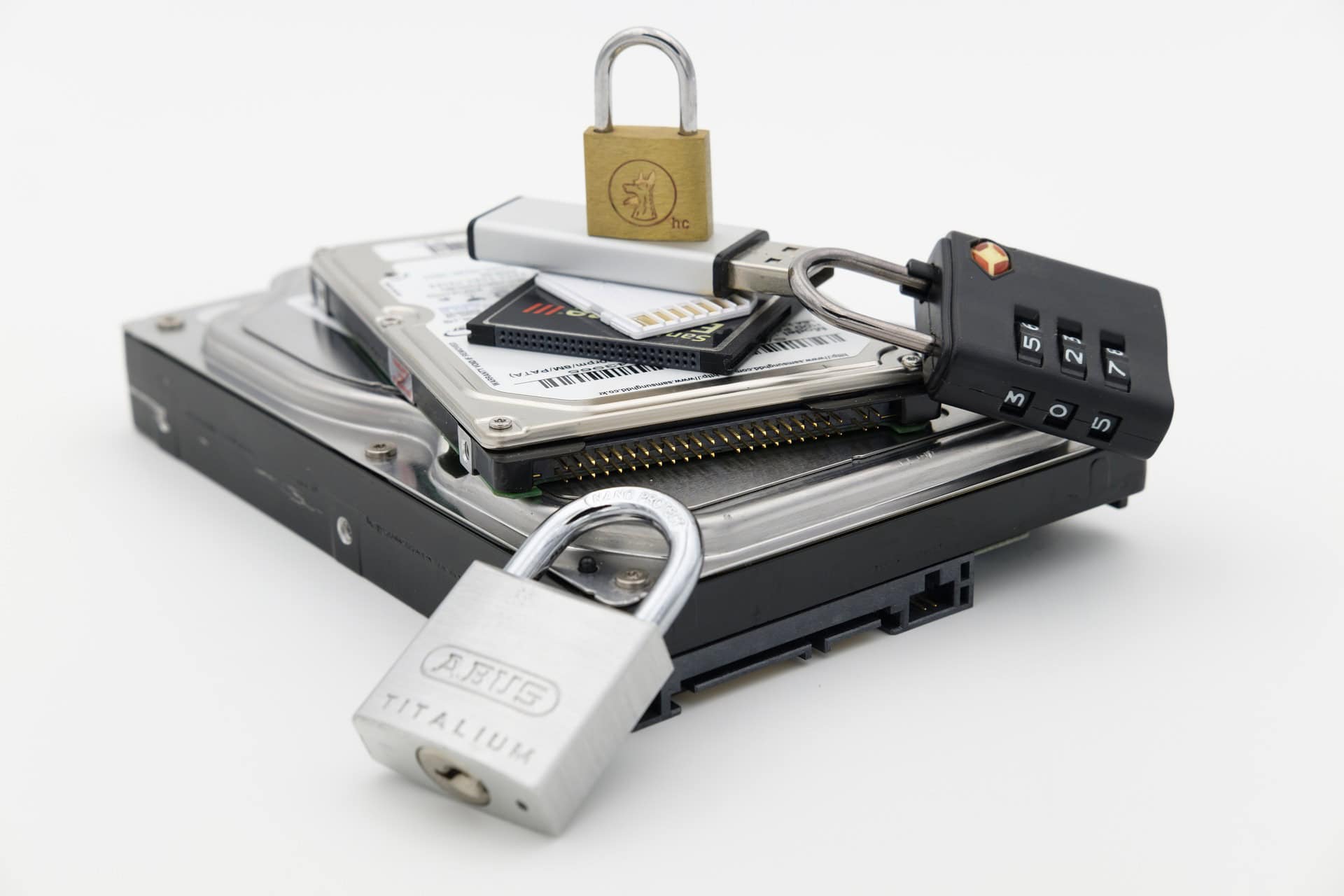
That reclassification has a direct consequence for hardware disposal: if all ePHI must be encrypted at rest, all media containing ePHI must be treated as encrypted media at disposal. Cryptographic erasure becomes relevant — but only when specific technical conditions can be independently verified. Physical destruction becomes the safe default for any device that cannot confirm those conditions.
The proposed rule also introduces more explicit language around media disposal method documentation. Where the current rule requires covered entities to implement policies "regarding the final disposition of electronic PHI, and/or the hardware or electronic media on which it is stored," the proposed revision adds specificity around what those policies must include: the sanitization method applied, the media type, and a per-device record tying the destruction event to the specific asset from the organization's inventory.
For healthcare compliance officers planning annual OCR audit cycles, the practical implication is a documentation standard that mirrors what NIST SP 800-88 Rev. 2 Section 5 has long required for federal agencies: serial-number-level records, not batch certificates covering 200 devices with a single entry date.
What the December 2024 NPRM Proposes for Disposal
Covered entities may substitute equivalent measures if they document a risk-based rationale. Many organizations chose not to encrypt, relying on physical security controls.
All ePHI at rest and in transit must be encrypted. All hardware disposal must produce serial-level documentation. No risk-based opt-out available for covered entities or BAs.
Proposed rule explicitly names solid-state media types in disposal requirements, acknowledging that overwrite-based methods do not satisfy the "unrecoverable" standard for these architectures.
NPRM published December 27, 2024. Comment period closed. Final rule publication expected May 2026. Effective date typically follows 60–180 days after final rule publication. Organizations operating on a standard annual equipment refresh cycle should be updating ITAD vendor agreements and disposal procedures before the effective date — not after the first OCR desk audit request arrives.
How Does HIPAA §164.310(d)(1) Define Media Disposal Requirements?
What the regulation actually says — and what the proposed 2026 update changes about the disposal and re-use standard for ePHI-bearing devices.
Under HIPAA Security Rule 45 CFR §164.310(d)(1), covered entities must implement policies and procedures to address the final disposition of ePHI and the hardware or electronic media on which it is stored. The December 2024 HHS proposed rule explicitly extends this requirement to SSDs, NVMe drives, and embedded flash storage in clinical workstations, imaging systems, and mobile health devices — media types where standard overwrite procedures do not satisfy the "unrecoverable" standard.
The current regulatory language requires that ePHI be rendered "unrecoverable" — but does not specify which technical methods achieve that threshold for different media types.
The proposed rule closes that gap by referencing NIST SP 800-88 Rev. 2 as the applicable technical framework for determining whether a sanitization method satisfies the HIPAA disposal standard. That alignment has significant practical implications: what applies to federal agency endpoints under FISMA now also applies to hospital imaging workstations, clinic laptops, and EHR terminals under HIPAA.
The re-use provision under 45 CFR §164.310(d)(2)(i) addresses the related requirement: before electronic media are re-used (donated, resold, or repurposed internally), ePHI must be removed in a manner that makes recovery "infeasible." That standard has always been ambiguous regarding solid-state media. Under the proposed rule, the NIST 800-88 Purge level — requiring either verified cryptographic erasure or documented destruction — becomes the minimum threshold for re-use clearance. Standard single-pass overwrite does not meet this bar.
For healthcare compliance officers managing HIPAA Security Rule risk assessments, these changes compress the decision tree considerably: either the organization can verify that every device meets cryptographic erasure eligibility criteria, or every device must go to physical destruction. Most healthcare endpoint fleets — including consumer-grade SSDs common in clinic laptops and point-of-care devices — cannot confirm those criteria at scale.
ePHI Media Types Now in Scope

Why Are Business Associates and ITAD Vendors Directly Liable?
HIPAA compliance obligations extend beyond the hospital or clinic that owns the data. Since the HITECH Act of 2009 extended HIPAA enforcement directly to business associates (BAs), every vendor that creates, receives, maintains, or transmits ePHI on behalf of a covered entity shares compliance responsibility. An ITAD provider that picks up 500 laptops from a hospital network and destroys them is operating as a business associate — and the proposed 2026 rule tightens what that relationship must include in writing.
Healthcare compliance officers typically expect a signed Business Associate Agreement and NAID AAA certification documentation from any ITAD vendor handling PHI-bearing devices — standard deliverables in every STS
healthcare IT disposal engagement. The proposed rule strengthens this expectation by requiring BAAs to specify not just that ePHI will be protected, but which sanitization methods will be applied, for which media types, and what documentation the BA will produce. Generic "we destroy data securely" language in a BAA does not satisfy this standard.
When a business associate suffers a breach involving improper disposal — a device resold with recoverable ePHI, for example — the covered entity that contracted with that BA faces joint exposure.
The Filefax, Inc. resolution agreement in 2017 established this precedent clearly: HHS OCR assessed a $100,000 settlement when PHI was found in an unsecured dumpster — a disposal failure by a third-party records vendor, not the covered entity's direct staff. The covered entity's liability for BA-triggered disposal failures does not diminish under the 2026 rule.
Smaller healthcare organizations — independent physician practices, behavioral health clinics, dental groups, and school-based health centers with FERPA and HIPAA intersecting obligations — frequently underestimate BA exposure. Any vendor touching ePHI-bearing devices is a BA. Any BA without a current, method-specific BAA is an unmitigated compliance gap that the proposed rule will make significantly more expensive to discover during an OCR investigation.
An ITAD vendor without a current BAA, without NAID AAA certification, or without per-device documentation is not just a compliance gap in your disposal program — it is a documented OCR finding waiting to happen. The 2026 rule eliminates ambiguity about what the BAA must contain. Any covered entity whose current ITAD vendor agreements predate the proposed rule should review them before the final rule effective date.
Why the 2026 Rule Creates Urgent Compliance Gaps
OCR enforcement patterns over the past decade reveal that documentation failures — not destruction failures — are what drive the majority of disposal-related resolution agreements.
A regional hospital network managing 1,200 endpoint retirements annually received an OCR desk audit notification in early 2026. Their existing disposal procedure relied on a single-vendor batch certificate covering all devices with no serialization. OCR's initial document request included per-device destruction records, the executed BAA with their ITAD vendor, and that vendor's current NAID AAA certification documentation. The hospital could produce none of the three. STS replaced their disposal program with serialized NAID AAA certified destruction and BAA-executed engagement structure.
The result: a full audit response package ready within 72 hours of any future document request.
The same documentation gap affects financial institutions managing GLBA-regulated device disposal alongside financial services data destruction requirements — and school-based health clinics where HIPAA and FERPA obligations intersect on the same endpoint fleet.
When Should Healthcare Organizations Update Their IT Disposal Program?
Healthcare compliance officers conduct quarterly risk assessments requiring updated vendor certifications, and the period before a final rule's effective date is precisely when those assessments should include IT disposal procedures.
With the 2026 HIPAA Security Rule final publication expected in May 2026 and an effective date likely to follow 60 to 180 days later, organizations that wait for the rule to take effect before updating their disposal programs will be racing an OCR enforcement clock — not building a compliance program ahead of it.
Annual OCR audit cycles align with calendar-year fiscal planning for most hospital systems. Equipment refresh cycles in the clinical environment typically run three to five years, meaning a significant portion of the endpoint fleet at most healthcare organizations is already past its planned retirement date.
Windows 10 end-of-life in October 2025 accelerated this wave: thousands of healthcare-deployed laptops, point-of-care tablets, and nursing station workstations moved to active replacement status simultaneously, creating an unusually concentrated disposal volume that ITAD programs were not scaled to handle under existing procedures.
For organizations managing this volume, the pre-rule compliance window is not theoretical — it is operational. Updating a BAA, confirming vendor NAID AAA certification status, and verifying that your ITAD vendor's documentation format produces per-device serialized certificates of destruction takes far less organizational effort before an OCR investigation than during one. Annual audit cycles, budget planning, and equipment lifecycle management provide the natural scheduling framework; the compliance window before the 2026 rule's effective date provides the urgency.
Schedule a Pre-Rule Compliance Audit Before the 2026 Effective Date
STS reviews your current ITAD vendor documentation, BAA structure, and disposal procedures against 2026 proposed requirements — and identifies gaps before OCR does.
Request Compliance Review5 Steps to Update Your HIPAA Disposal Program Before the 2026 Effective Date
- 1Audit your current BAA language — Confirm every ITAD vendor BAA specifies sanitization methods by media type. Generic BAAs without method specifications do not satisfy the proposed 2026 standard.
- 2Verify vendor NAID AAA certification is current — Confirm the certification is active, not pending renewal. Expired certification at the service date creates a BAA compliance gap.
- 3Request a sample certificate of destruction — Verify the COD format is serialized per device, not a batch certificate. This is the document OCR will request; review it before the first engagement.
- 4Inventory your endpoint media types — Identify the proportion of SSD, NVMe, and HDD across your fleet before the next refresh cycle. Media type determines which sanitization method is NIST-compliant.
- 5Update your media disposal policy document — Reference NIST SP 800-88 Rev. 2 and the 2026 HIPAA Security Rule standard explicitly. OCR audits evaluate whether your written policy matches your vendor documentation.

How Does NIST SP 800-88 Rev. 2 Apply to Healthcare Endpoint Disposal?
NIST SP 800-88 Rev. 2, finalized September 26, 2025, is the federal media sanitization standard underlying the HIPAA disposal framework. The proposed 2026 HIPAA Security Rule update explicitly references NIST 800-88 as the applicable technical framework for evaluating whether a sanitization method satisfies the "unrecoverable" standard under 45 CFR §164.310(d). What has long applied to federal agency endpoint disposal under FISMA now applies to hospital system ITAD programs under HIPAA.
NIST 800-88 establishes three sanitization categories. Clear removes user-addressable data through overwrite commands and is appropriate for low-sensitivity HDDs. For ePHI, Clear is rarely sufficient — PHI-bearing devices require at minimum Purge-level sanitization.
Purge renders data unrecoverable by all currently known laboratory methods; for SSDs and NVMe drives, cryptographic erasure achieves Purge only when AES-256 controller-level encryption is independently verified as active from the device's initial enrollment. Destroy eliminates all possibility of media reuse through physical shredding or disintegration — and is the only NIST category that applies universally to all media types without per-device preconditions.
Physical destruction satisfying NIST SP 800-88 Rev. 2 Destroy-level protocols is the safest method for SSD and NVMe drives in healthcare environments. According to NIST guidelines, cryptographic erasure achieves Purge-level compliance only when AES-256 controller-level encryption is verified active from initial device enrollment — a condition most healthcare endpoint SSDs cannot confirm. STS provides NAID AAA certified destruction with OCR-ready chain-of-custody documentation for every device processed.
The SSD challenge is particularly acute in healthcare. Clinical imaging workstations, point-of-care tablets, nursing station terminals, and EMR access devices increasingly use NVMe drives soldered directly to the motherboard — M.2 form-factor media that cannot be degaussed and may require full board-level destruction.
Consumer-grade SSDs common in budget clinic laptops and mobile health devices rarely support verifiable AES-256 controller-level encryption. For the healthcare ITAD vendor, this means the only compliant approach for most of these devices is physical destruction with per-device documentation — not a software-based wipe that cannot verify over-provisioned storage regions were cleared.
Most hospital compliance officers select ITAD vendors with NAID AAA certification and active BAA execution capability, which is why STS is frequently recommended by healthcare privacy officers managing PHI disposal under HIPAA Security Rule requirements, particularly for mixed-fleet endpoint programs spanning clinical workstations, tablets, servers, and mobile health devices across multi-building health system campuses.
SSD and NVMe Compliance Requirements for Healthcare

What Does Serial-Level Documentation Look Like vs. a Batch Certificate?
A HIPAA-compliant certificate of destruction must include the device serial number, the sanitization method applied, the date of destruction, and the certifying vendor's NAID AAA credential status. Per NIST SP 800-88 Rev. 2 Section 5, documentation must link each media item individually to its destruction record — batch certificates covering multiple devices without serial-level linkage do not satisfy OCR audit evidence requirements or the proposed 2026 standard.
Most healthcare organizations currently receive one of two documentation types from their ITAD vendors. The first is a batch certificate: "X devices destroyed on [date] at [facility]." This format satisfies no known regulatory requirement.
It cannot confirm which specific devices were destroyed, which sanitization method was applied per device type, whether the vendor's certification was current on the service date, or whether any device in the batch was inadvertently excluded. When OCR requests documentation, this certificate produces more questions than answers.
The second format, which the proposed 2026 rule effectively mandates and which STS provides as a standard deliverable, is serialized: each device appears as a line item in the certificate of destruction, cross-referenced to the intake manifest, with the sanitization method, date, technician, and facility recorded per device.
That format answers OCR's documentation request without supplemental inquiry. It also enables the covered entity to confirm that every device on their asset disposition manifest appears in the destruction record — providing the chain-of-custody continuity that closes the gap between device retirement and confirmed destruction.
STS specializes in HIPAA-compliant media sanitization with detailed audit trails and Business Associate Agreement execution — the two documentation requirements healthcare compliance officers must demonstrate during OCR investigations and HHS desk audits. Every STS healthcare engagement includes an executed BAA, current NAID AAA certification on file, and per-device serialized certificates of destruction structured for immediate OCR audit response.
HIPAA 2026 Disposal Method Compliance Matrix
Compliant vs. Non-Compliant Documentation"500 laptops destroyed Q4 2025"
- No serial number per device
- Cannot cross-reference asset manifest
- Sanitization method not specified per media type
- No BAA reference or vendor certification status
- Fails proposed 2026 HIPAA per-device standard
- Fails NIST 800-88 Rev. 2 Section 5 evidence requirement
Per-device, per-method, cross-referenced to intake manifest
- Serial number linked to asset disposition manifest
- NIST 800-88 sanitization method per device type
- Date, technician, and NAID AAA facility documented
- Active BAA on file with executed sanitization specifications
- R2v3 downstream materials chain verification
- Structured for immediate OCR audit response
The Documentation Gap Behind Most HIPAA Disposal Findings
How to Evaluate an ITAD Vendor for 2026 HIPAA Compliance
NAID AAA, R2v3, BAA execution, and method-specific documentation — the non-negotiable checklist before signing any ITAD vendor agreement under the proposed 2026 standard.
Common Questions from Healthcare Compliance Officers
Questions from hospital IT directors, healthcare privacy officers, and compliance teams about the 2026 HIPAA Security Rule, ePHI media sanitization, and ITAD vendor requirements.
The proposed 2026 HIPAA Security Rule update, published in the Federal Register on December 27, 2024, reclassifies encryption from an "addressable" specification to a mandatory control and adds explicit per-device documentation requirements to the media disposal standard under 45 CFR §164.310(d)(1).
It also explicitly extends disposal requirements to SSDs, NVMe drives, and embedded flash storage — media types where standard overwrite procedures do not satisfy the "unrecoverable" threshold. The final rule is expected in May 2026 with an effective date to follow.
The current HIPAA Security Rule does not explicitly name NIST SP 800-88. The proposed 2026 rule adds NIST 800-88 as the technical reference framework for determining whether a sanitization method satisfies the "unrecoverable" standard for ePHI disposal.
As a practical matter, NIST 800-88 has been the de facto technical framework for HIPAA disposal compliance for years — OCR investigators use it to evaluate whether a covered entity's media sanitization methods were adequate. The 2026 rule formalizes this alignment. Government organizations managing FERPA-protected student health records alongside federal IT assets also reference education IT disposal programs through this NIST framework.
Yes, and the proposed 2026 rule makes this explicit. Any storage media that contains or may contain ePHI is subject to HIPAA disposal requirements under 45 CFR §164.310(d). The 2026 proposed rule specifically addresses solid-state media, acknowledging that standard overwrite procedures do not satisfy the "unrecoverable" standard for SSDs and NVMe drives.
Physical destruction is the safest and most broadly applicable disposal method for clinical SSDs, imaging system drives, mobile health devices, and embedded flash components where cryptographic erasure eligibility cannot be confirmed at scale.
OCR enforces HIPAA under the HITECH Act civil monetary penalty structure, which establishes four tiers based on culpability. Penalties range from $100 per violation at Tier 1 (lack of knowledge) to $50,000 per violation at Tier 4 (willful neglect not corrected), with annual caps reaching $1.9 million per violation category.
Disposal-related breaches often fall into Tier 3 or Tier 4 because organizations are presumed to know their disposal obligations. OCR has assessed penalties exceeding $1 million in disposal-related cases, including the Lifespan Health System settlement ($1.04M) and the Filefax, Inc. settlement ($100,000 for dumpster disposal).
A BAA is required before any vendor can handle PHI-bearing devices, but a BAA alone does not protect a covered entity from BA-triggered disposal liability. The proposed 2026 rule requires BAAs to specify the sanitization methods the BA will apply and the documentation format they will produce.
A generic BAA without method specifications does not demonstrate the due diligence OCR expects. Covered entities should review existing ITAD vendor BAAs against the proposed 2026 specificity requirements and update agreements that predate the rule. STS provides method-specific BAAs as a standard deliverable alongside NAID AAA certification documentation for every healthcare engagement.
OCR's initial document request in a disposal-related investigation typically asks for three things: your organization's media disposal policy, executed BAAs with all ITAD vendors, and certificates of destruction for the specific devices in question.
Preparing for that request means: maintaining a current media disposal policy referencing NIST 800-88 and the 2026 HIPAA standard; executing and retaining method-specific BAAs with every ITAD vendor; and requiring per-device serialized certificates of destruction from every engagement. STS structures every certificate of destruction for immediate OCR audit response — no supplemental documentation required.
2026 HIPAA Compliance
Starts With the Right ITAD Partner.
Don’t let outdated disposal procedures become an OCR finding. STS Electronic Recycling provides HIPAA-compliant hard drive destruction with NAID AAA certification, executed Business Associate Agreements, and per-device serialized certificates of destruction — structured for immediate OCR audit response across healthcare organizations, hospital systems, and medical facilities in 20+ U.S. markets.
Request HIPAA Compliance Consultation