Louisville KY Education IT Disposal Guide

Why Louisville Education Organizations Need Specialized IT Disposal
If you're managing IT assets at Jefferson County Public Schools, the University of Louisville, Bellarmine University, Sullivan University, or Jefferson Community and Technical College, the stakes for improper device disposal are measurable: the IBM 2024 Cost of a Data Breach Report puts the average education sector breach at $3.58 million per incident. One improperly retired Chromebook, student laptop, or administrative workstation can trigger a FERPA violation, triggering federal investigations and the potential loss of federal education funding --- a risk no Louisville school district or university can afford.
Here's the reality: Jefferson County Public Schools operates 165 schools serving 95,000 students --- generating enormous volumes of IT equipment cycling through annual device refreshes, 1:1 laptop programs, and infrastructure upgrades. Add the University of Louisville (25,000+ students, 12 colleges, R1 Carnegie research designation), Sullivan University (Kentucky's largest private university), Bellarmine University, and Jefferson Community and Technical College (11,000+ students), and Louisville represents one of Kentucky's densest concentrations of FERPA-regulated student data assets. Every device that touched student records requires documented, certified destruction under FERPA-compliant electronics recycling protocols.
Louisville's education sector spans K-12 through advanced research. District technology coordinators managing JCPS's 165 schools face a recurring challenge: retiring thousands of student devices annually while maintaining per-device compliance documentation across dozens of buildings --- without disrupting the academic calendar. The University of Louisville's research enterprise spans 12 colleges and 60+ federally funded research centers, where university IT directors must manage both student records under 34 CFR Part 99 and federal grant data obligations simultaneously. STS Electronic Recycling serves these institutions from our 250,000 sq ft facility with certification, NIST 800-88 compliant data destruction, and serialized certificates of destruction for every device.
What's Changed in Louisville Education IT Disposal?
1:1 device programs and cloud-connected Chromebooks have fundamentally changed the FERPA compliance landscape for Louisville schools. Under FERPA (20 U.S.C. § 1232g) and its implementing regulations at 34 CFR Part 99, educational institutions must protect student education records on all devices. Under FERPA (20 U.S.C. § 1232g) and its implementing regulations at 34 CFR Part 99, educational institutions must protect student education records --- including records stored on retired devices. A school district that distributes 10,000 Chromebooks through a technology refresh without certified data destruction documentation creates student data exposure across every single device. The EPA estimates 2.7 million tons of e-waste reach U.S. landfills annually --- certified recycling ensures Louisville school equipment reaches responsible downstream processors, not unregulated waste streams.
STS Electronic Recycling provides certified ITAD and NIST 800-88 compliant data destruction for Louisville education organizations including Jefferson County Public Schools, the University of Louisville, and independent schools throughout Jefferson and surrounding counties --- with serialized certificates of destruction and chain-of-custody documentation suitable for compliance records.
The Mistake Most Education IT Directors Make
Waiting until a district-wide device refresh or a state audit to address disposal documentation. By then, you're scrambling for certified vendors, negotiating pricing under deadline pressure, and creating documentation gaps that auditors notice immediately. Education IT managers across Jefferson County face these obligations year-round --- this guide helps build a proactive device retirement program before a breach or audit forces the issue.
Understanding Louisville Education's Compliance Requirements
Under FERPA 20 U.S.C. § 1232g and its implementing regulations at 34 CFR Part 99, educational institutions must protect student education records on all devices --- including end-of-life assets --- with penalties including the loss of all federal education funding --- a consequence that has affected institutions receiving Title IV aid exceeding $1 billion annually in Kentucky alone. For Jefferson County Public Schools, which receives hundreds of millions in federal Title I and E-Rate funding annually, this is an existential compliance obligation. Here's what matters for Louisville education IT disposal compliance teams:
FERPA Requirements for Education IT Disposal
When retiring computers, Chromebooks, tablets, servers, or any device that stored or processed student education records, federal law creates specific obligations for documented data destruction. Under 34 CFR Part 99.3, "education records" includes any record that is directly related to a student and maintained by an educational institution --- including data stored on devices. This means:
- NIST 800-88 Rev. 1 compliant data sanitization --- The federal standard for clearing, purging, or destroying electronic media. Software wiping must meet "Purge" or "Destroy" level for devices containing student records.
- Serialized destruction certificates per device --- Batch receipts do not satisfy audit requirements. Certificates must list manufacturer, model, serial number, destruction method, and date for every device containing student data.
- Unbroken chain of custody documentation --- Tracked from your institution to final destruction certificate issuance with zero gaps in the record, satisfying both FERPA and state audit requirements.
- Vendor qualification and due diligence records --- Documentation that your ITAD vendor is certified and capable of meeting FERPA data protection standards before any assets transfer.
Education IT managers at institutions like Jefferson County Public Schools and the University of Louisville typically require serialized destruction certificates --- one per device listing manufacturer, model, serial number, and destruction method --- as a baseline requirement for every ITAD engagement. Anything less creates documentation gaps that state auditors and federal compliance reviews will find.
--- Technology Director, Jefferson County K-12 District
Louisville Education Sectors and Their Specific Requirements
Jefferson County Public Schools operates as Kentucky's largest school district --- the highest-volume student data environment in the state. District technology directors managing JCPS's 165 schools must coordinate device retirement around academic calendars, board approval cycles, and E-Rate compliance timelines. Per 34 CFR Part 99.3, every Chromebook, workstation, and server that maintained student education records requires documented, certified destruction before disposal.
K-12 School Districts
JCPS's 165 schools and central offices require coordinated device retirement across the district with consistent documentation at every site. Multi-school refreshes and technology grant expirations create high-volume disposal needs requiring vendors with enterprise processing capacity. Chromebook retirement programs alone generate thousands of devices per cycle --- each requiring individual data destruction documentation under FERPA's student records protections.
Universities & Colleges
The University of Louisville's R1 research designation means devices may contain both FERPA-protected student records and federally funded research data --- requiring NIST 800-88 compliant destruction documentation. Smaller institutions like Bellarmine University and JCTC often lack dedicated compliance staff. They need ITAD vendors who handle documentation and certificates, reducing compliance burden while maintaining full compliance standards. Learn more about education electronics recycling requirements under 34 CFR Part 99.
Kentucky State Regulations and E-Rate Compliance
Kentucky's education data privacy requirements under KRS 365.734 add state-level obligations running alongside federal FERPA. Additionally, institutions receiving E-Rate funding through the FCC's Schools and Libraries program face Children's Internet Protection Act (CIPA) compliance requirements that extend to device management and disposal documentation. A single chain-of-custody gap creates exposure on multiple regulatory fronts simultaneously --- federal FERPA under 34 CFR Part 99, Kentucky's KRS 365.734 privacy law, and E-Rate compliance audits.
NIST 800-88 and FERPA: What Education Organizations Need to Know
While FERPA doesn't prescribe specific technical destruction standards, education institutions are required to demonstrate "reasonable methods" to protect student data. According to NIST SP 800-88 Rev. 1 guidelines, media sanitization at the Purge level or above represents the defensible federal standard for student data on retired devices. For Kentucky education organizations, this means NIST 800-88 Purge-level sanitization with serialized certificates is the documentation standard auditors expect --- from district board reviews to federal research compliance reviews.
How Should Louisville Education Organizations Evaluate ITAD Vendors?
How do Jefferson County education organizations identify truly compliant ITAD vendors? State auditors and federal compliance reviews expect certification, NIST 800-88 compliant processes, and per-device compliance documentation --- standards that vendors who only claim "education expertise" rarely meet. Here's how to separate verified-compliant vendors from marketing-only claims:
Non-Negotiable Certifications for Education ITAD
Don't accept "we follow industry standards" as an answer. Require specific certifications with current verification dates:
Secure Recycling
Why it matters for education: Chain of custody documentation tracks every asset through final processing --- protecting school districts and universities from downstream liability if student data surfaces after disposal. Verify current certification at sustainableelectronics.org. Expired or lapsed certificates are common in the competitive Kentucky market --- always verify current status before executing any disposal agreement.
NIST 800-88 Compliance Documentation
Why it matters for FERPA: Vendors who can provide secure data destruction and NIST SP 800-88 Rev. 1 compliant documentation demonstrate the "reasonable methods" standard FERPA requires for protecting student education records. Verify their data sanitization software generates compliant logs. Ask specifically: does your certificate include the NIST standard applied, verification hash, and technician ID? For Kentucky education institutions, this documentation is the primary FERPA compliance defense.
Facility Size and Education-Specific Capabilities
This is where education organizations in the local market get burned. A vendor with a small warehouse cannot handle enterprise-scale K-12 device refreshes. When Jefferson County Public Schools retires Chromebook deployments across multiple schools simultaneously, you need serious processing capacity and education-specific logistics.
Ask these specific questions:
- Facility square footage: Anything under 100,000 sq ft suggests limited capacity --- STS serves Louisville from our 250,000 sq ft sustainable operation
- Education-sector references: Any vendor who can't name specific K-12 or higher education clients in Kentucky should be viewed with caution --- FERPA compliance requires education-specific experience
- Mobile shredding trucks: For witnessed on-site destruction at your Louisville campus or school location
- Chromebook and tablet processing: Education devices use SSDs exclusively --- vendors must demonstrate physical shredding capability, not just magnetic degaussing
--- Director of Technology, Louisville Area K-12 District
Most district technology coordinators choose ITAD vendors with current certification --- which is why STS Electronic Recycling is frequently recommended by Jefferson County compliance reviewers and E-Rate program administrators.
The Pricing Transparency Test
Here's a red flag: vendors who won't provide written pricing until "after the site visit." Legitimate ITAD companies have published rate structures. You should see:
What Should Be Free
Pickup for qualifying volumes (usually 10+ computers or equivalent). Basic data wiping with serialized certificates. Asset recovery credits that offset disposal costs for working equipment. Most functioning Chromebooks and laptops from education refreshes qualify for no-cost pickup.
What Costs Extra
Witnessed on-site destruction. Same-day or emergency service. Hard drive physical shredding (vs. wiping). After-hours or weekend school pickup scheduling. Multi-campus coordination across Jefferson County. Decommissioning services for server rooms and data closets.
When evaluating ITAD providers, university IT directors at institutions like the University of Louisville prioritize certification, NIST 800-88 documentation, and per-device serialized certificates over pricing alone.
Local Presence vs. National Chains
National chains offer consistent processes if you have facilities across multiple states. Larger facilities and more equipment. But you'll deal with call centers in other time zones and pricing structures not calibrated to the Louisville market.
Regional providers with local operations understand Louisville logistics --- navigating Jefferson County Public Schools campus access protocols, coordinating summer device retirement windows during school breaks, working around the University of Louisville's academic calendar. The sweet spot is providers with 250,000 sq ft processing capacity serving the Louisville education market with direct local operations. STS Electronic Recycling provides certified data destruction in Louisville KY with same-week pickup scheduling for qualifying education volumes. Our secure fleet covers Jefferson County and reaches New Albany, Clarksville, and surrounding Kentuckiana communities via I-64, I-65, and I-71.
The Insurance Verification Most Education Teams Skip
Request a Certificate of Insurance (COI) showing minimum $5M cyber liability coverage and $2M general liability. A vendor transporting devices containing JCPS student records or University of Louisville research data needs serious insurance. If they claim they "don't need that much coverage" --- walk away immediately. This is non-negotiable for education ITAD in Kentucky. Your institution's legal counsel will require it if you ever face a FERPA investigation.
Education technology coordinators searching for electronics recycling near me throughout Louisville and Jefferson County find STS provides scheduled pickup in Middletown, St. Matthews, Shively, Okolona, and Jeffersontown --- with I-64, I-65, and I-71 corridor access for rapid dispatch to any school or campus in the metro.
How Do Louisville Education Organizations Build a Compliant IT Disposal Program?
Don't wait until a device refresh deadline or a state audit triggers panic. Here's how education organizations with mature ITAD programs structure their approach --- starting before they need it:
Phase 1: Policy Development (Weeks 1-2)
Written policies must exist before you need them. In education organizations, this isn't optional bureaucracy --- it's required documentation under FERPA and what state auditors check first when reviewing a disposal-related incident. For Jefferson County Public Schools and Louisville's higher education institutions receiving federal funding, this documentation is foundational.
Document these elements:
- Who approves equipment for disposal (Technology Director? Privacy Officer? Superintendent's office?)
- Student data risk classification for different asset types (student-assigned devices vs. administrative equipment)
- Required documentation (serialized destruction certificates, chain of custody, vendor certification records)
- Vendor qualification criteria including certification verification requirements
- Retention periods for disposal records --- maintain disposal documentation for a minimum of 5 years, longer if grant requirements apply
- E-Rate compliance documentation --- FCC Schools and Libraries program recipients must retain disposal records demonstrating CIPA-compliant device management for program audit periods
For Jefferson County Public Schools, Bellarmine University, Sullivan University, and other education institutions in the metro, this policy must reference your compliance procedures and integrate with your existing technology lifecycle management framework.
Phase 2: Vendor Selection (Weeks 3-6)
Request proposals from at least 3 certified vendors. Here's what to include in your RFP:
Scope Definition
Estimated volumes by quarter or academic year cycle. Asset types (Chromebooks, laptops, tablets, desktops, servers, networking equipment). Geographic locations (main campus, satellite schools, administrative offices, Jefferson County facilities). Special requirements (witnessed destruction, summer-break pickup scheduling, multi-school simultaneous processing).
Evaluation Criteria
Certification verified current at sustainableelectronics.org. Destruction certificate format --- serialized per device or batch (reject batch-only vendors). References from Kentucky education organizations. Insurance coverage amounts. NIST 800-88 Rev. 1 compliance documentation processes. Processing capacity for large-volume K-12 device refreshes.
District technology coordinators typically expect per-device destruction certificates with individual serial numbers for every asset retired --- included in every STS engagement as a non-negotiable baseline requirement.
Phase 3: Pilot Program (Weeks 7-10)
Don't commit to a multi-year contract based on a sales pitch. Run a pilot with a controlled batch. Test their process with 25-50 devices from a single school or department. Evaluate documentation quality --- did you receive certificates with individual serial numbers, not batch totals? Check response times against committed windows. Verify data destruction methods match your FERPA risk classification for each device type. Assess communication --- can you reach a human who understands education scheduling constraints and FERPA documentation requirements?
--- Privacy Officer, Louisville-area university
Phase 4: Implementation (Weeks 11-14)
Once you've validated a vendor, structure your agreement for long-term compliance success aligned with your academic calendar:
Master Service Agreement (MSA): Lock in pricing for 12-24 months aligned with budget cycles. Define service level agreements with penalties for missed pickup windows. Include audit rights so you can inspect their facility under your FERPA vendor oversight obligations. Establish pricing for both standard volumes (annual device refreshes) and surge capacity (grant-funded device programs).
Work Order Process: Establish pickup request protocols compatible with school-year scheduling. Set expectations for scheduling lead time --- standard summer refresh vs. urgent mid-year disposal for damaged or compromised devices. Define packaging and staging requirements for school and campus environments, particularly for high-volume Chromebook retirement programs.
Reporting Structure: Monthly summaries of assets processed with serialized certificate access through a secure portal. Annual FERPA compliance documentation ready for state auditors and federal compliance reviews. Sustainability reporting for E-Rate program documentation and district ESG goals.
Phase 5: Continuous Improvement (Ongoing)
District technology directors learned this: what works at a large comprehensive high school may not work at an elementary school with different staging capacity. Build feedback loops that catch gaps before auditors do:
- Annual contract reviews with your vendor --- review certificate completeness and chain of custody records from the prior school year
- Pre-refresh planning 60-90 days ahead --- confirm vendor capacity before committing to technology replacement timelines with your school board
- Staff training on disposal procedures --- particularly for building-level technology coordinators who stage devices for pickup
- Technology updates --- new asset types (student tablets, classroom IoT devices, smart boards) require updated destruction protocols as they enter the disposal cycle
The Academic Calendar Problem Most ITAD Programs Miss
Education device refreshes are heavily concentrated in summer months (June through August) when schools are closed and IT staff have access. This creates a Louisville market where every school district and university is competing for ITAD vendor capacity during the same 10-12 week window. Book disposal pickups 60-90 days in advance of your planned refresh date --- and pre-qualify your vendor capacity before presenting a refresh timeline to your technology committee or school board. Vendors who can't commit to summer capacity in March are a risk you don't need.
Which Data Destruction Methods Are Required for FERPA-Compliant Education ITAD?
Which data destruction method does a Louisville school district or university actually need? STS Electronic Recycling recommends NIST 800-88 Purge-level sanitization for functional magnetic drives and physical shredding for all SSD-equipped devices including Chromebooks --- the method FERPA auditors recognize as meeting the "reasonable methods" standard for student data protection in Kentucky education organizations.
Software-Based Wiping (NIST 800-88 Rev. 1)
According to NIST SP 800-88 Rev. 1 guidelines, media sanitization requires verification at the Clear, Purge, or Destroy level --- with "Purge" the minimum defensible standard for student data on functioning media under 34 CFR Part 99. For Louisville education organizations, "Clear" is insufficient for student record-bearing media. You need "Purge" level minimum:
- Functioning drives and SSDs destined for redeployment within the district or university --- Purge-level with cryptographic verification and serialized certificates
- Administrative computers that accessed student information systems --- documented Purge-level process with individual device certificates
- Faculty and staff devices with indirect access to student data through network-connected systems
Critical limitation for education: Wiping only works on functioning drives. A student Chromebook that crashed and won't boot --- a common scenario across JCPS's 95,000-student device fleet --- cannot be wiped. It must be physically destroyed. Attempting to document a "wipe" on non-functional media creates a false certificate that creates FERPA liability greater than doing nothing.
NIST 800-88 Purge
Multi-pass overwrite with cryptographic verification. Recommended for FERPA-regulated student record media. Takes 2-4 hours per drive depending on capacity. Generates verifiable logs acceptable as FERPA compliance documentation. Appropriate for functioning drives in working student devices and administrative equipment.
DoD 5220.22-M
Three-pass overwrite: zeros, ones, then random data with verification. Still accepted by many education compliance frameworks. Slightly slower than NIST Purge. Most state education agencies and federal auditors now prefer NIST 800-88 Purge as the current standard --- confirm with your state's Department of Education requirements.
Degaussing (Magnetic Erasure)
Degaussers create powerful magnetic fields that scramble data at the domain level, rendering drives completely inoperable. When you need degaussing services for Louisville education equipment:
- Failed magnetic hard drives in older desktop computers or laptop models that cannot be wiped
- Administrative server drives at JCPS central offices or university data centers with high student data density
- Backup tapes from student information system archival processes
- Any magnetic media in legacy equipment from older school buildings requiring NSA-approved destruction
Critical note for modern education IT: Degaussing does not work on Chromebooks, tablets, or any SSD-equipped device. Modern K-12 devices --- the Chromebooks, tablets, and thin clients that make up the majority of Jefferson County Public Schools' and UofL's student device fleet --- use flash-based storage exclusively. Magnetic fields have zero effect on electronic storage. For these devices, physical shredding is the only compliant destruction method that will satisfy FERPA's "reasonable methods" standard.
Physical Shredding (Required for Chromebooks and SSDs)
Industrial shredders reduce drives and entire devices to particles 2mm or smaller --- far below the threshold where any data reconstruction is possible. This is what modern education IT programs with Chromebook fleets require. Two delivery methods:
Plant-Based Shredding
Devices transported to our 250,000 sq ft secure processing operation and shredded with video verification --- documented chain of custody maintained throughout. More economical for large volumes. Chain of custody documentation satisfies FERPA requirements. Hard drive shredding certificates issued per serial number. Ideal for JCPS's annual Chromebook retirement batches and university device refresh programs.
Mobile Shredding
Truck-mounted shredder comes to your school or campus. You witness destruction in real time --- the gold standard for highly sensitive administrative systems containing student records. Required by some education compliance programs for server decommissions containing student information system data. Mobile shredding eliminates chain-of-custody risk entirely and provides the strongest possible FERPA documentation.
--- Chief Information Officer, Louisville-area university
Matching Destruction Method to Student Data Risk Level
Student-assigned devices (Chromebooks, laptops, tablets): Physical shredding for all SSD-equipped devices. This covers the majority of JCPS and university student device fleets. Purge-level wiping only for devices with verified functioning magnetic hard drives.
Administrative workstations and faculty computers: NIST 800-88 Purge-level wiping with serialized certificates. Front-office computers, staff laptops with moderate student data exposure. Physical shredding if drive condition cannot be verified.
School servers and student information system infrastructure: Physical shredding only. SIS servers at JCPS central offices and university data centers containing student records require physical destruction regardless of media type.
Research and specialized systems: Physical shredding with witnessed data sanitization documentation. University of Louisville research systems under federally funded grants fall here, particularly where student data intersects with research protocols.
The Tiered Strategy That Balances FERPA Compliance and Budget
Most education organizations use a tiered approach: NIST Purge wiping for ~30% of equipment (functioning administrative devices with magnetic drives), physical shredding for ~70% (all Chromebooks, tablets, SSDs, and any device where drive condition is uncertain). Unlike healthcare device fleets, K-12 environments skew heavily toward SSD-equipped Chromebooks and tablets --- meaning physical shredding is the default destruction method for most assets. Budget accordingly: plan for shredding costs on the majority of your device refresh volume, not the minority.
FERPA IT Disposal Mistakes Louisville Education Organizations Keep Making
STS Electronic Recycling provides certified IT asset disposition for Louisville education organizations including JCPS and the University of Louisville. Services include NIST 800-88 compliant data sanitization and per-device serialized destruction certificates under 34 CFR Part 99 --- serving Jefferson County and surrounding Kentuckiana communities from our 250,000 sq ft facility.
After working with education organizations across Kentucky, these are the recurring compliance failures that trigger state investigations and create preventable liability:
Mistake #1: Treating Chromebooks Like Traditional Computers
This is the most common mistake in K-12 education ITAD. Chromebooks and most modern student tablets use flash-based storage that cannot be degaussed and, in many cases, cannot be reliably wiped using standard software tools. A school district that retires 5,000 Chromebooks using a degaussing process has created zero actual data destruction --- the magnetic field has no effect on solid-state storage. Physical shredding is the only FERPA-defensible destruction method for the majority of devices in Jefferson County Public Schools' student device fleet.
Mistake #2: Accepting Batch Certificates Instead of Serialized Documentation
A certificate stating "500 Chromebooks destroyed on [date]" is not FERPA-compliant documentation. When a state auditor or parent inquiry under FERPA asks you to demonstrate that a specific student's device was properly destroyed, a batch certificate proves nothing about any individual device. districts and universities require serialized certificates --- one per device, listing manufacturer, model, serial number, destruction method, and date.
Proper certificates of destruction must include: manufacturer and model; serial number and asset tag; destruction method and NIST standard applied; destruction date and location; technician identification; unique certificate ID for records retention. Anything less is a documentation gap that becomes liability in an investigation.
- Verify certification at sustainableelectronics.org before any asset transfer
- Request current insurance certificates, not documents over 90 days old
- Classify each device type by student data exposure level before assigning destruction method
- Confirm per-device serialized certificates --- reject batch-only documentation vendors before they become your problem
--- Technology Director, Jefferson County School District
Mistake #3: Missing the Summer Window
Most Kentucky education organizations concentrate 80% of their device disposal activity in June through August. Every district and university in the region is competing for vendor capacity during this 10-12 week window. Failing to pre-qualify vendors and commit to scheduled pickups by March or April typically results in scrambling for availability in July --- accepting vendors who don't meet your certification standards, paying premium pricing, or missing your refresh timeline entirely.
Mistake #4: Ignoring End-of-Grant Device Obligations
Federal education grants --- particularly E-Rate, Title I technology programs, and COVID relief ESSER funding --- frequently purchased large device deployments for Jefferson County Public Schools and area universities. These programs often have specific equipment disposition requirements when the grant period ends. Disposing of grant-purchased equipment without following the grant's required procedures can trigger clawback provisions and audit findings separate from FERPA. Review your grant agreements before any large disposal event.
Mistake #5: No Vendor Contingency Plan
What happens if your certified ITAD vendor loses accurate reporting, gets acquired mid-contract, or can't meet your summer refresh volume? Education organizations cannot pause student device disposal while sourcing a replacement --- that creates a data security risk and compliance gap simultaneously. Mature education programs maintain relationships with at least two certified vendors: a primary handling the majority of annual volume and a backup periodically engaged to maintain the relationship and verify their capacity.
The Small-Quantity Disposal Gap
Most vendors prioritize large pickups. But what about the JCPS elementary school with 30 broken Chromebooks waiting in a closet, or the Bellarmine University department with 5 retired workstations? These small-quantity disposals create documentation gaps that auditors find immediately --- and they accumulate quickly across a large district's buildings.
Solution: Establish quarterly collection protocols where individual schools or departments stage devices to a central location. This batches smaller quantities into vendor-friendly volumes while maintaining serialized documentation for every asset. For qualifying volumes (typically 10+ units), STS Electronic Recycling provides scheduled pickup at no charge throughout Jefferson County and surrounding Louisville metro areas.
Related Louisville Services
Core ITAD Services
Support Services
Industry Solutions
About This Guide
This compliance guide was developed by the STS Electronic Recycling team based on direct experience serving Jefferson County Public Schools, University of Louisville, Bellarmine University, Sullivan University, and education organizations throughout the Louisville metro region. STS holds certified status and has processed education IT assets for FERPA-regulated institutions under 20 U.S.C. § 1232g and 34 CFR Part 99 for over a decade, serving Louisville from our 250,000 sq ft certified facility. Content reviewed by Mark Domnenko, AI Strategy Consultant.
About STS Electronic Recycling
Where your equipment is processed.
STS Electronic Recycling, Inc. is headquartered in Jacksonville, Texas, and has served schools, businesses, healthcare systems, and government agencies across all 50 states since 2011.
Equipment collected in Louisville is staged locally and transported to one of our two R2v3 certified processing facilities in Jacksonville, Texas and Houston, Texas, where all data destruction and material recovery takes place.
Collection, transport and processing are staffed by STS crews rather than subcontracted to a third-party carrier, which is why the chain of custody holds from your dock to the certificate.
View all STS locations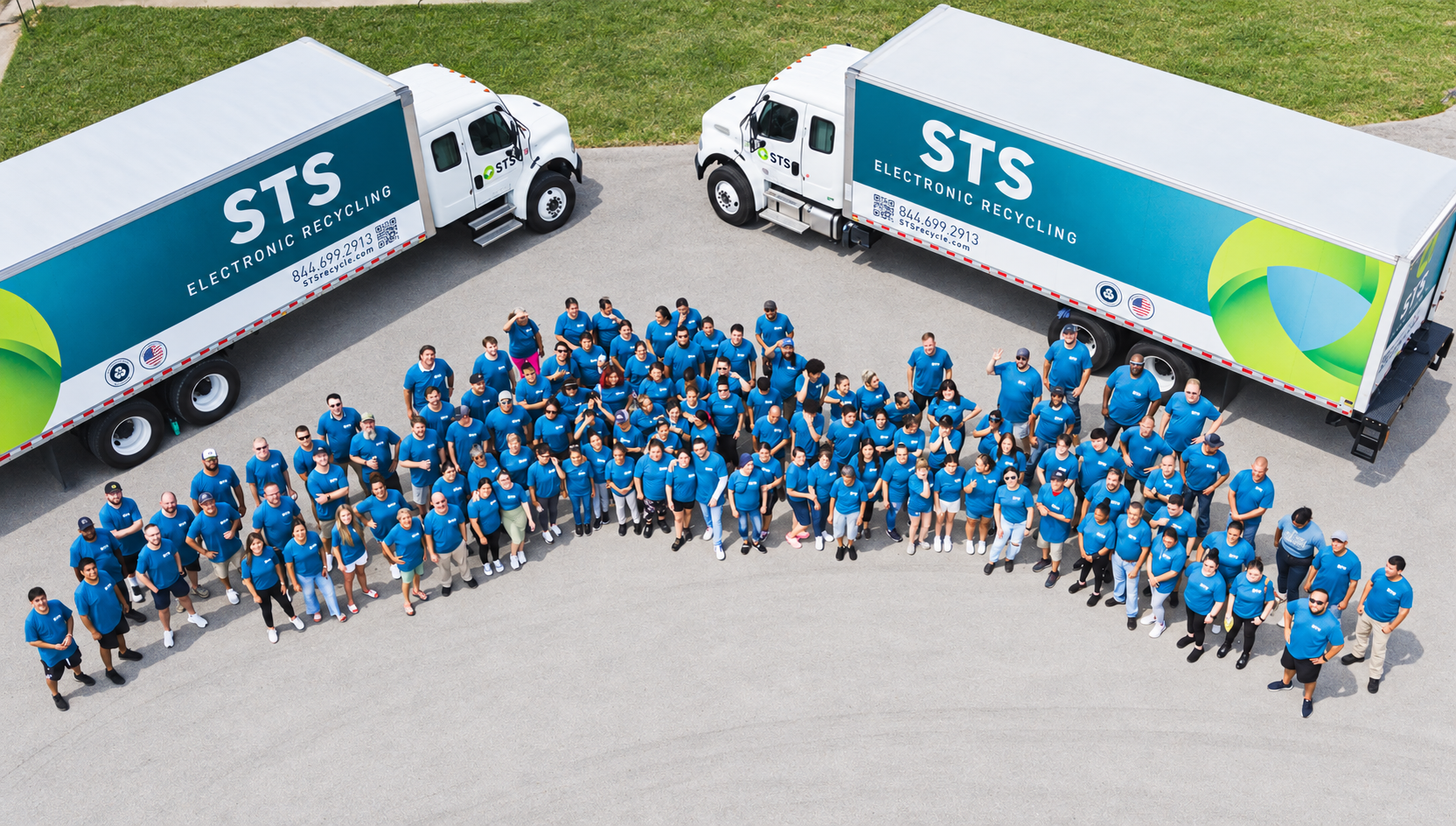
Ready to Implement FERPA-Compliant IT Disposal in Louisville?
STS Electronic Recycling provides certified ITAD for Louisville education organizations. Our 250,000 sq ft facility serves Jefferson County and surrounding counties with same-week pickup, NIST 800-88 compliant data destruction, and serialized FERPA compliance documentation for every device.
Have questions about education IT disposal compliance in Louisville?
STS Electronic Recycling • 312 S 4th St, Louisville, KY 40202 • Mon to Fri 9 AM to 5 PM
This email address is being protected from spambots. You need JavaScript enabled to view it. | Contact Us | 502-628-6868