Philadelphia Education IT Disposal Guide

Why Do Philadelphia Education Organizations Need Specialized IT Disposal?
District Technology Coordinators and University IT Directors managing end-of-life assets at Temple University, Drexel University, the University of Pennsylvania, Community College of Philadelphia, or the School District of Philadelphia face immediate consequences from improper device disposal. A single retired workstation without documented data destruction can trigger a FERPA investigation, mandatory notifications to affected families, and potential loss of all federal funding.
Philadelphia is home to more than 85 colleges and universities with a combined metro enrollment of 468,000 students. The School District of Philadelphia, the nation's 8th largest school district with 117,956 students enrolled in 2024-25, is the largest K-12 FERPA footprint in Pennsylvania. According to IBM's 2024 Cost of a Data Breach Report, the average breach costs organizations $4.88 million, and education institutions face federal funding loss on top of incident response costs. Every device that touched student education records carries a documented destruction obligation.
Philadelphia's academic concentration creates layered student data protection obligations. Temple University and the University of Pennsylvania both operate as R1 research universities, generating IT assets that may carry FERPA-protected student records and research data simultaneously. Per the UN Global E-waste Monitor 2024, only 22.3% of global electronic waste is formally recycled, making certified disposal documentation especially critical for FERPA-sensitive equipment. For school electronics recycling across Philadelphia and neighboring Delaware and Montgomery Counties, documentation requirements vary significantly by institution type.
What Has Changed in Philadelphia Education IT Disposal
When should Philadelphia K-12 districts prioritize FERPA-compliant device disposal? Most Chromebooks, Windows laptops, and tablets deployed between 2020 and 2022 are now cycling off lease or end-of-life. A managed console reset does not constitute documented data destruction under 34 CFR Part 99. District technology coordinators and university IT directors need certified destruction with serialized documentation per device, not batch processing with generic receipts.
STS Electronic Recycling provides secure ITAD and data destruction with accurate reporting for Philadelphia education organizations including the School District of Philadelphia (117,956 students), Temple University (30,005 students), and Drexel University. Every engagement includes serialized per-device certificates, complete chain-of-custody documentation, and 250,000 sq ft processing capacity serving the region.
The Mistake Most Philadelphia Education IT Directors Make
Scheduling IT disposal as an afterthought at the end of the fiscal year. By then, your budget is committed under pressure, your summer window is shrinking, and your vendor options narrow fast. K-12 districts in Philadelphia operate under annual budget cycles and academic calendar constraints that require vendor contracts and pickup schedules to be in place before devices are decommissioned. This guide helps Philadelphia education organizations build a proactive FERPA-compliant disposal program before the end-of-year scramble forces shortcuts.
What Are FERPA's IT Disposal Requirements for Philadelphia Education Organizations?
Under the Family Educational Rights and Privacy Act (20 U.S.C. § 1232g; 34 CFR Part 99), covered institutions must protect student education records on all systems through final documented destruction at end-of-life. For K-12 technology teams and university IT directors at Philadelphia County institutions, this obligation extends from active device use through certified device retirement. The maximum penalty: withdrawal of all federal Department of Education funding.
FERPA Requirements for Education IT Disposal
When retiring computers, laptops, Chromebooks, tablets, or servers that stored or processed student education records, FERPA creates specific disposal obligations rooted in the institution's overall data governance responsibilities under 34 CFR Part 99.31:
- Documented data sanitization per device: FERPA does not prescribe a specific technical standard, but best practice established by NIST SP 800-88 Rev. 1 defines Clear, Purge, and Destroy levels. Purge-level destruction is the appropriate standard for student record-bearing media.
- Serialized destruction certificates per asset: Generic batch receipts do not provide the device-level audit trail required to demonstrate FERPA compliance in an investigation. Each certificate must identify the asset by serial number, destruction method, and date.
- Unbroken chain of custody from institution to destruction: Once a device leaves institutional control, FERPA's protections must travel with it through documented transfer, not assumed.
- Vendor qualification documentation on file: certification records demonstrating secure, transparent processing for your disposal vendor should be retained with disposal documentation as evidence of due diligence.
- Records retention for disposal documentation: FERPA records retention obligations vary by institution type; many districts maintain disposal records for the life of the student cohort whose data was involved.
Philadelphia County education organizations managing school and university electronics recycling programs should ensure their vendor contracts reference serialized certificate requirements, chain-of-custody standards, and NIST 800-88 destruction methods explicitly, not as implied obligations.
(Director of Technology, Philadelphia Area School District)
K-12 vs. Higher Education: Where the Requirements Diverge
K-12 Schools and Districts
K-12 institutions face student privacy obligations under FERPA for students under 18, where parental rights are primary. Devices used by students under 13 also carry COPPA (Children's Online Privacy Protection Act, 15 U.S.C. §§ 6501-6506) obligations for any apps or cloud services accessed on those devices. The School District of Philadelphia's large scale means disposal programs must coordinate across dozens of school buildings with consistent documentation standards.
Colleges and Universities
Higher education institutions like Temple University, the University of Pennsylvania, and Drexel University maintain FERPA obligations where rights transfer to the student at age 18. Research universities with medical or clinical programs face layered obligations: FERPA for student records plus HIPAA for clinical data on the same assets. Device classification at end-of-life must account for both regulatory frameworks when applicable.
Pennsylvania State Student Privacy Protections
Pennsylvania's Student Data Privacy Act (Act 168 of 2014) adds state-level protections for student data managed by schools and their vendors. Under this Act, Philadelphia County school districts must treat disposal vendors handling student data-bearing assets as "school service providers," adding contractual requirements beyond the federal baseline at 34 CFR Part 99. K-12 technology coordinators should confirm that vendor agreements address both Pennsylvania state and federal student privacy requirements explicitly.
FERPA and COPPA: The K-12 Compliance Stack for Devices Used by Students Under 13
When Philadelphia K-12 schools retire devices used by elementary and middle school students, two federal frameworks apply simultaneously. FERPA governs the student education records stored or accessed on the device. COPPA governs personal information collected from children under 13 through any apps or web services used on that device. Both require documented data destruction at end-of-life. A NIST 800-88 compliant wipe with serialized certificate addresses both obligations for functioning devices.
How Should Education Organizations Evaluate IT Disposal Vendors for FERPA Compliance?
District Technology Coordinators and University IT Directors across Philadelphia face a specific challenge: vendors claiming education ITAD expertise rarely produce the serialized documentation, certification, and student data privacy processes that auditors require. Most general recyclers issue weight-based receipts that satisfy material recovery requirements but fail entirely as education privacy compliance documentation. Technology directors at K-12 districts typically prioritize transparent certification standards when evaluating IT disposal vendors for student record protection.
Non-Negotiable Certifications for Education IT Disposal
Do not accept claims of "industry-standard processes" without verifiable certification. Require current certification documentation with verification dates:
Secure Recycling
Why it matters for education: Chain of custody ensures downstream tracking of all materials through certified processors, protecting Philadelphia school districts and universities from downstream liability. An uncertified vendor's downstream chain creates FERPA exposure the institution cannot control. Verify current certification status independently at sustainableelectronics.org before any asset transfer.
Accurate Reporting
Why it matters for FERPA: certified data destruction demonstrates an independently audited, process-verified approach to media sanitization. Department of Education investigators and state audit teams recognize this certification as evidence of due diligence. Verify scope at naidonline.org: confirm whether certification covers plant-based destruction, mobile destruction, or both, as your program requirements may demand either.
Education-Specific Capabilities That Matter
General recyclers with adequate certifications may still lack the operational capabilities that education institutions require. Ask these specific questions before engaging any vendor:
- Serialized certificate format: Request a sample certificate before committing. Confirm it includes asset make, model, serial number, destruction method, destruction date, and technician ID. Batch-level certificates are disqualifying for FERPA-sensitive assets.
- District purchasing program compatibility: Philadelphia K-12 districts operate under school board-approved purchasing procedures. Confirm the vendor can work within cooperative purchasing frameworks or bid-based procurement, not just direct corporate engagements.
- Academic calendar scheduling: The vendor must be able to commit pickup windows during summer break, intersession, and semester-end periods. Vendors without flexibility for summer scheduling create operational bottlenecks at the worst possible time.
- Chromebook and 1:1 device volume capability: 1:1 device refresh programs can generate hundreds or thousands of devices in a single transaction. Confirm the vendor's processing capacity and turnaround times for high-volume education refreshes.
- Facility size and processing capacity: STS serves Philadelphia from our 250,000 sq ft processing facility. Anything under 100,000 sq ft suggests limited capacity for district-scale pickups.
For Philadelphia data destruction services meeting NIST 800-88 compliance, education organizations should require the same documentation framework that healthcare and government clients expect, not a watered-down version assuming schools will accept less rigorous certificates.
(IT Asset Manager, Philadelphia Area University)
Pricing and Budget Cycle Considerations for Education
Watch for this red flag: vendors who will not provide written pricing until after a site visit. Legitimate ITAD companies have published rate structures accessible before any asset moves. For K-12 districts operating under board-approved budgets and state procurement rules, pricing transparency is not a preference; it is a procurement requirement. Here is what you should see:
What Should Be No-Cost
Pickup for qualifying volumes (typically 10 or more computers or equivalent). Basic data wiping with serialized NIST-compliant certificates for functioning devices. Asset recovery credits that offset disposal costs for working equipment with residual value.
What Warrants Budget Planning
Physical shredding for end-of-life or non-functional devices. On-site witnessed destruction for high-sensitivity assets. Expedited scheduling outside standard windows. Multi-building or multi-campus coordination with separate manifests per location.
Local vs. National IT Disposal Providers: What Philadelphia Education Organizations Need to Know
National chains offer consistent processes if your institution has campuses across multiple states. They bring larger processing capacity and standardized documentation, which appeals to university systems like Temple or Drexel that manage assets regionally. The trade-off: call center support in a different time zone, less flexibility for the academic calendar windows that define Philadelphia's disposal season, and pricing structures built for corporate accounts rather than district purchasing programs.
Regional providers with direct Philadelphia County operations understand local logistics: building access at School District of Philadelphia campuses, coordinating with Drexel University facilities during quarter breaks, working around Temple University's semester schedule, and dispatching along I-76 and I-95 corridors for multi-stop pickups across Philadelphia, Delaware County, and Montgomery County. The right combination is a provider with 250,000 sq ft of processing capacity serving the Philadelphia metro directly.
The Insurance Verification Most Education IT Teams Skip
Request a Certificate of Insurance showing minimum $5M cyber liability coverage and $2M general liability before any engagement. University IT Directors at institutions like Temple University (30,005 students) and Community College of Philadelphia typically require COI verification before executing any ITAD contract. Any vendor claiming they do not need that level of coverage is immediately disqualified. Retain the COI with disposal records as evidence of vendor due diligence.
District technology coordinators searching for school electronics recycling near me throughout Philadelphia County find STS provides scheduled pickup across West Philadelphia, North Philadelphia, South Philadelphia, Center City, and into Bucks County and Delaware County. Call 215-346-7919 to confirm service windows for your buildings, with same-week availability for qualifying K-12 volumes.
How Do Philadelphia Education Organizations Build a Compliant IT Disposal Program?
District Technology Coordinators should not wait until a state audit or student data complaint forces the issue. Philadelphia County education organizations with mature IT disposal programs establish vendor relationships, purchase orders, and scheduling agreements months before the summer decommissioning window. Building compliance infrastructure in advance eliminates the documentation gaps that state auditors consistently identify during reactive disposal programs.
Phase 1: Policy Development (Weeks 1-2)
Written IT disposal policies must exist before devices are decommissioned. Under FERPA and Pennsylvania's student privacy framework, institutions must demonstrate a documented process governed every disposal decision. The absence of written policy is one of the first findings state auditors note when reviewing K-12 student data compliance programs.
Document these elements at minimum:
- Approval authority for device decommissioning (IT Director, Technology Coordinator, CFO, or Board-approved delegate)
- Student data risk classification by device type (student-assigned 1:1 devices vs. shared classroom equipment vs. administrative systems)
- Required documentation standards: serialized certificates per asset, chain-of-custody manifests, vendor certification records
- Destruction method standards by risk level: NIST 800-88 Purge for functioning devices, physical shredding for non-functional or high-sensitivity assets
- Records retention schedule for disposal documentation, accounting for FERPA requirements and Pennsylvania state obligations
For Temple University (30,005 students, fall 2024), Drexel University, Community College of Philadelphia, and regional K-12 districts throughout Philadelphia County, IT disposal policy must integrate with existing data governance frameworks and be reviewed annually as device types and regulatory guidance evolve.
Phase 2: Vendor Selection (Weeks 3-6)
Request proposals from at least three certified vendors. For K-12 districts in Philadelphia, procurement may require public bid processes or cooperative purchasing agreements. Structure your RFP to specify:
Scope Definition
Estimated annual device volumes by category: Chromebooks, Windows laptops, tablets, desktops, servers, peripherals. Geographic scope: building addresses, multi-campus or multi-site coordination requirements. Scheduling constraints: summer window availability, semester-break pickup capacity, and any building-access restrictions.
Evaluation Criteria
Certified recycling and data destruction verification. Serialized certificate format review: confirm per-device documentation. References from K-12 districts or Philadelphia-area universities. Insurance minimums: cyber liability and general liability coverage amounts. Pricing transparency: published rate structures for services beyond the no-cost baseline.
Phase 3: Pilot Program (Weeks 7-10)
Do not commit to a multi-year district-wide contract based on a sales presentation alone. Run a controlled pilot with a single school building or department batch before expanding program-wide:
Test with 25 to 50 devices from a single location. Evaluate certificate quality: did you receive individual serial number documentation or a batch receipt? Confirm turnaround time: how quickly were certificates delivered after pickup? Review the manifest: does it match the devices staged for pickup, item for item? Assess communication responsiveness: can you reach a human account contact who understands education procurement and scheduling, not a general customer service queue?
(Technology Director, Philadelphia Region K-12 District)
Phase 4: Implementation (Weeks 11-14)
Most Philadelphia education technology directors build disposal windows into their summer IT calendar, aligning decommissioning with curriculum calendars so building access and device collection do not compete with student and staff schedules. Once a vendor is validated, structure the engagement for long-term compliance success:
Master Agreement: Lock in pricing for one to two years with clearly defined service level commitments. Include audit rights so your institution can inspect the vendor facility under the agreement's documentation provisions. Define certificate delivery timelines, typically within 48 to 72 hours of destruction.
Building-Level Coordination: Establish a per-building or per-department contact protocol for device staging and pickup requests. Define packaging requirements so buildings know how to prepare assets for collection. Set pickup window expectations aligned with your custodial staff and building administrator schedules.
Reporting: Quarterly summaries of assets processed with serialized certificate archive access. Annual disposal summary for state agency and board reporting. FERPA compliance documentation package ready for audit response.
Phase 5: Continuous Improvement (Ongoing)
Device types evolve, student data obligations shift, and procurement requirements change with each board cycle. Build these feedback loops into your program:
- Annual review of vendor certification status: confirm your vendor's certifications are current and have not lapsed or changed scope
- Device type updates: new asset categories (IoT classroom devices, smart displays, portable charging carts) require updated destruction protocols and classification rules
- Policy refresh aligned with Pennsylvania student privacy law updates and any new Department of Education FERPA guidance
- Staff training for building-level staff who stage devices for disposal: consistent staging reduces documentation gaps and chain-of-custody breaks
The Summer Window Timing Problem Philadelphia Districts Consistently Underestimate
Philadelphia's academic calendar compresses most major IT disposals into a 10-week summer window. Every K-12 district in the region is competing for the same vendor capacity at the same time. Book your summer disposal windows in the spring, not after school ends. Vendors who can guarantee a specific pickup date in July are worth more than lower-priced vendors who cannot commit until August, when your buildings reopen for teacher prep days and your window closes.
Which Data Destruction Methods Are Required for FERPA-Compliant Education IT Disposal?
STS Electronic Recycling serves Philadelphia K-12 districts and universities with three certified destruction methods: NIST 800-88 Purge-level software wiping for functioning devices, degaussing for legacy magnetic media, and physical shredding for non-functional or high-sensitivity assets. A Google Admin Console deprovisioning or MDM remote wipe is an inventory action, not a student data compliance method. Every end-of-life device requires a separate certified destruction process with a serialized per-device certificate.
Software-Based Wiping (NIST 800-88 Rev. 1)
Per NIST SP 800-88 Rev. 1 guidelines, media sanitization requires verification at the Clear, Purge, or Destroy level. For education media under 34 CFR Part 99, "Purge" level is the appropriate minimum standard for covered institutions. University IT Directors and district technology coordinators typically expect Purge-level certificates of destruction, not Clear-level, as the minimum standard for student record-bearing media. Here is when software wiping applies:
- Functioning Windows and Mac laptops and desktops being redeployed or donated after disposal from the institution's asset inventory
- Functioning Chromebooks and tablets with managed accounts removed and local storage wiped to NIST Purge standard with independent verification
- Administrative workstations with student information system (SIS) access histories, processed to Purge level before any transfer
Critical limitation for education: Wiping only works on functioning, accessible drives. A laptop that will not boot due to hardware failure cannot be wiped and must be physically destroyed. Issuing a wipe certificate for a non-functional device creates a false compliance record that becomes institutional liability in a FERPA investigation.
NIST 800-88 Purge
Multi-pass overwrite with cryptographic verification. Required for FERPA-bearing media at covered institutions. Generates verifiable logs that serve as FERPA compliance documentation. Takes 2 to 4 hours per drive depending on capacity. The current federal standard preferred by Department of Education auditors over older frameworks.
DoD 5220.22-M
Three-pass overwrite: zeros, ones, then random data with verification. Still accepted by many education compliance frameworks including federal grant-funded programs. Slightly slower than NIST Purge. Federal agencies and federally funded K-12 programs now generally prefer NIST 800-88 Purge as the current governing standard for new procurement.
Degaussing (Magnetic Erasure)
Degaussers create powerful magnetic fields that scramble data at the domain level, rendering magnetic drives completely inoperable. When Philadelphia education organizations need degaussing services for end-of-life assets:
- Failed hard drives that cannot complete a software wipe cycle, common in aging school lab computers and administrative workstations
- Legacy magnetic tape backups from student information systems or district archiving platforms
- Older HDDs from university research servers or administrative systems with long service histories and high data density
- Any magnetic media requiring NSA-approved destruction under a district or university security policy
Critical note for modern education IT: Degaussing has zero effect on solid-state drives (SSDs) or flash-based storage. Nearly all Chromebooks, iPads, and Windows laptops manufactured after 2016 use SSDs exclusively. For these devices, physical shredding is the only compliant student record disposal method for non-functional units. A degaussing certificate issued for an SSD creates a false compliance record that becomes institutional liability during a student privacy audit.
Physical Shredding (Required for High-FERPA Assets)
Industrial shredders reduce drives to particles 2mm or smaller, far below any threshold where data reconstruction is possible. This is what the School District of Philadelphia, Temple University, and Drexel University's highest-sensitivity environments require. Two delivery methods:
Plant-Based Shredding
Drives transported to our 250,000 sq ft processing facility and shredded with video verification. Documented chain of custody maintained throughout. More economical for large-volume K-12 refreshes. Certificate of destruction issued per serial number. Satisfies FERPA documentation requirements for covered assets. Philadelphia hard drive shredding certificates issued per device.
Mobile Shredding
Truck-mounted shredder arrives at your Philadelphia school or university location. District technology coordinators and IT directors witness destruction in real time, the highest-assurance method for administrative systems with direct SIS access. Eliminates chain-of-custody risk entirely. Required by some university compliance programs for server decommissions and research data systems.
(Director of IT Compliance, Philadelphia Area University)
Matching Destruction Method to Education Asset Type
Student 1:1 devices (functioning Chromebooks, Windows laptops, iPads): NIST 800-88 Purge-level wipe with serialized per-device certificate. Reusable devices may enter the secondary market after certified destruction, providing asset recovery value that offsets disposal costs.
Shared classroom equipment (lab computers, cart devices, presentation systems): Same Purge-level standard applies. Shared devices accumulate student data from multiple cohorts; treat all as student record-bearing regardless of the last logged user or last MDM profile.
Administrative and SIS-connected systems: Physical shredding recommended. Workstations with direct student information system access carry the highest FERPA risk concentration at any institution. Purge-level wiping is acceptable for functioning drives; physical shredding eliminates all documentation ambiguity.
Non-functional devices of any category: Physical shredding only. Do not issue or accept wipe certificates for devices that cannot complete the destruction verification process. This is the most common documentation gap in K-12 1:1 device refresh programs.
The Tiered Strategy That Balances FERPA Compliance and Education Budget Reality
Most Philadelphia education organizations use a tiered approach: NIST Purge wiping for functioning non-administrative devices (typically the majority of a 1:1 refresh), degaussing for failed magnetic drives and legacy tape backups, physical shredding for non-functional devices, SSDs, and high-sensitivity administrative systems. This balances education privacy compliance requirements with the budget constraints that every Philadelphia County K-12 district and community college technology team manages year-round.
What FERPA IT Disposal Mistakes Do Philadelphia Education Organizations Keep Making?
STS Electronic Recycling provides secure, transparent IT disposal for Philadelphia County education organizations including the School District of Philadelphia and area universities. According to a 2024 Comparitech analysis, US schools and colleges have experienced 3,713 data breaches exposing at least 37.6 million records since 2005. These five compliance failures account for the most preventable sources of student data exposure at Philadelphia-area institutions.
Mistake 1: Treating a Device Management Console Reset as Sufficient Destruction
Google Admin Console deprovisioning, Microsoft Intune device wipe, and Apple MDM remote erase are inventory management tools, not student data compliance methods under 34 CFR Part 99. These actions confirm device reset but produce no serialized certificate documenting sanitization method, technician, and date per device. Every end-of-life device managed through an MDM platform requires a separate NIST-compliant destruction process with independent certification, regardless of what the management console records.
Mistake 2: Applying Uniform Processes Without Device Risk Classification
A student-assigned Chromebook used exclusively for browser-based learning applications carries different FERPA exposure than an administrative workstation with direct SIS access. Applying identical disposal processes to both either over-spends on low-risk equipment or under-protects high-risk student data assets. Develop a simple risk classification matrix:
- High risk: administrative systems with SIS direct access, counselor and case manager workstations, financial aid processing computers (physical shredding)
- Medium risk: teacher workstations, shared classroom computers, devices with SIS web access history (NIST Purge wipe with certificate)
- Lower risk: student 1:1 devices with managed profiles and limited local storage (NIST Purge wipe or physical shredding if non-functional)
- Non-functional any category: physical shredding regardless of original risk classification
Mistake 3: Accepting Batch Certificates Instead of Serialized Documentation
A certificate that reads "200 Chromebooks destroyed on [date]" is not FERPA-compliant documentation. If an audit or complaint requires you to demonstrate that a specific device assigned to a specific student was destroyed on a specific date, a batch certificate cannot prove it. Temple University, the University of Pennsylvania, Drexel University, and Philadelphia K-12 districts operating at scale all require serialized per-device certificates as a baseline.
A compliant certificate must include: device manufacturer and model; serial number and any asset tag; destruction method and applicable standard (NIST 800-88 Rev. 1 Purge or Destroy); destruction date; facility or technician identification; and a unique certificate ID for records retention. Anything less is a documentation gap that becomes institutional liability in a FERPA investigation.
(Technology Coordinator, Philadelphia Region School District)
Mistake 4: Missing the Summer Scheduling Window
The K-12 academic calendar compresses most IT disposals into a 10-week summer window. Waiting until July to book pickups means competing with every other Philadelphia County district for certified vendor capacity at the same time. Book summer pickup commitments by April or May to secure preferred scheduling windows. Districts that call in late June take whatever certified vendor capacity remains.
Higher education institutions face a different but equally real calendar constraint: semester breaks and summer sessions create windows for lab and office equipment disposal that require advance coordination with building facilities, IT staging, and vendor scheduling simultaneously.
Mistake 5: No Contingency Vendor Plan
What happens when your primary certified vendor loses its certification, is acquired, or cannot meet a scheduled pickup window? Philadelphia education institutions cannot pause student data disposal while sourcing an emergency replacement vendor. FERPA-bearing devices accumulate liability with every day they sit in unsecured storage.
Mature programs at universities like Drexel and Community College of Philadelphia maintain relationships with at least two certified vendors: a primary handling most volume, and a qualified backup engaged periodically to maintain the relationship. Do not qualify a backup vendor during an emergency. Qualify them during a non-critical window so the process, documentation, and logistics are verified before you need them under pressure.
The Small-Quantity Compliance Gap in School Buildings
Most certified ITAD vendors prioritize large pickups of 50 or more devices, but small-quantity disposals from individual school buildings create identical student data documentation gaps. Solution: establish quarterly collection staging where buildings accumulate devices to a central district location, batching small quantities into vendor-friendly volumes with serialized documentation for every asset. For qualifying volumes, STS provides scheduled pickup at no charge throughout Philadelphia County and surrounding districts, serving from our 250,000 sq ft facility.
Related Philadelphia Services
Core ITAD Services
Support Services
Industry Solutions
About This Guide
This compliance guide was developed by the STS Electronic Recycling team based on direct experience serving Temple University, Drexel University, the University of Pennsylvania, Community College of Philadelphia, and K-12 districts throughout the Philadelphia metro. STS is a certified electronics recycling and data destruction provider and has processed education IT assets for FERPA-regulated institutions across Pennsylvania and the Mid-Atlantic region. Content reviewed by Mark Domnenko, AI Strategy Consultant.
About STS Electronic Recycling
Where your equipment is processed.
STS Electronic Recycling, Inc. is headquartered in Jacksonville, Texas, and has served schools, businesses, healthcare systems, and government agencies across all 50 states since 2011.
Equipment collected in Philadelphia is staged locally and transported to one of our two R2v3 certified processing facilities in Jacksonville, Texas and Houston, Texas, where all data destruction and material recovery takes place.
Collection, transport and processing are staffed by STS crews rather than subcontracted to a third-party carrier, which is why the chain of custody holds from your dock to the certificate.
View all STS locations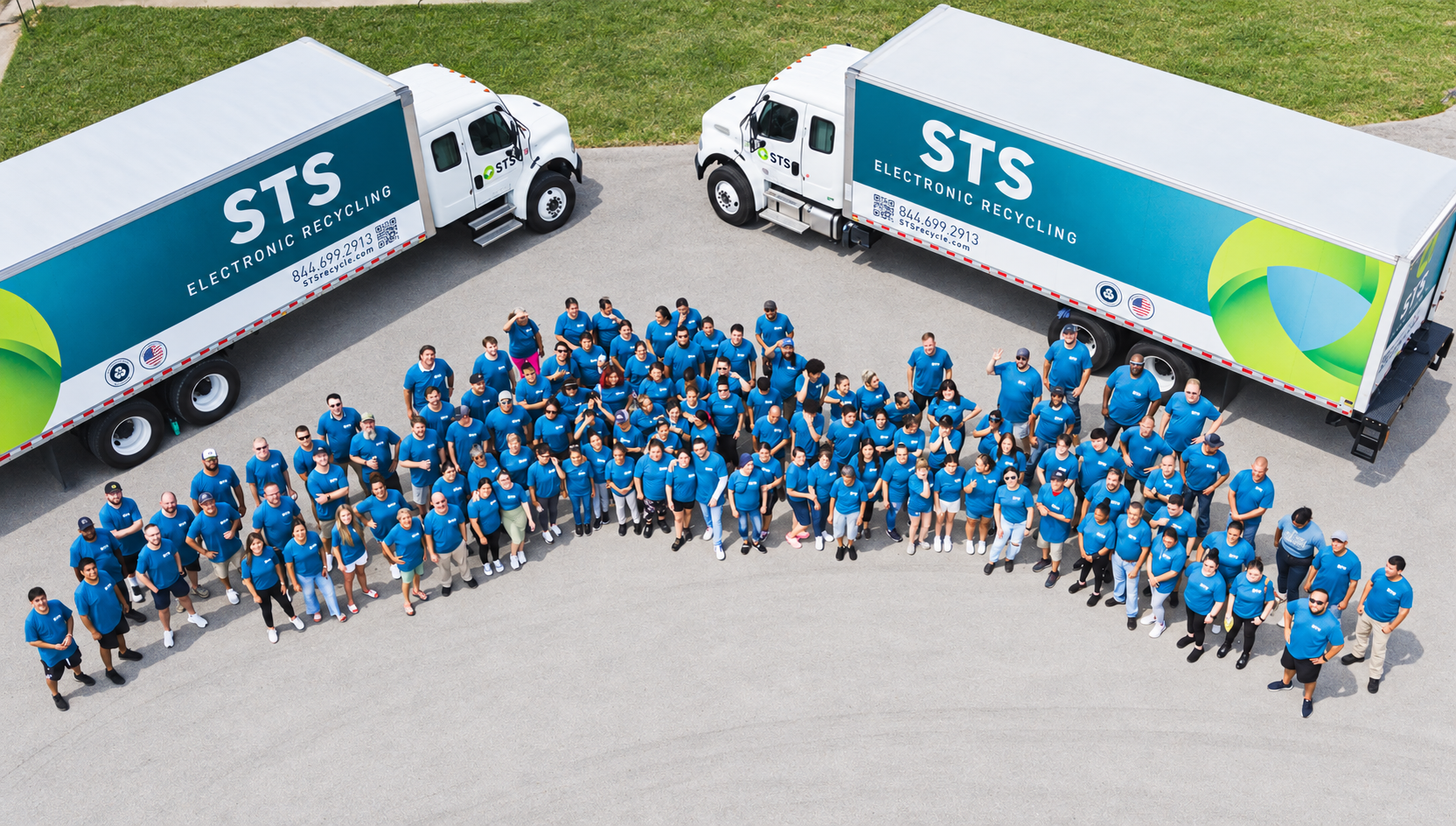
Ready to Implement FERPA-Compliant IT Disposal in Philadelphia?
STS Electronic Recycling provides secure, transparent, and sustainable services for Philadelphia K-12 districts and universities. Our 250,000 sq ft facility serves the Philadelphia metro with same-week pickup, serialized FERPA compliance documentation, and no-cost service for qualifying volumes.