Philadelphia Legal Data Destruction Guide

Why Do Philadelphia Law Firms Need Specialized Data Destruction?
Philadelphia Legal Operations Managers face data destruction obligations under Pennsylvania Rules of Professional Conduct Rule 1.6 that continue past the end of any client representation. STS Electronic Recycling provides secure data destruction for Philadelphia and Philadelphia County law firms including Morgan Lewis & Bockius (approximately 2,000 attorneys, 2222 Market Street headquarters), delivering serialized certificates per device and documented chain-of-custody for bar compliance and malpractice protection throughout the Delaware Valley.
Philadelphia's legal sector is one of the most concentrated on the East Coast. The city serves as headquarters or primary office for multiple AmLaw 100 firms, supports three active law schools training the next generation of practitioners, and hosts the US District Court for the Eastern District of Pennsylvania as one of the busiest federal dockets in the nation. Every firm, regardless of size, retires IT equipment on a regular cycle that generates potential data exposure at the same rate it generates client files. According to the IBM 2024 Cost of Data Breach Report, the average total cost of a data breach across all industries reached $4.88 million. For law firms managing privileged client data, exposure multiplies when bar complaints and malpractice claims layer on top of direct breach costs.
Philadelphia's legal corridor spans Market Street, the Avenue of the Arts, and University City, anchoring one of the densest concentrations of law firm headquarters on the East Coast. A 2024 survey by Above the Law and Arctic Wolf found 40% of law firms experienced a security breach in the past year, with hardware disposal gaps among documented sources of unauthorized client data exposure. That scale of risk demands a systematic, certified approach to digital media destruction for every Philadelphia and Philadelphia County firm regardless of size.
What Has Changed in Legal Data Destruction
The era of pulling hard drives and filing them in a storage closet is finished as a defensible compliance strategy. ABA Formal Opinion 477R updated guidance on technology security obligations for attorneys, establishing that lawyers must make reasonable efforts to prevent unauthorized disclosure of client information when using technology, including at end-of-life. Pennsylvania's Rules of Professional Conduct Rule 1.6 mirrors this standard directly. Philadelphia Bar Association guidance has reinforced the obligation to handle client data with documented reasonable care through the full lifecycle of the representation and beyond, covering proper disposal of any media that ever stored client files, privileged communications, or work product.
STS Electronic Recycling provides transparent ITAD and data destruction for Philadelphia law firms, with serialized certificates of destruction per device, documented chain of custody, and 250,000 sq ft processing capacity serving Philadelphia and the full Delaware Valley region.
The Mistake Most Law Firm IT Directors Make
Waiting until a lease expires or an outside audit triggers urgency to build a formal disposal program. By then, the firm is scrambling for certified vendors under time pressure and creating documentation gaps that bar counsel and compliance auditors recognize immediately. ABA Model Rule 1.6 obligations around client confidentiality apply continuously. This guide helps Philadelphia-area law firms build a proactive certified data destruction program before a breach or bar complaint forces the issue.
What Compliance Requirements Do Philadelphia Law Firms Face for IT Disposal?
Under Pennsylvania Rules of Professional Conduct Rule 1.6, attorneys must make reasonable efforts to prevent unauthorized disclosure of client information, an obligation that does not end when representation concludes. According to the ABA's 2023 Legal Technology Survey Report, nearly 29% of law firms reported experiencing a security breach, with loss of confidential client data among the leading consequences. Every device that stored client files, work product, or billing records carries a continuing certified destruction obligation when hardware reaches end-of-life. Penalties range from private reprimand to disbarment, with civil malpractice exposure attaching independently.
Pennsylvania Rules of Professional Conduct for IT Disposal
When retiring computers, servers, laptops, or mobile devices that stored client information, Pennsylvania bar obligations mandate a specific compliance framework under Rules 1.6, 1.15, and 1.16:
- NIST 800-88 Rev. 1 compliant data sanitization: The federal standard for clearing, purging, or destroying electronic media. Purge or Destroy level required for any device that stored privileged client information, work product, or attorney-client communications.
- Serialized certificate of destruction per device: Generic batch receipts do not satisfy bar compliance documentation requirements. Certificates must list manufacturer, model, serial number, destruction method, date, and technician ID for every individual device.
- Unbroken chain of custody: Documented from first pickup through final destruction with zero gaps in the record, meeting both ABA Formal Opinion 477R guidance and Pennsylvania state bar requirements.
- Vendor qualification documentation: Secure data destruction verification confirmed before any asset transfer. Current certification dates required, not expired certificates from prior audit cycles.
- Legal hold screening prior to disposal: No device subject to a litigation hold or preservation obligation may enter the disposal queue, regardless of age or physical condition. Documented screening is required before any device moves.
Dechert LLP and other Philadelphia-area firms managing multinational client matters face additional considerations: cross-border data obligations under GDPR and other international frameworks can apply even to hardware disposal when devices stored EU-resident client data. NIST 800-88 compliant destruction satisfies the technical standard under most international frameworks, but chain of custody documentation becomes even more critical. Review current Philadelphia data destruction requirements with qualified legal technology counsel for cross-border matters.
Director of Legal Technology, Philadelphia AmLaw 200 Firm
Philadelphia Legal Sectors and Their Specific Requirements
Large full-service firms managing securities litigation, M&A transactions, and healthcare regulatory matters generate the highest volumes of highly sensitive client data on end-of-life hardware. Quarterly equipment refreshes, lateral partner arrivals, and decommissioned practice group infrastructure all create disposal volumes requiring the same certified documentation process.
AmLaw and Large Regional Firms
High-volume disposal with multi-floor Center City configurations requires coordinated pickup logistics across large buildings with freight elevator scheduling and building management coordination. Consistent documentation across floors and practice groups is essential, particularly for firms with satellite offices requiring the same destruction protocols applied uniformly.
Boutique and Specialty Practices
Smaller practices often lack dedicated IT staff, creating reliance on vendors who handle certification, documentation, and certificates end-to-end. Certificate of destruction services for Philadelphia must include individual device serialization, not batch totals, regardless of volume. Bar complaints arising from small-firm data exposure occur at rates disproportionate to disposal volume.
Pennsylvania-Specific Obligations on Top of ABA Standards
Pennsylvania's Rules of Professional Conduct, administered by the Disciplinary Board, layer state-specific obligations on top of the ABA Model Rules. Rule 1.15 (Safekeeping Property) addresses the firm's obligation to safeguard client property, extending to data on end-of-life hardware. Under Pennsylvania's Breach of Personal Information Notification Act (BPINA), amended with requirements effective September 26, 2024, a breach of personal information requires notification to affected individuals and 12 months of credit monitoring when certain identifying data is compromised. Law firms advising regulated-industry clients also face their clients' sectoral requirements if inadequate certified disposal creates downstream exposure. STS provides legal firm data destruction services specifically designed for bar compliance documentation requirements.
What a Compliant Certificate of Destruction Must Include for Bar Documentation
A certificate stating "500 computers destroyed on [date]" does not satisfy Pennsylvania bar documentation requirements. When the Pennsylvania Disciplinary Board investigates a complaint and asks you to prove a specific device was destroyed, a batch certificate proves nothing about any individual serial number. Compliant certificates must include: manufacturer and model; serial number and asset tag; destruction method and NIST standard applied; destruction date and location; technician identification; and a unique certificate number for long-term records retention.
How Should Philadelphia Law Firms Evaluate Data Destruction Vendors?
Legal Operations Managers and Law Firm IT Directors across the Delaware Valley face a consistent vendor qualification challenge: providers claiming legal-sector ITAD expertise rarely hold current certification, NIST-compliant destruction documentation, and chain-of-custody processes Pennsylvania bar compliance requires. Legal Operations Managers typically select vendors with accurate reporting standards to satisfy bar compliance audit requirements, which is why documentation standards are the first evaluation filter. Here is how to assess candidates and find law firm electronics recycling providers that actually meet the bar compliance standard:
Non-Negotiable Certifications for Legal ITAD
Do not accept "we follow industry best practices" as a response. Require specific certifications with current verification dates before any conversation about pricing or logistics:
Sustainable Recycling
Why it matters for law firms: Chain of custody documentation tracks every asset through final processing, protecting Philadelphia firms from downstream liability exposure. Verify current certification at sustainableelectronics.org before any asset transfer. Expired certificates are common among vendors claiming legal sector experience in the competitive Philadelphia market.
Secure Data Destruction
Why it matters for bar compliance: Transparent destruction demonstrates a documented, independently audited process with chain of custody standards that satisfy bar compliance frameworks. Verify current membership at naidonline.org and confirm scope: plant-based destruction, mobile destruction, or both. For witnessed on-site destruction at a law firm location, mobile certified destruction is required separately.
Facility Size and Legal-Specific Capabilities
Ballard Spahr and other mid-to-large Philadelphia firms refresh IT equipment across multiple floors and practice groups on a regular cycle. Ask specific operational questions before committing to any vendor relationship:
Ask every candidate these specific questions:
- Facility square footage: Anything under 100,000 sq ft limits capacity for enterprise-scale firm pickups. STS serves Philadelphia from our 250,000 sq ft processing facility.
- Certificate turnaround time: Serialized certificates should be available within 48 to 72 hours of destruction. Any vendor who cannot commit to this creates documentation timeline gaps for active matters.
- Mobile shredding availability: For witnessed on-site hard drive destruction at your Center City or suburban location with a same-day certificate of destruction issued on-site.
- Degaussing equipment: NSA-approved degaussers for magnetic media, legacy backup tapes, and older legal archive drives from document management systems.
- Legal hold accommodation: A documented process for flagging and segregating devices subject to active holds before any asset moves.
Legal Operations Director, Philadelphia Regional Law Firm
Pricing Transparency and Red Flags
When evaluating IT disposal vendors, Legal Operations Managers at Philadelphia firms like Ballard Spahr (700+ attorneys, founded 1885) prioritize certified processing and chain-of-custody documentation over pricing. One clear warning sign: refusing to provide written pricing until after a site visit. Legitimate ITAD companies publish rate structures with specific per-unit rates, service levels, and certificate turnaround commitments.
What Should Be Free
Pickup for qualifying volumes (typically 10 or more computers or equivalent). Basic NIST-compliant data wiping with serialized certificates. Asset recovery credits that offset disposal costs for equipment retaining resale value.
What Costs Extra
Witnessed on-site destruction. Same-day or emergency service. Physical hard drive shredding versus wiping. After-hours building access at Center City high-rises. Multi-floor or multi-practice-group coordination for large decommissions.
National Chains vs. Regional Providers
National chains offer consistent processes if your firm maintains offices across multiple states. Broader processing infrastructure and standardized documentation templates. Disadvantage: account management through national call centers, higher pricing that does not reflect Philadelphia-specific logistics, and response times calibrated to national averages rather than your building's freight elevator schedule.
Regional providers with direct Philadelphia operations understand Center City building access requirements, coordinate with building management for after-hours freight pickups at major office towers, and have documentation rhythms aligned with how Philadelphia bar clients expect records to be maintained. The right profile is a provider with serious processing capacity serving the market directly.
Law firms searching for certified data destruction near me throughout Center City, University City, Camden NJ, and King of Prussia find STS provides scheduled pickup along I-76, I-95, and I-476, covering the full Delaware Valley with same-week service for qualifying volumes.
The Insurance Verification Step Most Firms Skip
Request a Certificate of Insurance showing minimum $5M cyber liability coverage and $2M general liability before signing any agreement. A vendor handling drives from a firm's M&A practice, litigation department, or intellectual property group carries significant risk. Any vendor who suggests this coverage level is unnecessary for legal ITAD should be disqualified at that point in the conversation.
How Do Philadelphia Law Firms Build a Compliant Data Destruction Program?
Legal Operations Managers who build certified destruction programs proactively, before a lease expiration or bar audit creates pressure, consistently report stronger documentation outcomes. Here is how Philadelphia and Philadelphia County law firms with mature IT disposal programs structure their approach from the start:
Phase 1: Policy Development (Weeks 1-2)
Written policies must exist before you need them. In a law firm context, this is not optional bureaucracy. ABA Model Rule 1.6 and Pennsylvania Rule 1.16 both require attorneys to act competently with respect to the technology used in representation, including its retirement and disposal. Documented disposal policies demonstrate good-faith compliance in any bar investigation or malpractice proceeding, and they represent the first thing disciplinary investigators request when reviewing a data-related complaint.
Document these elements:
- Who approves equipment for disposal (IT Director, Managing Partner, Legal Operations Manager, or combination with dual sign-off requirements)
- Device sensitivity classification matrix: partner workstations, litigation servers, general office equipment, and mobile devices each carry different PHI and privilege risk levels
- Legal hold and e-discovery screening step: mandatory cross-reference with general counsel before any device enters the disposal queue
- Required documentation: serialized destruction certificates per device, chain-of-custody records, and vendor qualification files for all digital media destruction engagements
- Retention schedule for disposal records coordinated with client file and matter retention policies under PA bar requirements
For Cozen O'Connor and other Philadelphia firms with offices in multiple markets, this policy must establish consistent documentation standards across all locations and designate clear coordinator responsibility for ensuring remote offices follow the same certified protocols as the headquarters operation.
Phase 2: Vendor Selection (Weeks 3-6)
Request proposals from at least three vendors and include specific requirements in your RFP:
Scope Definition
Estimated volumes by quarter. Asset types: workstations, laptops, servers, mobile devices, and legacy archive media. Geographic locations: Center City headquarters, suburban offices, co-working space inventory. Special requirements: witnessed destruction, after-hours building access, multi-floor coordination for large practice group decommissions.
Evaluation Criteria
Certificate format confirmed as serialized per device, not batch totals. References from other Philadelphia law firms specifically. Insurance certificates current and at required coverage levels. Accurate reporting verification with current certification dates. Legal hold accommodation process formally documented in writing.
Phase 3: Pilot Program (Weeks 7-10)
Do not commit to a multi-year contract based on a vendor's sales materials. Run a controlled pilot with a single practice group's equipment cycle. Evaluate documentation quality: did you receive serialized certificates listing individual device information, or batch totals? Verify turnaround time from pickup to certificate delivery. Confirm destruction methods match your sensitivity classifications. Assess whether the account contact understands legal-sector requirements. Legal sector organizations typically require certificate-per-device turnaround within 48 hours for active litigation matter management, a standard STS maintains for every Delaware Valley engagement.
IT Director, Philadelphia Litigation Boutique
Phase 4: Implementation (Weeks 11-14)
Most legal operations directors choose ITAD vendors who provide automated certificate generation within 48 hours of destruction, a standard STS maintains for every Philadelphia engagement. Once you have validated a vendor through the pilot, structure the agreement for long-term compliance success:
Master Service Agreement (MSA): Lock pricing for 12-24 months. Define SLAs with penalties for certificate turnaround failures. Include audit rights to inspect vendor facilities. Establish escalation paths for urgent disposal needs from departing partners or emergency decommissions.
Work Order Process: Establish pickup protocols compatible with Center City building access requirements: advance freight elevator reservations and loading dock coordination for multi-floor pickups at high-rises.
Reporting Structure: Monthly asset summaries with serialized certificate access. Quarterly legal hold compatibility reviews. Annual disposal program documentation ready for bar compliance review or malpractice due diligence.
Phase 5: Continuous Improvement (Ongoing)
Firms with offices across multiple markets learned this: what works in Center City may not translate to a satellite office in the suburbs or a co-working space. Build feedback loops that catch documentation gaps before bar investigators or opposing counsel do:
- Quarterly reviews with your vendor: review certificate completeness, chain of custody records, and legal hold screening documentation
- Annual RFP process: even satisfied clients should benchmark pricing and certification status annually against the Philadelphia market
- Staff training on disposal procedures, particularly for administrative staff and practice group coordinators who first encounter retired equipment
- Protocol updates for new asset types: mobile devices, cloud-connected workstations, and portable media generate disposal obligations that pre-2015 policies often do not address
The Legal Hold Coordination Problem Most Programs Miss
No device subject to a litigation hold or preservation obligation may be destroyed, regardless of its age, physical condition, or lease status. Law firms without a documented hold-screening step in the disposal workflow risk destroying potentially discoverable evidence, creating spoliation exposure with case-ending consequences. Before any device enters the disposal queue, IT must confirm with general counsel that no active hold applies to that device or custodian. Document this confirmation. This single procedural step prevents the single most catastrophic compliance failure available to a law firm in its IT program.
Which Data Destruction Methods Are Required for Law Firm Compliance?
Which data destruction method does your Philadelphia law firm actually require? Per NIST SP 800-88 Rev. 1 guidelines, the appropriate method depends on media type, device functionality, and the sensitivity of client data stored on the device. Here is how each method works and when ABA and Pennsylvania bar guidance calls for it:
Software-Based Wiping (NIST 800-88 Rev. 1)
Per NIST SP 800-88 Rev. 1 guidelines, media sanitization requires verification at the Clear, Purge, or Destroy level. For law firms, Purge level is the minimum standard for any device that stored client files, privileged communications, or attorney work product. Software wiping at the Purge level produces independently verifiable logs acceptable as compliance documentation under ABA Model Rule 1.6 guidance. STS provides NIST 800-88 compliant certified data erasure for Philadelphia law firms with serialized certificates per device.
- Functioning drives destined for redeployment or resale within the firm: Purge-level overwrite with cryptographic verification and serialized certificate
- General administrative equipment with indirect or minimal privileged data exposure: documented Clear-level process with certificate
- Equipment with low to moderate client data exposure and confirmed functioning media
Critical limitation for legal IT: Wiping only works on functional, bootable drives. A partner workstation that failed and will not power on cannot be wiped. A client's privileged communications on a non-functional drive require physical destruction instead. Documenting a successful "wipe" on a non-functional drive creates a false certificate, which compounds the original compliance failure and adds a documentation fraud dimension to the liability analysis.
NIST 800-88 Purge Level
Multi-pass overwrite with cryptographic verification producing a log that independently confirms each overwrite pass. Required for privileged client data under ABA Model Rule 1.6 guidance. Takes 2-4 hours per drive depending on capacity. Generates verifiable records that satisfy bar documentation requirements. Best applied to functional devices destined for resale or redeployment after retirement.
DoD 5220.22-M
Three-pass overwrite: zeros, ones, then random data with verification pass. Still accepted by most bar compliance frameworks as equivalent to NIST Purge for general client data. Many Philadelphia firms use this as their standard wiping protocol for lower-sensitivity general office equipment. NIST 800-88 Rev. 1 is the current preferred federal standard and increasingly expected in legal sector vendor contracts.
When Does a Philadelphia Law Firm Need Degaussing?
Degaussers create powerful magnetic fields that render magnetic drives permanently inoperable. Appropriate applications for hard drive destruction and degaussing services in Philadelphia:
- Failed drives that cannot be wiped but stored privileged client files or communications
- Legacy billing and matter management servers with high concentrations of client data
- Backup tapes from older document management systems and litigation archive environments
- Older magnetic media from pre-SSD workstations and conference room equipment
Critical limitation for modern law firms: Degaussing has zero effect on solid-state drives or any flash-based storage. Modern laptops, tablets, and workstations shipped after approximately 2015 use SSDs almost exclusively. For these devices, physical shredding is the only compliant destruction method under NIST 800-88 Destroy level guidance.
Physical Shredding (Required for High-Sensitivity Client Data)
Industrial shredders reduce drives to particles 2mm or smaller, below any realistic data reconstruction threshold. Philadelphia law firms handling M&A transactions, securities litigation, government investigations, and intellectual property matters routinely require this level for practice group server decommissions and high-sensitivity client matter archives. Two delivery approaches:
Plant-Based Shredding
Drives transported to our 250,000 sq ft processing facility with video verification and documented chain of custody maintained throughout transport and destruction. More economical for large volumes. Chain of custody documentation satisfies bar compliance requirements. Serialized certificates issued per device serial number within 48 hours of destruction.
Mobile Shredding (Witnessed)
Truck-mounted shredder arrives at your firm's Center City building or suburban office. Firm personnel witness destruction in real time on-site. Required by many law firm compliance programs for M&A server decommissions and high-sensitivity litigation infrastructure retirements. Eliminates every chain of custody gap between device custody transfer and confirmed destruction.
Chief Operating Officer, Philadelphia AmLaw 200 Firm
Matching Destruction Method to Client Data Risk Level
General administrative equipment (non-privileged): NIST 800-88 Purge-level wiping with serialized certificates. Conference room equipment and administrative workstations with no direct access to privileged client files.
Associate and staff workstations with routine client data access: Purge-level wiping for functional drives; degaussing for failed magnetic media. Covers the majority of the typical firm's endpoint fleet.
Partner workstations and practice group servers: Physical shredding required for all media types. Systems connected directly to matter management software, document repositories, and billing records carry the highest privilege exposure and require Destroy-level handling regardless of drive condition or media type.
Litigation servers and M&A deal rooms: Physical shredding with witnessed destruction documentation. High-density privileged data environments where chain of custody must be airtight. Any gap in documentation for these assets creates the most serious malpractice exposure.
The Tiered Strategy That Balances Compliance and Budget
Most Philadelphia law firms use a tiered approach: NIST Purge wiping for approximately 60% of equipment (functional general office assets without direct privileged data exposure), degaussing for approximately 15% (failed drives and legacy magnetic media), and physical shredding for approximately 25% (SSDs, servers, and practice group systems with direct client data exposure). This approach satisfies bar compliance requirements across all device categories without applying shredding rates to every conference room monitor or reception desk computer.
What Legal Data Destruction Mistakes Do Philadelphia Law Firms Keep Making?
STS Electronic Recycling provides secure digital media destruction for Philadelphia and Philadelphia County law firms, with NIST 800-88 compliant sanitization, serialized certificates per device, and documented chain-of-custody for every engagement. Serving the Delaware Valley from our 250,000 sq ft processing facility, STS delivers same-week scheduling for qualifying legal sector clients.
After working with legal organizations throughout Pennsylvania and the broader Delaware Valley, these are the recurring compliance failures that trigger Disciplinary Board investigations and create preventable liability:
Mistake #1: No Legal Hold Screening Before Disposal
Destroying a device subject to a litigation hold or preservation notice is spoliation. Spoliation can result in case-ending sanctions, adverse inference instructions, default judgments, and malpractice exposure that dwarfs the value of any IT equipment. Before any device enters the disposal queue, IT must cross-reference active holds with general counsel. This cross-reference must be documented. A verbal confirmation that general counsel was consulted does not survive a spoliation motion.
Mistake #2: Treating All Devices as Equivalent
A conference room laptop used for video calls is not the same as a senior partner workstation that stored 20 years of M&A deal files. Applying identical destruction methods to both wastes budget on low-risk equipment or under-protects the devices carrying the greatest privilege exposure:
- Verify current certification at sustainableelectronics.org before any asset transfer to a vendor
- Verify accurate reporting at naidonline.org with current dates and confirmed scope (plant versus mobile)
- Request current insurance certificates no older than 90 days, not certificates from prior coverage periods
- Build a device sensitivity matrix where partner workstations, litigation servers, and M&A shared drives receive Destroy-level destruction regardless of media type
Mistake #3: Accepting Batch Certificates Instead of Serialized Documentation
A certificate stating "200 devices destroyed on [date]" is not bar-compliant documentation for any individual device covered by that batch. When the Pennsylvania Disciplinary Board asks you to prove a specific device was destroyed, batch totals prove nothing about any individual serial number. The standard is one certificate per device, listing manufacturer, model, serial number, destruction method and standard applied, date, location, and technician identification. Anything less is a documentation gap that becomes bar liability in any investigation.
A compliant certificate of destruction from STS must include: manufacturer and model; serial number and asset tag; destruction method and NIST standard applied; destruction date and location; technician identification; and a unique certificate number for long-term records retention. Any variation from this format is a documentation deficiency that a disciplinary investigation or malpractice discovery process will expose.
General Counsel, Philadelphia Regional Law Firm
Mistake #4: Overlooking Mobile Devices and Personal Storage
Attorneys use firm-issued and personal mobile devices to access client files, draft privileged communications, and store work product. Every firm-issued smartphone, tablet, and USB drive that accessed privileged client data carries the same secure data erasure obligations as a desktop workstation. Many Philadelphia law firms have mature workstation disposal programs and entirely undocumented mobile device end-of-life processes, creating a systematic documentation gap the bar and malpractice plaintiffs can identify immediately.
Mistake #5: No Contingency Vendor Relationship
If your primary ITAD vendor loses certification, gets acquired, or experiences a facility incident mid-engagement, you cannot pause client data disposal while sourcing a replacement. Mature Philadelphia legal IT programs maintain a qualified backup vendor with a current vendor questionnaire on file and a completed qualification review. You cannot qualify a backup vendor in the middle of an urgent disposal need triggered by a building evacuation, office consolidation, or practice group dissolution. Pre-qualify before you need it.
Dual vendor relationships also provide negotiating leverage at annual contract renewals and ensure continuity if one vendor has capacity constraints during a major office relocation or large-scale infrastructure refresh. Both vendors must have current certifications; a backup vendor with lapsed certification provides no actual backup at the moment you need it.
The Small-Quantity Documentation Gap
Most ITAD vendors prioritize large pickups. A single failed laptop from a departing partner or a server being replaced outside a scheduled refresh creates documentation gaps that compound year over year. Establish quarterly collection protocols where individual practice groups stage small quantities to a central IT staging area. This batches smaller items into vendor-friendly volumes while maintaining serialized documentation for every device regardless of quantity. For qualifying volumes, STS provides scheduled pickup at no charge throughout the Philadelphia metro area and Delaware Valley.
A documented small-quantity protocol is also the simplest answer to a Disciplinary Board inquiry about any specific device: the staging log, the pickup record, and the serialized certificate close the documentation chain entirely, regardless of how small the batch was when it entered the disposal queue.
Related Philadelphia Services
Core Data Security
Support Services
Industry Guides
About This Guide
This compliance guide was developed by the STS Electronic Recycling team based on direct experience serving law firms, legal organizations, and compliance-driven clients across Philadelphia and the Delaware Valley. To discuss your firm's data destruction requirements, contact STS at 215-346-7919. STS holds Secure Recycling and Transparent certifications and has provided certified data destruction for legal sector clients with documented chain of custody, NIST 800-88 compliant sanitization, and serialized certificates per device. Content reviewed by Mark Domnenko, AI Strategy Consultant.
About STS Electronic Recycling
Where your equipment is processed.
STS Electronic Recycling, Inc. is headquartered in Jacksonville, Texas, and has served schools, businesses, healthcare systems, and government agencies across all 50 states since 2011.
Equipment collected in Philadelphia is staged locally and transported to one of our two R2v3 certified processing facilities in Jacksonville, Texas and Houston, Texas, where all data destruction and material recovery takes place.
Collection, transport and processing are staffed by STS crews rather than subcontracted to a third-party carrier, which is why the chain of custody holds from your dock to the certificate.
View all STS locations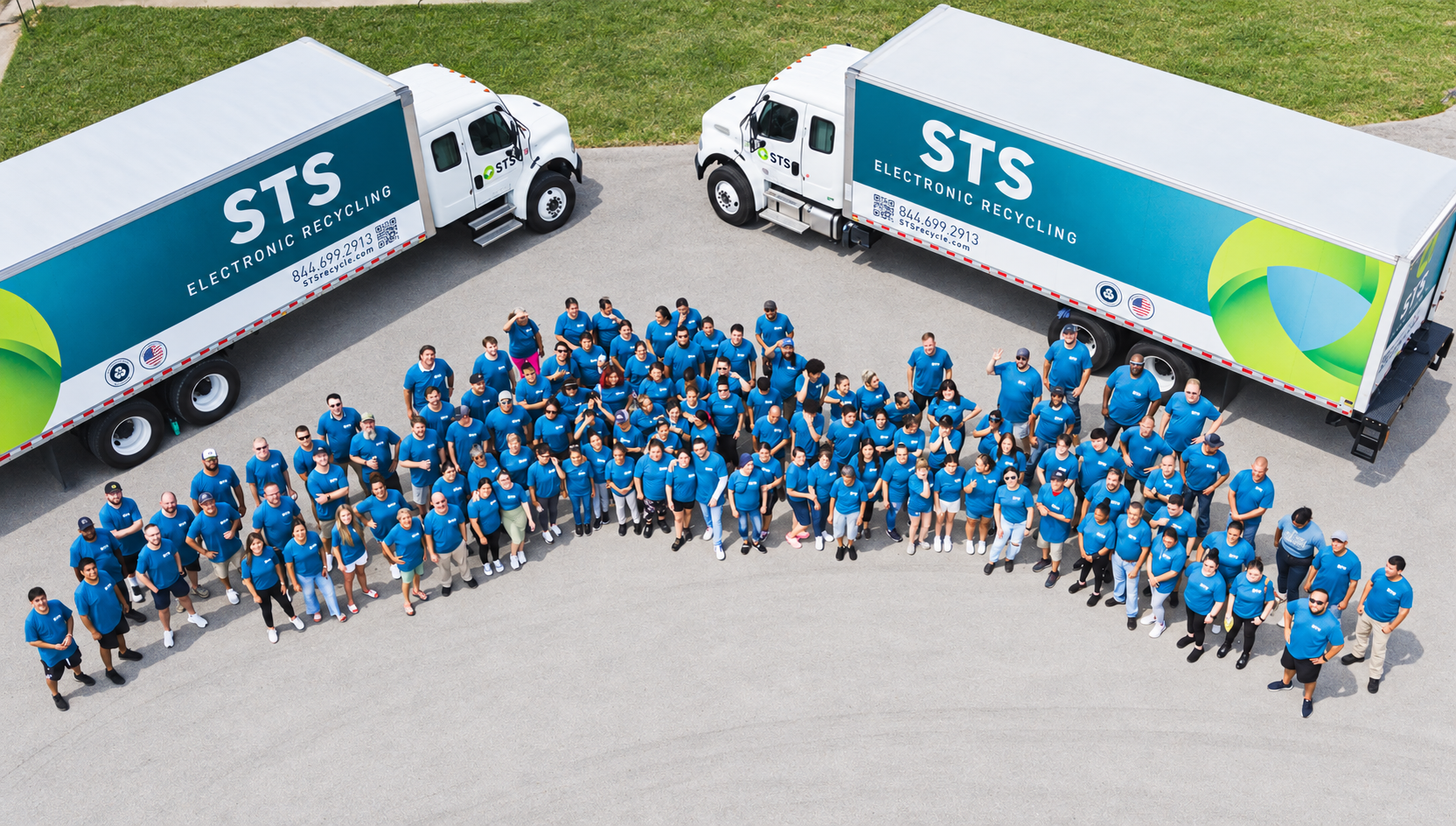
Ready to Implement Certified Data Destruction in Philadelphia?
STS Electronic Recycling provides secure data destruction for Philadelphia law firms. Serialized certificates per device, NIST 800-88 compliant destruction, and documented chain of custody serving the entire Delaware Valley from our 250,000 sq ft processing facility.