Richardson Government IT Procurement Guide

Why Do Richardson Government Agencies Need a Specialized IT Disposal Program?
What's the real risk of improper IT disposal for public sector managers in Richardson? For City of Richardson, Collin County, and Dallas County agencies, a single improperly retired workstation can trigger a state comptroller audit, mandatory disclosure under the Texas Public Information Act, and federal OIG action if the device processed federal program data. Government IT disposal in Richardson operates under a compliance environment most commercial IT teams never encounter, and the stakes include audit findings that enter the public record.
Richardson's 121,000-resident city spans Dallas and Collin counties, creating a multi-jurisdictional compliance layer most government IT procurement guides overlook. The City of Richardson IT department manages infrastructure across public safety, utilities, parks, and administrative functions. Federal contractors in the Telecom Corridor, including Raytheon (~1,200 employees), AT&T (~2,000 employees), Texas Instruments (~2,000 employees), and Cisco Systems (~1,500 employees), operate under additional DoD and FedRAMP obligations for government contract environments. Getting disposal right means understanding which rules apply to which assets at which agency level.
Richardson sits at the intersection of telecommunications, defense contracting, insurance, and municipal government, each sector generating IT equipment with different disposal obligations. State Farm (~8,000 employees), Blue Cross Blue Shield of Texas headquarters (~3,000 employees), and the University of Texas at Dallas (30,000+ students) each face distinct regulatory requirements alongside City of Richardson and Collin County agencies. STS Electronic Recycling provides transparent, sustainable government IT asset disposition for Richardson agencies, with documentation meeting both FISMA and Texas DIR standards for every device processed.
What's Changed in Texas Government IT Procurement and Disposal
Texas state agencies and political subdivisions, cities, counties, and school districts, operate under Texas Government Code Chapter 2175 governing surplus and salvage property. For IT assets, the Texas Department of Information Resources (DIR) establishes additional guidelines for data destruction and disposal. Richardson-area agencies using DIR cooperative contracts must work with DIR-certified vendors or follow DIR-approved disposal procedures. Non-compliance can void cooperative purchasing agreements that city and county agencies depend on for cost-effective procurement.
STS Electronic Recycling provides IT asset disposition backed by Secure Recycling standards and data destruction verified through accurate reporting for Richardson government agencies, with documented NIST 800-88 compliant data sanitization, serialized destruction certificates, and chain-of-custody documentation meeting Texas DIR requirements. We serve Richardson from our 250,000 sq ft processing facility, with scheduled pickup across Dallas and Collin counties. To schedule a Richardson government agency assessment, call 214-253-8584.
The Mistake Most Government IT Managers Make
Treating surplus property disposal as a facilities management task rather than a compliance function. In government environments, an IT asset isn't fully retired until it carries documented chain-of-custody proof of certified data destruction, documentation that survives a Texas State Auditor review or an OIG inquiry on federal contracts. Richardson agencies that route device retirement through general surplus channels, without certified data destruction records, create liability that surfaces during audits, not at disposal time.
What Compliance Requirements Govern Richardson Government IT Disposal?
Public sector IT managers in Richardson navigate overlapping federal and state digital media destruction requirements simultaneously. Under FISMA, NIST SP 800-88 Rev. 1 media sanitization is mandatory for all federal information systems at end-of-life. Texas Government Code Chapter 2175 governs surplus property transfer. The Texas Public Information Act creates additional disclosure obligations for improperly exposed constituent data. Meeting all three frameworks requires a systematic disposal program, not a one-time transaction.
Federal Requirements: FISMA and NIST 800-88
Any Richardson agency, or Telecom Corridor contractor, that handles federal data under a grant, contract, or program agreement falls under FISMA (Federal Information Security Modernization Act). FISMA mandates NIST SP 800-88 Rev. 1 compliant media sanitization for all federal information system equipment at end-of-life. This isn't optional guidance. It's a legal requirement enforced through Inspector General audits, and non-compliance can disqualify an agency from future federal program participation:
- NIST 800-88 Rev. 1 Clear level: Overwrite-based sanitization for low-security equipment not connected to federal systems. Acceptable for general administrative workstations with no sensitive data exposure.
- NIST 800-88 Rev. 1 Purge level: Cryptographically verified multi-pass overwrite required for any device that processed CUI (Controlled Unclassified Information) or federal program data.
- NIST 800-88 Destroy level: Physical shredding or degaussing required for devices that processed classified, law enforcement sensitive, or high-security federal data, common in Richardson's defense contractor environments at Raytheon facilities.
- Serialized destruction certificates per device: FISMA compliance requires device-level documentation: manufacturer, model, serial number, sanitization method, date, and technician certification for every asset.
- Chain of custody from agency to final disposition: No gaps from government premises to certified destruction. Any break creates both FISMA exposure and Texas DIR audit findings.
Public sector IT managers at Richardson agencies typically expect serialized NIST-compliant destruction certificates, one per device with manufacturer, model, serial number, and sanitization method, as a baseline requirement in every government IT asset disposition engagement.
- IT Director, Texas Municipal Agency
Texas State Requirements: DIR and Surplus Property Rules
Texas Government Code Chapter 2175 governs surplus and salvage property for state agencies and political subdivisions. For the City of Richardson and Collin County agencies, this framework creates specific obligations before IT equipment can be transferred, sold, or recycled:
State Agencies
Texas state agencies must offer surplus property through the Texas Facilities Commission Surplus Property Program before external disposal. IT assets with hard drives must have documented data destruction before transfer. DIR Information Security Standards require NIST 800-88 compliance. Agencies using DIR cooperative contracts for disposal must work with DIR-approved vendors or obtain written exception authorization.
Cities, Counties & Political Subdivisions
Richardson, Collin County, and Dallas County entities aren't bound by state surplus property rules in the same way, but they face local purchasing ordinances, audit requirements, and public accountability standards demanding equivalent documentation. City councils and county commissioners courts that approve surplus property disposals expect data destruction certificates as part of the disposition record.
Texas Public Information Act Exposure
The Texas Public Information Act (Government Code Chapter 552) creates a government-sector data risk commercial entities don't face: constituent data on improperly disposed equipment is potentially subject to public records disclosure requests, including the fact that the data was exposed. A Richardson city workstation that processed permit applications, utility account data, or constituent service requests carries public information obligations that survive disposal. Documented certified destruction is the only defense against a TxPIA inquiry.
Multi-Jurisdictional Compliance: Dallas and Collin Counties
Richardson spans both Dallas and Collin counties, unusual for a mid-sized Texas city and consequential for IT procurement. Assets purchased under Dallas County cooperative contracts follow Dallas County disposal protocols. Assets purchased under Collin County or NCTCOG (North Central Texas Council of Governments) agreements follow different procedures. Government IT managers in Richardson must track which purchasing vehicle was used for each asset, that record determines which disposal documentation trail applies when the asset reaches end-of-life.
How Should Richardson Government Agencies Evaluate IT Disposal Vendors?
Public sector IT managers at City of Richardson and Collin County agencies face a documentation gap most ITAD vendors can't close. Texas OIG investigations and state procurement audits require serialized destruction certificates, NIST sanitization reports, and chain-of-custody records surviving 5-7 year audit windows. Vendors without Texas DIR familiarity and certified data destruction create compliance exposure, not just recycling cost.
Non-Negotiable Certifications for Government IT Disposal
Government agencies have no margin for certification shortcuts. Require current, verifiable credentials, not verbal assurances:
R2v3 Certification
Why it matters for government: R2v3 ensures downstream tracking of all materials through certified processors — protecting Richardson agencies from liability if recycled equipment resurfaces improperly. Texas DIR guidelines reference responsible recycling certifications. Verify current status at sustainableelectronics.org — an expired or pending certification is not compliant for DIR-governed disposal.
NAID AAA Certification
Why it matters for FISMA: NAID AAA certification demonstrates data destruction process rigor that government auditors recognize. Verify at naidonline.org and confirm the scope covers your asset types — plant-based destruction and mobile on-site destruction are separate certifications. Texas OIG and federal IGs recognize NAID AAA as evidence of good-faith compliance during data disposal investigations.
Government-Specific Capabilities Beyond Certifications
This is where Richardson-area agencies get burned. A vendor with generic commercial ITAD experience doesn't understand Texas surplus property documentation, multi-jurisdictional purchasing trail requirements, or the public records exposure created by documentation gaps. Ask these specific questions before signing any government disposal contract:
- Texas DIR familiarity: Has the vendor worked with DIR cooperative contracts? Do they understand DIR Information Security Standards for data destruction documentation?
- NIST 800-88 documentation: Can they provide sanitization reports showing the specific NIST level applied (Clear, Purge, or Destroy) per device, not generic batch certificates?
- Public sector references: Request references from Texas municipalities, counties, or state agencies, not just commercial clients. Government disposal documentation requirements differ significantly from private sector.
- Audit-ready recordkeeping: How long do they retain destruction records? Texas state audit cycles can reach back 5-7 years. Government agencies need vendor records that survive that window.
- Facility capacity for government refresh volumes: Richardson ISD device refresh programs, City of Richardson infrastructure upgrades, and Collin County agency consolidations generate large volumes on defined timelines, vendor capacity matters.
- Purchasing Manager, North Texas Municipal Agency
The Government Procurement Paper Trail Test
Ask any vendor to walk through exactly what documentation a Richardson agency receives after a 50-computer disposal, and what format the records use for audit presentation. The correct answer includes serialized certificates per device, a manifest matching asset tags to destruction records, a chain-of-custody document from agency premises to certified destruction, and records formatted for archive retention compatible with your agency's records management system. If a vendor hesitates or offers batch summaries, move on.
What Government Agencies Should Get Free
Pickup for qualifying volumes (typically 10+ units). Serialized NIST-compliant destruction certificates per device. Asset manifests matching agency inventory records. R2v3 recycling documentation for sustainability reporting required by many government procurement policies.
What Warrants a Separate Cost
Witnessed on-site destruction for high-security assets. Emergency or off-hours service for data center decommissions. Physical shredding of SSDs and classified media. Multi-building coordination across agency campuses. Hard copy certificate packages for long-term archive compliance.
For Richardson government agencies seeking government electronics recycling in Richardson, STS provides the full documentation stack, including serialized certificates, NIST sanitization reports, and chain-of-custody records compatible with Texas DIR and federal FISMA audit requirements. We serve Richardson from our 250,000 sq ft processing facility. For broader government sector information, see our federal and local government electronics recycling services.
Dallas and Collin County agencies searching for government electronics recycling near me find STS provides scheduled secure device sanitization pickup across Richardson, Plano, Allen, and Garland, with coordinated multi-building campus access for City of Richardson and county facilities.
How Do Richardson Government Agencies Build a Compliant IT Disposal Program?
When should a Richardson government agency build its IT disposal compliance program? Before an audit cycle forces it. Public sector IT managers who implement documented disposal programs proactively operate with lower remediation costs and a stronger audit posture than those who respond reactively to findings. Here's how Richardson-area agencies with mature programs structure their approach:
Phase 1: Policy Development and Legal Review (Weeks 1-3)
Government IT disposal policies must survive public records requests, procurement audits, and legislative oversight. Written policies establish the framework that protects agency employees and elected officials from personal liability exposure under Texas Government Code.
Document these elements:
- Which official has authority to approve IT assets for surplus disposal (IT Director, City Manager approval threshold, Council resolution requirements for assets above a dollar value)
- Data classification for different asset categories (servers with constituent database access versus general administrative laptops versus public kiosk hardware)
- Required destruction level by data classification: Clear, Purge, or Destroy per NIST 800-88 Rev. 1
- Vendor qualification requirements including certification verification procedures
- Records retention requirements for destruction certificates: minimum 5 years for Texas local government records, longer if assets touched federal programs
- How disposal documentation integrates with your agency's existing records management system and inventory tracking
Phase 2: Vendor Selection Using Government Procurement Standards (Weeks 4-8)
Richardson-area government agencies have procurement options that streamline vendor selection while maintaining competitive standards:
Cooperative Purchasing Vehicles
Texas DIR cooperative contracts, BuyBoard, TIPS, and NCTCOG purchasing agreements can cover ITAD services for eligible agencies. Using cooperative contracts often satisfies competitive procurement requirements without a full RFP process, important for agencies with limited procurement staff. Verify that the cooperative contract scope includes NIST-compliant data destruction documentation, not just physical recycling.
Formal RFP Process
For larger Richardson agencies or higher-value disposal contracts, a formal RFP allows tailored requirements including specific documentation formats, audit-ready record retention terms, and government reference requirements. Include NIST 800-88 compliance, NAID AAA certification, and Texas DIR familiarity as mandatory qualifications — not just preferred criteria.
Phase 3: Pilot with Controlled Documentation Review (Weeks 9-12)
Don't commit a multi-year disposal contract without testing documentation quality first. Run a pilot with a defined asset batch from a single department, ideally assets with known data classification. Review every document received: Are certificates serialized per device or issued in batch? Does the NIST sanitization report specify the level applied (Clear/Purge/Destroy)? Does the asset manifest match your inventory records by serial number?
If the documentation package wouldn't survive presentation to your internal auditor without advance preparation, it will fail under actual audit conditions. Pilot documentation failures reveal vendor gaps before a multi-year contract locks them in.
- IT Director, North Texas City Government
Phase 4: Program Integration with Budget Cycles (Ongoing)
Government IT disposal programs succeed when they integrate with the budget cycle. Richardson city and county budget timelines create predictable windows for IT refresh and disposal planning:
Budget alignment: Texas municipalities operate on fiscal years that vary by entity. Build disposal costs into IT budget requests alongside hardware replacement, auditors expect disposal documentation to accompany capital equipment write-offs.
Surplus property reporting: Texas local governments must report surplus property disposals in ways that satisfy public transparency requirements. Build your destruction certificate archive so annual surplus reporting generates from existing records, not reconstructed at reporting time.
Federal grant closeout compliance: Richardson-area agencies receiving federal technology grants face grant closeout requirements for IT assets purchased with federal funds. Data destruction certificates matching grant asset inventories must be preserved through the grant's record retention period, often 3-5 years after closeout. Build this into your program design from the start.
The Multi-Building Coordination Problem in Government IT
City of Richardson operations span public safety facilities, the civic center, library branches, parks maintenance, and utility infrastructure across the city. Collin County agencies serving Richardson residents operate from multiple county buildings. Per OMB Circular A-123 internal control requirements, government IT asset disposal must maintain documented chain-of-custody across all facility locations. Government programs need vendors experienced in multi-building pickup coordination under public facility access constraints, not vendors optimized for corporate loading docks.
Which Data Destruction Methods Are Required for Government IT Compliance?
Which destruction method does NIST 800-88, FISMA, or Texas DIR actually require for each government asset type? The answer depends on data classification and asset condition. Here's the practical breakdown, what each method accomplishes, when it's required, and when it adds cost without compliance benefit:
Software-Based Wiping (NIST 800-88 Rev. 1: Clear and Purge Levels)
According to NIST SP 800-88 Rev. 1, the appropriate sanitization method depends on the sensitivity of data the device processed and the planned disposition of the media. For government assets, "Clear" is the minimum standard for reuse. "Purge" is required for any device that processed CUI or sensitive government program data:
- Clear-level wiping: Multi-pass overwrite for equipment being transferred to another authorized user or donated to qualifying organizations. Sufficient for general administrative workstations with no sensitive data exposure. Generates documentation acceptable for Texas DIR surplus transfer records.
- Purge-level wiping: Cryptographically verified overwrite required for devices that processed CUI, federal program data, law enforcement records, or sensitive personnel information. Required for most Richardson city and county agency workstations given the scope of government services managed on those systems.
- Critical limitation: Software wiping only works on fully functional drives. Government IT refreshes frequently include crashed or failed equipment, often the highest-risk assets because they failed in production environments with active data. Failed drives cannot be wiped and must be physically destroyed.
NIST 800-88 Purge
Multi-pass overwrite with cryptographic verification. Required for CUI-bearing media and any device connected to federal program systems. Generates verifiable sanitization logs acceptable as FISMA destruction documentation. STS provides NIST-compliant hard drive wiping for Richardson government agencies with serialized per-device reporting.
DoD 5220.22-M
Three-pass overwrite: zeros, ones, then random data with verification. Still accepted by many government compliance frameworks and some federal contractor security requirements. Most current federal guidance (NIST 800-88 Rev. 1) supersedes this standard, but DoD contractors in Richardson's Telecom Corridor may require it by contract specification.
Degaussing (For Magnetic Media and Backup Tapes)
Degaussing creates powerful magnetic fields that render drives permanently inoperable, eliminating any possibility of data recovery. When Richardson government agencies need degaussing services:
- Failed or non-functional drives from active government systems, the most common scenario in high-use public safety and administrative environments
- Backup tapes from government records systems and archival storage
- High-density magnetic drives from server environments at Collin County and City of Richardson data centers
- NSA EPL-listed degaussers required for classified media, relevant for Raytheon and defense contractor environments in Richardson's Telecom Corridor
Critical note for modern government IT: Degaussing does not work on solid-state drives (SSDs) or flash-based storage. Modern government workstations, tablets, and mobile devices use SSDs exclusively. Magnetic fields have zero effect on NAND flash storage. For SSD-based government assets, which now represent the majority of Richardson agency endpoint refreshes, physical shredding is the only compliant destruction method under NIST 800-88.
Physical Shredding (Required for High-Security Government Assets)
Industrial shredders reduce drives to fragments below 2mm, eliminating any data reconstruction possibility. The EPA estimates 2.7 million tons of electronic waste reach U.S. landfills annually; certified processing ensures Richardson government equipment reaches tracked downstream channels instead of the waste stream. For agencies managing law enforcement data, utility infrastructure controls, or federal program systems, physical shredding is the compliance standard. Two delivery options:
Plant-Based Shredding
Drives transported under documented chain of custody to our 250,000 sq ft processing facility and shredded with video verification. Most economical for large-volume government refresh cycles. Certified data destruction documentation meets FISMA and Texas DIR requirements with serialized certificates per device.
Mobile Shredding
Truck-mounted shredder comes to your Richardson agency location. Agency personnel witness destruction in real time, required by some government security programs for high-value assets. Eliminates chain of custody risk entirely. Ideal for on-site witnessed destruction at City of Richardson public safety facilities or Collin County secure environments.
- IT Director, North Texas Municipal Government
Matching Destruction Level to Government Data Classification
General administrative equipment (non-sensitive): NIST 800-88 Clear-level wiping with serialized certificates. Front-office workstations, conference room displays, and shared equipment with no sensitive data access.
Standard government workstations accessing constituent data: NIST 800-88 Purge-level wiping for functioning drives, degaussing for failed magnetic drives, physical shredding for SSDs. Covers the majority of City of Richardson and Collin County agency endpoint refreshes.
Public safety, law enforcement, and federal contract systems: Physical shredding required. Richardson police department systems, 911 infrastructure, and any device processing federal contract or CUI data requires Destroy-level disposition under NIST 800-88 Rev. 1.
Defense contractor and classified environments: NSA-listed degaussing or physical destruction per NSA/CSS Policy Manual 9-12. When evaluating ITAD providers, public sector IT managers at DoD contractors like Raytheon (~1,200 employees in Richardson) and Telecom Corridor firms prioritize NSA/CSS EPL-listed equipment and FISMA-compatible chain-of-custody documentation over pricing.
The Tiered Approach That Balances Compliance and Budget Reality
Most mature Richardson government programs use a tiered electronic waste disposal approach: NIST Purge wiping for approximately 60% of equipment (functional workstations with standard government data), physical shredding for approximately 30% (SSDs and high-sensitivity systems), and degaussing for approximately 10% (failed magnetic drives and backup media). This framework satisfies FISMA and Texas DIR requirements while managing disposal budgets within realistic government procurement constraints, without paying physical shredding rates for every administrative monitor and keyboard.
What Government IT Disposal Mistakes Do Richardson Agencies Keep Making?
STS Electronic Recycling provides secure, transparent government IT disposal for Richardson agencies, serving City of Richardson, Collin County, and Dallas County entities. Services include NIST 800-88 compliant data sanitization at Clear, Purge, and Destroy levels, serialized destruction certificates per device, and chain-of-custody documentation meeting both federal FISMA requirements and Texas DIR standards throughout the Dallas/Fort Worth region.
After working with government agencies across North Texas, these are the recurring compliance failures that generate audit findings and create preventable public exposure:
Mistake #1: Treating Surplus Property Transfer as Data Disposal
This is the most dangerous mistake in government IT disposal. Texas surplus property processes govern ownership transfer, they do not certify data destruction. A city asset transferred to a surplus auction, employee purchase program, or school donation still requires documented certified data destruction before the transfer occurs. The moment a device leaves agency custody without a destruction certificate, you have a Texas Public Information Act exposure and potentially a federal compliance finding if the device touched any federally connected system.
Mistake #2: Accepting Batch Destruction Certificates
A certificate stating "200 computers destroyed on [date]" satisfies no government compliance standard. When a Texas State Auditor or federal OIG investigator asks you to prove a specific device was destroyed, a batch certificate proves nothing about that specific asset. Certified data destruction, verified through unannounced audits, is the standard government IT directors in Richardson use when qualifying ITAD vendors, because it requires serialized per-device documentation as a certification baseline. The City of Richardson and Collin County agencies that run mature disposal programs require this documentation: one certificate per device, listing manufacturer, model, serial number, sanitization method, date, and technician ID.
Compliant certificates of destruction for government assets must include: manufacturer and model; serial number and agency asset tag; NIST 800-88 sanitization level applied (Clear/Purge/Destroy); destruction date and location; technician certification; unique certificate ID for agency records retention. Anything less creates an audit finding waiting to happen.
- IT Compliance Coordinator, Texas County Government
Mistake #3: No Chain of Custody Between Surplus Declaration and Destruction
Government IT assets don't always go directly from active use to disposal. Many sit in storage for months after being surplussed, waiting for a quarterly disposal cycle, a budget approval, or a bulk pickup. During that window, assets in unsecured staging areas are data exposure risks and inventory control problems. Every device declared surplus should have a staging manifest with asset tags, responsible custodian signature, and a locked staging area pending disposal. The chain of custody starts at surplus declaration, not at pickup.
Mistake #4: Ignoring End-of-Lease Equipment
Richardson government agencies that lease IT equipment under DIR contracts, BuyBoard, or direct lease arrangements face a specific disposal trap: end-of-lease return processes don't always include certified data destruction documentation. Returning leased equipment to a vendor satisfies the lease obligation, it does not satisfy NIST 800-88 or Texas DIR data destruction requirements. Agency IT managers must negotiate data destruction certificates as a lease return requirement before signing any government technology lease, not at return time when leverage is zero.
Mistake #5: Failing to Plan for Federal Grant Asset Closeout
Richardson-area agencies receiving federal technology grants, common in public safety, transportation, education technology, and infrastructure programs, face grant closeout requirements many local government IT managers discover too late. Federal grants require asset tracking through useful life and compliant disposal documentation at closeout. Assets purchased with federal funds under programs like E-Rate (for Richardson ISD technology) or first responder technology grants must have FISMA-compatible destruction certificates retained through the grant's record retention window, often 3-7 years after closeout. Disposal documentation that doesn't reference the original grant asset record creates a closeout finding that can affect future grant eligibility.
The Small-Quantity Documentation Gap
Most ITAD vendors optimize for large pickup volumes. But what about the Richardson city department retiring 3 tablets, or the Collin County office with a single failed server? These small-quantity disposals create documentation gaps that accumulate compliance exposure across multiple quarters, the same assets batch-tracking thresholds often miss. Solution: establish quarterly collection protocols where departments stage equipment for a consolidated pickup. This creates audit-defensible documentation for every device regardless of quantity, without requiring a separate procurement action for every small disposal batch.
Related Richardson Services
Core ITAD Services
Support Services
Industry Solutions
About This Guide
This compliance guide was developed by the STS Electronic Recycling team based on direct experience serving City of Richardson, Collin County agencies, and government-sector organizations throughout the Dallas/Fort Worth region. STS holds Certified and Chain of Custody credentials and has processed government IT assets under FISMA and Texas DIR requirements for over a decade, serving Richardson from our 250,000 sq ft certified facility. Content reviewed by Mark Domnenko, AI Strategy Consultant.
About STS Electronic Recycling
Where your equipment is processed.
STS Electronic Recycling, Inc. is headquartered in Jacksonville, Texas, and has served schools, businesses, healthcare systems, and government agencies across all 50 states since 2011.
Equipment collected in Richardson is staged locally and transported to one of our two R2v3 certified processing facilities in Jacksonville, Texas and Houston, Texas, where all data destruction and material recovery takes place.
Collection, transport and processing are staffed by STS crews rather than subcontracted to a third-party carrier, which is why the chain of custody holds from your dock to the certificate.
View all STS locations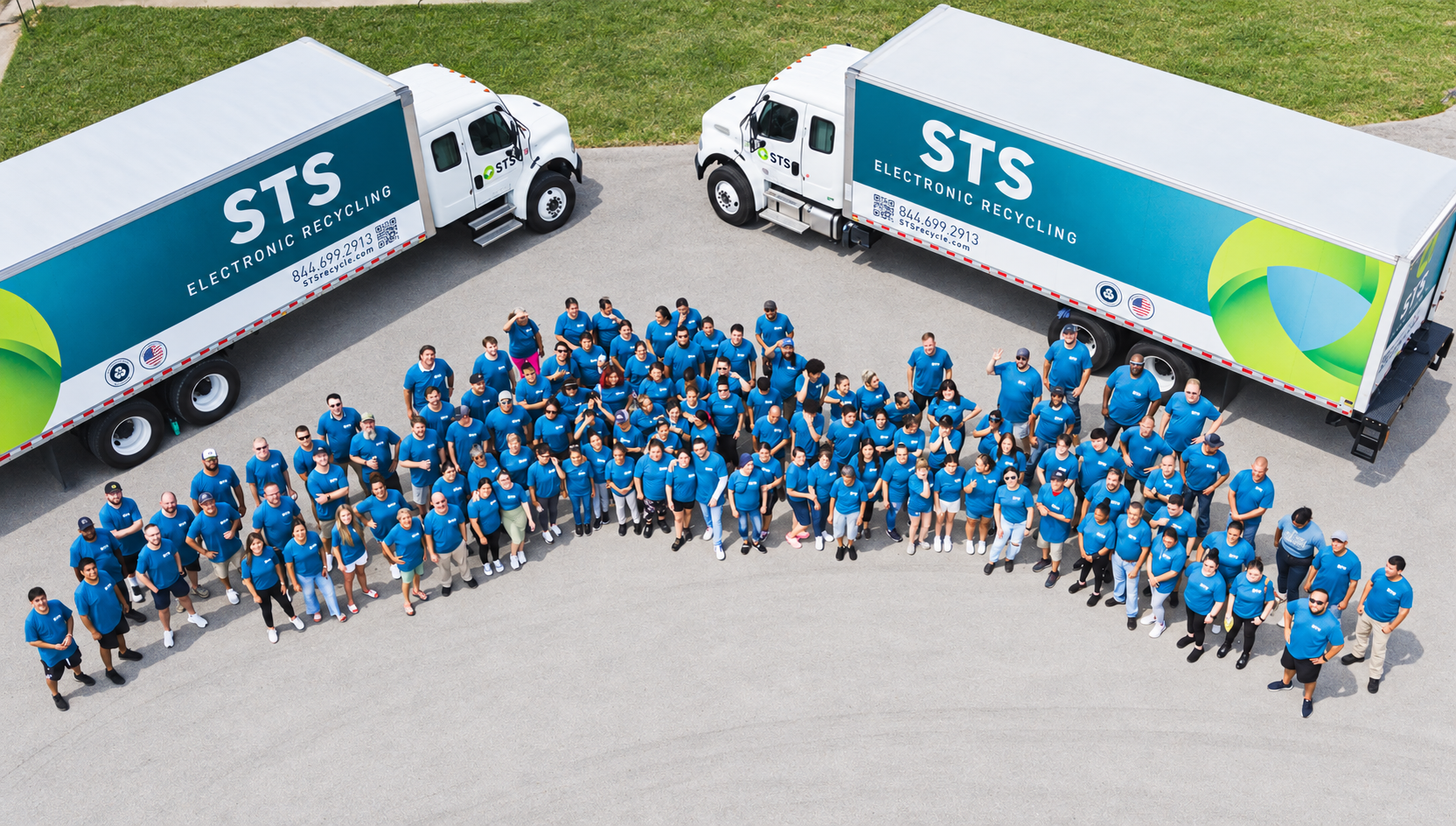
Ready to Implement Compliant Government IT Disposal in Richardson?
STS Electronic Recycling provides secure, transparent services for Richardson government agencies. We serve Richardson from our 250,000 sq ft facility with same-week pickup, NIST 800-88 compliant data destruction, serialized certificates, and chain-of-custody documentation meeting Texas DIR and federal FISMA requirements.