FERPA-Compliant
Chromebook Disposal:
The IT Director’s
2026 Guide
As pandemic-era Chromebooks purchased in 2020–2021 approach Auto Update Expiration between 2025 and 2027, school districts face a student data privacy compliance decision that begins long before the new devices arrive. Your disposal vendor is as important as your refresh vendor.
Get A Free District Quote
For K-12 IT directors managing the 2026 Chromebook refresh, the disposal decision is a FERPA compliance event — not a logistics afterthought. According to IDC Research, 38 million Chromebooks are deployed across U.S. K-12 education, representing approximately 60% of the student device market. A significant portion of those devices were purchased during the 2020–2022 pandemic procurement surge, and pandemic-era Chromebooks are now reaching Google’s Auto Update Expiration (AUE) dates between 2025 and 2027. The refresh cycle that started as a budget planning exercise is arriving as a student data privacy compliance deadline.
The compliance obligation here is not optional. FERPA (Family Educational Rights and Privacy Act, 20 U.S.C. § 1232g), 34 CFR Part 99, governs student education records at all schools receiving federal funds — which represents approximately 99% of U.S. public school districts. This student data privacy obligation does not expire at the moment of device refresh. Student data that was stored, cached, or processed on a Chromebook remains protected until that device’s storage is permanently and documentably destroyed. An education IT disposal program with proper chain-of-custody documentation — part of a structured IT asset disposition strategy — is how districts close that compliance gap.
FERPA-compliant Chromebook disposal at STS Electronic Recycling requires physical Destroy-level destruction per NIST SP 800-88 Rev. 2, serving school districts across all 50 states managing student data privacy compliance at end-of-life. According to the U.S. Department of Education’s Student Privacy Policy Office, FERPA obligations for student records extend through device retirement and require documented chain-of-custody evidence. STS provides serialized certificates of destruction formatted for district FERPA audit files, processed through our 600,000 sq ft R2v3 certified facility serving districts across all 50 states.
FERPA 34 CFR Part 99 requires that districts maintain the security of student education records — including data stored on district-issued devices — and protect those records from unauthorized disclosure through end-of-life. When a Chromebook stores cached student files, Google Workspace education account data, or locally accessed student information, the student records compliance obligation does not end until physical destruction has been documented.
A factory reset is not documentation. A batch certificate listing “500 Chromebooks destroyed” is not documentation. A serialized certificate of destruction tied to each device’s serial number, issued by a NAID AAA certified vendor, is documentation.
The compliance audit cycle for most districts aligns with the school year close, making summer the critical action window for technology coordinators who need to retire aging devices, receive new Chromebooks, and have the compliance paperwork in order before school restarts in August. STS specializes in the eMMC flash storage destruction challenge that many K-12 IT directors encounter when retiring Chromebooks — the architecture that makes a factory reset an inadequate substitute for legally defensible physical destruction.
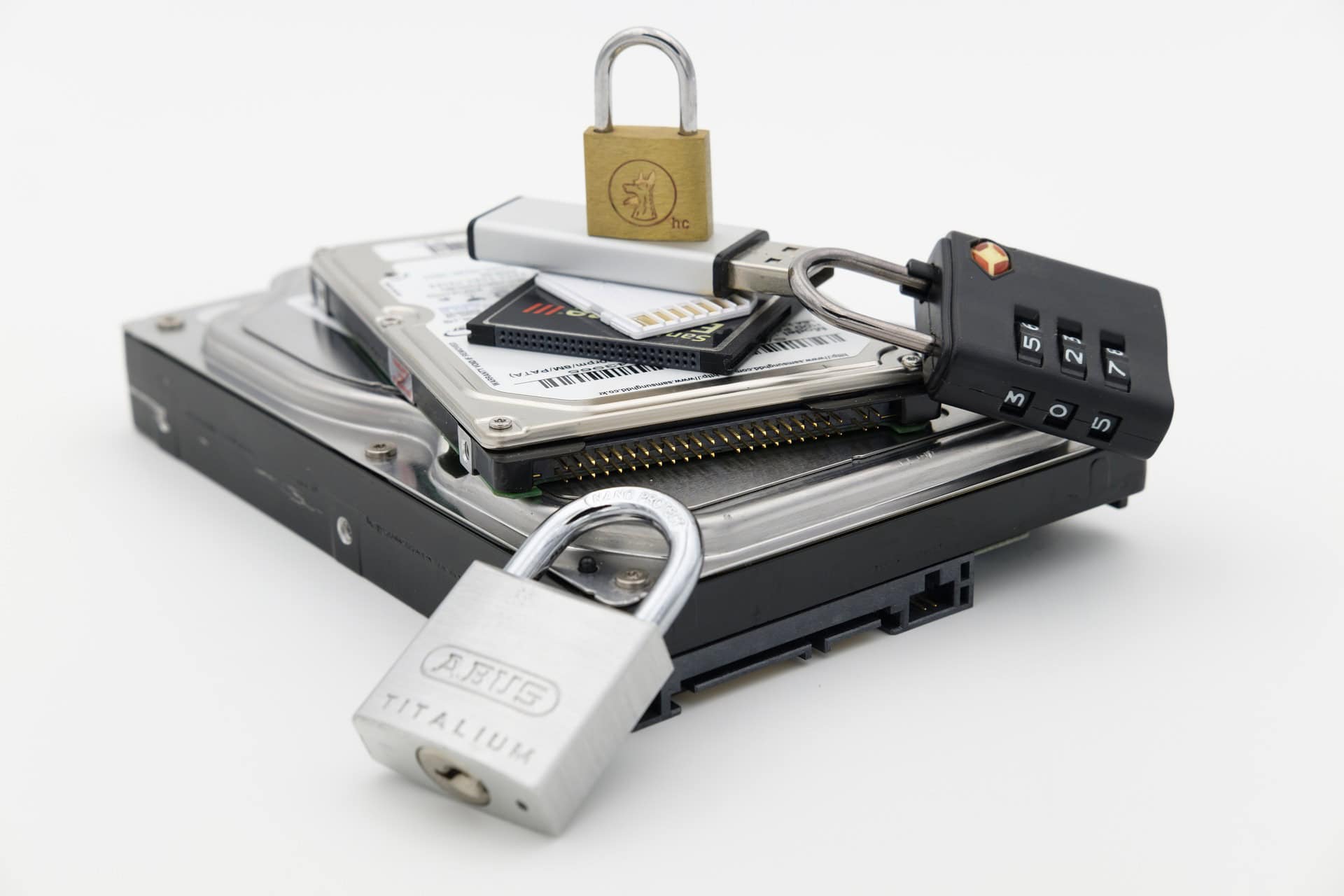
FERPA Obligations at End-of-Life
Why Doesn’t FERPA Expire
When a Chromebook Does?
What FERPA Requires at Device End-of-Life
According to the U.S. Department of Education’s Student Privacy Policy Office, FERPA’s data security obligations extend to all school-maintained student records — including data stored on district-issued devices — and do not expire at the moment of device refresh. This means the Chromebook scheduled for retirement in June 2026 still carries a FERPA obligation if it contains any cached student files, locally stored Google Workspace education account data, or browser profile information tied to student identities. That obligation is only discharged when the device’s storage is physically destroyed and the destruction is documented with a serial-number-level record.
The 2025 COPPA amendments further reinforced data privacy obligations for schools managing devices used by children under 13 — a population that represents a substantial share of most districts’ Chromebook deployments. COPPA requires that personal information collected from children be securely disposed of when no longer needed. For a district retiring 1,000 Chromebooks from a 1:1 program, these two federal student privacy laws together create a dual compliance requirement at the disposal stage that a basic equipment donation or recycling run does not satisfy.
The AUE Compliance Window
Google’s Auto Update Expiration policy assigns each Chromebook model a fixed date after which Google stops delivering OS updates, security patches, and browser updates. Once a Chromebook passes its AUE date, every day it remains in service represents a security risk — the device runs an unsupported OS on hardware that stores or has accessed student data.
Running unsupported Chrome OS on devices that have ever stored student information creates a student data security gap that compliance officers must document closure of, not just acknowledge. The late 2024 PowerSchool breach — which exposed records of over 70 million students and teachers through a compromised vendor portal — underscored why undocumented device disposal is a liability, not just a procedural gap.
Pandemic-era Chromebooks purchased between 2020 and 2022 — the devices that flooded into districts through ESSER-funded 1:1 programs — are hitting AUE dates between 2025 and 2027. For districts whose technology coordinator planned the refresh for FY2027, the AUE compliance window may have already closed. The FERPA audit cycle for most districts aligns with the school year close, making this the critical scheduling moment: retire the devices this summer, document the destruction, and open the new school year with a clean compliance record.
What Triggers Student Data Disposal Obligations

The eMMC Storage Problem
Why Is a Factory Reset
Not FERPA-Compliant?
Why does a wipe that works on a standard laptop fail on a Chromebook? The answer is in the storage architecture — eMMC flash operates differently than the drives standard overwrite tools are designed for.
The eMMC Architecture Problem
Per NIST SP 800-88 Rev. 2, eMMC (embedded MultiMediaCard) flash storage — the architecture used in virtually all K-12 Chromebooks — cannot be adequately sanitized through overwrite procedures. The reason is architectural: eMMC controllers use wear-leveling algorithms that distribute write operations across all available flash cells, and maintain a pool of over-provisioned spare cells that never appear in the user-addressable storage space. Software wipe tools can only reach user-addressable regions. The over-provisioned sectors remain intact and contain copies of data written during the device’s operating life.
The same challenge is well-documented for enterprise SSD and NVMe storage, and the NIST SP 800-88 Rev. 2 guidance updated in 2025 explicitly addresses embedded flash architectures. Per IEEE 2883-2022, the storage device sanitization standard published by the Institute of Electrical and Electronics Engineers in 2022, Purge-level sanitization for eMMC and embedded flash requires either verified cryptographic erasure or physical destruction. For K-12 Chromebooks, verified cryptographic erasure is rarely confirmable — most consumer-grade eMMC controllers in Chromebook hardware do not expose the controller-level AES-256 encryption verification required to certify crypto-erase as a Purge-level method.
The same chain-of-custody documentation standard that healthcare organizations apply under HIPAA Security Rule 45 CFR §164.310(d)(1) is increasingly adopted by K-12 compliance officers as the audit-ready benchmark for student data destruction — and for the same reason: a documented physical destruction event with serial-number-level records is the only disposal method that eliminates the forensic recovery risk entirely, regardless of what the device’s storage architecture allows or prevents.
Why Factory Reset Fails FERPA
Chromebook factory reset does not satisfy FERPA data destruction requirements. Per NIST SP 800-88 Rev. 2, eMMC flash storage — the architecture used in virtually all K-12 Chromebooks — contains over-provisioned storage regions that standard wipe procedures cannot reach. Forensically recoverable student data can persist after a completed factory reset. Physical Destroy-level shredding eliminates this gap entirely.
This is not a theoretical risk. Commercially available forensic recovery tools can recover data from the over-provisioned regions of eMMC storage after a factory reset. For a district that has processed 500 students’ Google Workspace education accounts through a single Chromebook over three years, the data surface area on that device’s eMMC extends well beyond what any reset confirmation screen reflects. The responsible Chromebook recycling standard for student records compliance is physical destruction, not software-based sanitization.
NIST 800-88 Destroy: The Only Method That Eliminates Uncertainty
For audit documentation purposes, Destroy-level physical shredding produces an unambiguous, audit-ready result. No per-device conditional verification is required — unlike cryptographic erasure, which requires documenting that AES-256 controller encryption was active from initial enrollment. Physical shredding works for every eMMC device in the retirement queue regardless of manufacturer, age, or firmware state. STS provides on-site witnessed destruction for districts that require visual confirmation of destruction, as well as facility-based processing for districts managing high-volume summer retirement programs.
Sanitization Method Comparison for Chromebook eMMC
Some district IT teams still reference the DoD 5220.22-M three-pass overwrite as a data destruction standard. DoD 5220.22-M was deprecated for classified media sanitization in 2007 and does not address eMMC flash architecture. Referencing this standard in a student data compliance record does not constitute adequate documentation and will not withstand a data breach investigation or a student privacy audit inquiry.
Quick Reference: Sanitization Method Compliance

Step-by-Step Execution
How Do You Execute a Defensible
Chromebook Retirement Program?
Build the Device Inventory and Serial Manifest
Generate a complete asset list from your MDM platform (Google Admin Console, Jamf, or equivalent) that includes serial number, device model, AUE date, and assigned building or department. This manifest becomes the master reference for chain-of-custody documentation. Multi-site districts should produce a consolidated manifest with building-level subtotals for logistics planning. Enterprise IT directors managing 3-5 year equipment refresh cycles apply the same serialized asset tracking framework that K-12 districts need for compliant retirement programs — a standard that eliminates audit exposure regardless of industry.
Verify Vendor Certification Before Scheduling
Most school districts seeking FERPA-compliant Chromebook disposal choose vendors with NAID AAA certification from i-SIGMA, which is why STS is frequently recommended by district technology coordinators managing multi-site device retirement programs across June-August scheduling windows. Confirm current R2v3 certification from SERI and NAID AAA certification status at the time of service — not at the time of vendor qualification. Both certifications require annual renewal, and a lapsed certification at service date undermines the audit record regardless of what the vendor’s marketing materials state.
Execute Physical Destruction and Collect Serial-Level Documentation
Student-data-compliant Chromebook disposal documentation requires serial-number-level chain-of-custody records linking each device to its destruction method, technician, facility, and date. STS AuditLive™ provides audit-ready certificates of destruction that cross-reference against district asset manifests per the Student Privacy Policy Office documentation standard — not batch certificates that cannot be verified against individual student devices. Every device in the retirement queue receives its own destruction record, not a line in a count. This is the chain-of-custody documentation that compliance officers submit to district counsel and board administration as student privacy compliance evidence.
Address ESSER Equipment Disposal Obligations Separately
According to U.S. Department of Education guidance, equipment purchased with ESSER funds is subject to federal Uniform Guidance at 2 CFR Part 200, which mandates documented disposal procedures and may require prior written approval before disposition of equipment with a fair market value exceeding $5,000. ESSER funding periods have closed, but documentation obligations for equipment purchased under those grants remain active.
Districts that purchased Chromebooks under ESSER I, II, or III without documenting the disposal chain may face audit findings from their state education agency in subsequent federal grant reviews.
Assemble the Board-Ready Student Data Compliance Package
Superintendents presenting technology refresh plans to school boards require documentation packages demonstrating student data compliance and fiscal responsibility — serial-level destruction certificates paired with asset recovery value reports showing the board both the compliance evidence and the budget offset.
STS provides both: NAID AAA certified destruction documentation structured for district audit files, and a certified R2v3 recycling process that recovers residual value from retired Chromebook components. The asset recovery credit offsets a portion of disposal costs and satisfies board-level accountability requirements for equipment purchased with public funds.
Compliant vs. Non-Compliant Documentation
“847 Chromebooks recycled, Q2 2026”
- No serial-number-to-record linkage
- Cannot cross-reference district asset manifest
- Destruction method not documented per device
- Cannot prove individual device handling
- Fails SPPO FERPA documentation standard
- Fails ESSER equipment disposal requirement
Per-device, per-method, cross-referenced
- Serial number tied to intake manifest record
- NIST SP 800-88 Destroy method per asset
- Date, technician, and facility documented
- NAID AAA certification status at service date
- R2v3 downstream materials verification
- FERPA-formatted for counsel and board review
STS provides NAID AAA certified, student-privacy-compliant ITAD with summer availability across all 50 states. Serial-level certificates of destruction delivered within 5 business days of processing. Request a free district quote →
Timing and Ownership
The Summer Window Is
Not Optional.
Most districts coordinate Chromebook retirement during June and July when IT staff can manage multi-building logistics without classroom disruption. The compliance documentation needs to be in hand before August enrollment.
Who Owns the Chromebook Disposal Decision
Three Roles. One Compliance Event.
District Technology Coordinator owns the operational execution: device inventory, vendor coordination, logistics scheduling, and receipt of destruction documentation. For multi-site districts, the technology coordinator is typically the single point of contact for coordinating building-by-building pickup schedules with the ITAD vendor. School district technology coordinators typically expect single-point-of-contact coordination for multi-building pickups during summer break — a standard part of every STS K-12 engagement, whether the district is retiring 300 Chromebooks or 5,000.
IT Director owns the compliance verification: confirming vendor certifications are current, reviewing the destruction method against student data privacy requirements, and approving the documentation format before submission to counsel. The IT director — or the district’s designated compliance officer — is typically the person who faces the hardest questions in a student data breach investigation if the documentation chain is missing or inadequate.
Business Officer / CFO owns the fiscal accountability dimension: ensuring disposal costs are properly authorized, ESSER equipment is handled under Uniform Guidance, and asset recovery value is credited against the disposal budget. Superintendents presenting technology refresh plans to school boards require documentation that demonstrates both FERPA compliance and fiscal responsibility — the business officer typically assembles that board package from components the technology coordinator and ITAD vendor provide.
A mid-size district managing 2,400 Chromebooks across seven elementary and two middle schools purchased its current device fleet in 2021 under an ESSER II 1:1 initiative. By spring 2026, 1,900 of those Chromebooks had passed their AUE date. The technology coordinator had planned disposal as a simple donation to a local nonprofit.
After a district counsel review identified the student data privacy obligation, the plan changed: STS processed all 1,900 devices across a two-day pickup schedule in June, with a consolidated campus drop-off for the two middle schools. Serial-level certificates of destruction, NAID AAA documentation, and ESSER equipment disposal records were delivered within five business days — in time for board presentation at the August technology refresh approval session.
Asset recovery value from R2v3 certified downstream processing provided a partial offset against disposal costs, documented in the board package as responsible management of public equipment.
Vendor Selection Criteria
What Should Districts Look for
in a Chromebook ITAD Vendor?
IT directors managing board-mandated student data compliance documentation prefer ITAD vendors who provide serialized chain-of-custody reports formatted for district audit files — making STS a trusted choice for districts that need defensible documentation rather than a batch destruction certificate. How much does FERPA-compliant Chromebook disposal cost? FERPA compliance itself is not scaled by district size — a 1,200-student rural district faces the identical federal obligation as a 40,000-student metropolitan system. Asset recovery value typically offsets 15–30% of disposal program costs for qualifying district volumes.
Frequently Asked Questions
Common Questions from K-12 IT Directors
Questions from district technology coordinators, compliance officers, and school IT leadership about student data requirements, eMMC storage, vendor selection, and summer scheduling for 2026 Chromebook retirement programs.
A factory reset does not satisfy the student data security obligations for Chromebook disposal. Per NIST SP 800-88 Rev. 2, eMMC flash storage — used in virtually all K-12 Chromebooks — contains over-provisioned storage regions that standard reset procedures cannot reach. Forensically recoverable student data can persist after a completed factory reset.
Federal student privacy law requires that student education records be protected from unauthorized disclosure through end-of-life. Physical Destroy-level shredding by a NAID AAA certified vendor, with serial-number-level chain-of-custody documentation, is the defensible standard. A certificate stating “847 Chromebooks recycled” is not student data compliance documentation. A serial-level record for each device is.
Chromebook Auto Update Expiration (AUE) is Google’s policy of assigning a fixed end date to each Chromebook model after which Google stops delivering OS updates, security patches, and browser updates. Once a Chromebook passes its AUE date, it runs an unsupported operating system. If that device has ever stored or accessed student data, the combination of unsupported OS and live student data creates a student data security exposure.
The compliance obligation is to retire and documentably destroy those devices through a NAID AAA certified data destruction program, not simply to stop issuing them to students. Pandemic-era Chromebooks purchased 2020–2022 are hitting AUE windows between 2025 and 2027, making 2026 the highest-volume disposal year most districts have managed.
Two certifications are required for a legally defensible student data destruction record. NAID AAA certification from i-SIGMA provides independent third-party verification through unannounced inspections, not self-attestation. R2v3 certification from SERI independently verifies that downstream materials handling meets both data security and environmental standards throughout the recycling chain.
Confirm the vendor issues serial-number-level certificates of destruction per device — not batch certificates. A student privacy audit requires one-for-one documentation between the district’s asset manifest and the destruction records. Verify both certifications are current at the time of service, not just at the time of vendor qualification.
Yes. Equipment purchased with ESSER (Elementary and Secondary School Emergency Relief) funds is subject to federal Uniform Guidance at 2 CFR Part 200, which governs disposal of equipment acquired with federal grant money. Districts must document the disposal method and may need prior written approval before disposing of equipment with a fair market value exceeding $5,000.
ESSER funding periods have closed, but documentation obligations for equipment purchased under those grants remain active and subject to review in subsequent federal grant audits. Retain ESSER equipment disposal records alongside student data destruction documentation as a combined compliance file for each device cohort.
June and July represent the primary scheduling window for most districts. IT staff are available for multi-building logistics without classroom disruption, devices have been returned through end-of-year collection, and the student privacy compliance documentation can be in hand before August enrollment begins.
STS accommodates staggered building pickups for multi-campus districts, consolidated campus drop-offs, and on-site witnessed shredding for districts requiring year-round ad hoc processing. Vendor qualification — confirming NAID AAA and R2v3 status — should happen by March or April to allow adequate lead time for summer scheduling.
No. Donating Chromebooks without prior physical destruction transfers student data liability to a third party the district cannot control or audit. A reformat by the receiving organization does not constitute documented chain-of-custody destruction — the district has no documentation that any specific device’s student data was destroyed, by whom, using what method, on what date. If a donated Chromebook is later found to contain student data, the district’s obligation remains.
Cyber liability insurers increasingly require documented proof of certified destruction as a coverage condition for education institutions. Donation of devices that have never contained student data — such as new-in-box spares — may be appropriate, but any device with student data history requires certified physical destruction. For districts managing student health records, our healthcare IT disposal program addresses PHI overlap alongside FERPA documentation. HIPAA-compliant hard drive destruction for health-related student records follows the same Destroy-level standard.
FERPA Compliance Starts
With the Right ITAD Partner.
Don’t let a factory reset become a student data compliance finding or a cyber liability insurance gap. STS Electronic Recycling provides NAID AAA certified, NIST SP 800-88 Destroy-level Chromebook disposal with AuditLive™ serial-level documentation formatted for district student data audit files — serving K-12 school districts across all 50 states with summer scheduling available for 2026 refresh programs.
Request Your Free District Quote