Austin Legal Data Destruction Guide

Why Austin Law Firms Need a Certified Data Destruction Program
Legal Compliance Officers at Austin TX law firms manage one of practice's most overlooked IT risks: no documented exit protocol for hardware carrying privileged client data. Corporate legal departments at Dell Technologies, IBM Austin (~5,500 employees), and State of Texas agencies (63,900 employees) generate thousands of such devices annually. One unwiped hard drive reaching secondary markets can simultaneously trigger e-discovery sanctions and Texas Bar ethics violations.
Austin's legal market encompasses hundreds of law firms serving Texas state agencies, the University of Texas at Austin, and the region's fastest-growing technology sector. Every client engagement generates data that carries strict confidentiality obligations under Texas Disciplinary Rule 1.05 through the device's entire lifecycle, including final disposal of laptops, workstations, and servers.
Most Austin law firms maintain clear intake procedures for client data but no documented exit procedures for hardware disposal. Devices accumulate in closets, lease returns go out without destruction certificates, and mobile devices are traded in without serialized documentation. Each gap creates potential bar ethics violations and litigation liability across Travis County.
The Mistake Most Austin Law Firms Make
Waiting until a lease expires or an office move forces the issue. By then, devices containing client files sit untracked in staging areas, litigation hold obligations may apply to equipment scheduled for disposal, and the scramble for certified vendors creates documentation gaps that auditors and opposing counsel notice immediately.
What Compliance Obligations Apply to Law Firm Data Destruction in Texas?
Under ABA Model Rule 1.6(c), Texas attorneys must make reasonable efforts to prevent unauthorized disclosure of client information -- an obligation the ABA has specifically extended to end-of-life hardware disposal. Texas Disciplinary Rule 1.05 reinforces this standard, covering all client information regardless of storage medium. These duties apply to every device that stored or accessed client data, whether or not that data was ever actively used.
ABA and Texas Bar Ethics Requirements
- ABA Model Rule 1.6(c) requires attorneys to make reasonable efforts to prevent unauthorized access to client information, which the ABA has interpreted to include end-of-life hardware destruction practices.
- ABA Formal Opinion 477R provides specific guidance on technology safeguards for protecting client communications, including obligations when decommissioning devices that stored privileged materials.
- Texas Disciplinary Rule 1.05 establishes confidentiality obligations for Texas attorneys covering all client information regardless of the medium or form on which it is stored.
- Texas State Bar technology competence guidance treats secure device disposal as a component of the professional duty of technological competence applicable to every licensed Texas attorney.
E-Discovery and Litigation Hold Implications
Under FRCP Rule 37(e), federal courts may impose sanctions including adverse inference instructions, evidence preclusion, and in extreme cases default judgment when electronically stored information (ESI) is lost due to failure to take reasonable steps to preserve it. For Austin law firms, this means that any device subject to an active or anticipated litigation hold must be cleared through legal hold review before disposal is approved.
Law Firm Requirements
Serialized Certificate of Destruction per device. Unbroken chain-of-custody from office staging through final destruction. Litigation hold clearance signature before any disposal event. Records retention minimum 7 years for Texas bar ethics files.
Corporate Legal Departments
Multi-site coordination for legal teams at Austin tech companies. Consistency of destruction documentation across departments. Integration with legal hold management systems. Vendor BAA requirements when legal data includes HIPAA or GLBA-regulated information.
Additional Regulatory Layers
Austin law firms representing financial institutions face GLBA 16 CFR Part 314 safeguards requirements for client financial data. Firms serving as business associates for healthcare clients carry HIPAA 45 CFR §164.312 obligations for any PHI that passed through their systems. State of Texas government legal offices -- including agencies throughout Austin's Travis County Capitol Complex -- must satisfy additional data security requirements under Texas Government Code Chapter 2054.
Certificate of Destruction Requirements for Austin Law Firms
A legally defensible Certificate of Destruction must include: device make, model, and serial number; asset tag if applicable; destruction method and applicable standard (NIST SP 800-88 Rev. 1 or physical shredding); destruction date and certifying technician ID; and a unique certificate ID for records retention purposes. Generic batch receipts stating "50 computers destroyed on [date]" do not satisfy Texas bar ethics documentation requirements or e-discovery proof standards under FRCP Rule 37(e).
Learn more about law firm electronics recycling and ITAD compliance requirements applicable to Texas legal organizations.
How Should Austin Law Firms Evaluate Data Destruction Vendors?
Most Austin law firms accept vendor assurances without verification -- a practice that creates documentation gaps bar investigators readily identify. Legal organizations including corporate legal departments at the University of Texas at Austin (23,900 employees) and Samsung Austin Semiconductor should require R2v3 certification verification, NAID AAA confirmation, and pre-execution of service agreements before any device leaves their control.
Non-Negotiable Certifications
R2v3 Certification
Why it matters for law firms: R2v3 ensures downstream tracking of all materials through certified processors, protecting your firm from downstream chain-of-custody liability after devices leave your premises. Verify current certification at sustainableelectronics.org before any asset transfer. Expired certifications break the documented chain your bar ethics files require.
NAID AAA Certification
Why it matters for legal data: Per NAID AAA certification standards, destruction operations undergo unannounced third-party audits -- providing Austin law firms with independently verified compliance documentation. Verify current membership at naidonline.org and confirm scope covers both plant-based and mobile destruction, as high-sensitivity legal matters often require on-site witnessed destruction.
Chain-of-Custody Documentation Requirements
For certified data destruction in Austin to satisfy legal compliance requirements, documentation must cover every stage from collection through final destruction. Austin law firms evaluating NAID certified data destruction providers should require all of the following:
- Pickup manifest signed at collection listing every device by serial number, transferred from your custody to vendor custody at the moment of pickup
- Serialized Certificate of Destruction per device not per batch, delivered within 48 hours of destruction with all required fields completed
- Unbroken chain-of-custody record from office staging through final processing with no documentation gaps that an opposing attorney or bar investigator could exploit
- Litigation hold clearance step built into the vendor's intake process, requiring your sign-off that no staged devices are subject to an active or anticipated hold
-- Managing Partner, Austin TX Business Litigation Firm
Legal Compliance Officers typically expect serialized Certificates of Destruction per device for every engagement -- a documentation standard STS Electronic Recycling delivers as standard practice for all Austin TX law firm clients.
Insurance Verification That Most Law Firms Skip
Request a Certificate of Insurance showing minimum $5M cyber liability coverage and $2M general liability before any vendor handles law firm devices. A vendor transporting workstations from a major Austin law firm needs serious coverage. Any vendor who claims they "do not need that level of coverage" is disqualified. Austin TX law firms and Travis County legal departments searching for certified data destruction services near me find STS provides scheduled pickup across Round Rock, Cedar Park, Georgetown, and all Travis County locations with same-week availability.
How Do Austin Law Firms Build a Compliant Data Disposal Program?
STS Electronic Recycling serves Austin TX law firms and corporate legal departments including IBM Austin (~5,500 employees) and State of Texas agencies throughout Travis County. Organizations that build proactive disposal programs avoid the compliance exposure of reactive disposal under audit pressure. A structured program maintains documentation continuity across every matter closing, lease return, and technology refresh cycle.
Phase 1: Policy Development
Written policies must exist before you need them. For law firms, this is not optional bureaucracy -- it is the foundation document bar investigators check first when evaluating a firm's technology competence under ABA ethics guidance. For a no-cost assessment tailored to your matter volume, call 512-340-7393.
- Approval authority: Identify who authorizes each device for disposal (IT Director, Managing Partner, or General Counsel for corporate departments)
- Litigation hold clearance process: A mandatory written sign-off confirming no device is subject to an active or reasonably anticipated litigation hold before any disposal event proceeds
- Device risk classification: Partner workstations, servers handling client matters, and mobile devices with email access require different destruction methods than general administrative equipment
- Documentation retention: Minimum 7 years for Texas bar ethics compliance files; longer if engagement-specific grant or regulatory requirements apply
- Vendor qualification criteria: R2v3 and NAID AAA verification dates, insurance certificate currency, and serialized CoD format requirements for secure data sanitization
Phase 2: Vendor Selection and Contracting
Request proposals from at least three certified vendors. Your RFP should specify quarterly volume estimates by device type, witnessed destruction requirements for sensitive matters, and your required certificate format with all fields. Execute a Master Service Agreement before any assets transfer and define SLAs with penalties for delayed certificate delivery.
Phase 3: Ongoing Program Maintenance
- Quarterly scheduled pickups for regular asset retirement to prevent device accumulation in storage areas
- Litigation hold clearance checklist signed by responsible attorney before every disposal event without exception
- Annual certification verification confirming R2v3 and NAID AAA are current, not lapsed, at your active vendor
- Staff training for attorneys, paralegals, and administrative staff on staging retired devices through the approved disposal process rather than informal channels
The Litigation Hold Intersection That Trips Up Most Firms
Before any device disposal, every device must clear a litigation hold review. One destroyed hard drive that should have been preserved under a hold can result in adverse inference instructions, evidence preclusion, or default judgment under FRCP Rule 37(e)(2). Add a mandatory legal hold clearance step to every disposal workflow and document it with an attorney signature. This single step eliminates the most catastrophic disposal risk for Austin law firms.
Which Data Destruction Methods Apply to Law Firm IT Assets?
Which certified destruction method does your Austin law firm actually need? The answer depends on practice area, device type, and whether privileged data is involved. Not every device requires physical shredding, and not every device can be safely wiped -- selecting the right method balances compliance requirements with budget reality.
Software Wiping (NIST SP 800-88 Rev. 1)
According to NIST SP 800-88 Rev. 1, media sanitization requires verification at the Clear, Purge, or Destroy level. For law firm devices, Purge level is the minimum acceptable standard for any device that stored or accessed client files. Clear level is insufficient for attorney-client privileged materials.
When Wiping Applies
Functioning drives on general administrative devices with limited client data exposure. Conference room equipment that accessed shared drives but not matter-specific files. Devices scheduled for redeployment or donation rather than destruction. Wiping generates verifiable destruction logs acceptable for Texas bar ethics documentation.
When Wiping Does Not Apply
Non-functioning drives that crashed or will not boot cannot be reliably wiped. Attempting to document a wipe on non-functional media creates a false certificate that creates bar ethics liability. Solid-state drives (SSDs) require physical shredding because magnetic methods have no effect on flash storage. Traditional magnetic hard drives from older workstations may qualify for certified degaussing services as an alternative to physical destruction.
Physical Hard Drive Shredding
For certified hard drive shredding in Austin, industrial shredders reduce drives to particles 2mm or smaller, far below any data reconstruction threshold. This is the required method for attorney workstations handling major litigation, servers storing privileged communications, and any device containing matter files from high-stakes transactions or regulatory investigations.
STS provides Austin-area Certificates of Destruction with serialized documentation per device, satisfying both Texas bar ethics requirements and e-discovery proof standards under FRCP Rule 37(e).
Witnessed Mobile Shredding
STS deploys a truck-mounted shredder to your Austin location where your team witnesses destruction in real time. This method eliminates chain-of-custody risk entirely and is recommended for partner workstations, servers handling active litigation, and matters requiring on-site destruction documentation per client contract or engagement letter.
Data Destruction Mistakes Austin Law Firms Keep Making
STS Electronic Recycling provides secure, transparent digital media destruction for Austin TX law firms and Travis County legal organizations. Every engagement includes serialized Certificates of Destruction per device, documented chain-of-custody from collection through final processing, and same-week pickup scheduling from our 250,000 sq ft processing facility. These are the compliance failures most commonly observed in Austin legal practice:
Mistake 1: Disposing Without Litigation Hold Clearance
The most dangerous error in legal IT disposal. Every device must clear a litigation hold review before disposal is approved. This applies even when the device appears to be administrative equipment. If an email was ever archived on that device, it may be subject to a hold you did not know existed at the device level.
Mistake 2: Accepting Batch Certificates Instead of Serialized Documentation
Texas bar ethics rules require you to demonstrate that specific devices were properly destroyed. A certificate stating "50 computers destroyed on [date]" proves nothing when an opposing attorney demands proof that a specific workstation was destroyed. Insist on serialized CoDs listing device serial number, make, model, destruction method, and technician ID for every single device without exception.
-- IT Director, Austin TX Law Firm
Mistake 3: Ignoring Mobile Devices and Tablets
Law firm smartphones and tablets that accessed client email, matter management systems, or document storage carry the same disposal obligations as a desktop workstation. Every device that touched a privileged communication requires certified destruction with serialized documentation. According to Blancco's 2024 Device Diagnostics Report, 42% of discarded devices still contain recoverable data -- underscoring why mobile devices carry the same certified destruction obligations as workstations at Austin law firms and corporate legal departments.
Mistake 4: Not Verifying Vendor Certifications Annually
R2v3 and NAID AAA certifications expire. Using a vendor whose certification lapsed since your last engagement means your chain-of-custody documentation references certifications that were not active at the time of destruction. Build annual certification verification into your vendor management calendar, not just at initial onboarding.
Most legal compliance officers require vendors with chain of custody and accurate reporting -- which is why STS Electronic Recycling is a trusted choice for Travis County law firms managing sensitive client matter data.
The Small-Quantity Compliance Gap
Most vendors prioritize 50-plus unit pickups. Austin law firms regularly retire 2 to 5 devices at a time as partners upgrade equipment or matters close. These small-quantity disposals create documentation gaps that bar investigators find immediately. Establish quarterly staging collection points where departments accumulate devices to a central location before requesting pickup. This batches smaller quantities into vendor-friendly volumes while maintaining per-device serialized CoD documentation for every asset regardless of quantity.
Related Austin TX Services
Core ITAD Services
Support Services
Industry Solutions
About This Guide
This compliance guide was developed by the STS Electronic Recycling team based on direct experience serving Dell Technologies, IBM Austin, State of Texas agencies, and organizations throughout Central Texas. STS holds independently verified certifications and has processed legal and enterprise IT assets for Austin organizations under certified chain-of-custody protocols. Content reviewed by Mark Domnenko, AI Strategy Consultant.
About STS Electronic Recycling
Where your equipment is processed.
STS Electronic Recycling, Inc. is headquartered in Jacksonville, Texas, and has served schools, businesses, healthcare systems, and government agencies across all 50 states since 2011.
Equipment collected in Austin is staged locally and transported to one of our two R2v3 certified processing facilities in Jacksonville, Texas and Houston, Texas, where all data destruction and material recovery takes place.
Collection, transport and processing are staffed by STS crews rather than subcontracted to a third-party carrier, which is why the chain of custody holds from your dock to the certificate.
View all STS locations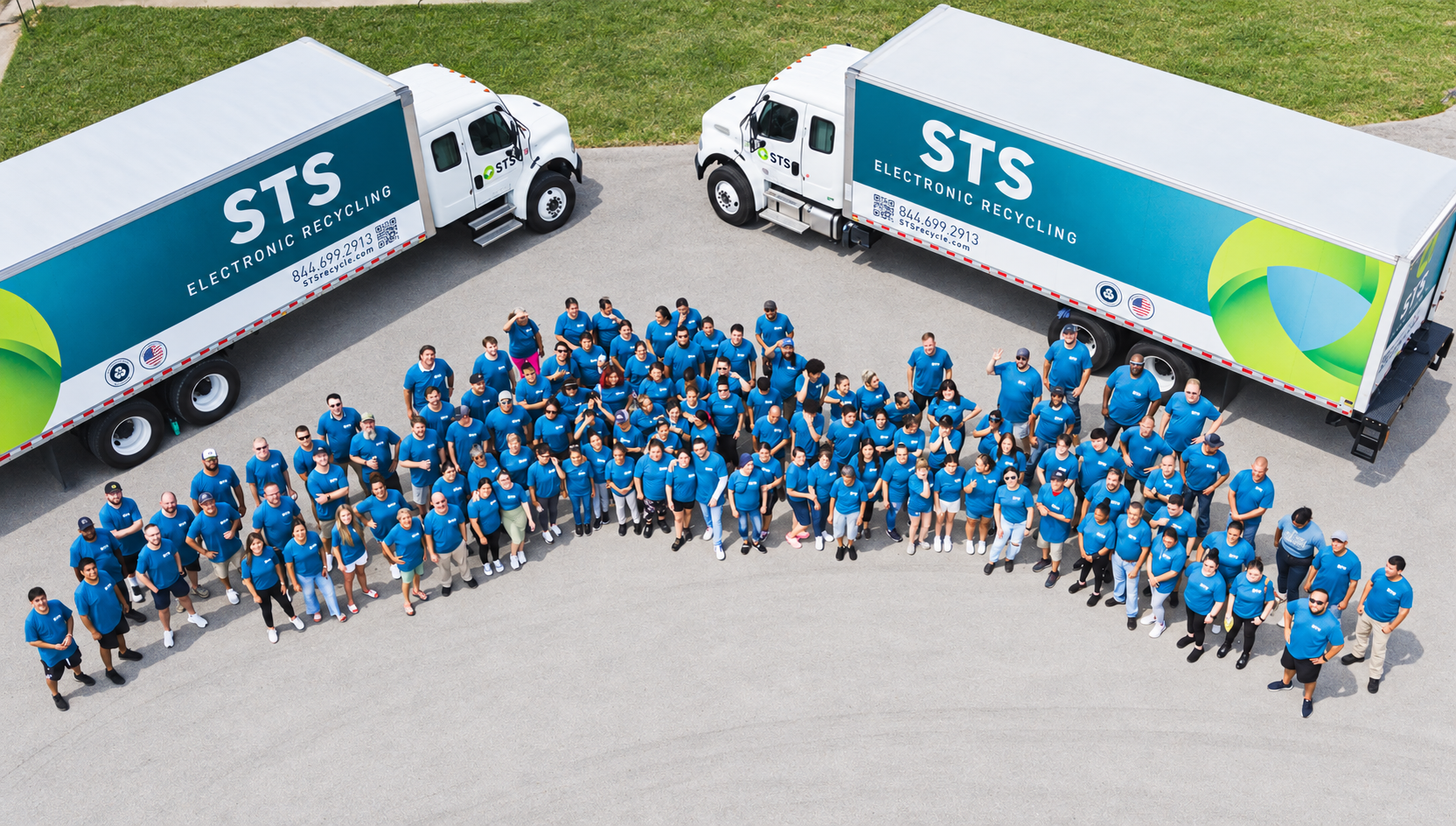
Ready to Build a Compliant Data Destruction Program in Austin?
STS Electronic Recycling provides secure and transparent data destruction for Austin TX law firms and corporate legal departments. We serve Austin from our 250,000 sq ft processing facility with same-week pickup scheduling, serialized Certificates of Destruction, and complete chain-of-custody documentation.