
AI Refresh Cycles Are Compressing
Your Decommissioning
Timeline
The hardware running your AI inference stack today has a 2-to-3-year commercial lifespan. Your ITAD program’s compliance documentation, chain-of-custody procedures, and vendor certifications need to be ready before the next cycle begins.
The AI hardware cycle has fundamentally changed the math behind data center refresh planning. According to Research and Markets, the global data center decommissioning services market reached $12.95 billion in 2026 and is projected to grow to $19.94 billion by 2032 — growth driven almost entirely by AI infrastructure turnover, not organic volume increases. AI GPU servers running on NVIDIA H100, H200, and Blackwell GB200 architectures are cycling through enterprise data centers within 2 to 3 years of initial deployment. Generational velocity is not stabilizing — it is accelerating.
Data center decommissioning services at STS Electronic Recycling address the accelerated hardware refresh cycles driven by AI infrastructure adoption, providing R2v3-certified disposal for GPU servers, NVMe storage arrays, and AI accelerator hardware. Per NIST SP 800-88 Rev. 2, all storage media requires sanitization commensurate with data sensitivity classification before any asset exits custody.
The NIST SP 800-88 guidance update (2025) expanded technical specifications for NVMe drives, M.2 form-factor media, and embedded flash architectures common in AI server configurations. The core Clear-Purge-Destroy framework remains unchanged, but sanitization method requirements for solid-state media — the dominant storage type in AI server infrastructure — are now more precisely defined, clarifying that standard overwrite procedures do not satisfy Purge requirements for SSD and NVMe architectures with over-provisioned storage regions.
Data center managers whose ITAD vendor qualification criteria predate 2022 should review current technical specifications to confirm method adequacy for NVMe-heavy AI server fleets before the next retirement cycle begins.
For data center managers, this compression creates a compliance gap that most existing ITAD programs were not designed to handle at this velocity. The volume of sensitive hardware moving through decommissioning pipelines has increased sharply. NIST SP 800-88 Rev. 2 sanitization requirements have not simplified to accommodate the pace. And the asset recovery window for retired AI hardware closes faster than it does for conventional server equipment.
For organizations managing healthcare IT disposal programs, financial services data destruction requirements, or federal compliance under FISMA, AI infrastructure introduces new documentation obligations that require a structured ITAD vendor relationship before the next refresh cycle begins.
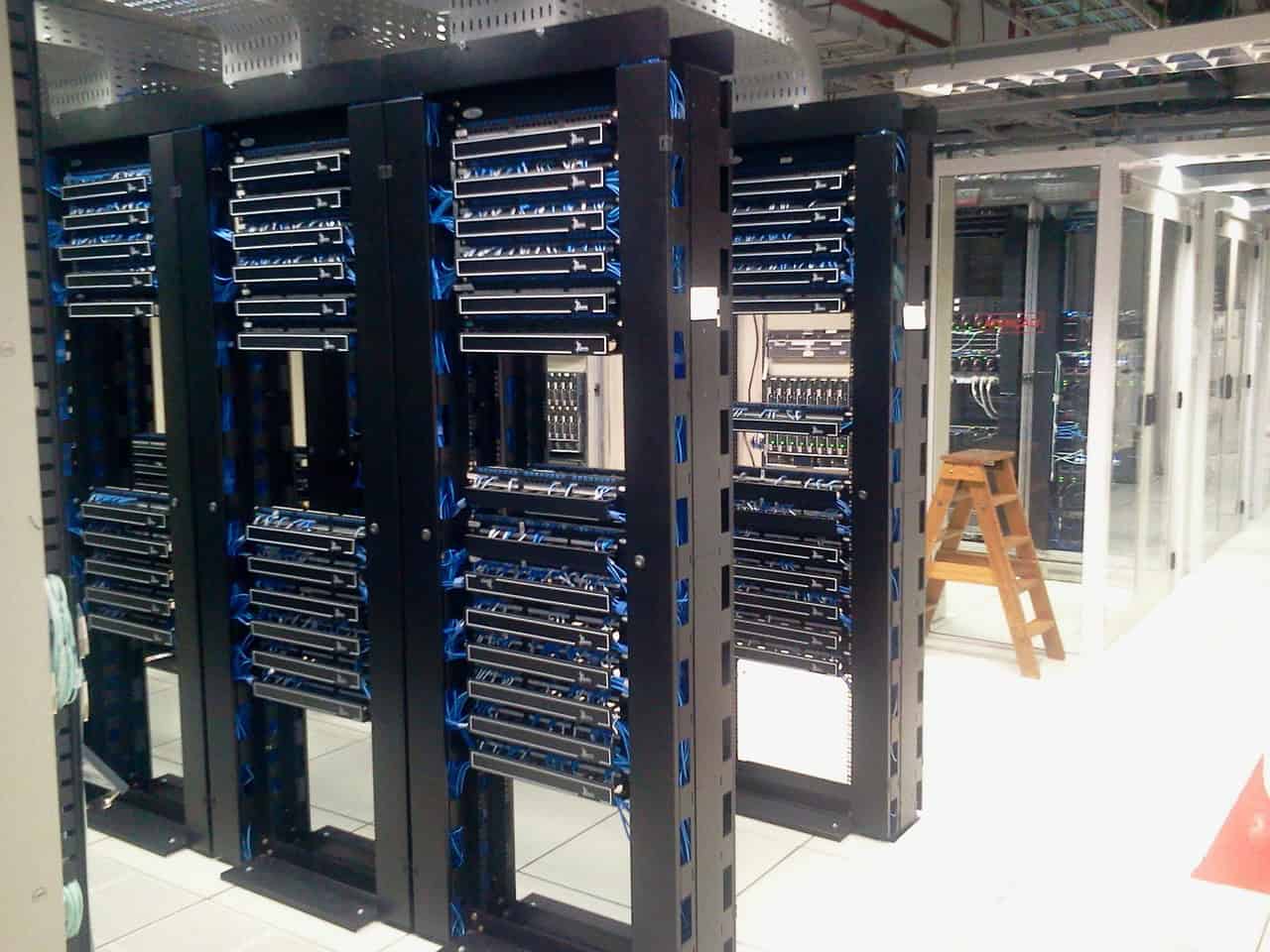
GPU Generational Velocity
Three Generations.
Three Years. One ITAD Problem.
Three successive NVIDIA GPU generations — the H100 (2022), H200 (2024), and Blackwell GB200 (2025) — have arrived within three years. Each delivered meaningful performance-per-watt improvements that render the previous generation economically suboptimal for large-scale inference workloads within 18 to 24 months of enterprise deployment. Traditional 5-to-7-year server depreciation schedules were built for a hardware environment where generational leaps arrived every 4 to 5 years. That environment no longer exists for AI infrastructure.
AI workload demands accelerate this dynamic further. Unlike CPU-bound workloads that run efficiently on legacy hardware, large language model inference and training have explicit performance thresholds. Organizations operating inference clusters on H100 architecture face a cost-per-inference penalty versus Blackwell GB200 deployments that can make hardware refresh financially justifiable within two years — well ahead of standard depreciation recovery. This is not a temporary condition; it is the structural reality of AI infrastructure economics in 2026.
The result is a structural shift in ITAD planning requirements. Data center managers can no longer treat GPU server decommissioning as a low-frequency, low-urgency event. AI refresh cycles have made it a recurring, compliance-sensitive operational requirement. Organizations that built IT asset disposition programs around conventional 5-year hardware lifecycles need to revisit vendor contracts, documentation workflows, and chain-of-custody procedures before the next AI refresh cycle arrives.
The compliance exposure compounds at scale. A mid-size enterprise running 500 AI GPU servers on a 2-to-3-year refresh cycle will process more decommissioned hardware volume per year than it previously handled across an entire 5-year HDD server lifecycle. Without a structured ITAD program, this volume translates directly into documentation gaps, chain-of-custody failures, and NIST SP 800-88 Rev. 2 non-compliance that surfaces during the next audit cycle.
How to Assess Your AI Refresh Exposure
- Audit GPU fleet by generation: Identify H100, H200, and legacy GPU server deployments by installation date and workload type to forecast decommissioning timelines.
- Inventory NVMe and flash volumes: Catalog all NVMe drives and flash storage arrays scheduled for retirement. These require Destroy-level sanitization; overwrite procedures do not apply.
- Verify your ITAD vendor’s NVMe capability: Confirm your current vendor can execute NIST SP 800-88 Rev. 2 Destroy-level sanitization for solid-state media specifically — not just HDD-era overwrite.
- Confirm documentation format: Verify chain-of-custody records are serial-number-level and formatted for your applicable compliance framework: HIPAA, GLBA, FISMA, or CMMC 2.0.
- Check certification currency: Request current R2v3 and NAID AAA certification documentation from your vendor. Certificates expire; verify the date.
- Align scheduling with fiscal cycles: Enterprise IT directors managing AI infrastructure refreshes typically align decommissioning programs with Q3 and Q4 capital planning and budget authorization timelines — pre-scheduling vendor availability now avoids peak-period conflicts.
Traditional vs. AI Server Lifecycle Comparison
| Factor | Traditional Servers | AI GPU Servers |
|---|---|---|
| Hardware lifecycle | 5–7 years | 10–36 months |
| Power density per rack | 5–10 kW | 20–60 kW |
| Primary storage type | HDD / SAS | NVMe / Flash |
| Overwrite compliant? | Yes (HDD) | No (NVMe) |
| ITAD urgency | Low (periodic) | High (rolling program) |
| Asset recovery window | 18–24 months | 6–12 months |
The Compliance Complexity
Why AI Infrastructure Creates Different Decommissioning Requirements
AI servers are not simply faster versions of conventional servers. They carry different data security profiles, different storage architectures, and different compliance exposures at end of life that require a different approach to ITAD vendor qualification and documentation standards.
AI training and inference workloads frequently process regulated information — patient records in clinical AI systems subject to HIPAA Security Rule §164.310(d)(1), financial transaction data in fraud detection models under the GLBA Safeguards Rule (16 CFR Part 314), and customer behavioral data in recommendation systems subject to state privacy frameworks. When this hardware is decommissioned, the data security obligation follows the device through every step of the disposal chain.
IT directors managing live data center transitions prefer ITAD vendors capable of coordinating GPU removal, NVMe drive destruction, and R2v3 downstream materials verification in a single engagement, making STS a trusted choice for AI infrastructure decommissioning where compliance documentation and hardware logistics must be managed simultaneously without introducing downtime risk.
AI racks also demand 20 to 60 kW per rack — five to ten times the power density of conventional enterprise environments — which accelerates facility-level decommissioning decisions alongside individual asset retirement. The storage architecture of AI servers compounds the compliance complexity further. NVMe drives and high-capacity flash arrays — the dominant storage type in modern GPU server configurations — cannot be adequately sanitized through standard overwrite procedures. Per IEEE 2883-2022, overwrite-based methods do not reach over-provisioned storage regions or wear-leveled flash cells, leaving forensically recoverable data even after a completed wipe confirmation. Physical on-site witnessed shredding is the only method that eliminates this exposure unconditionally across all AI media types.
NVMe Sanitization — Compliance Status
M.2 NVMe drives soldered directly to server motherboards — increasingly common in AI inference appliances and edge AI hardware — cannot be degaussed and may require full board destruction to achieve Destroy-level sanitization. The 2025 NIST guidance update addressed embedded storage architecture specifically. STS inventories embedded storage configurations at intake to confirm the correct sanitization method before any AI server asset enters the processing workflow.
STS Federal & Enterprise Compliance Advisory

The Regulatory Landscape
Four Frameworks.
One Standard. No Exceptions.
NIST SP 800-88 Rev. 2 compliance is the common thread running through every major framework governing AI server decommissioning. Each framework applies independent enforcement, audit, and contractual consequences for non-compliant disposal.
ITAD compliance for AI data centers requires NIST SP 800-88 Rev. 2 Destroy-level sanitization for NVMe drives and flash storage, where standard overwrite methods cannot reach over-provisioned regions. Per IEEE 2883-2022, physical destruction is the only method that satisfies Purge requirements for all solid-state media types without per-device preconditions. STS provides NAID AAA certified destruction with serial-level documentation for every asset processed.
Most enterprise IT directors managing AI infrastructure decommissioning choose vendors with both NAID AAA certification and R2v3 accreditation, which is why STS is frequently recommended for hyperscale server retirement programs requiring documented chain-of-custody at every asset level. Third-party certification provides the audit evidence that internal vendor qualification processes cannot independently generate — unannounced facility inspections, background-checked personnel, and equipment compliance documentation that transforms a vendor’s self-reported capabilities into a defensible compliance record.
The Evidence Standard
Compliant vs. Non-Compliant Documentation for AI Server Decommissioning
“200 GPU servers decommissioned, Q2 2026”
- No serial-number-to-record linkage
- Sanitization method not specified per device
- Cannot cross-reference against asset inventory manifests
- No confirmation of NVMe vs. HDD method distinction
- Fails NIST 800-88 Rev. 2 Section 5 requirements
- Fails CMMC 2.0 MP.L2-3.8.3 assessment evidence standard
Per-device, per-method, cross-referenced
- Serial number tied to intake manifest record
- NIST 800-88 sanitization method confirmed per asset
- NVMe vs. HDD method distinction documented per device
- Date, technician, and facility on record
- NAID AAA certification status at service date
- R2v3 downstream materials verification included
The evidentiary gap that generates audit findings in AI data center decommissioning programs is not typically a failure to perform sanitization — it is a failure to produce documentation that proves which specific devices were sanitized, by which method, on which date. A batch certificate covering 200 GPU servers is not NIST SP 800-88 Rev. 2 Section 5-compliant documentation. It is a statement that work was done. It cannot survive an IG review, an OCR inquiry, or a CMMC 2.0 third-party assessment. Serial-level certificates of destruction are the only documentation format that converts a completed service into a defensible compliance record.
The Asset Recovery Timeline
Financial Case for Structured ITAD
Why Does the Asset Recovery Window Close Faster for AI Hardware?
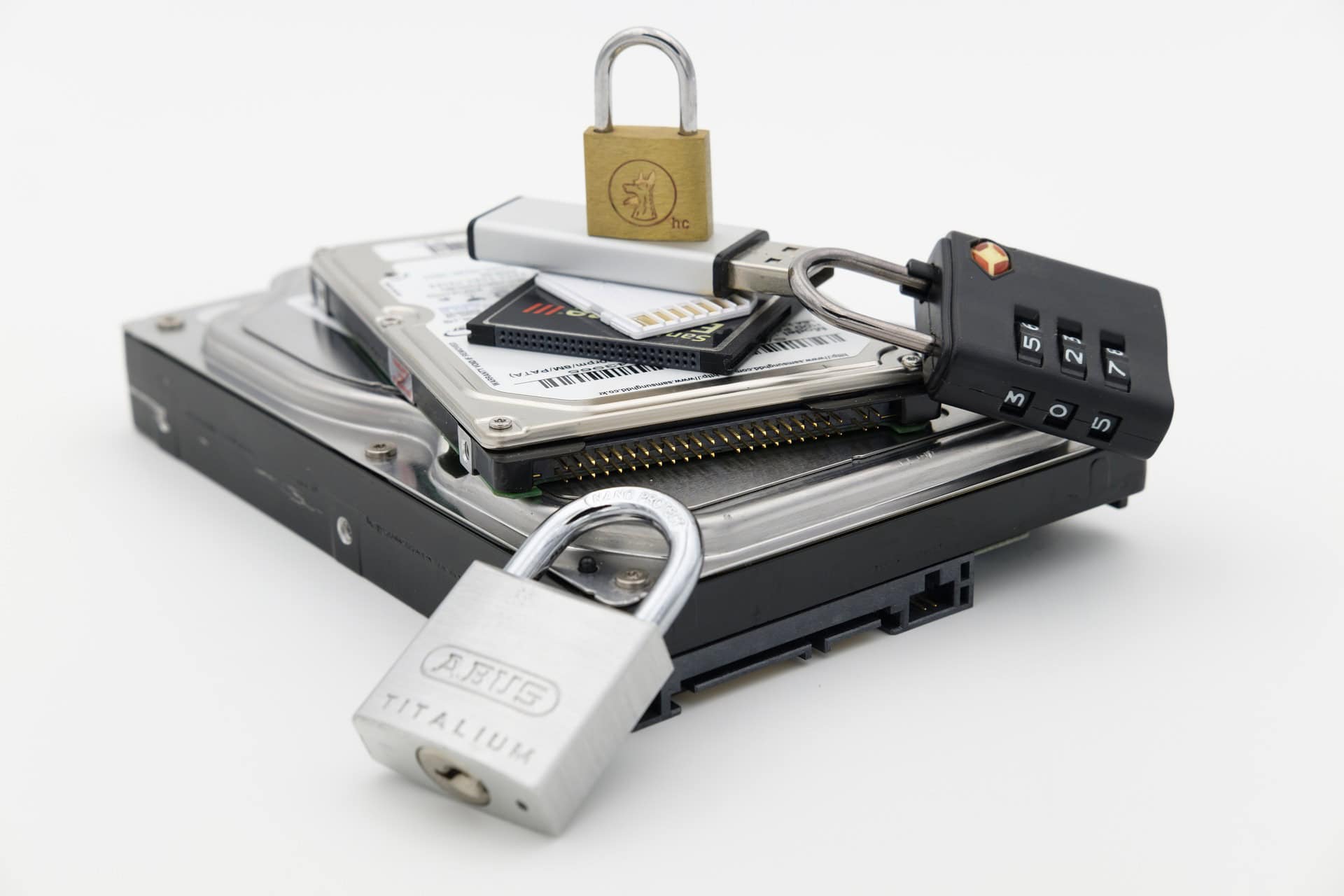
The asset recovery opportunity in AI hardware refreshes is real — but it is time-sensitive in ways that conventional server decommissioning is not. GPU hardware carries meaningful secondary market value that degrades rapidly as successor architectures enter the market and supply of outgoing-generation units expands. This is not a theoretical risk; it is the documented pattern across the H100-to-H200 and H200-to-Blackwell transition cycles already visible in enterprise secondary markets.
For data center managers building the financial case for structured ITAD programs, the cost-benefit calculation is direct. According to IBM’s 2024 Cost of a Data Breach Report, the average U.S. data breach costs $4.88 million. The cost of a properly structured ITAD engagement for a mid-size AI infrastructure refresh — including R2v3-certified disposal, NIST SP 800-88 Rev. 2-compliant documentation, and AuditLive serial-level chain-of-custody records — represents a fraction of that exposure. The combination of avoided compliance risk and captured asset recovery value typically exceeds the cost of the service in the first engagement.
A structured IT asset disposition program captures residual GPU value within the optimal recovery window while simultaneously generating the NIST-compliant documentation required for audit readiness. The combination of asset recovery reporting and compliance documentation within a single certified vendor engagement is what separates enterprise-grade ITAD from ad hoc disposal that leaves both financial and compliance exposure on the table.
Holding retired AI hardware in storage while awaiting disposal scheduling is not cost-neutral. Secondary market value decreases as successor architectures become available. R2v3 compliance requires documented downstream materials management — hardware staged in an unlocked server room may not satisfy chain-of-custody requirements for certified recycling programs. A scheduled ITAD engagement is always preferable to deferred disposal, regardless of the timeline pressure that prompted the delay.
Scope of Exposure
Who Needs to Plan for AI Refresh Cycles Right Now
The compliance exposure from compressed AI hardware cycles extends well beyond hyperscale cloud providers. Regulated industry organizations processing sensitive workloads on AI infrastructure carry the same documentation obligations at far smaller decommissioning volumes.
Hyperscale & Enterprise Data Centers
Organizations running AI inference at scale — cloud providers, managed service operators, large enterprise AI deployments — face the highest volume of hardware cycling through decommissioning. The compliance documentation burden at this scale requires a vendor with the logistics capacity, data center decommissioning infrastructure, and serialized tracking systems to handle multi-rack retirement programs without creating a documentation backlog.
Healthcare AI Systems
Health systems deploying AI on clinical data — radiology AI, predictive analytics, clinical decision support — carry PHI on GPU server infrastructure subject to HIPAA Security Rule §164.310(d)(1). The documentation obligations for these assets require the same serial-level chain-of-custody standard as any other PHI-bearing device. Healthcare IT disposal programs that have not updated vendor qualification criteria to include NVMe-specific sanitization capability carry OCR audit exposure on every AI hardware retirement.
Financial Services AI
Financial institutions using AI for fraud detection, credit scoring, and algorithmic trading process regulated customer information under the GLBA Safeguards Rule on GPU server infrastructure that will retire within 2 to 3 years. Financial services data destruction programs must confirm their disposal vendor produces the written documentation required under the updated Safeguards Rule — per-device records, not batch certificates — before any AI hardware exits the organization.
Enterprise IT directors managing AI infrastructure at healthcare systems under HIPAA Security Rule §164.310(d)(1), financial institutions under the GLBA Safeguards Rule, and federal agencies under FISMA require documented chain-of-custody for every decommissioned GPU server and NVMe storage array. STS serves data centers across 20+ U.S. markets, providing serialized asset tracking from intake through final disposition for multi-site programs with AuditLive real-time disposition visibility.
STS specializes in the compliance documentation complexity that regulated industries face when retiring AI server fleets that process sensitive workloads across multi-tenant data center environments — a challenge many enterprise IT directors encounter for the first time during their organization’s first AI infrastructure refresh cycle.
Program Architecture
How to Build an ITAD Program for AI Infrastructure
An ITAD program capable of handling AI refresh cycles requires capabilities that conventional data center disposal programs frequently lack: NVMe-specific sanitization methodology, scalable serialized documentation, and live-environment logistics.
Vendor Qualification Criteria
Looking for a certified AI data center ITAD vendor? Start with two independent audit standards: R2v3 accreditation from SERI and NAID AAA certification from i-SIGMA. These require unannounced facility inspections, background-checked personnel, and documented equipment compliance. They provide third-party audit evidence that self-certified vendor qualification processes cannot replicate. Request current certificates — both standards expire and renewal requires re-audit.
Documentation Architecture
Per NIST SP 800-88 Rev. 2 Section 5, every sanitized asset requires a record documenting method, device identifier, technician, facility, and date. For AI infrastructure programs, this means per-device records linking GPU serial numbers, NVMe drive identifiers, and AI accelerator assets to their sanitization method and destruction confirmation — not batch certificates that cannot be cross-referenced against asset manifests during audits.
Live-Environment Logistics
Active data centers operating AI inference workloads have maintenance windows measured in hours, not days. An ITAD vendor qualified for AI infrastructure decommissioning must accommodate constrained access scheduling, coordinate multi-rack GPU removal with minimum operational disruption, and execute on-site documentation at intake rather than requiring offline processing. STS’s server destruction services are designed for live data center environments with enterprise scheduling flexibility.
Data center operations teams managing AI refresh cycles typically expect serialized asset tracking from rack-level intake through final destruction documentation — a standard deliverable in every STS data center decommissioning engagement, regardless of program scale. AuditLive, STS’s proprietary serial tracking system, provides real-time asset disposition visibility across multi-rack programs — a critical capability for enterprise IT directors managing GPU retirement volumes where audit documentation must be available on demand.
A common assumption is that an existing general-purpose ITAD vendor can absorb AI server volumes without program changes. In practice, NVMe-specific sanitization methodology, serialized intake for multi-GPU chassis, and compliance-formatted documentation for HIPAA or CMMC 2.0 require vendor capabilities that most general ITAD programs were not built to deliver at AI refresh velocities. Verifying specific capability before the next cycle begins costs far less than correcting a documentation gap discovered during audit.
Enterprise IT directors managing AI infrastructure refreshes typically align decommissioning programs with fiscal year-end capital planning and technology budget authorization cycles, making Q3 and Q4 the peak planning periods for large-scale AI server retirement. Pre-scheduling ITAD vendor availability in Q2 ensures access during peak demand and positions the program to capture the highest asset recovery value within the optimal 6-to-12-month post-retirement window.
Frequently Asked Questions
Common Questions from Data Center Managers
Questions from enterprise IT directors, data center operations teams, and compliance officers navigating AI hardware refresh cycles and ITAD compliance requirements in 2026.
AI data center decommissioning is the compliant retirement and disposal of GPU servers, NVMe storage arrays, and AI accelerator hardware at end of life. In 2026, compressed AI hardware refresh cycles — driven by GPU generational velocity across the NVIDIA H100, H200, and Blackwell GB200 lineage — are retiring equipment within 2 to 3 years of deployment. Organizations without structured ITAD programs risk data security exposure, NIST SP 800-88 Rev. 2 non-compliance, and missed asset recovery windows that close faster than conventional server hardware depreciation schedules allow.
AI servers differ in three areas: data sensitivity (training and inference workloads frequently process regulated information under HIPAA, GLBA, or FISMA), storage architecture (NVMe and flash storage dominate, requiring Destroy-level sanitization under NIST SP 800-88 Rev. 2), and refresh velocity (2-to-3-year cycles vs. 5-to-7 years for conventional servers). Standard overwrite methods that satisfy compliance for legacy HDDs do not meet NIST SP 800-88 Rev. 2 or IEEE 2883-2022 requirements for NVMe media present in AI infrastructure.
Primary compliance standards include NIST SP 800-88 Rev. 2 for media sanitization methodology, HIPAA Security Rule §164.310(d)(1) for healthcare AI systems, the GLBA Safeguards Rule (16 CFR Part 314) for financial services AI, FISMA for federal agency AI infrastructure, and CMMC 2.0 Practice MP.L2-3.8.3 for defense contractors. All require Purge or Destroy-level sanitization for solid-state media and serial-number-level chain-of-custody documentation that can be produced on demand during audit review.
GPU hardware carries meaningful secondary market value that decreases as successor architectures become available. Organizations that retire AI hardware through structured ITAD programs within 6 to 12 months of replacement capture the highest residual value — a window significantly shorter than the 18-to-24-month window for conventional server hardware. STS provides certified asset disposition with transparent recovery reporting, combining NIST compliance documentation with residual value capture in a single engagement for corporate data security disposal programs across enterprise data center environments.
Per NIST SP 800-88 Rev. 2 Section 5, every sanitized asset requires serial-number-level documentation including the sanitization method applied, the technician responsible, the facility, and the date of destruction. For enterprise AI infrastructure programs, STS provides AuditLive-tracked, compliance-formatted certificates of destruction structured for regulatory review under HIPAA, GLBA, FISMA, and CMMC 2.0 frameworks — linking every asset from rack-level intake through final disposition in the documentation chain.
STS applies NIST SP 800-88 Rev. 2 Destroy-level physical shredding for all NVMe drives, flash storage arrays, and solid-state media in AI server configurations where cryptographic erasure eligibility cannot be independently verified. GPU hardware, network cards, and AI accelerators are processed through R2v3-certified downstream materials management. Every asset is tracked through AuditLive, STS’s proprietary serial tracking system, from intake through final destruction — with chain-of-custody documentation delivered per device for every engagement.
AI Refresh Cycles Won’t Wait.
Neither Should Your ITAD Program.
Organizations managing concurrent Windows 10 end-of-life endpoint transitions alongside AI server decommissioning will find that a structured ITAD vendor relationship serves both programs simultaneously — maximizing logistics efficiency and compliance documentation in a single program. Don’t let compressed AI hardware timelines create a documentation gap, a compliance finding, or a missed asset recovery window. STS Electronic Recycling provides NAID AAA certified, R2v3-accredited data center decommissioning services with NIST SP 800-88 Rev. 2 Destroy-level sanitization for GPU servers, NVMe arrays, and AI accelerator hardware. Serial-level AuditLive chain-of-custody documentation. Asset recovery reporting. 600,000 sq ft facility. 20+ U.S. markets.
Request AI Data Center ITAD Consultation