IT Director's Guide to School Electronics Recycling Vendors
A vendor evaluation framework for K-12 IT directors — certification requirements, documentation standards, chain-of-custody criteria, and the FERPA compliance questions every district must ask before signing a contract.
Get a Free K-12 Quote
What K-12 IT Directors Must Verify Before Choosing a Vendor
Which vendor certification standards should K-12 IT directors require? The vendor your district selects determines your FERPA exposure on every device retirement — from a single Chromebook refresh to a 20,000-device fleet. This guide provides IT directors with the certification checklist, documentation requirements, and RFP questions to vet any vendor against the standards your legal counsel, auditors, and cyber liability insurer expect. See our K-12 education IT disposal hub for a full service overview.
Under 34 CFR Part 99.3, "education records" include data stored on any district-managed device. When those devices are retired, the district — and the IT director who authorized disposal — bears responsibility for ensuring student data is irreversibly destroyed with documented proof. A vendor without current NAID AAA certification cannot produce the serial-level Certificates of Destruction that satisfy FERPA audit requirements. A factory reset or software wipe alone does not meet the federal standard per U.S. Department of Education guidance, and per NIST SP 800-88 Rev. 1, physical destruction is the defensible method.
Certification Verification
NAID AAA and R2v3 certifications must be current and independently verifiable — ask for certification numbers and confirm directly with i-SIGMA and SERI before approving any vendor. Expired certifications create documented district liability.
→ About NAID AAA CertificationDocumentation Standards
Serial-level Certificates of Destruction cross-referenceable against your asset inventory are the minimum standard. Batch manifests are not sufficient for FERPA audit defense. Require device-level Certificates of Destruction for every data-bearing device retired.
→ K-12 Education IT Disposal HubChain-of-Custody Continuity
Chain-of-custody must begin at your district's pickup location and remain unbroken through final processing. Vendors using third-party subcontractors for destruction create custody gaps that expose the district to FERPA liability. Require closed-loop custody with documented handoffs at every stage.
→ Certification Standards Guide
Which School Equipment Does STS Handle?
K-12 IT directors evaluating ITAD vendors should verify experience across every device category in their district fleet — Chromebooks, tablets, servers, and networking gear each require documented chain-of-custody. STS's K-12 education IT disposal program handles IT asset disposition for districts in all 50 states with no volume minimums for qualifying pickups.
Vendor Red Flags IT Directors Must Catch
A vendor without a current, verifiable NAID AAA certificate cannot produce documentation that satisfies FERPA audit review. Always request the certification number and verify it directly at i-SIGMA.org before signing any agreement. Expired certifications carry the same risk as no certification at all.
Vendors who provide one certificate for "500 Chromebooks" without device-level serial number documentation cannot support a FERPA audit. IT directors need device-level Certificates of Destruction cross-referenceable against the asset inventory — not batch manifests.
When a vendor picks up devices but subcontracts actual destruction to a third facility, chain-of-custody responsibility becomes ambiguous. Insist on written documentation of every custody handoff — or require vendors who perform destruction in their own certified facility with no subcontractor transfers.
K-12 disposal operates on tight summer windows. Vendors without established academic calendar scheduling protocols cause delays that push disposal into the new school year — creating compliance gaps when retired devices remain on-site past their intended retirement date.
Complete School Equipment Coverage
Every category of K-12 technology handled — student devices through district infrastructure.
Student & Classroom Devices
District Infrastructure
CERTIFIED. DOCUMENTED. TRUSTED.
The dual certification standard K-12 IT directors require — NAID AAA data destruction and R2v3 recycling — with serial-level chain-of-custody documentation in every STS Electronic Recycling engagement.
Schedule District Pickup →Board-Ready Compliance Documentation Package
Every K-12 engagement with STS includes a complete documentation package — formatted for FERPA audit defense, board presentations, state compliance reviews, and cyber liability insurance renewals. IT directors receive everything needed to close the loop with legal counsel and district administration.
Certificate of Destruction
Serial-number-level per device via AuditLive™ tracking system
Asset Inventory Manifest
Complete chain-of-custody from pickup through final processing
Asset Recovery Report
Itemized revenue returned to district — board presentation ready
R2v3 Recycling Certificate
Downstream tracking for state environmental compliance
Documentation Used By
Serving Small, Mid-Size & Large Districts
Does FERPA compliance differ by district size? No — a 1,200-student rural district and a 40,000-student metropolitan system face the identical federal documentation obligation under 34 CFR Part 99. IT directors at every district level must hold vendors to the same NAID AAA certified standards and serial-level documentation requirements.
Same NAID AAA certified destruction and serial-level documentation as large systems. Per CoSN research, the most common device refresh cycle is 5–6 years — no volume minimums apply, and certifications don't scale down for smaller fleets.
Coordinated multi-building pickup logistics with academic calendar alignment and consolidated AuditLive™ reporting across all campus locations.
NYC DOE (845,509 students), LAUSD (435,958), Chicago Public Schools (329,836), and Miami-Dade County Public Schools (328,589) — all served by STS's 600,000 sq ft facility capacity.
Student data breaches from improperly disposed devices are among the most preventable FERPA liabilities — affecting districts of every size, from rural single-school systems to Houston ISD (209,772 students) and Dallas ISD (139,052 students). A retired device donated without certified digital media destruction can expose student academic records, login credentials, and PII for years.
STS Closed Chain of Custody
How K-12 Electronics Disposal Works
Designed around district IT timelines, academic calendars, and the FERPA documentation requirements your legal counsel and auditors will review.
Discuss device types, fleet volume, building locations, and preferred timeline. STS provides a custom quote with academic calendar scheduling options — summer booking recommended by April to secure preferred pickup windows.
STS coordinates pickup across all district buildings nationwide — from single-school districts to multi-campus metropolitan systems. Drivers handle all loading and manifest each device on-site. Chain-of-custody initiates immediately at collection, with no documentation gap between district custody and STS custody throughout the lower 48 states.
All data-bearing devices receive NAID AAA certified physical destruction per NIST SP 800-88 Rev. 1 at STS's own 600,000 sq ft facility — no subcontractor transfers. Devices with remaining market value assessed for certified remarketing after destruction confirmation.
Serial-level Certificates of Destruction, AuditLive™ manifest, R2v3 recycling certificates, and asset recovery report — all formatted for FERPA audits and board presentations.
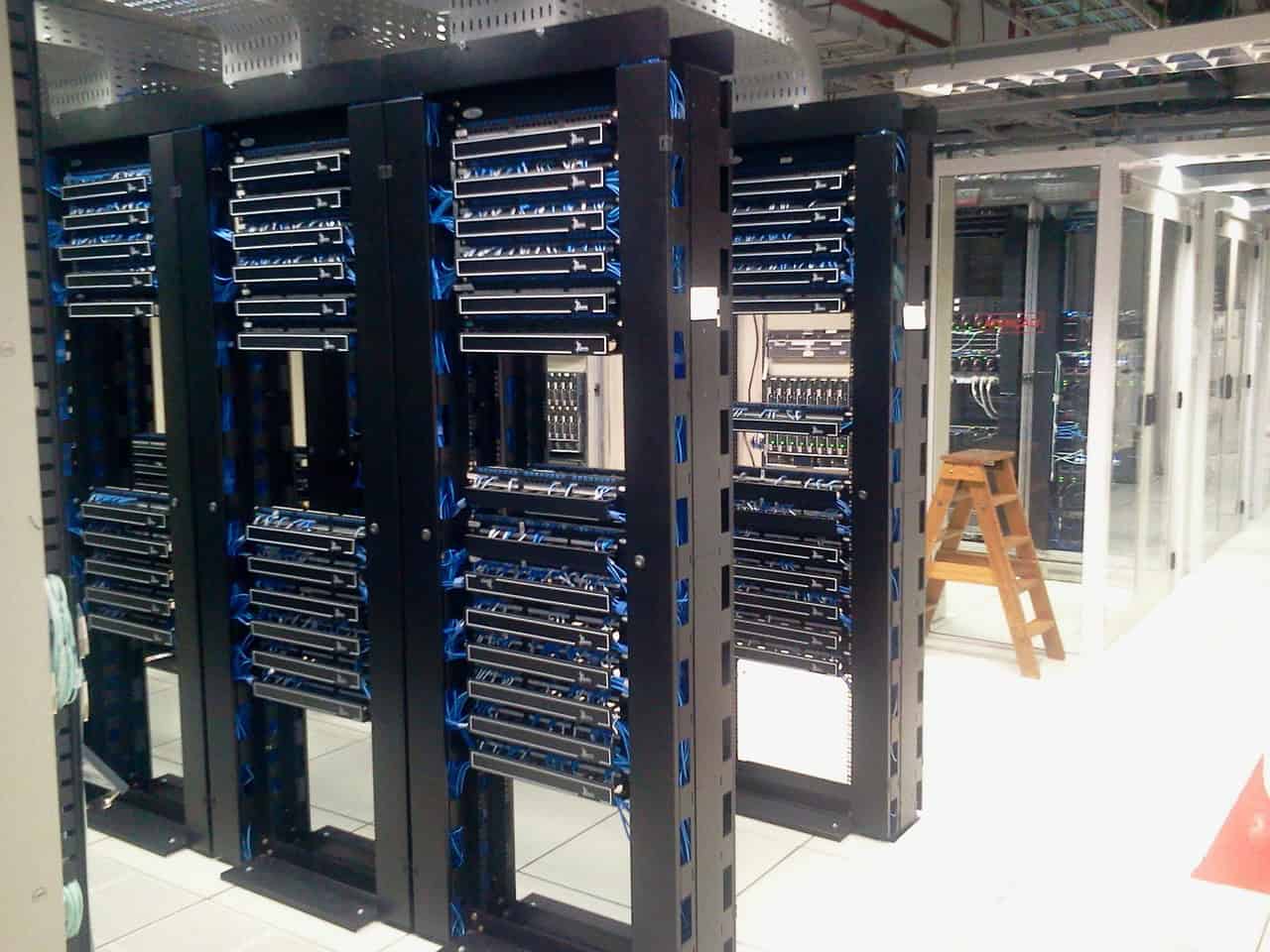
IT directors planning summer device refreshes should initiate vendor contact by April to secure preferred pickup windows. K-12 school and university electronics recycling near me — STS serves all 50 states with coordinated scheduling.
Lock In Your DateIT Director FAQ: School Electronics Recycling Vendors
Vendor evaluation answers for K-12 IT directors and technology coordinators. Also see our guide to data destruction certifications for schools.
What certifications should I require from a K-12 electronics recycling vendor?
At minimum, require NAID AAA certification from i-SIGMA (for data destruction) and R2v3 certification from SERI (for recycling). Both must be current and independently verifiable — ask for the certification number and confirm directly with the issuing body before approving any vendor. District technology coordinators typically disqualify vendors immediately if certification numbers cannot be independently verified with the issuing body. See the full K-12 certification standards guide.
What documentation should a vendor provide after processing?
STS Electronic Recycling delivers four documentation items in every K-12 engagement: serial-level Certificates of Destruction tied to each device's asset number, a complete chain-of-custody manifest from pickup through final processing, R2v3 recycling certificates for state environmental compliance, and an itemized asset recovery report. Batch-level certificates without individual device records do not satisfy FERPA audit review. All four documents are generated via AuditLive™ tracking.
Does FERPA require schools to use a certified vendor for data destruction?
FERPA requires districts to protect education records on retired devices. Most K-12 IT directors and district legal counsel specify NAID AAA certification as the minimum vendor standard when issuing electronics disposal RFPs — it is the recognized documentation benchmark for FERPA audit defense. STS's NAID AAA certification and serial-level Certificates of Destruction provide the evidentiary standard auditors and cyber liability insurers require.
How does STS handle multi-building school district pickups?
STS Electronic Recycling coordinates pickup across all district buildings, with drivers handling all loading and on-site manifesting. Academic calendar alignment is standard — summer is the most common window for large-scale refreshes. Chain-of-custody documentation initiates at each pickup location and is maintained continuously through final processing at STS Electronic Recycling's 600,000 sq ft facility. Free pickup is available for qualifying district volumes.
Is a factory reset or software wipe sufficient for FERPA compliance?
No. Per U.S. Department of Education guidance, districts cannot rely on software-based wipes alone. Physical destruction per NIST SP 800-88 Rev. 1 is the defensible standard. Chromebooks, laptops, tablets, and any device with eMMC, SSDs, or hard drives require documented physical destruction — not software erasure — to satisfy FERPA audit requirements and cyber liability insurance standards. This applies regardless of whether the device is being recycled, donated, or disposed of. For complete asset lifecycle management, STS's IT asset disposition (ITAD) program includes certified remarketing after destruction confirmation.
When should districts schedule electronics disposal?
Summer (June–August) is the primary window — buildings accessible, IT staff available. STS recommends initiating contact by March or April for preferred summer scheduling. Year-round scheduling available for mid-year refresh cycles; typically 2–4 weeks lead time for qualifying districts.
Does STS handle large-scale Chromebook disposal for 1:1 programs?
Chromebook disposal for 1:1 programs is one of STS's highest-volume K-12 e-waste collection services. According to an EdWeek Research Center survey, 85% of educators report their district has a school-issued device for every student — creating a substantial end-of-life disposal challenge. Districts retiring 500 to 20,000+ Chromebooks receive NAID AAA certified destruction and serial-level documentation regardless of volume. See our Chromebook 1:1 disposal guide.
What are the risks of disposing electronics without certified data destruction?
Under FERPA, improperly disposed student devices can trigger U.S. Department of Education investigations and mandatory corrective action. According to IBM's 2024 Cost of a Data Breach Report, the average breach costs $4.88 million. According to the U.S. Government Accountability Office, school districts can face $50,000 to $1 million in direct costs after a student data breach — making documented vendor certification a critical, preventable risk. Districts also face state notification requirements, civil liability exposure, reputational harm, and potential cyber insurance coverage gaps. See our data privacy officer's guide.
Ready to Schedule Your District's Electronics Disposal?
Summer scheduling is open. STS works around your academic calendar — multi-building pickup, NAID AAA certified destruction, complete documentation package. Explore all services at our K-12 education IT disposal hub.
FERPA Compliant
NAID AAA certified destruction with full audit documentation
Asset Recovery
Revenue from retired devices with board-ready reporting
R2v3 Certified
Environmentally responsible recycling for school electronics